
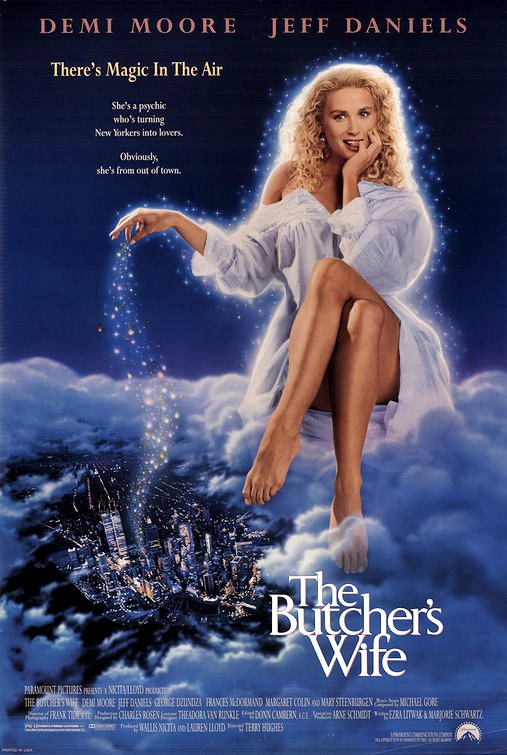
USA. 1991.
Crew
Director – Terry Hughes, Screenplay – Ezra Litwak & Marjorie Schwartz, Producers – Laureen Lloyd & Wallis Nicita, Photography – Frank Tidy, Music – Michael Gore, Visual Effects – Illusion Arts (Supervisors – Syd Dutton & Bill Taylor), Special Effects Supervisor – David P. Kelsey, Production Design – Charles Rosen. Production Company – Paramount.
Cast
Demi Moore (Marina Lemke), Jeff Daniels (Dr Alex Trimmer), George Dzundza (Leo Lemke), Mary Steenburgen (Stella Kiefother), Max Perlich (Eugene Kearney), Margaret Colin (Robyn Graves), Frances McDormand (Grace)
Plot
The unworldwise Marina lives on a remote island off the North Carolina coast with her grandmother. She is a strong clairvoyant and divines via various omens that she is about to meet her true love. Shortly thereafter, Leo Lemke, a pudgy middle-aged butcher from New York City, arrives, lost on a fishing trip. Marina immediately accepts him as her love. They are married and she returns to New York with him. While working in Leo’s butcher shop, the clairvoyant advice she dispenses regarding the romantic futures of customers and other locals causes much upset. Neighbourhood psychologist Alex Trimmer tries to dissuade Marina by arguing in favour of reason but instead finds himself falling for her.
This venture into Magical Realism is a modestly likeable film. Although undeniably lightweight, The Butcher’s Wife obtains a fair degree of vitality from a plot that energetically twists and contorts around the various romantic fates and misunderstandings of the principals.
There are some appealing Magical Realist touches – divination via two-tailed comet, a magical perpetual motion clock that measure the success of a marriage. The script tries to set up a New Age mysticism vs rationalism debate, although one can see that the case is hopelessly weighed on one side from the outset.
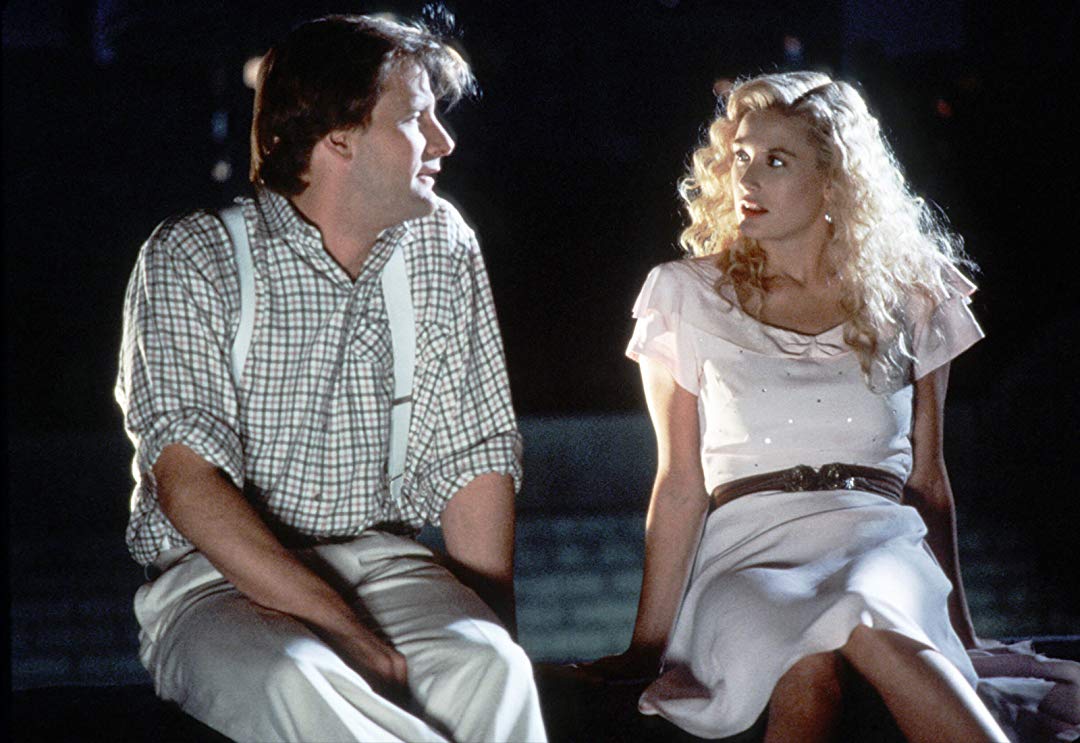
The film has a strong supporting cast, with the show being stolen by the far-too-little seen Margaret Colin. Demi Moore gives her usual bland performance in a role that was surely written for Daryl Hannah. It nevertheless emerges as an oddly likeable film.
Director Terry Hughes directed much British tv comedy during the 1970s, including Monty Python Live at the Hollywood Bowl (1982), and in the 1980s moved to the US where he now directs for various tv sitcoms.
Trailer here