

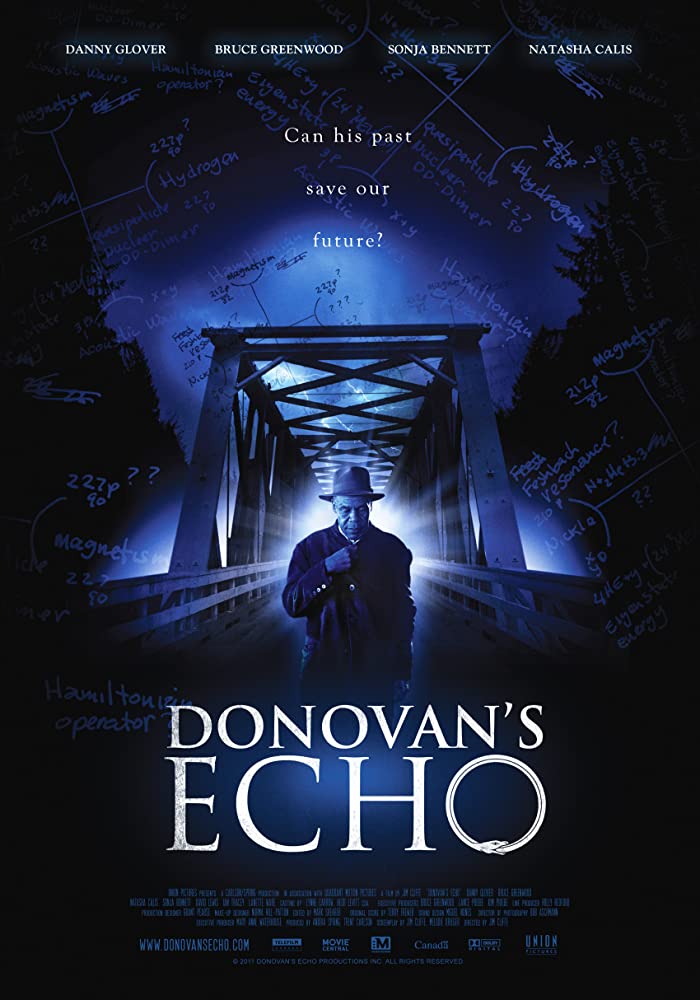
Canada. 2011.
Crew
Director – Jim Cliffe, Screenplay – Jim Cliffe & Melodie Krieger, Producers – Trent Carlson & Andria Spring, Photography – Robert Aschmann, Music – Terry Frewer, Visual Effects Supervisor – Brett Keyes, Special Effects Supervisor – James Paradis, Production Design – Grant Pearse. Production Company – Carlson-Spring/Quadrant Motion Pictures/Oom Productions Ltd/Telefilm Canada/Movie Central/The Movie Network.
Cast
Danny Glover (Donovan Matheson), Bruce Greenwood (Sergeant Finn Boyd), Natasha Calis (Magnolia ‘Maggie’ Waldgrave), Sonja Bennett (Sarah Waldgrave), David Lewis (Kit), Ian Tracey (Ray), Dailas Blake (Young Donovan), Karen Holness (Jasmine Matheson), Lanette Ware (Susan Boyd), Kevin McNulty (Dean Belton)
Plot
Donovan Matheson returns to his home in Fort Langley, British Columbia after many years, now an old man. He was part of the original atomic bomb experiments at Los Alamos and later began to research cold fusion. However, he became traumatised and vanished after his wife and daughter were killed in a car crash in 1964. He now obtains a job bagging at a supermarket. He is walking home one night when he has a vision of a restaurant owner being hit by a vehicle and tries to stop it happening but is too late. He has another vision and is able to save eleven year-old Maggie Waldgrave from being hit by a falling workman’s tool outside the supermarket. Donovan becomes aware that a vision of events that he had in 1964 prior to the accident is coming true. Tiny pieces of symbolism from the vision start mirroring themselves in present happenings, while the events that killed his wife and daughter appear to be repeating themselves with uncanny coincidence. Donovan befriends Maggie and becomes certain that something that is going to happen to her. However, others, including Maggie’s mother and Donovan’s friend, RCMP officer Finn Boyd, think he is losing his mind from unresolved grief.
Donovan’s Echo is a debut feature for Canadian director Jim Cliffe. The script was a quarter finalist at a Screenwriting Fellowship offered by the Academy Awards and a Bronze Award winner (third place) at the 2007 Page International Screenwriting award. The film was shot for cable release in the US.
At first glance and throughout the car crash scenes and where Danny Glover saves Natasha Calis from a tool falling off a scaffold, Donovan’s Echo seems to be shaping up to be another clairvoyance thriller. We have had a good many of these over the last few years – see the likes of Baffled! (1972), The Eyes of Charles Sand (1972), Visions (1972), Eyes of Laura Mars (1978), Double Exposure (1981), Fear (1990), Murderous Vision (1991), Dead On Sight (1994), Sensation (1994), Hideaway (1995), A Deadly Vision (1997), After Alice (1999), In Dreams (1999), The Gift (2000), Murder Scene (2000), Troubled Waters (2006), Empathy (2007), The Cell 2 (2009), Let Me Die Quietly (2009) and In/Sight (2011). These are largely disappointing in that they have reduced exploring the conceptual possibilities inherent in clairvoyant visions and predicting the future to routine detective stories about tracking killers or missing people. With its set-up and tv-styled direction, Donovan’s Echo gives the impression of being no different to these others.
As it transpires, this is not quite the case. As becomes apparent, Donovan’s Echo is a film more about predestination and events from the past repeating themselves. Director/co-writer Jim Cliffe says he based these on an experience of deja vu in his own life. In truth though, his source for the film appears to be Nicolas Roeg’s Don’t Look Now (1973). Just like Don’t Look Now, Donovan’s Echo is about visual clues from one event in the past – in both films it is the traumatic death of the protagonist’s daughter (and here his wife as well) – echoing in terms of leaked clues of events about to happen in the future.
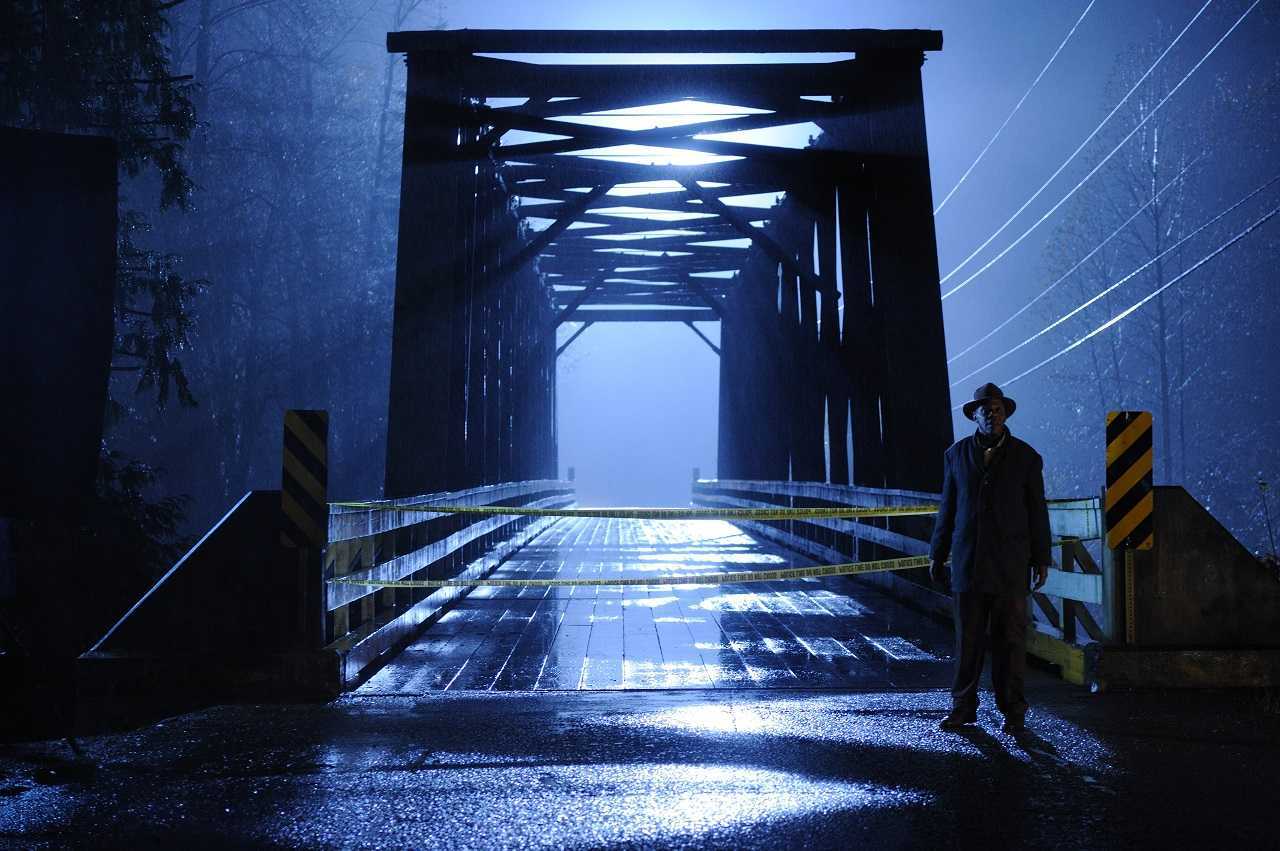
Both films become akin to a tapestry that exists on a level of symbolism where aspects from one event keep visually mapping themselves out in another. Here the Ouroboros key that Danny Glover finds is reflected in the cover of the book that Sonja Bennett gives him; the odd cross shape he draws in his physics notes leads to the garage where the climactic events take place; the ad for a dinosaur exhibit is near-identical to the one where Natasha Calis wins a science prize to go to; strings of numbers prove significant; people in the present have the same names as those in the past and so on. This game of overlapping symbolism proves interesting – in both of these works, it is about turning the film into a mandala of multiple connection points.
Donovan’s Echo is ultimately far more prosaic about these than Don’t Look Now was. It is Don’t Look Now, which was in truth an arthouse film, played out down around the level of a tv movie thriller where the overlapping clues are spelled out in ways that are pedestrian and obvious. Eventually this makes Donovan’s Echo still the same type of mundane detective story about the solving of a mystery that the abovementioned clairvoyance thrillers are. Not that it fails to take an interestingly different way of getting there.
Among the cast, Danny Glover does well as Donovan. Glover has been showing his age in the last few years but succeeds in making his bug-eyed crazy thing work well for the role. The other headline name that the film brings in is that of Bruce Greenwood in a nothing much role as Danny Glover’s best friend. Natasha Calis shows much promise as the young girl that Danny Glover befriends.
Trailer here