
Crew
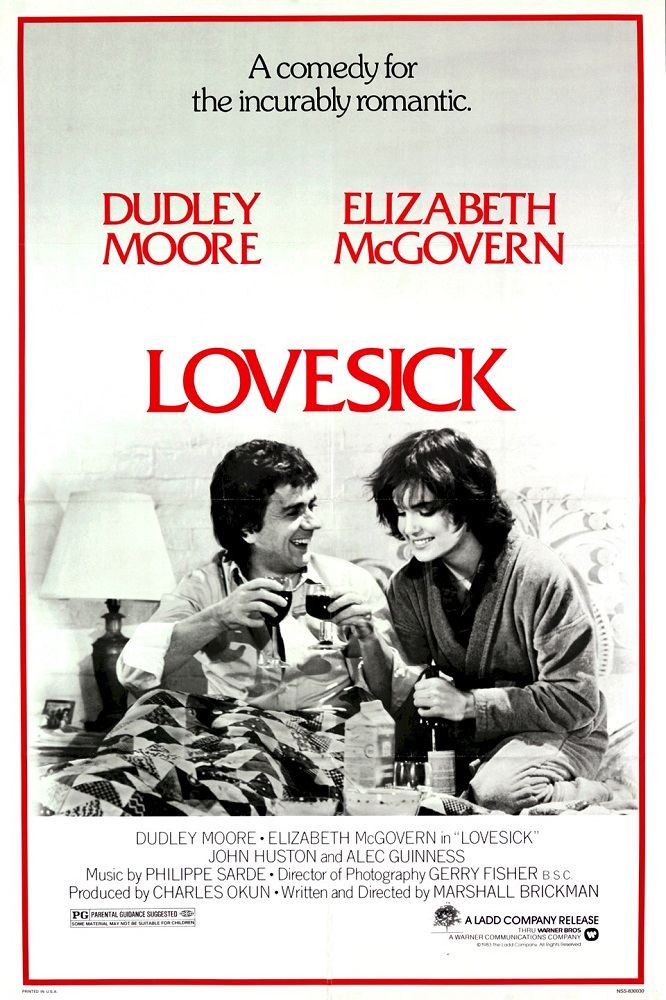
Director/Screenplay – Marshall Brickman, Producer – Charles Okun, Photography – Gerry Fisher, Music – Philippe Sarde, Production Design – Philip Rosenberg. Production Company – The Ladd Company.
Cast
Dudley Moore (Saul Benjamin), Elizabeth McGovern (Chloe Allen), Alec Guinness (Sigmund Freud), John Huston (Larry Geller), Ron Silver (Ted Caruso), Anne Kerry (Katie Benjamin), Wallace Shawn (Otto Jaffe), David Strathairn (Marvin Zuckerman), Gene Saks (Mr Houseman), Renee Taylor (Mrs Mondragon), Kent Broadhurst (Gay Patient), Lester Rawlins (Mr Arnold), Christine Baranski (Nymphomaniac Patient)
Plot
Analyst Saul Benjamin is at a birthday party for colleague Otto Jaffe where Otto confesses to him that he is head-over-heels infatuated with a patient, playwright Chloe Allen. Saul advises against professional misconduct. That very night Otto collapses and dies from a heart attack. After this Chloe is referred to Saul, needing help with the anxiety attacks she experiences. However, almost as soon as she sits down, Saul starts to fall for her. Ignoring the advice of the ghost of Sigmund Freud and the ethics of professional conduct, he obsessively follows Chloe and then enters into a passionate affair with her.
Marshall Brickman used to co-write for Woody Allen, collaborating on the scripts for Allen classics such as Sleeper (1973), Annie Hall (1977), Manhattan (1979), before branching out into a solo writing and directing career with the interestingly strange Simon (1980) and the teen thriller The Manhattan Project (1986). More recently, Brickman returned to prominence as co-writer of the hit musical Jersey Boys (2005).
There still seems a lot of Woody Allen in the way that Marshall Brickman writes – Lovesick is very similar to Allen’s Play It Again Sam (1972) which, instead of Lovesick‘s ghost of Sigmund Freud popping in to give advice, had the ghost of Humphrey Bogart appearing to give Woody Allen romantic advice. It is not difficult to imagine Woody Allen playing the role Dudley Moore does here – in fact, Allen would have been a far preferable choice to the bumbling pratfoolery that Moore lets pass for a performance.
Lovesick is unfortunately not a terribly good film – its’ plot is too sprawling and longwinded and Dudley Moore’s professional ethical dilemma too banal to care about much. Brickman also has scenes where Moore is clearly abusing Elizabeth McGovern and causing considerable irritation around the house, but he lets these drop – they are scenes that could have been cut from the film altogether for the amount of difference they make.
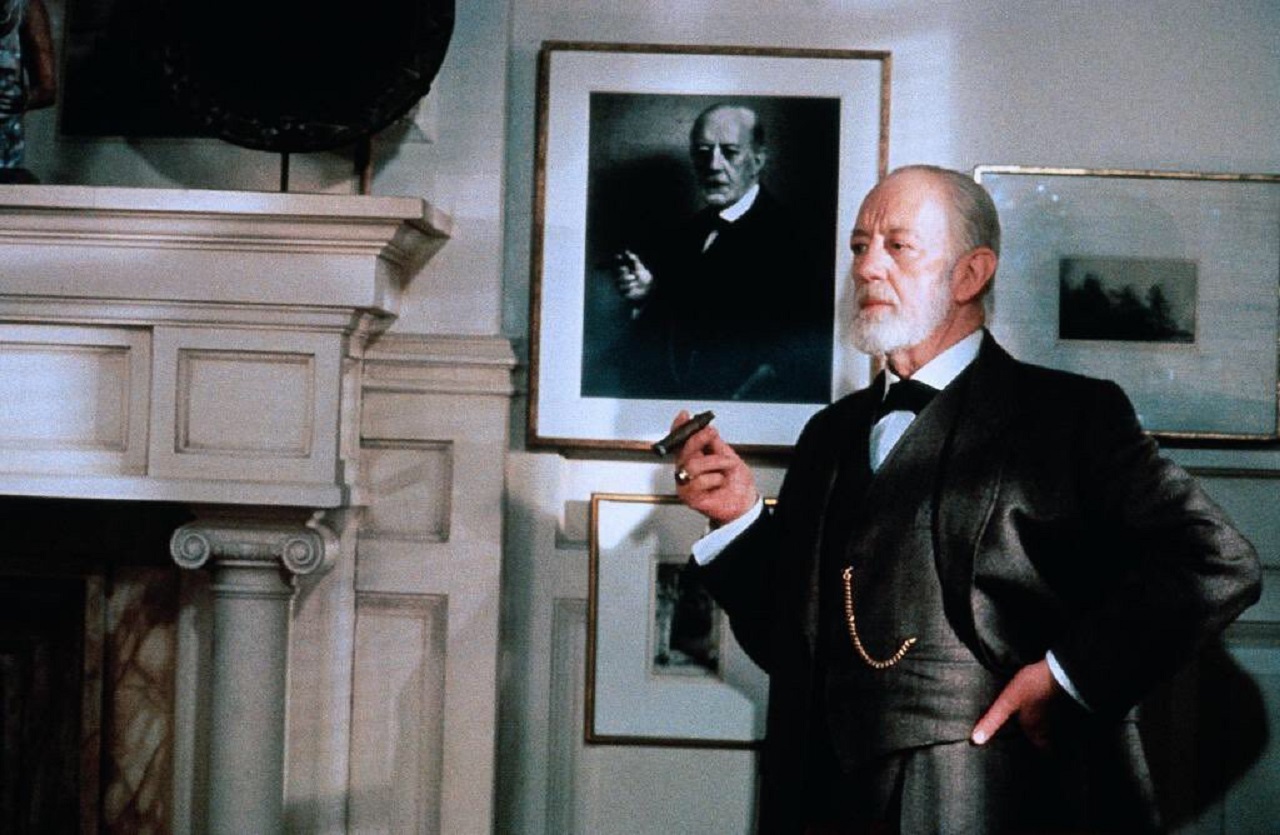
Alec Guinness makes an appealingly wry Sigmund Freud, reading up on the latest pop psychology and drug therapy, and Ron Silver has an amusing supporting role as an egocentric actor. The developing scenes between Dudley Moore and Eliabeth McGovern have a nice soft-eyed intimacy – they are all on her part, but it is easy to see why half the characters in the film fall in love with her.
Towards the end, Marshall Brickman does rise to make some mildly acerbic comments about the therapeutic profession – in one rather nice speech he has Dudley Moore tell his neurotic middle-aged patient to go out and live life, and the ghost of Freud departs with a shrug, “It [psychotherapy] was an experiment, it should never have become an industry.” However, these sharpened barbs are something the film should have arrived at much sooner than this.