


Crew
Director – Alan Rudolph, Screenplay – Bruce A. Evans & Raynold Gideon, Producers – Bruce A. Evans, Raynold Gideon & David Blocker, Photography – Jan Klesser, Music – Mark Isham, Visual Effects – Max W. Anderson, Special Effects – Doug De Grazzio, Production Design – Paul Peters. Production Company – Lorimar.
Cast
Timothy Hutton (Mike Shea/Elmo Barnett), Kelly McGillis (Annie Packert/Allyson Chandler), Debra Winger (Emmett Humbird), Maureen Stapleton (Aunt Lisa), Ann Wedgeworth (Annette Shea), James Gammon (Steve Shea), Timothy Daly (Tom Donnally), Don Murray (Ben Chandler), David Rasche (Donald Summer), Ellen Barkin (Lucille)
Plot
In the 1950s, Mike Shea dives into a river to save the driver of a car that has gone off a bridge but drowns while doing so. In Heaven, Mike meets afterlife guide Annie Packert and the two fall in love. Their bliss is ended when Annie learns she has to return to Earth to be reborn. Mike begs the Heavenly authorities to let him return so that he can be with her. Heaven reluctantly allow him to also be reborn – but only on the same continent as she is. The two are then given until their thirtieth birthdays to find one another in their new bodies.
There are few genres as worn-out and dated as the afterlife drama, a genre that hit its peak during the 1940s. So it is doubly a surprise when Made in Heaven succeeds in breathing life back into such a tired theme and in doing so with considerably affecting sincerity. The emotions engendered come with an amazing degree of sincerity and straight-forward simplicity, and with no falsity of sentiment about them.
Made in Heaven is a beautifully crafted film – the 1950s scenes are photographed in stunningly textured black-and-white. The drift through the 1960s and 70s is conducted in a lovely series of intercut tableaux (even if the sight of Timothy Hutton in sideburns seems a little hard to swallow). Best of all are the Heaven scenes, shot in impossibly real autumnal colours with the dialogue recorded in a echo-damping chamber. These afterlife scenes are filled with wonderfully incongruous and surreal touches that nonchalantly sit in the background – of a couple dancing in mid-air, conversations that takes place on a park bench drifting in mid-air across a lake, of Kelly McGillis going to sleep floating above a bed of red roses. The film opens with the charming penned title – “This story might be true. You might even know some of the people.”
Made in Heaven was directed by Alan Rudolph, who made acclaimed films such as Trouble in Mind (1986), Mrs Parker and the Vicious Circle (1995), Afterglow (1997) and Breakfast of Champions (1999). (See below for Alan Rudolph’s other genre films). The script comes from the writing and occasionally directing team of Bruce A. Evans and Raynold Gideon who wrote John Carpenter’s Starman (1984), the much-loved Coming of Age drama Stand By Me (1986) and later the fine serial killer film Mr. Brooks (2007). Alas, Made in Heaven was not a big success at the box-office.
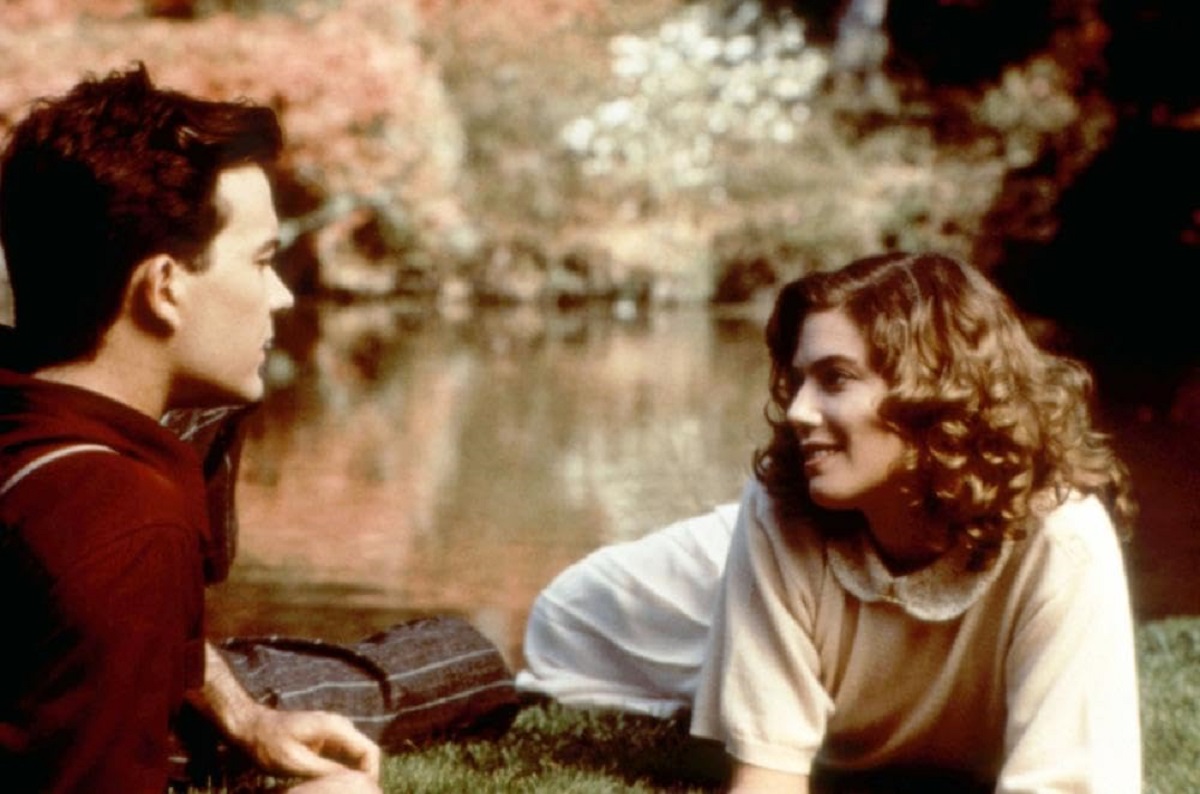
Alan Rudolph fills the film out with an amazing cast, including cameos from rockers Tom Petty, Neil Young and Ric Ocasek and author Tom Robbins. Ellen Barkin and Timothy Hutton’s then real-life wife Debra Winger turn up, although are only billed by the names of their characters. Debra Winger is virtually unrecognisable (in drag, wearing a scruffy pinstripe and her hair punk-styled and dyed orange). While both Timothy Hutton and Kelly McGillis seem a little stiff at playing the real world scenes once they leave Heaven, at least Debra Winger succeeds in being remarkably affecting in a performance of distracting twitchiness and remarkable scruffiness.
The latter half of the film plays the interweavings of the two characters’ fates and the ironies of them nearly meeting or bumping into characters from their previous lives charmingly. It is only in the end that Made in Heaven seems slight where it is eventually seen that the plot consists of no more than a series of tableaux about the two characters fates and that it has no dramatic payoff other than an abrupt ending.
Director Alan Rudolph became a well-known mainstream director with films like Roadie (1980) through Choose Me (1984) to the likes of Mrs Parker and the Vicious Circle (1995) and Afterglow (1997). Rudolph has made a number of ventures around the edges of genre cinema. His first film was the obscure Premonition (1972) about sinister marijuana-induced hallucinations, followed by the gory psycho film Barn of the Naked Dead/Terror Circus/Nightmare Circus (1973). He then made Endangered Species (1982) about the cattle mutilation phenomenon, the duo of quasi-futuristic film noir thrillers, Trouble in Mind (1986) and Equinox (1992), and the Kurt Vonnegut adaptation Breakfast of Champions (1999).