

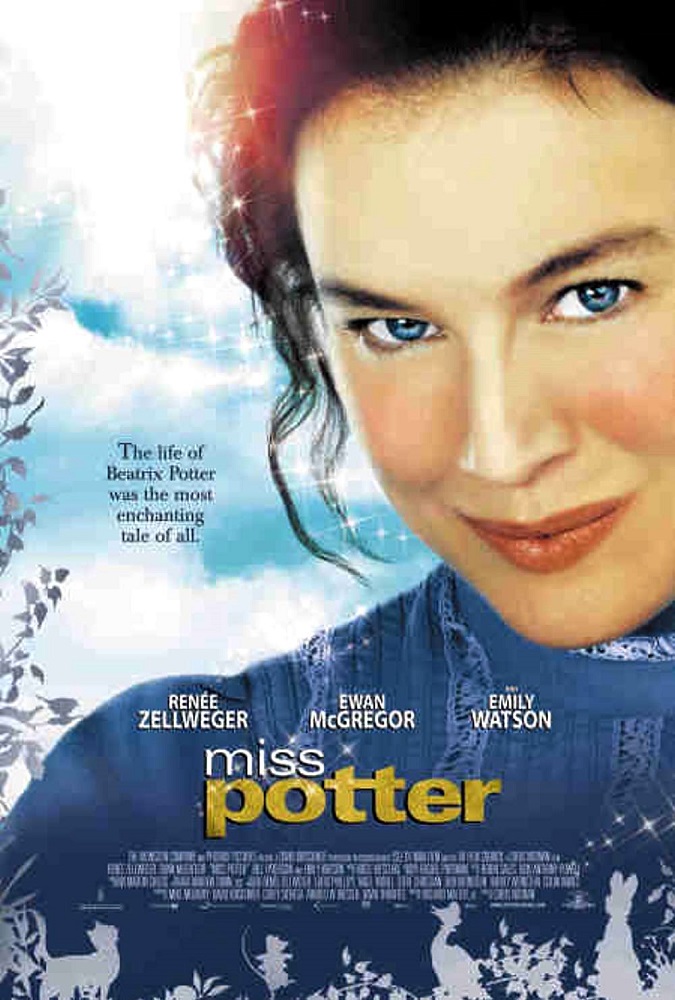
UK/USA. 2006.
Crew
Director – Chris Noonan, Screenplay – Richard E. Maltby, Jr., Producers – David Kirschner, Mike Medavoy, Arnold Messer, Corey Sienega & David Thwaites, Photography – Andrew Dunn, Music – Nigel Westlake, Additional Music – Rachel Portman, Visual Effects – Cinesite (Europe) Ltd (Supervisor – Simon Stanley-Clamp), Animation – Passion Pictures (Supervisor – Alyson Hamilton), Special Effects – Darkside Effects (Supervisor – Victoria Williams), Production Design – Martin Childs. Production Company – Phoenix Pictures/Isle of Man Film/The UK Arts Council.
Cast
Renee Zellweger (Beatrix Potter), Ewan McGregor (Norman Warne), Emily Watson (Amelia ‘Millie’ Warne), Barbara Flynn (Helen Potter), Bill Paterson (Rupert Potter), Matyelok Gibbs (Miss Wiggin), Lloyd Owen (William Heelis), Lucy Boynton (Beatrix Aged 10), Anton Lesser (Harold Warne), David Bamber (Fruing Warne), Patricia Kerrigan (Fiona)
Plot
London, 1902. Beatrix Potter is in her thirties and unmarried, something that is of upset to her conservative society parents. She is determined to publish a children’s book of talking animal stories that she has illustrated herself. After several rejections, Beatrix is accepted by Frederick Warne and Co who assign the publication of her book ‘The Tale of Peter Rabbit’ to Norman, the youngest member of the Warne family who wants to prove himself in the family business. Beatrix is delighted by Norman’s company, despite the disapproval of her mother who does not like her consorting with a common tradesman. Beatrix’s book is published to great success and Norman inveigles her to write further books. Norman then proposes to Beatrix at a Christmas Party and she accepts. However, this meets with the stern disapproval of her family.
Miss Potter is a biopic of children’s author and illustrator Beatrix Potter (1866-1943). As much of the film recounts, Beatrix Potter grew up in a well-to-do English family. As a child, she had few in the way of friends and instead began to befriend mice, rabbits and other small animals, smuggling them into the house, giving them names and drawing sketches of them. Such interest led to her wanting to enter the Royal Botanical Gardens as a student, only to be turned away on the grounds that she was a woman. Beatrix rejected many of the conventions of the day, including doing the near unthinkable of staying unmarried until the age of 47.
She published her first children’s book, The Tale of Peter Rabbit (1902), with publisher Frederick Warne and Company and then, as the bulk of the film tells, became engaged to one of the publishers Norman Warne. Beatrix published a total of twennty-three children’s books during her lifetime and these have sold millions of copies worldwide (the film’s end credits makes the claim that Beatrix Potter is the most successful children’s author of all time). During the latter years of her life, she brought up a substantial amount of property (fifteen farms comprising some 4000 acres) in England’s Lake District in order to preserve the area and placed this into a National Trust in her will.
Her works have only occasionally been adapted to film. To date there has been the cinematic ballet adaptation Tales of Beatrix Potter (1971), which featured dancers in animal costumes, the tv special The Tale of Little Pig Robinson (1990), the animated tv series The World of Peter Rabbit and Friends (1997) and the excruciatingly unfunny big screen adaptations Peter Rabbit (2018) and Peter Rabbit 2/Peter Rabbit 2: The Runaway (2021).
Miss Potter comes from Australian director Chris Noonan. Noonan had directed several Australian tv mini-series throughout the 1980s and made his big screen debut with Babe (1995). Babe‘s novelty was in telling what would otherwise be an animated talking animals film in live-action. Babe was a huge hit and was nominated for a Best Picture Academy Award with first-time director Noonan even receiving a nomination for Best Director. Subsequent to Babe, the great mystery has been what has happened to Chris Noonan. Babe showed that Noonan had an enormous degree of talent, the mystery was why he failed to capitalise on Babe in any way and why it took eleven years until Miss Potter for him to mount a follow-up project. He has nothing since Miss Potter bar directing a handful of tv episodes and appears to have vanished after 2013.
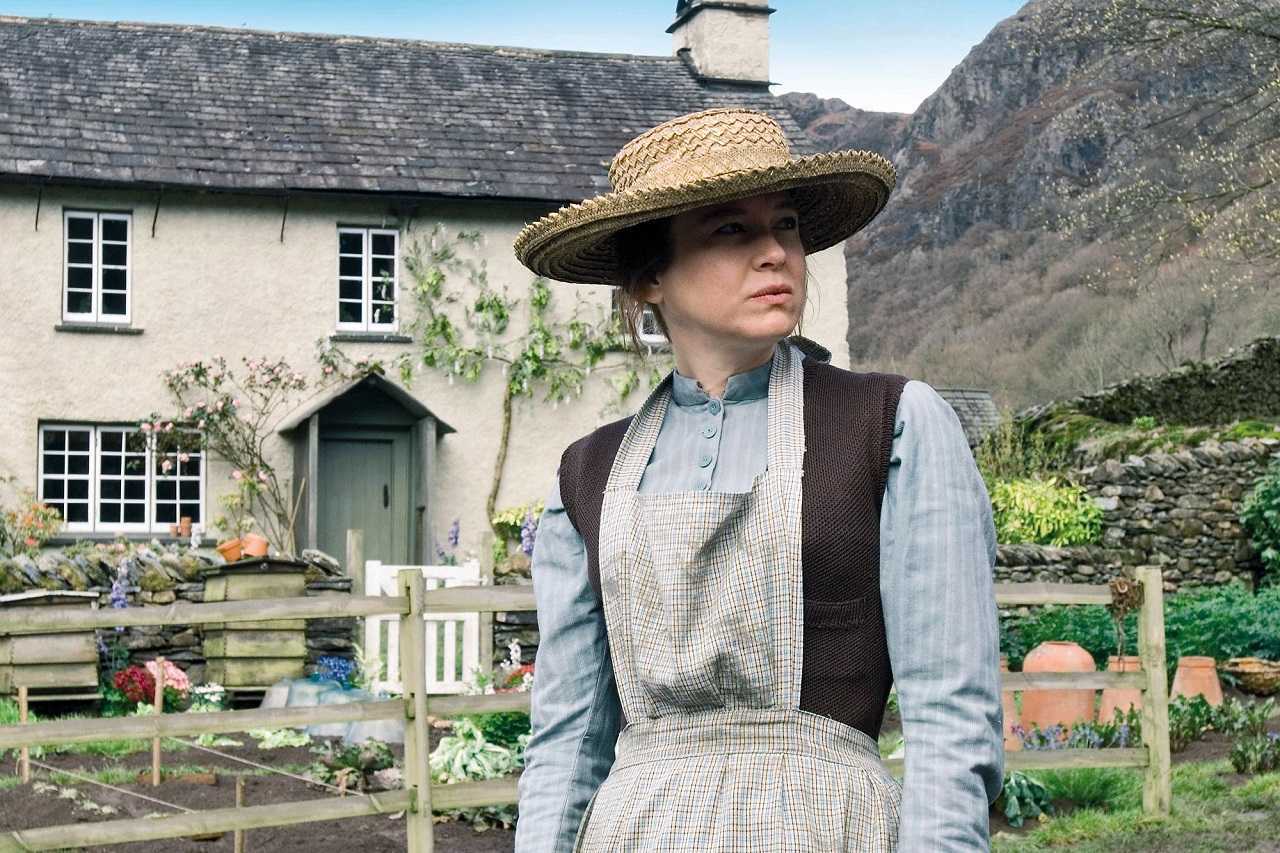
On the face of it, Babe and Miss Potter have a number of similarities – both could be said to deal in different ways with the lives of talking animals. In actuality though, Babe and Miss Potter are poles apart – Babe is a story not unakin to something that Beatrix Potter might tell in its depiction of the lives of barnyard animals (although is far less folksy and anthropomorphised than a Potter tale); Miss Potter is a British costume drama that is at most about the creator of a series of talking animal stories (although there are several scenes where the various animals come to animated life and Renee Zellweger is seen having conversations with them).
Miss Potter came advertised with the less-than-enthusiastic claim that it was “this year’s Finding Neverland [2004]”, which was a very similar true-life biopic about another turn of the 20th Century children’s writer – J.M. Barrie, the creator of Peter Pan (1904). There are many similarities between the two films – both attempt to get inside the author’s head and show the circumstances of their life and how it was reflected in their various creations. Both films also treat their subjects’ biographical details somewhat liberally. Miss Potter is certainly not as bad in this regard as the near totally fictional Finding Neverland was and is on the whole faithful to the general essence of Beatrix Potter’s biographical story.
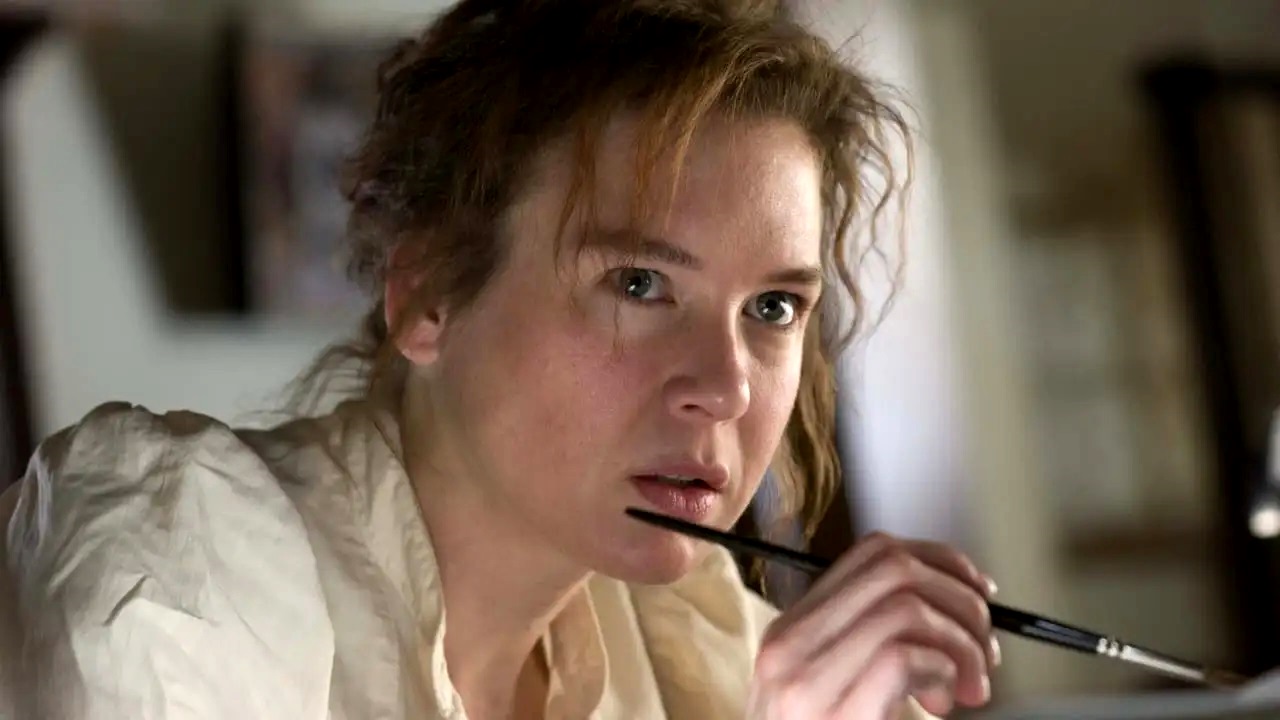
There are one or two quibbles such as fudging the origins of some of the stories and the order of their publication; the fact that Norman Warne originally proposed by letter not at a Christmas party and that he died of pernicious anaemia not of ‘a cough’ (which tends to suggest pneumonia); and that Renee Zellweger always remains around her natural age of 36 throughout the film, a period that in actuality covers Beatrix Potter’s life between the ages of 36 to around 50. The other odd thing is that while both Finding Neverland and Miss Potter are films that concern the lives of children’s authors, neither film is pitched to children’s audiences but rather to the much older crowd for British costume dramas – the average age of the audience I sat watching Miss Potter with was over sixty.
Renee Zellweger takes up the title role. In recent years, Zellweger has been attempting to do the Serious Actress thing and take on parts that play more and more to the Academy Awards crowd – Chicago (2002), White Oleander (2002), Cold Mountain (2003) and Cinderella Man (2005). Here she even takes an executive producer role on the film. Alas, apart from a nomination for Zellweger at the Golden Globes, Miss Potter failed to accrue any awards attention. Miss Potter also shows Zellweger engaging in another attempt to fake a British accent following Bridget Jones’ Diary (2001) and Bridget Jones: The Edge of Reason (2004).
Seeing non-British actresses faking a British accent for the sake of box-office drawcard when there are plenty of British actresses that could have done the job is something that leaves one gritting their teeth. Indeed, one suspects that Emily Watson, who made a truly amazing screen debut in Breaking the Waves (1996) and turns up in the supporting cast, would have been a more authentic casting choice as Beatrix Potter than Zellweger. Of course, the crucial difference is that Emily Watson doesn’t have the A-list profile that Renee Zellweger does. Certainly, Zellweger does okay in the role, although the part is nothing standout. The makeup department have gone overboard in trying to give her an English rose complexion to the extent that her cheeks look like ripe tomatoes.
There is the sense that Miss Potter is trying very hard to be a British period drama. It is all put together with modestly lavish regard – the Lake District is photographed with an almost hyper-real beauty, the set dressings are prettily arranged – but the emotions engendered fall by the numbers. As a story, the film seems to lack any true drama, merely the tried and true theme of the person in a conservative upper-class environment standing up against staid tradition.
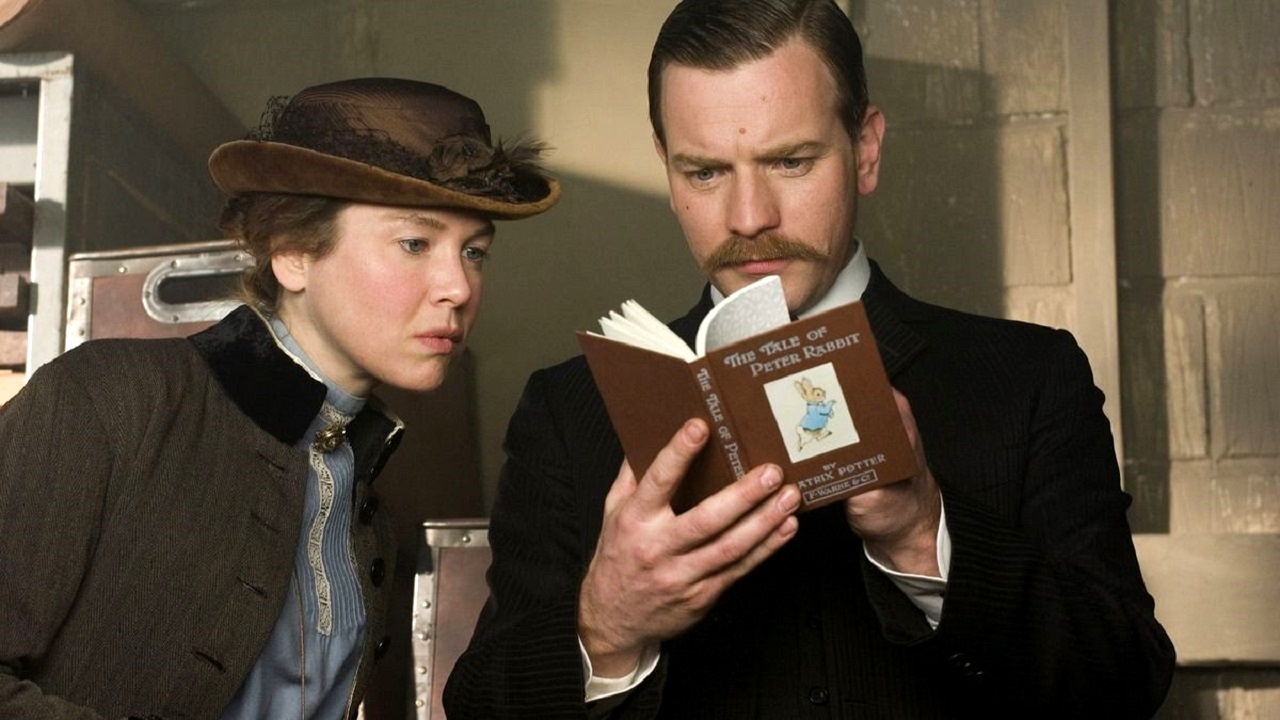
Everything happens with a predictability. The film moves through the various familiar character types of the genre – the free-spirited and self-willed Beatrix, the tradition-bound mother played by Barbara Flynn, the burgeoning romance from Ewan McGregor in a handlebar moustache – but the people never seem to truly come to life outside of their generic characters. You sort of feel that you should have been moved by the story and been tragically saddened by death of characters, but all that you go away with feeling that Miss Potter was a ‘nice’ film.
Chris Noonan also conducts the unusual narrative device of having some of Beatrix Potter’s creations coming to animated life and she having conversations with them. While one supposes that it is a literalisation of Beatrix’s friendship with the creatures as a child, it is a device that seems a little puzzling, especially when placed into the realist surroundings of the British costume drama. In the end, one is not sure what purpose any of it serves other than simply being a cute effect.
Trailer here