

Japan/USA. 1989.
Crew
Director/Screenplay – Jim Jarmusch, Producer – Jim Stark, Photography – Robby Muller, Music – John Lurie, Production Design – Dan Bishop. Production Company – MTI/JVC Entertainment Networks.
Cast
Screamin’ Jay Hawkins (Night Clerk), Cinque Lee (Bellboy). Far from Yokohama:– Youki Kudoh (Mitzuko), Masatoshi Nagase (Jun). A Ghost:– Nicoletta Braschi (Luisa), Elizabeth Bracco (Dee Dee), Tom Noonan (Conman), Sy Richardson (Newsvendor). Lost in Space:– Joe Strummer (Johnny), Rick Rusler (Will Robinson), Steve Buscemi (Charlie)
Plot
The stories of three different groups of people come to stay at a second-rate Memphis hotel on the same night. Far from Yokohama:– Two Japanese teenagers, Jun and Mitzuko, stop by for the night on their way to Graceland, where they debate the superiority of Elvis over Carl Perkins. A Ghost:– The Italian woman Luisa has been recently widowed. After making arrangements to have her husband’s body transported back to Italy, she wanders the city. In a cafe, she encounters a con artist who tells her a story of encountering Elvis’s ghost while hitchhiking and that Elvis told him in one year he would meet an Italian woman who would give him money. Luisa signs into the hotel, agreeing to share a room with Dee Dee who has just split with her boyfriend Johnny. As they settle down for the night, Luisa sees the ghost of Elvis in her room. Lost in Space:– Johnny, Dee Dee’s boyfriend, an unemployed English construction worker, is out drinking with two friends. Drunk, Johnny pulls a gun and tries to rob a liquor store for two bottles of whiskey but ends up shooting the store clerk. The three of them are quickly given a room at the hotel by a relative of one of the others who works as the night clerk. There they hide, drink more and try to decide what to do.
Today, Jim Jarmusch is one of the foremost independent American filmmakers. Indeed, the birth of the modern independent cinema movement has been placed with Jim Jarmusch’s second film Stranger Than Paradise (1982) according to those in the know. Jarmusch’s films do not fit the easy pigeonhole niches that studio marketers like to slot everything into – they are not films that you can sum up in a single sentence. In fact, Jarmusch seems largely unconcerned with plot and his films are preoccupied with charting everyday eccentricities and banalities, while his characters are not heroes but life’s nobodies and misfits who mostly stumble into happenings.
Jarmusch also made Down By Law (1986) then achieved some success with Night on Earth (1992) immediately subsequent to Mystery Train, which used the same anthology format. He followed this with the widely acclaimed Dead Man (1995) and other works such as Ghost Dog: The Way of the Samurai (1999), another anthology film Coffee and Cigarettes (2003), Broken Flowers (2005), the strangely surrealist The Limits of Control (2009), the vampire film Only Lovers Left Alive (2013), Paterson (2016) and the zombie film The Dead Don’t Die (2019).
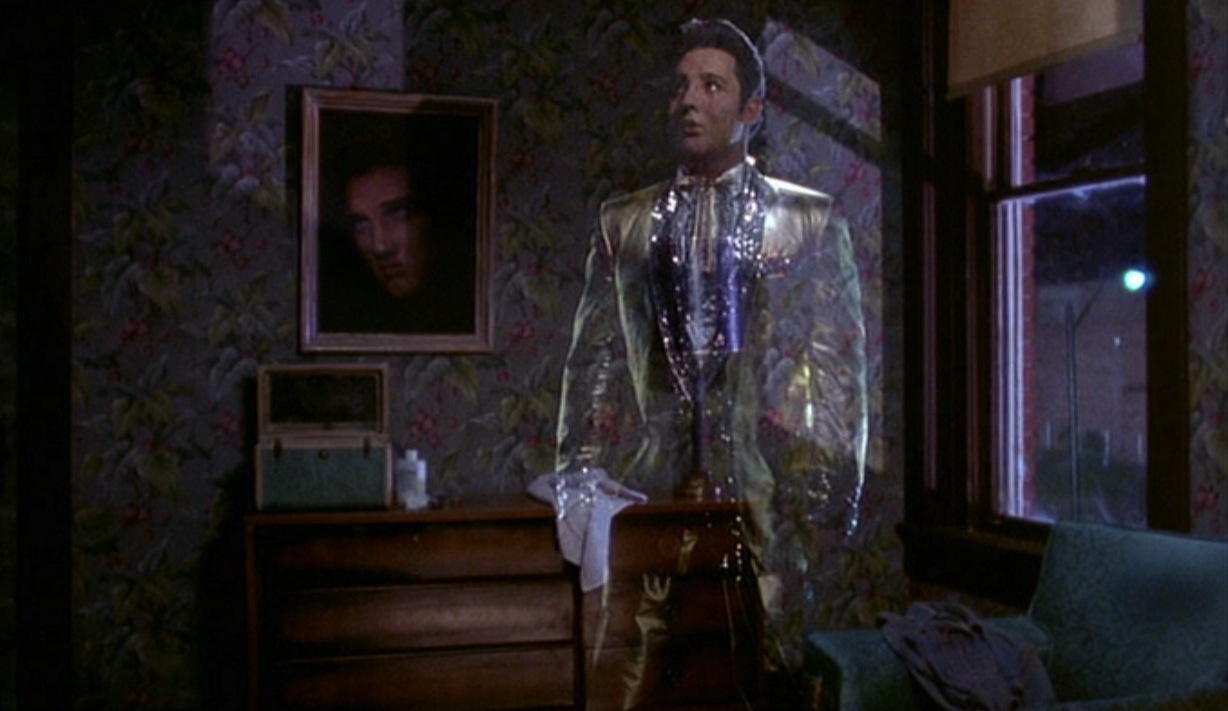
There is a dry, ironic wit that runs through Jim Jarmusch’s works. One of the many appealing things that plays away in Mystery Train is a witty send-up of the tabloid myths of Elvis sightings – a scrapbook montage in the first segment correlates the likeness of Elvis’s face with the Statue of Liberty, Madonna and ancient gods, while the second segment features an extremely funny con-artist’s spiel by Tom Noonan about encountering the hitch-hiking ghost of Elvis, which later appears to come true for Nicoletta Braschi who has a vision of Elvis in the hotel room in the middle of the night.
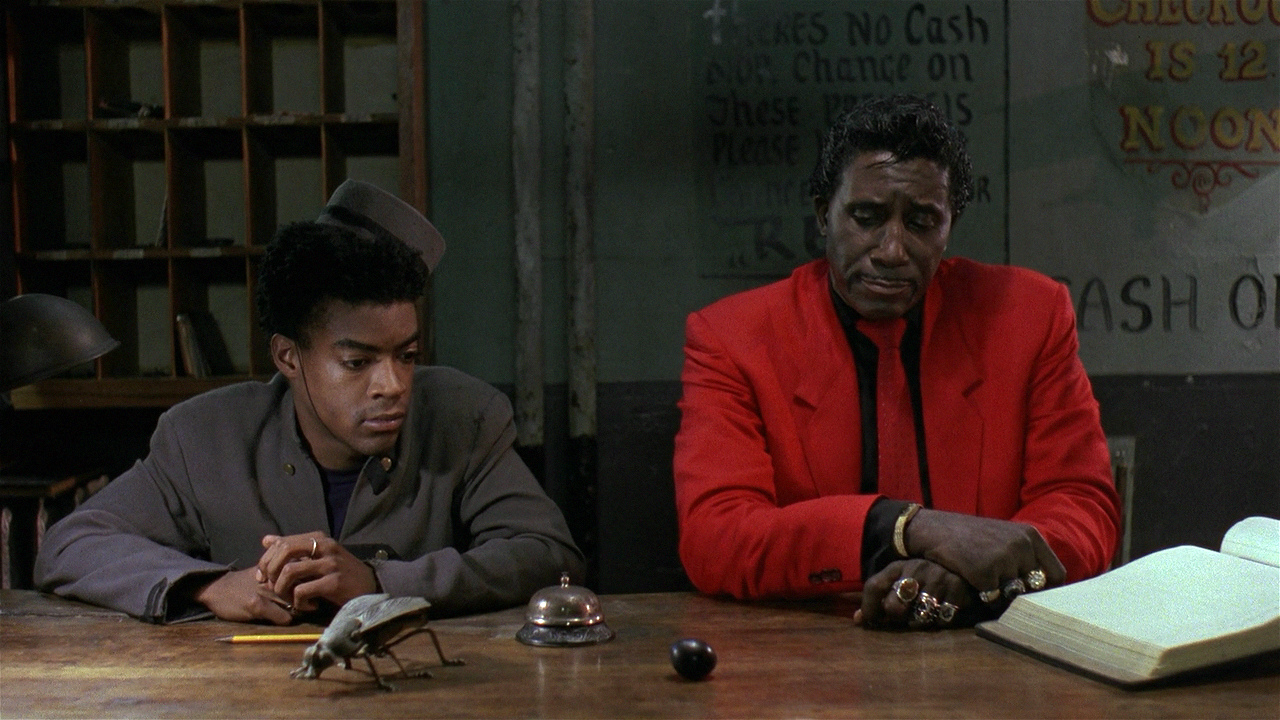
Jarmusch also throws in a series of playfully amusing synchronicities, how irrelevant minutiae of the three stories intertwine without the characters ever meeting – everybody tuning into the same song on the radio at 2:17 am; all hearing the gunshot or the sounds of the love makers from the first segment; the overlapping exchanges between the night porters; and the final parting coda where all three parties leave town together aboard the presumably titular train, which departs as the end credits play on a reverse of the same shot of the train arriving that we had at the start in the film.
Of the three segments, the third story Lost in Space is the best with its electrifyingly bared characterisations. There is some superb acting in the episode, particularly from Joe Strummer, former lead singer of iconic punk group The Clash. The drama of the situation and the bumbling drunkenness has a raw nakedness, although equally the episode does not escape Jarmusch’s light-hearted hand either.
The first segment Far from Yokohama is the wittiest. Jarmusch plays it with a nonchalantly laidback sense of absurdity – the couple fooling around with lipstick kisses or ones that passes smoke between their mouths, or the charmingly ditso Youki Kudoh’s stream-of-consciousness associations between the photos.
The second story A Ghost, the sole genre entry, is the most lightweight, lacking cohesion as a full story. It contains some charming vignettes – like the news vender who persuades Nicoletta Braschi to buy a dozen magazines and especially Tom Noonan’s cameo – but the episode lacks overall.
Trailer here