

Crew
Director – Tom Tykwer, Screenplay – Andrew Birkin, Bernd Eichinger & Tom Tykwer, Based on the Novel Das Perfume by Patrick Süsskind, Producer – Bernd Eichinger, Photography – Frank Griebe, Music – Reinhold Heil, Johnny Klimek & Tom Tykwer, Visual Effects – RUPP (Supervisor – Viktor Muller) & UPP Prague (Supervisor – Dennis Lowe), Special Effects – Die Nefzers GmBh (Supervisor – Uli Nefzers), Makeup Effects – DDT Effectos Especiales, Production Design – Uli Hanisch. Production Company – Constantin Film/VIP 4 Medienfonds/Nouvelle Editions de Films/Castelao Producciones/Rising Star.
Cast
Ben Whishaw (Jean-Baptiste Grenouille), Dustin Hoffman (Giuseppe Baldini), Alan Rickman (Richis), Rachel Hurd-Wood (Laura Richis), John Hurt (Narrator), Karoline Herfurth (The Plum Girl), Patrick Lefeuvre (Grenouille 12 Years), Sam Douglas (Grimal), Corinna Harfouch (Madame Arnulfi), Paul Berrondo (Dominic Druot), David Calder (Bishop of Grasse), Joanne Griffiths (Marianne), Birgit Minichmayr (Grenouille’s Mother), Sara Forestier (Jeanne), Harris Gordon (Marquis de Montesquieu), Sian Thomas (Madame Gaillard)
Plot
1766, Jean-Baptiste Grenouille is taken to be executed as a multiple murderer in the town of Grasse. Grenouille was born in the Paris fishmarkets in 1738 and became an orphan after his mother was hung for trying to kill him immediately after he was born. As he grew up, Grenouille stood out from other children because of his hyper-acute sense of smell. He was sold into servitude in a tannery. One day he was drawn away from his assignment by the richness of the smells on the streets. He followed a girl, intoxicated by her aroma, and grabbed her, unwittingly suffocating her when she cried out. He was heartbroken at not being able to preserve her smell. While making a delivery to the Italian perfumer Giuseppe Baldini, Grenouille amazed Baldini by being able to perfectly analyse and recreate a rival’s popular perfume. Baldini purchased Grenouille and took him on as an apprentice. Grenouille made Baldini promise to show him the art of preserving smells but he soon became disappointed, finding that Baldini’s methods of distilling were unable to provide what he wanted. Baldini gave Grenouille papers to travel to Grasse in Provence to study the art of enfleurage. Once there however, Grenouille began killing women in secret and trying to use animal fat to extract their aromatic essence in order to create the perfect perfume.
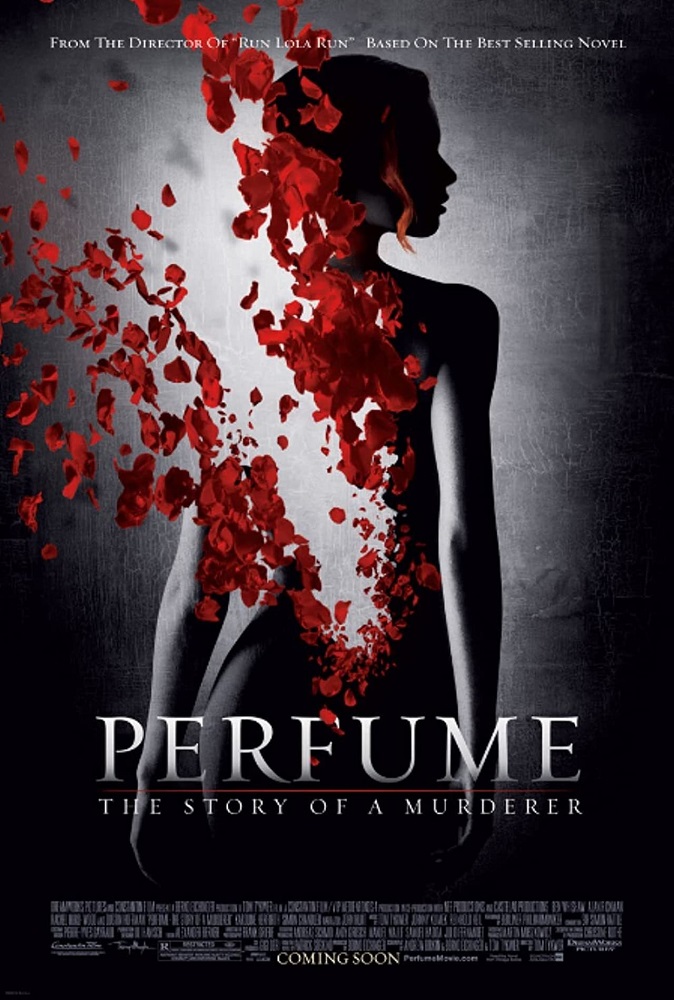
Perfume: The Story of a Murder is an adaptation of Das Perfume (1985), a novel from German author Patrick Süsskind, which received much acclaim in international publication. Though almost exclusively acclaimed by the literary mainstream, Perfume: The Story of a Murder is a genre work. The central character’s heightened olfactory senses are probably a condition that exist somewhere out there in the world, although the novelty of such ability is something that Patrick Süsskind presents in a way that could be considered science-fictional. Equally, the protagonist’s actions and obsessions place Perfume into the serial killer genre, while the ending pushes the elements over into the unquestionably fantastique.
There was interest in a film adaptation of Das Perfume over the years but Patrick Süsskind claimedly turned down several Hollywood offers. Stanley Kubrick was purported to have once given up on the idea of making a film out of Das Perfume because he considered it an unfilmable book and supposedly everyone from Tim Burton, Milos Forman and Martin Scorsese expressed interest at various points.
The film adaptation finally emerges here under the hands of acclaimed German director Tom Tykwer. Tom Tykwer is the current wunderkind of contemporary German cinema ever since the cult success of the alternate timelines film Run Lola Run (1998). Since then, Tykwer went onto the likes of The Princess and the Warrior (2000) and Heaven (2002), which enjoyed much success in international arthouse theatres, as well as the African tribal drama Soul Man (2010) about a boy whose soul is sold by his father, and A Hologram for the King (2016), which sounds like it should be a science-fiction film but isn’t, as well as collaborated with The Wachowskis on the cross-historical science-fiction film Cloud Atlas (2012) and the tv series Sense8 (2015-8), and created, produced and directed episodes of the hit tv series Babylon Berlin (2017- ).
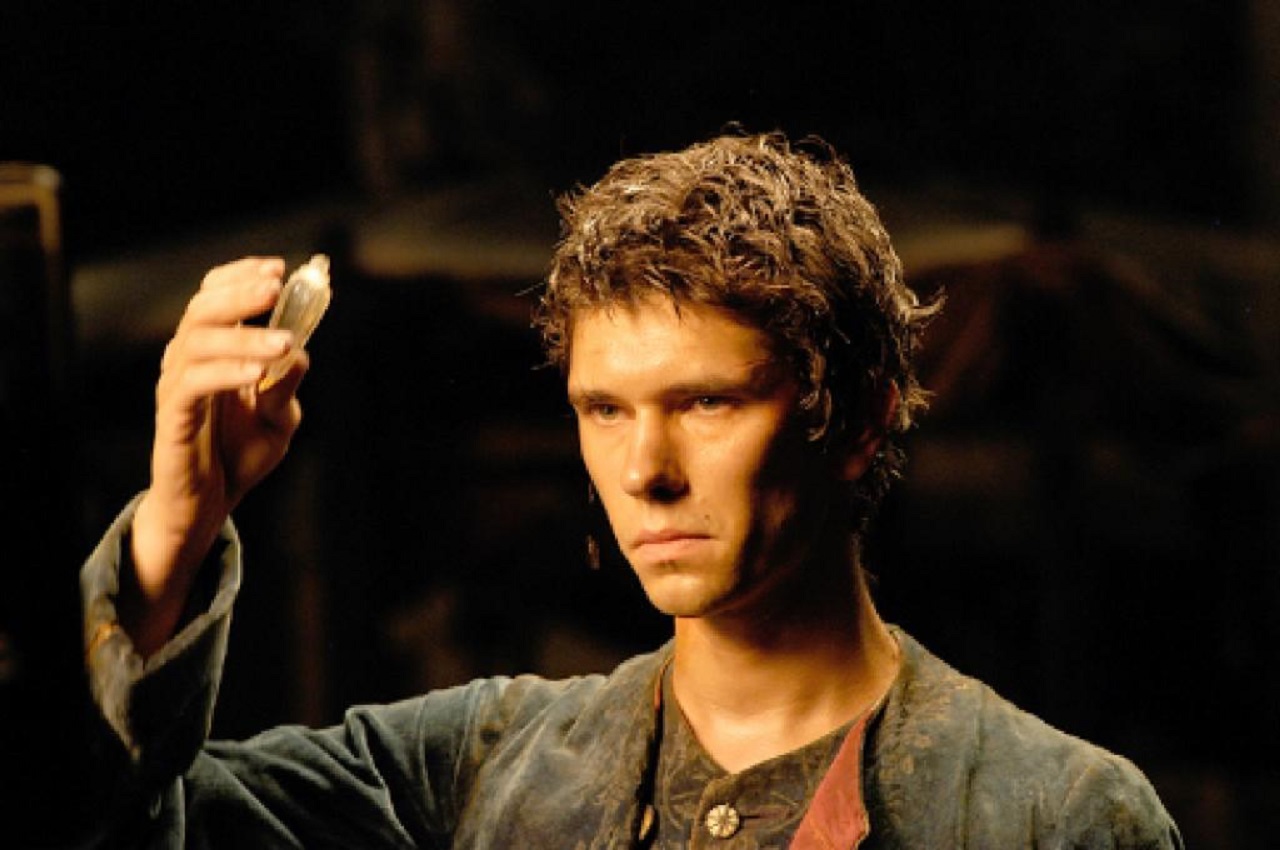
One suspects a good part of the problem that other filmmakers faced in adapting Perfume might have been the idea of how to go about conveying the central character’s heightened olfactory powers. Presumably, the idea of creating a variation on the ‘Smellovision’ gimmick that we saw in films like The Scent of Mystery (1960) or John Waters’ Polyester (1981) was considered too tacky. Tom Tykwer tells in interviews how various other options of depicting Grenouille’s sense of smell, such as showing a coloured mist in the air or following animated molecules as they touch his nose, were discarded and that he instead chose to replicate what Patrick Süsskind did in the novel by visually enwrapping the reader/viewer in the sensuality of Grenouille’s experiences.
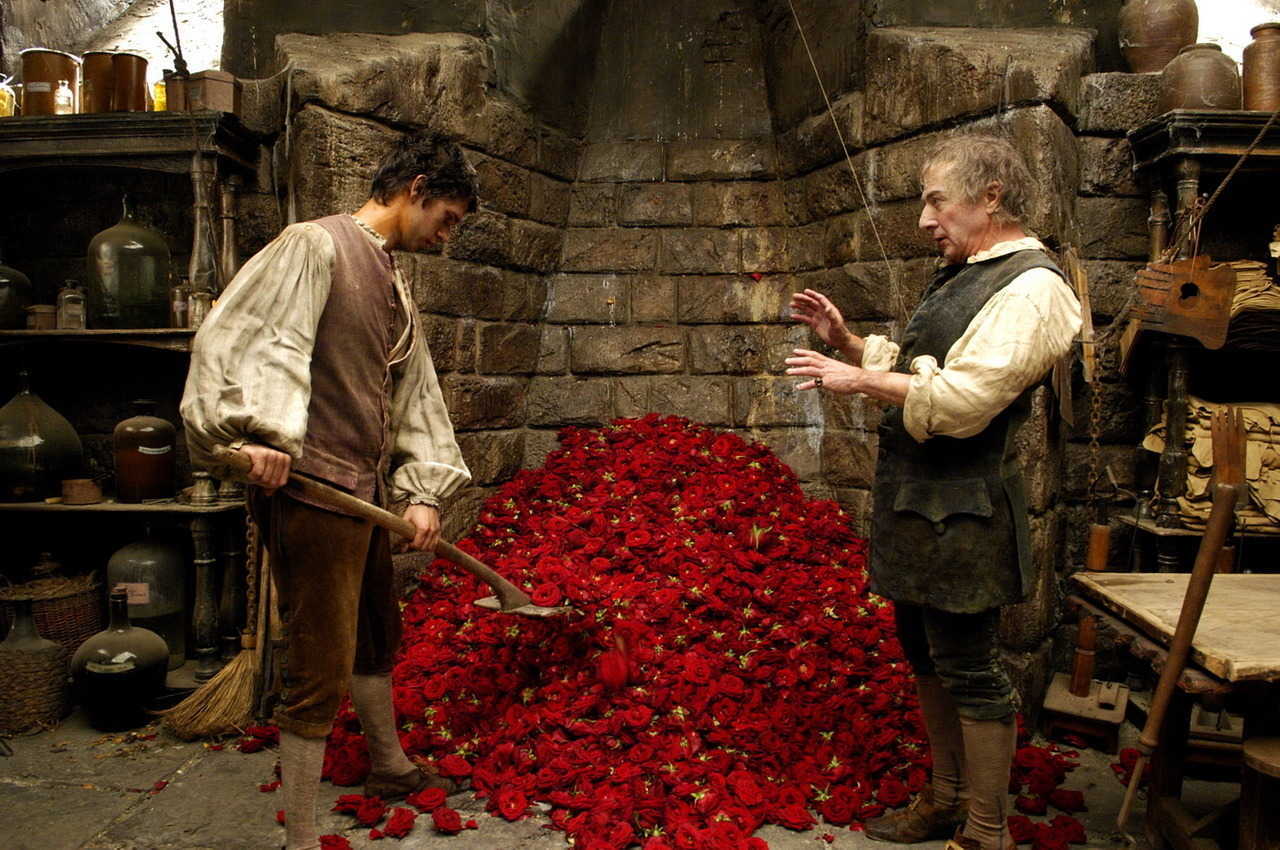
To this extent, Perfume: The Story of a Murder is a marvel of production design and art direction – the density of texture and detail that is placed into the background of the film becomes almost hyper-real. Tykwer delights in the rapture of colours and texture – be it fields and hillsides covered in purple, the resplendently visual array of Baldini’s perfumery, of Ben Whishaw shovelling heaped mountains of red roses. When it comes to the marketplace of Grenouille’s birth, Tykwer allows the ichor and filth to swim in an amazing montage of shots that almost places you there sensually. The scene following Ben Whishaw as he escapes into the marketplace for the first time and follows his nose, taking in the richness of the aromas he comes across – with Tom Tykwer’s camera wandering away to exquisitely photographed vignettes of each impression – comes with such a sense of texture, beauty and colour that we feel Grenouille’s intoxicating impression of sensory overload.
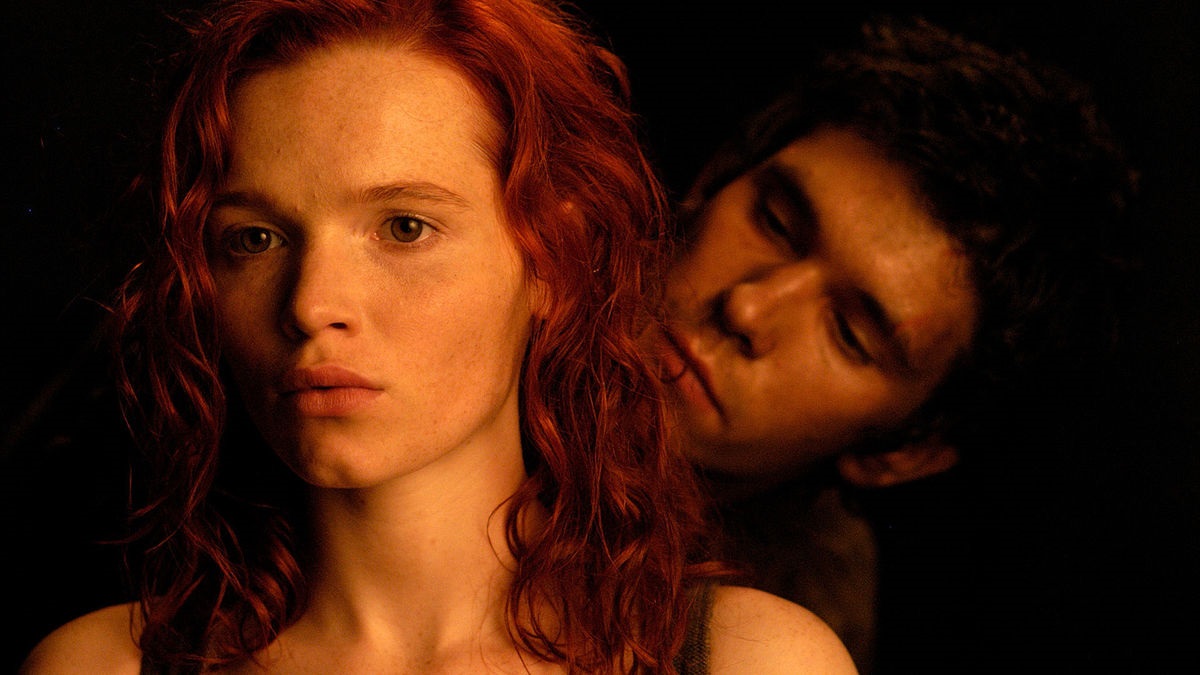
Perfume: The Story of a Murder is an amazing film. Tom Tykwer drives it with a darkly hypnotic power. One of the most unique and amazing scenes in the film is when Ben Whishaw follows Karoline Herfurth through the marketplace, sniffing her aroma before he unwittingly suffocates her and then strips her body and lingers, vainly trying to capture her aroma. It is a scene where Tom Tykwer absorbs us inside the ecstatic rapture of an act that in any other film would become a scene of revulsion and horror.
In any other story, you could easily imagine Grenouille as being a Thomas Harris villain – he has the superhuman and hyper-realized aesthetics of a Hannibal Lecter and the way that Tom Tykwer and Patrick Süsskind place us inside the character’s obsession is not unlike the way that Harris details the psychopathological minutiae of the mental states of characters like Francis Dollarhyde in Red Dragon (1981) and Jame Gumb in The Silence of the Lambs (1988). However, Perfume: The Story of a Murder is like a Thomas Harris work where Dollarhyde or Gumb are the heroes of the story and where the director has absorbed us so much in the lushness of the visuals and the details of psychological obsession that we come to regard these characters sympathetically.
Perfume: The Story of a Murder comes to a remarkable ending. [PLOT SPOILERS]. Here Grenouille goes to the executioner’s block. As he stands to greet the crowd, he uncorks the bottle of perfume that he has distilled from the murdered girls. The resulting scent has such a euphoric effect that people fall in wonderment, proclaiming Grenouille’s innocence. In an extraordinary piece of cinema, Tom Tykwer then choreographs an amazing scene where some 500+ extras in the central square of Grasse strip naked and collapse into an orgiastic sea of bodies, whilst Grenouille walks free. For an initial moment, the scenes teeters on the verge of risibility but Tom Tykwer then finds his feet and crafts it into something that is purely cinematic.
The film then goes out on a genuinely horrible coda where a despairing Grenouille returns to the fish markets of Paris where he was born, pours the perfected perfume over himself and is greeted by the wretches of the marketplace as an angel where they proceed to tear his body to pieces, thinking that they are consuming something made of pure love. It is one of the most extraordinary endings of a film that one has seen in some time.
Ben Whishaw gives an interestingly blank performance, covered in odd birthmarks that are never given any particular explanation. Whishaw’s blankness is exactly right for the role. He is like a young Christian Bale – the two actors both have an almost identical brooding quality and you could easily imagine the two being cast as brothers in a film. With the character’s dialogue stripped to a minimum, Grenouille is a role that Whishaw conveys almost entirely by his eyes and physical presence.
Among the name cast, Dustin Hoffman gives a theatrical performance, while Rachel Hurd Wood – only a couple of years ago the preadolescent Wendy in Peter Pan (2003) – makes little distinction. The actress that does is oddly one that appears more as a corpse than she does in a speaking role – Karoline Herfurth who presents a haunting beauty and innocence as the character who is only ever called The Plum Girl.
(Winner in this site’s Top 10 Films of 2006 list. Winner for Best Cinematography, Nominee for Best Director (Tom Tykwer), Best Adapted Screenplay, Best Supporting Actress (Karoline Herfurth), Best Music and Best Production Design at this site’s Best of 2006 Awards).