
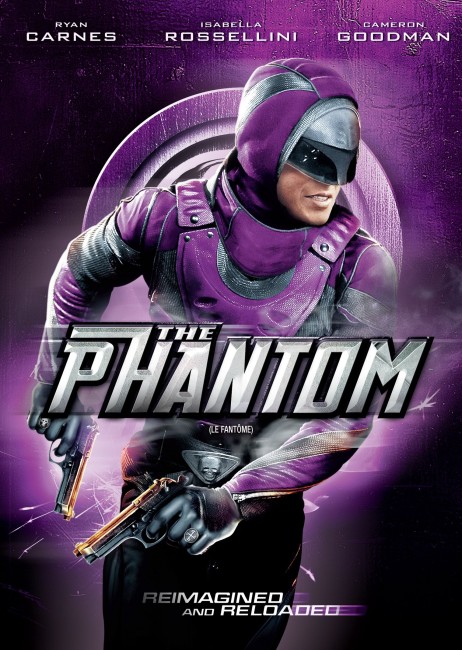
USA. 2009.
Crew
Director – Paolo Barzman, Teleplay – Charles Knauf & Daniel Knauf, Based on the Comic Book Created by Lee Falk, Producer – Irene Litinsky, Photography – Pierre Jodoin, Music – Michel Corriveau, Visual Effects – Lumiere VFX (Supervisor – Etienne Daigle), Special Effects – Les Productions de l’Intrigue (Supervisor – Louis Craig), Makeup Effects – C.J. Goldman, Production Design – Zoe Sakellaropoulo. Production Company – Muse Entertainment/Movie Central.
Cast
Ryan Carnes (Kit Walker/Chris Moore), Jean Marchand (Abel Vandermaark), Sandrine Holt (Guran), Cameron Goodman (Renny Davidson), Cas Anvar (Raatib Jawad Singh), Isabella Rossellini (Dr Belladonna Lithia), Ron Lea (Detective-Sergeant Sean Davidson), Ivan Smith (Dr Deepak Baboor), Victor Andres Turgeon-Trelles (Jordi Acovado), Luis Oliva (Dr Jason Kim), Anthony Lemke (Detective Clark Ellis)
Plot
Chris Moore is a law student in present-day New York City. During a live-streamed parkour stunt in which a friend is injured, he meets old school friend Renny Davidson who is working as a paramedic and the two start going out. Chris is then abducted by Abel Vandermaark who informs Chris that he is an orphan and his real name is Kit Walker. Vandermaark tells Chris that he is heir to the role of The Phantom, a masked figure who has fought crime and evil for hundreds of years, with each successor being named Kit Walker and handing the costume on to their son. Chris thinks this crazy and walks away but returns home to find that the Singh Brotherhood, originally an organisation of pirates who have now become a powerful corporation, have sent assassins who have killed his step-parents. Escaping from their attempt to kill him, Chris returns to Vandermaark. He is taken to Bengalla Island in the South Pacific where the organisation Bpaa-Thap keeps The Phantom identity alive. Chris is introduced to the skull-shaped cave that is The Phantom’s home. He is placed into training and given a new Kevlar armoured version of The Phantom’s costume. Meanwhile, The Singh Brotherhood employ Dr Bella Lithia to perfect a form of mind control that uses cable tv sets to turn ordinary people into programmed killers. When he learns that the Singh Brotherhood are targeting Renny and her father because of him, Kit abandons his training as The Phantom to return to New York City and save them.
The Phantom is one of the most popular syndicated newspaper comic-strips of all time. It was the creation of Lee Falk, a 23 year-old advertising copywriter from St Louis, Missouri. In 1934, Falk had created the character of Mandrake the Magician for King Features Syndicate, which also became a popular and long-running success in newspapers. King Features pressed Falk to come up with another creation and The Phantom was born. The Phantom comic-strip premiered in syndication in 1936 and still runs to this day. With The Phantom, Lee Falk in fact created the first superhero (or at least non-superpowered masked hero a la Zorro, The Long Ranger and Batman) comic-strip, predating Superman. Falk wrote every episode of the daily strip from 1936 until his death in 1999.
The Phantom has been intermittently incarnated in the media. There was a fifteen chapter Columbia serial The Phantom (1943) starring Tom Tyler, which was faithful to the original comic-strip. The character was incarnated into two animated series, Defenders of the Earth (1986-7) where The Phantom joined several other King Features heroes – Mandrake the Magician, Flash Gordon and their various siblings – in battling Ming the Merciless, and Phantom 2040 (1994-6), which concerns the activities of the Phantom’s son in a futuristic setting. The first major film adaptation in the modern era was The Phantom (1996) starring Billy Zane in the title role, which gave The Phantom a reasonably faithful cinematic airing but fared poorly at the box-office.
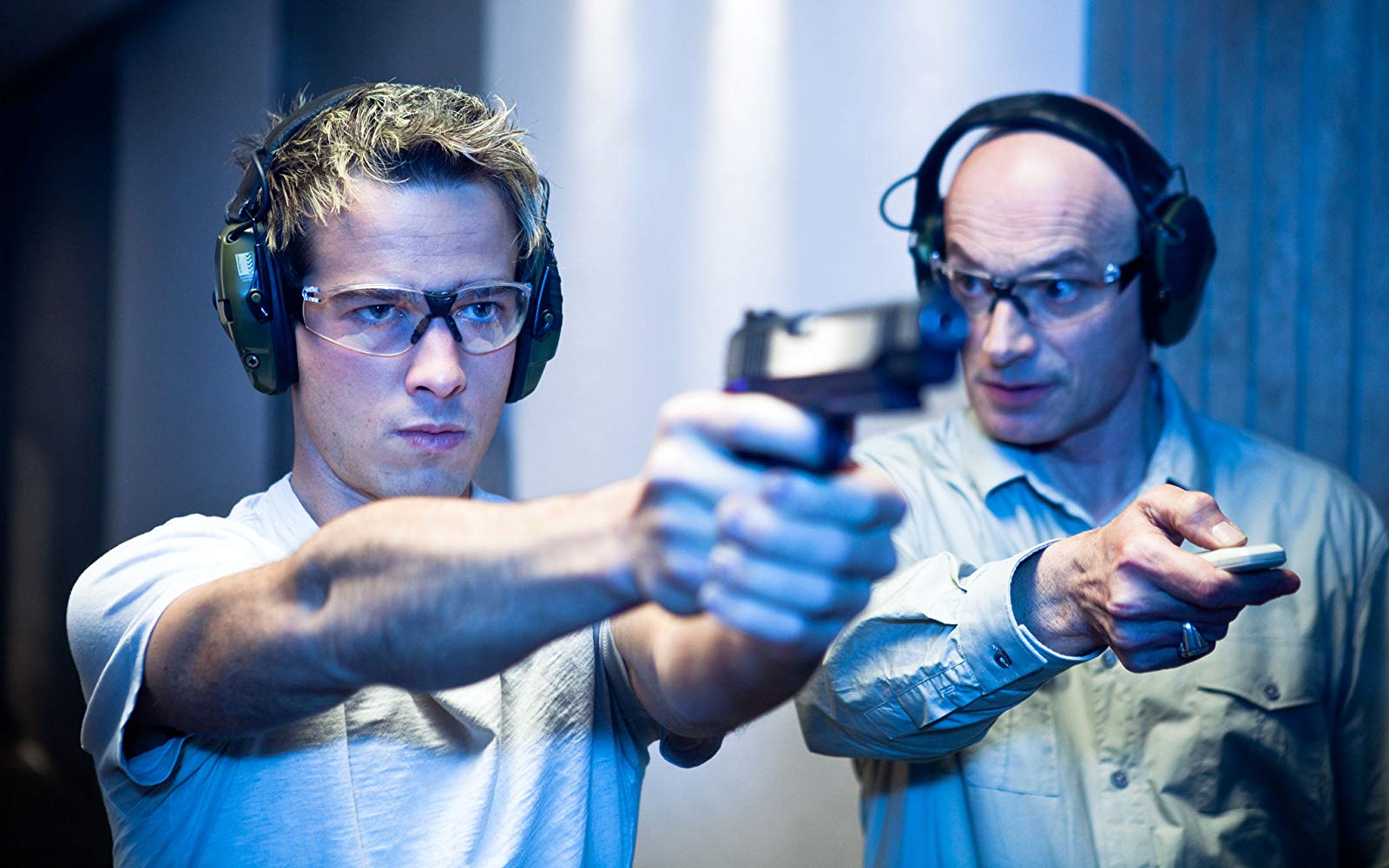
This TV Mini-Series was an attempt to revive The Phantom for 00s audience in a Syfy Channel mini-series produced by Canada’s Muse Entertainment, where you can clearly see that they were attempting to spin it off as a tv series. Alas, nothing has so far emerged. It may be that the producers were working with a property that failed to easily adapt to the modern-day – the original comic-book is founded in old-fashioned jingoistic notions of African tribes and their secretive rites, The Phantom riding on a horse and wielding handguns from a hip holster like a cowboy, a 1930s vision of villains that include crime syndicates and pirates, and a world that seems to exist before mass technology and communications. The 1996 film, for instance, had to backdate the setting to the 1930s to make it work. The writers have bravely tried to imagine The Phantom for the modern world and the results prove bizarrely awkward.
As the mini-series opens with Ryan Carnes’ hero engaged in internet-broadcast parkour stunts, it feels that we have something that exists a long way away from Lee Falk’s comic-book. The Phantom’s nemesis of The Singh Brotherhood has gone from an organisation of pirates to a generic evil corporation. Partway through the first half, Ryan Carnes learns he is a Kit Walker and is introduced to the legacy of The Phantom, which parallels what was introduced in the comic-book. We get to visit Bengalla Island at the end of the first half and venture inside a very wimpy looking Skull Cave.
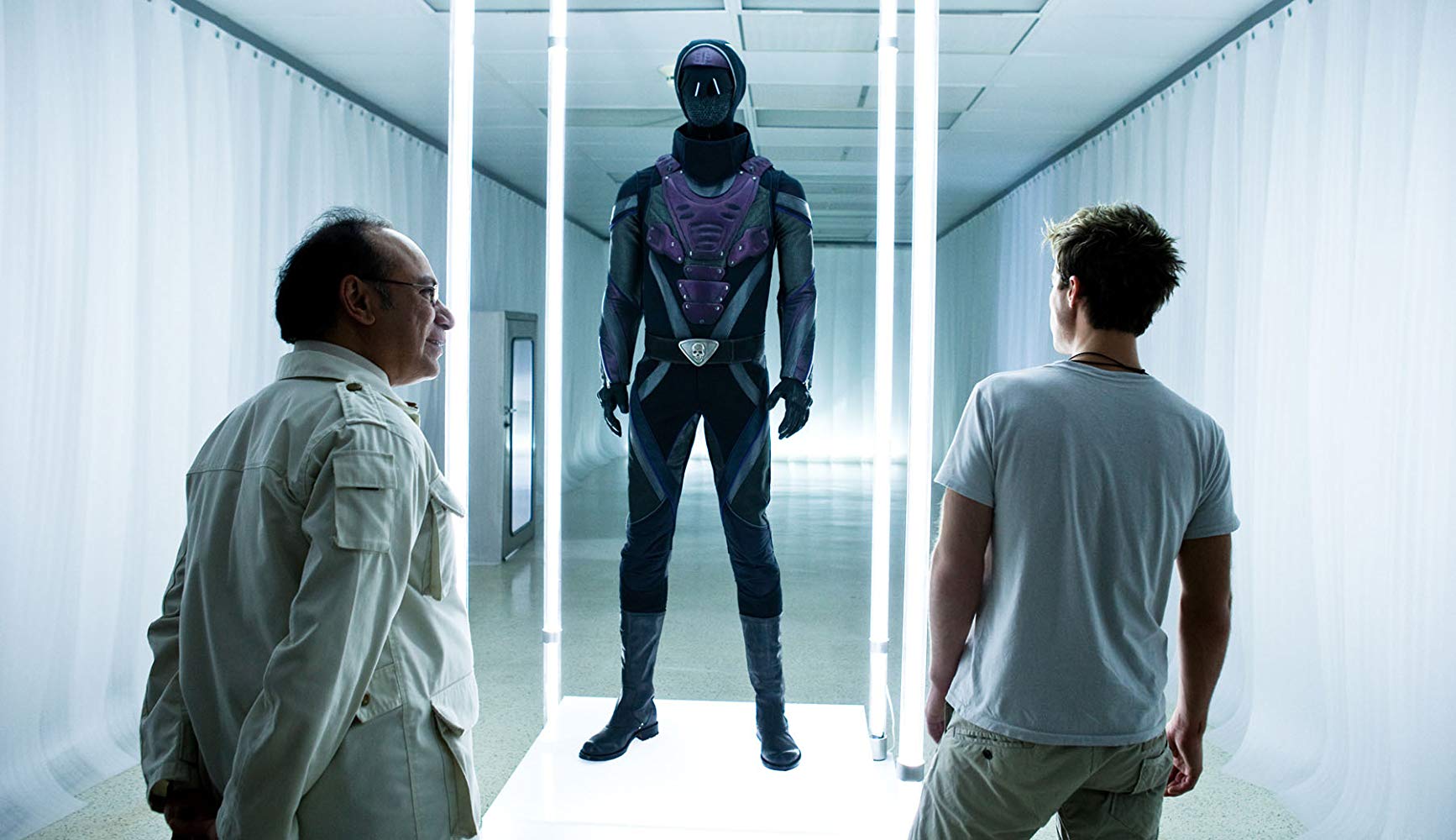
There we briefly get to see The Phantom’s traditional costume, although this is quickly abandoned for a heavily armoured and visored bodysuit that makes him look more like a cross between a ninja and a SWAT officer. He is given his skull ring and two sidearms but the writers have to conduct some complicated explanation about them being modified in order to make these work alongside modern semi-automatic weapons. There is an equivalent of The Phantom’s companion Guran, although this is played by a woman (Sandrine Holt) rather than a man as is traditional.
Perhaps the most contentious change is the introduction of the organisation Bpaa-Thap who serve as the equivalent of the comic-book’s Jungle Patrol. Here it feels as though the mini-series is attempting to be the equivalent of tv’s 24 (2001-10), having the hero go into action with the aid of a tech support crew feeding him information from behind the scenes. Though based on an unknown jungle island, the Bpaa-Thap group somehow have unlimited funding, access to private planes and technology far in advance of most regular law enforcement agencies.
I was prepared to buy this, even though it strained plausibility. However, what the mini-series then absurdly asks us to believe is that all of this organisation is at the service of a single man – moreover, someone who has not even been aware of his identity for twenty years. Rather than train an army to fight crime, as you might expect the logical thing to be, they seem fixated on the idea of grooming one young guy to inherit a hereditary role only for him to reject the idea at first and then decide to do things his own way.
I wanted to hope that the writers Charles and Daniel Knauf, who also created the fine genre tv series Carnivale (2003-5), might pull something worthwhile out of this. Instead, what the producers have mandated seems to be a version of The Phantom that has been reworked for audiences who come fresh from the success of the dark, grim reality-based world of the previous year’s The Dark Knight (2008).
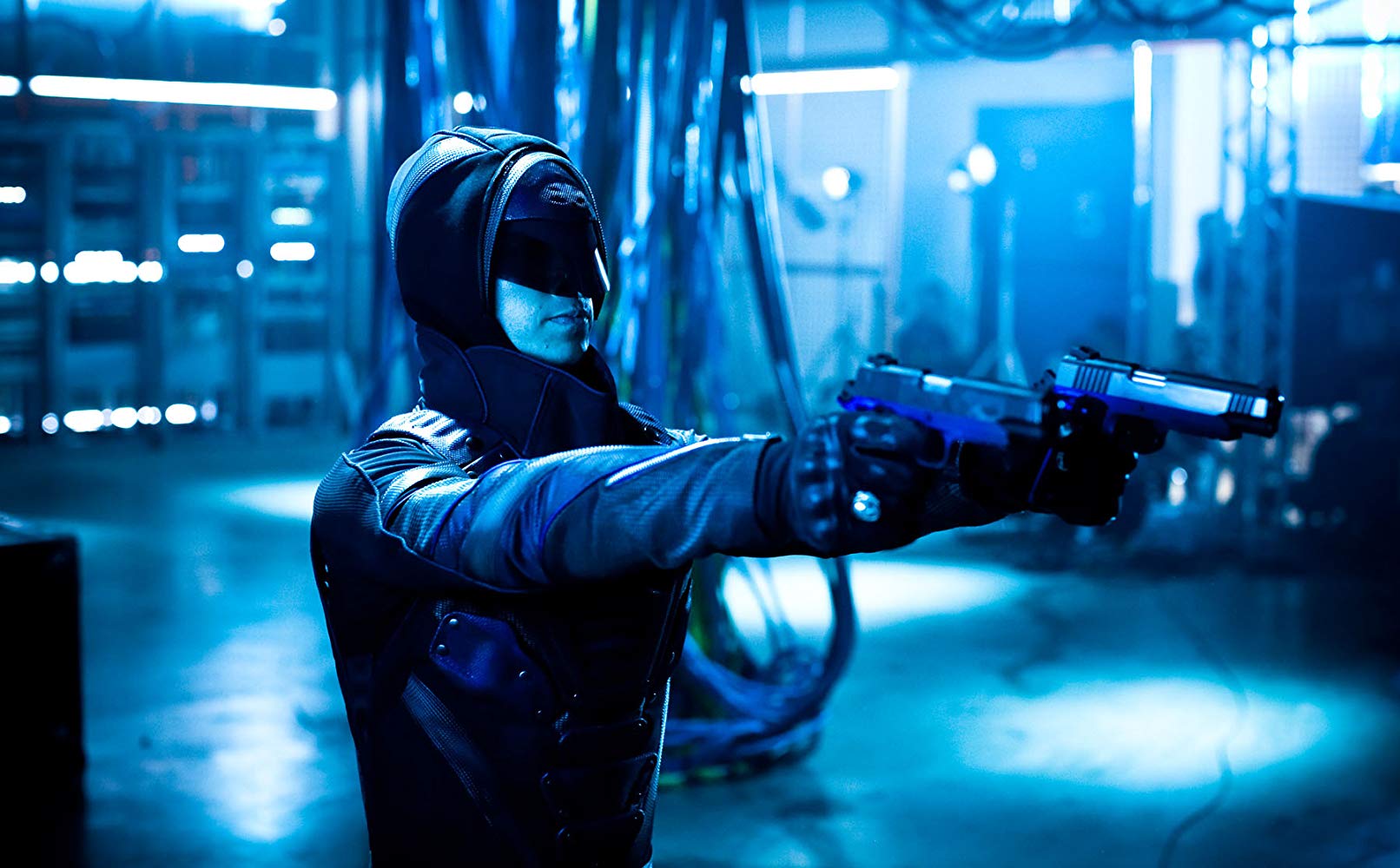
In fact, this seems more like the animated tv series Batman Beyond/Batman of the Future (1999-2001), which dealt with a futuristic successor to the traditional Batman, a youth who inherited the cowl and adapted it with modern technical gadgetry to continue fighting crime in the same manner. It is less a mini-series about The Phantom than it is the heir to role of The Phantom who adapts the traditional costume with hi-tech methods. Unfortunately, in rewriting the essentials of the comic-book, the mini-series fails to incarnate a beloved comic-book character and has only created a work of instant flash-in-the-pan forgettability.
The Phantom hums along adequately on its own terms, despite its never particularly believable scenario. It ultimately amounts to no more than Syfy Channel filler material. The action scenes are adequately handled, although the climactic scenes fighting in and around a speeding ambulance are dull, the type of thing that is routinely used to pad out action in a tv series. The villainous Mind Control scheme is an old hat and unexciting one – one kept being reminded of Spider-Man (1977), the pilot film for the cheesy tv series, which served up almost the same thing.
Ryan Carnes fares not too badly in the central role and one could at least believe him credibly holding together the main series. Isabella Rossellini turns up, breathily playing on her accent as the mad scientist of the show. It is sad to see someone like Isabella Rossellini doing a one-dimensional throwaway role like this. As the lead villain and head of the Singh Brotherhood, Cas Anvar gives a broadly villainous performance that frequently falls into the campy. More promisingly, the end coda sets up the much more worthwhile Jean Marchand as villain for the presumed ensuing tv series (which never ended up happening).
Trailer here