
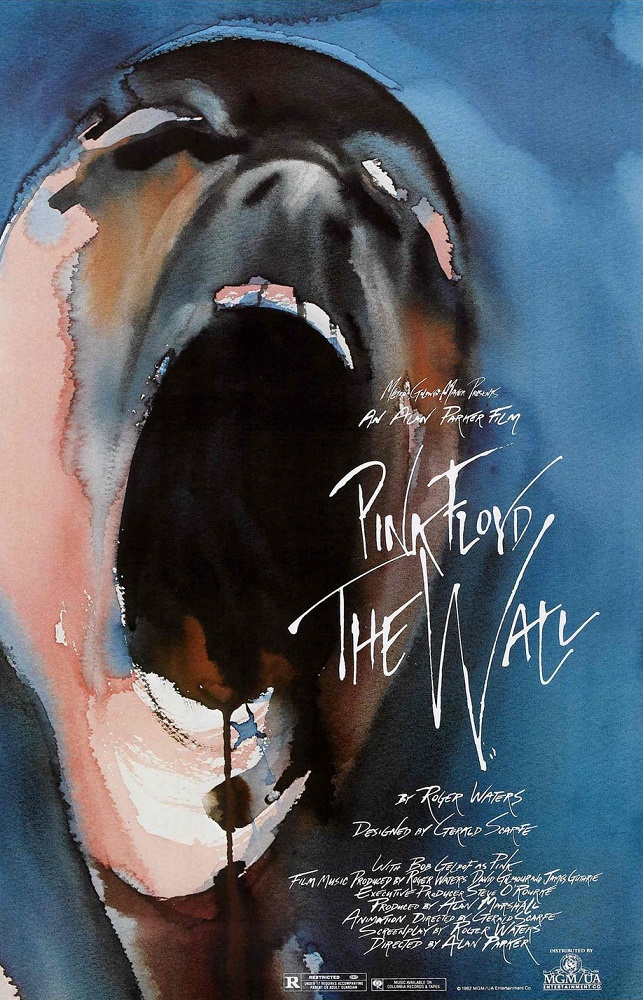
UK. 1982.
Crew
Director – Alan Parker, Screenplay – Roger Waters, Based on the LP The Wall by Pink Floyd, Producer – Alan Marshall, Photography – Peter Biziou, Music – Pink Floyd, Special Effects – Martin Gutteridge, Animation – Gerald Scarfe, Production Design – Brian Morris. Production Company – Tin Blue/Goldcrest.
Cast
Bob Geldof (Pink Floyd), Kevin McKeon (Young Pink), Christine Hargreaves (Pink’s Mother), James Laurenson (Pink’s Father), Eleanor David (Pink’s Wife), Bob Hoskins (Manager), Jenny Wright (Groupie)
Plot
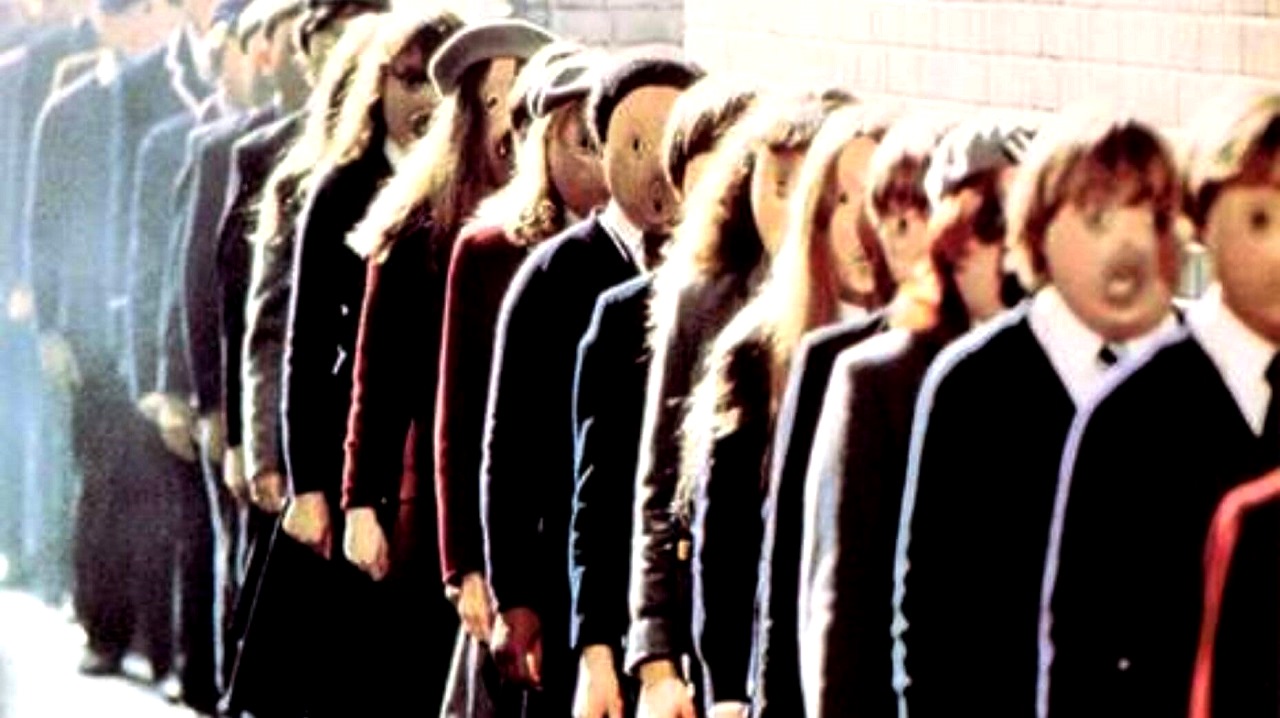
Pink Floyd, the lead singer of a highly successful rock group, sits in his L.A. hotel room in a drug-induced stupor. He drifts in and out of childhood memories of his father killed on a WWII battlefield, growing up with his overprotective mother, the petty cruelties of the British public school system, to dark Freudian fantasies about his failed marriage, life as a rock star and of being a fascist dictator.
Pink Floyd may well have been the cult band of the 1970s. Their album The Dark Side of the Moon (1973) became the No.1 best-selling LP of all time. Pink Floyd went way beyond the pomp and posturing of their glitter rock contemporaries. They conducted sound and engineering tricks and gimmicks with a technical genius that was way ahead of its time, while everything was suffused with the sardonic bite of Roger Waters’ darkly brilliant lyrics.
Their arguable masterpiece was the concept double-album The Wall (1979). The Wall was an autobiographical work upon Roger Waters’ part, covering his own feelings over the death of his father in service in World War II, growing up with an overprotective mother, his dislike of the petty tyranny of the English school system, his failed marriage and the trials and tribulations of being a rock star. Much of the sense of fraying sanity that runs through the album and film is drawn on both Roger Waters’ personal experiences and those of good friend and former Pink Floyd lead singer Syd Barrett whose mental health deteriorated to the point the rest of the band kicked him out.
The Wall was almost as big as The Dark Side of the Moon, spawning the hit single and Pink Floyd anthem Another Brick in the Wall. It was followed by an amazing 1981 tour that used a 100-foot tall inflatable mother marionette, as well as a huge wall that was built up out of cardboard boxes between the band and the audience during the course of the show. In years subsequent to the band’s split, Roger Waters has toured the album in a series of amazing audiovisual concerts, including a 1990 charity performance to commemorate the fall of the Berlin Wall.
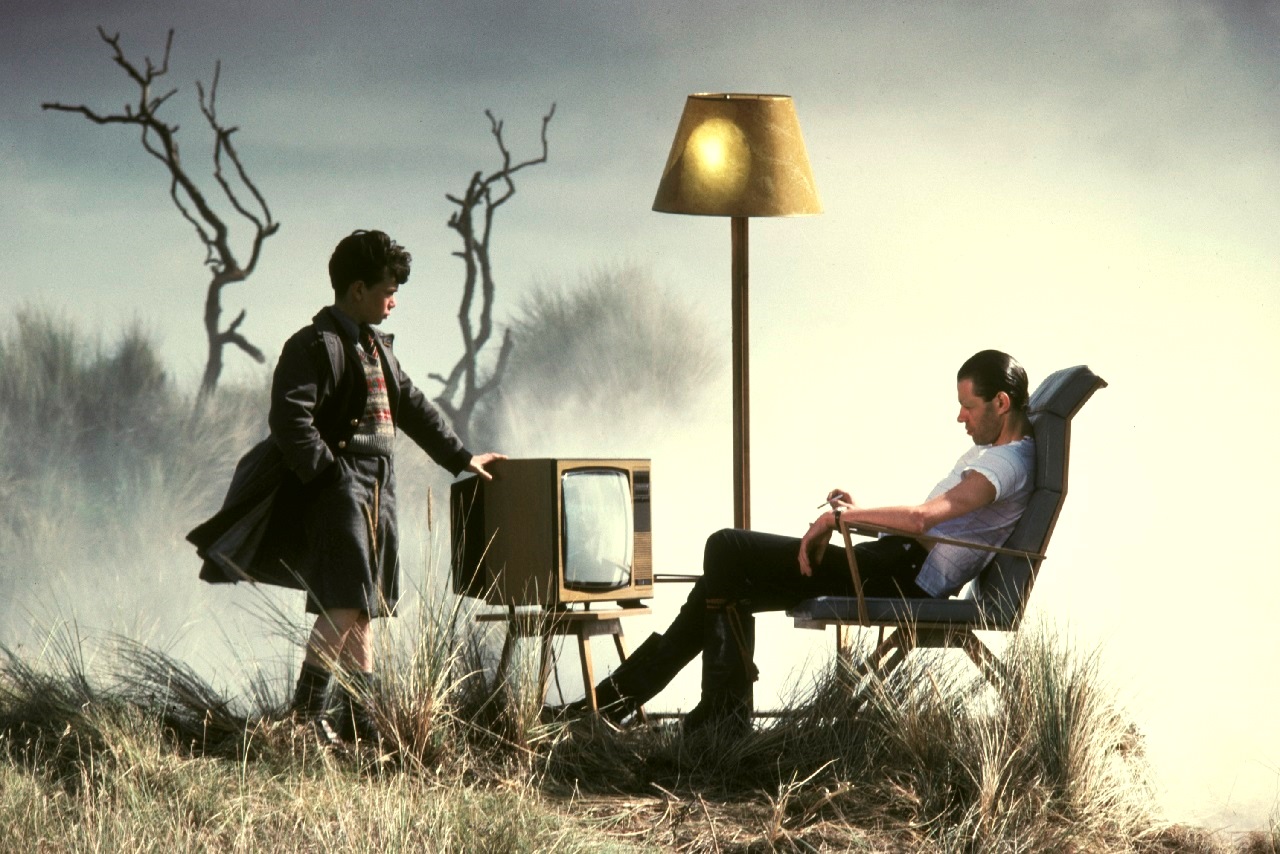
The stageshow of The Wall was then followed by this film. Roger Waters wrote the screenplay. Direction was handed to Alan Parker, the versatile genre-hopping director of the likes of Midnight Express (1978), Birdy (1984), Mississippi Burning (1988), Angela’s Ashes (1999) and two other works that fall within genre material, Bugsy Malone (1976), a 1930s gangster film that is all played out by kids, and the exquisite horror film Angel Heart (1987). Alan Parker’s oeuvre always demonstrates a strong interest in music, he having made films as varied in their musical styles as Fame (1980), The Commitments (1991) and Evita (1996).
Roger Waters was originally to have played the lead role but turned the part over to Bob Geldof after test screenings with Waters in the role turned out poorly. At the time, Geldof was then best known as the lead singer of The Boomtown Rats and was still a couple of years off fame as the force behind Live Aid. The filming was apparently a nightmare. Mark Blake’s book Pigs Might Fly: The Inside Story of Pink Floyd (2013) details the clashes between a control freak Waters and Parker, who described the experience as “one of the most miserable of his life.” The film ended up being critically trashed but has developed a considerable cult reputation in years since then.
The film makes slight changes to the album. The track Hey You is replaced by the banal When the Tigers Break Free, but other than that the film is essentially a 95-minute rock video of the album. Like a music video, there is almost no dialogue and no narrative thread. The flow of the film constantly changes between past and present, the real, the surreal and Gerald Scarfe’s dark ever-changing Freudian animation.
The nearest equivalent at the time was Ken Russell’s demented filming of The Who’s rock opera Tommy (1975). Maybe you could call Pink Floyd – The Wall a Tommy crossbred with Roman Polanki’s Repulsion (1965) and fed a strong dose of downers. Certainly, there are probably few artists in the world who have had the opportunity to work out their psyches on such a grandly operatic scale as Roger Waters – what with multi-million selling self-analytic album, a stage show with 100 foot tall mother marionettes, a film version with a pounding surround-sound Dolby soundtrack.
In terms of the ire that Roger Waters vents, Pink Floyd – The Wall is a singularly bleak and angry film and most certainly a narcissistic one, caught up as it is in Roger Waters’ singular obsessions about self, his overprotective mother, the English school system, feelings of suicide, madness and self-mutilation, and the links between fascism and rock music. (The latter was Waters’ commentary on the fans at rock concerts who seemed so mindless in their adoration he alikened them to goose-stepping fascisti. Such an attack on the crowds at rock concerts is diluted somewhat by the film – one can imagine how potent a point it would have been in a live concert venue).
The film also develops out the animation originally designed by British political cartoonist Gerald Scarfe for the Another Brick in the Wall music video and elaborated out through the stage show. Here Pink Floyd – The Wall is at its full flight of surreal fantasy – Gerald Scarfe’s plays of constantly transmogrifying animated images are wonderfully clever, even if they almost reach a point of symbolic overkill – doves dissolving into Nazi eagles, flying crosses and bleeding British flags, flowers cavorting in clear sexual symbolism and dissolving into threatening mother figures, and marching hammers and sickles.
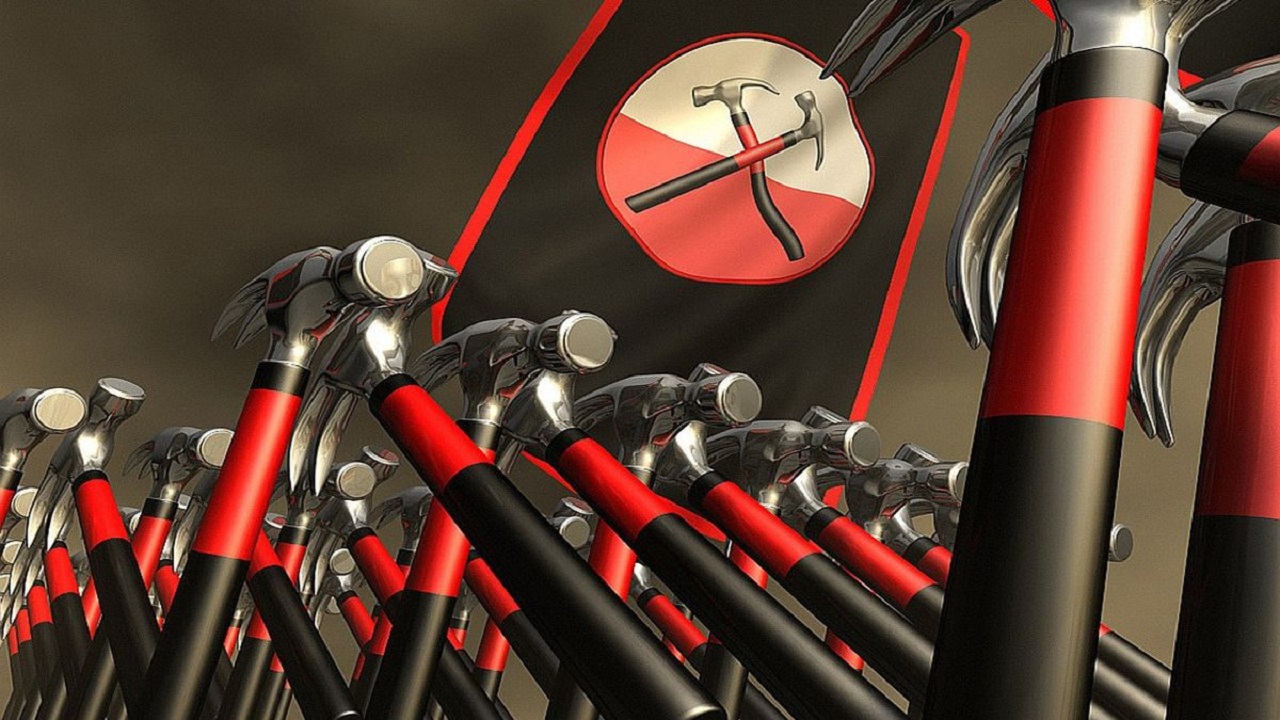
A number of critics slammed Pink Floyd – The Wall for its narcissism and uncompromising failure to reach any therapeutic breakthrough by the end. To one’s view, that is its very advantage – there’s no written rule that a film should have to end on a pat, positively upbeat moral note. As such, Pink Floyd – The Wall is a headfirst dive into the psyche of someone who has definitely left the dividing line of sanity a good way behind.
Even if one doesn’t attune to Roger Waters’ psycho-dramatics, there is the sheer kick of the soundtrack blasting at one in Dolby stereo where Waters’s black and cleverly funny lyrics and the Floyd’s masterful aural trickery hits one up front. This is a film that loses a great deal seen on video rather than in a theatrical setting.
Trailer here