
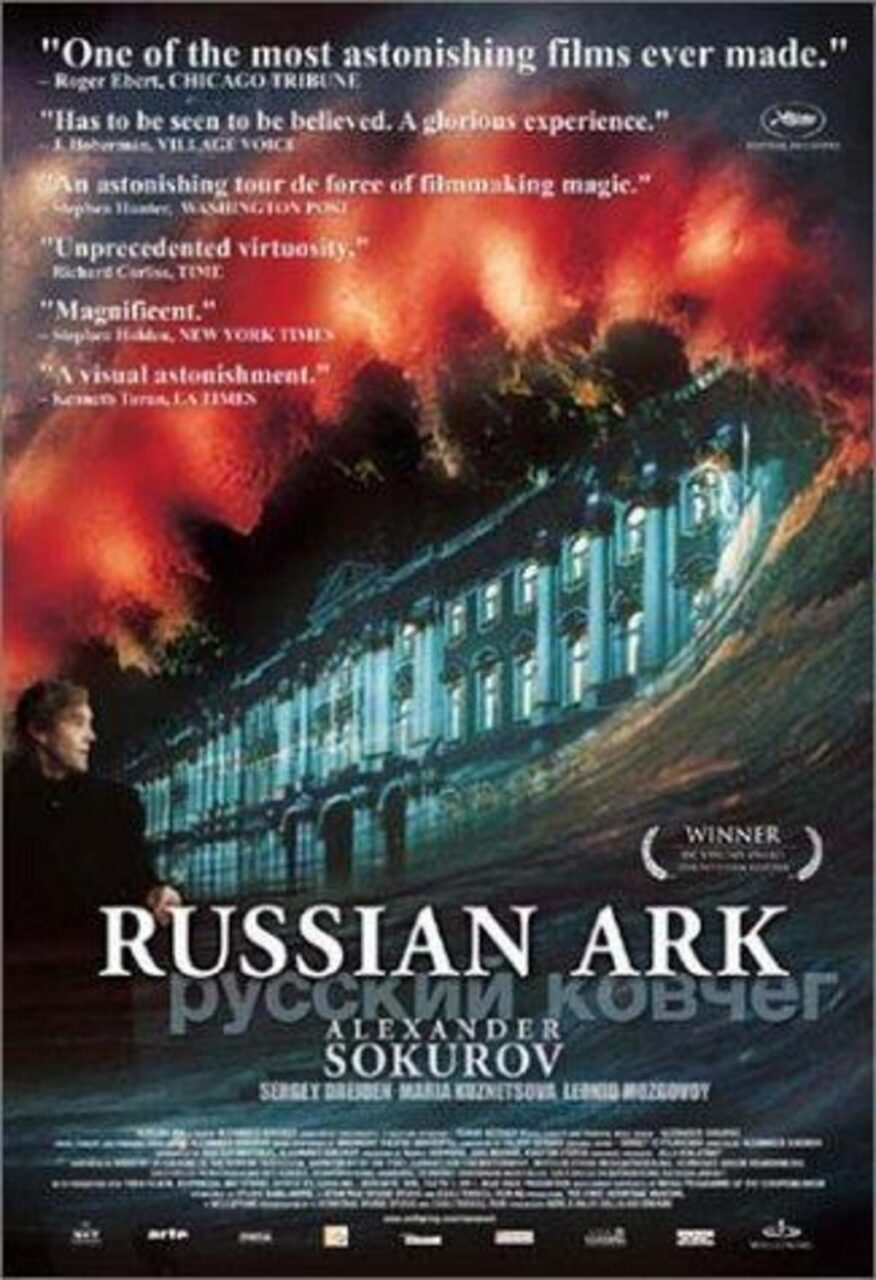
(Russkiy Kovcheg)
Russia/Germany. 2002.
Crew
Director/Visual Concept/Principle Image Design – Alexander Sokurov, Screenplay – Alexander Sokurov & Anatoly Nikiforov, Producers – Andrey Deryabin, Jens Meure & Karsten Stoeter, Photography – Tilman Buettner, Original Music – Sergey Yevtushenko, Music Conducted by Valery Gregiev, Digital Imaging Supervisor – Sergey Ivanov, Digital Imaging – Koppmedia, Art Direction – Natalia Kochergina & Yelena Zhukova. Production Company – Studio Babelsberg/Hermitage Bridge Studio/Egoloi Tossel Film AG Production/The State Hermitage Museum/Ministry of Culture of the Russian Federation/Department of the State Support for Cinematography/Mitteldeutsche Medienfoerderung/Filmboard Berlin Brandenberg/Kulturelle Filmfoerderung des Bundes/Filmfoerderung Hamburg/Filmbuero Nordhein-Westfalen/Kulturelle Filmfoerderung Sachsen-Anhalt/Fora-Film M, Koppmedia/Ast Studio/Seville Pictures Inc/WDR-Arte/NHK/YLE-tv/DR-1/Boje Buxk Produktion/Media Support for the European Union
Cast
Sergei Dreiden (Marquis de Custine), Alexander Sokurov (Narrator), Mariya Kuznetsova (Catherine the Great), Vladimir Baranov (Nicholas II), Anna Aleksakhina (Tsarina Alexandra)
Plot
A man finds himself in a vast labyrinthine Russian palace. As he wanders the galleries and ballrooms, they seem to open into various eras from the past, ranging from Catherine the Great to the court of Nicholas II and the present where the building is an art museum. In each of these era, the man is a phantom unseen by any of the people present. He is joined by an 18th French marquis, the only one who can see him, who offers appreciation of the art works and makes mocking commentary on Russian culture. The man is not sure if he is in the midst of a play or a dream.
Russian Ark became one of the hits of the 2002 Cannes Festival and since then made the rounds of just about every international film festival to considerable word of mouth. The film’s talking point in all cases was the sheer novelty of its method of making. In this case, the entire film is shot in a single unbroken, unedited 96-minute take.
The previous record for such a filmmaking gimmick was held by Alfred Hitchcock, who shot the psycho-thriller Rope (1948) in eight takes of around 10 minutes each. There was also Mike Figgis’s Timecode (2000), which was a single 90-minute film shot using four different cameras simultaneously. There were subsequent efforts, something that was dubbed the Long Take Film, with the likes of PVC-1 (2007), Cut (2010), Pig (2010), The Silent House (2010), Silent House (2011), Fish & Cat (2013), Unfriended/Cybernatural (2014), Victoria (2015), King Dave (2016), Red Mile (2016), Rendez-Vous (2019), Corona (2020), Crazy Samurai Musashi (2020) and Mads (2024), before the genre was hilariously parodied in One Cut of the Dead (2017). This type of filmmaking has been given the name The Long Take.
However, Russian Ark pushes the Lon Take Film to a level of virtuoso artistic accomplishment. During the single 96-minute take, the camera wanders through 33 different rooms of the St Petersburg Hermitage Museum, the former Winter Palace that was commissioned by Catherine the Great in 1752. Each new room that the camera opens into offers a work of art or has a vignette from some different period of Russian history enacted before us. There is a staggering ambitiousness to what we see being staged, which includes everything from balls, military parades, orchestras, numerous parties and a full formal court reception of Nicholas II.
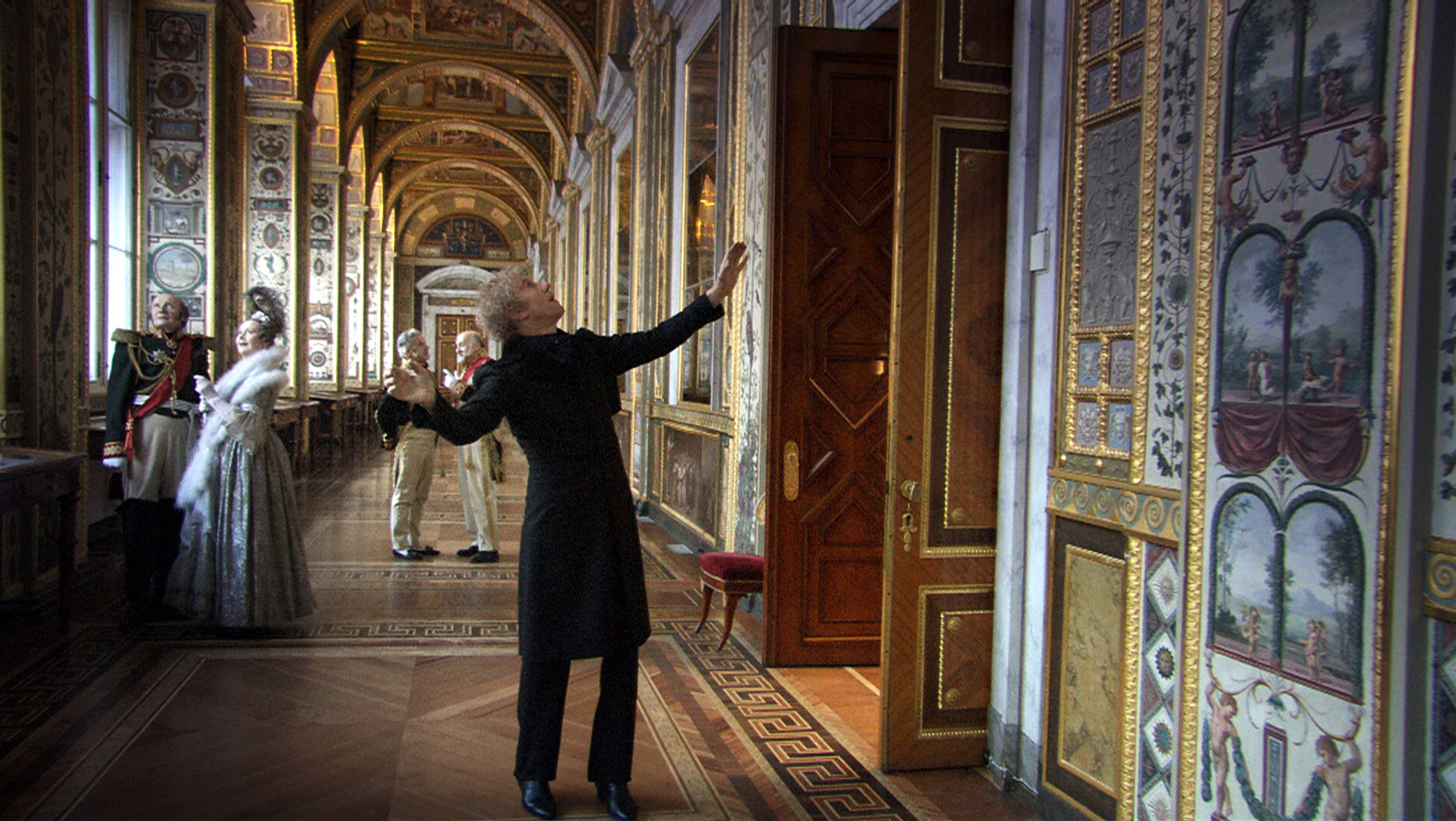
The organising of all of this on cue as the camera drifts past required the marshalling of some 2000 extras, nearly half a year of rehearsal and the closing of the museum for several months for it to be redecorated for the film. Even a special Steadicam had to be designed to house a high-resolution video and hard disk that could handle shooting for the length of time required. The single take, photographed by Tillman Buettner who also did the inventive visual work for Run Lola Run (1998), had to be shot only twice before it was perfected (which is still considerably less than the number of takes for a single scene on the average Hollywood film).
Russian Ark certainly has enough to count here as a fantasy film. It has a fantasy premise – a dream-like walk through a palace that opens up into various periods of Russian history. We see various historical personages – Peter the Great, Catherine the Great, Nicholas II and Tsarina Alexandra, Alexander Pushkin – engaged in mundane activities. (Although who the figures in some of the vignettes are is not always entirely clear – I was unsure what was going on during the scenes where we stumble into a room and hear what appear to be Communist Politburo men discussing the palace’s cats, for instance). Throughout we are placed in the position of spectators being guided past the various works of art and historical re-enactments – the whispered voice of a never-seen narrator comes from behind the camera. The voice is director Alexander Sokurov’s own, thus we are literally seeing out through his eyes as the camera stands in for his point-of-view.
However, the premise feels like an idea that has been contrived as a hook to hang the rest of the film on. There is no real story or even resolution to the film. Instead, all that the film is is a series of vignettes drifting through the museum with the mocking figure of Sergei Dreiden’s 18th Century marquis offering snide critique and analysis of the various artworks and eras of history. The focus is on the works of art and the eras of history rather than the temporal disjunctions – there are a few occasions with the marquis puzzling over some of the recent 20th Century developments but mostly the film uses him as a guide, stopping to analyze the symbolism and artistry of the works of art, even at one point to drink in an appreciation of the fine china being set up for a state banquet.
Indeed, what we are participating in seems less a fully-fledged dramatic film than it does a dramatized arts programme. The effect is akin to a combination of Last Year in Marienbad (1961) and say one of the Sister Wendy BBC arts programmes. (There is also some similarity to Pat O’Neill’s art film The Decay of Fiction (2002), which came out the same year, a feature-length film that wandered through the hallways and rooms of a disused L.A. hotel where the ghosts of characters conducting re-enactments out of 1940s films wandered in half-glimpsed vignettes). It feels like a film whose fantasy format has been dictated by the method its creators have chosen to make the film, rather than any desire to tell a unique story.
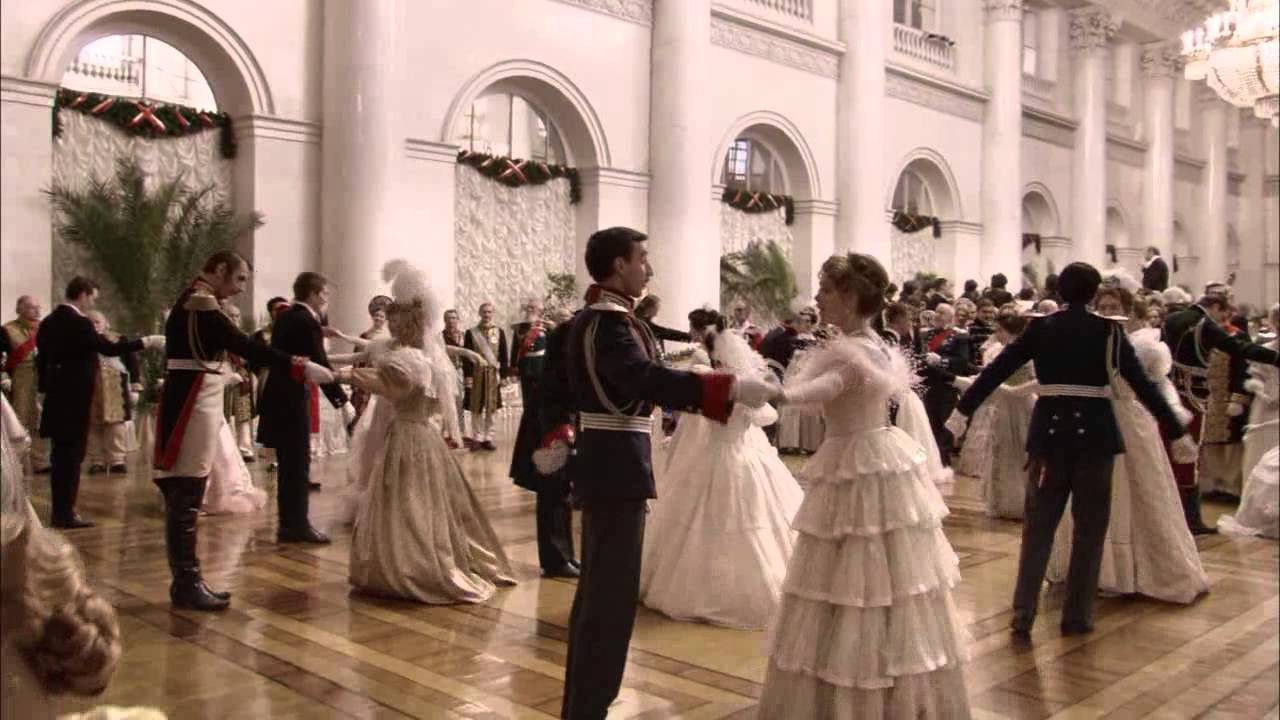
That said, Russian Ark is an exquisitely beautiful film, if one that may not be of interest to the casual genre sampler. Whether or not it is is largely dependent on having an interest in or familiarity with Russian history and/or classical art. (Indeed, one suspects that without the unique novelty of the way in which it was made, Russian Ark would have received considerably less attention than it did – it would be rather more difficult, for instance, to sell a film that advertises itself as a visual tour of a Russian museum with historical re-enactments). The lavishness and dressings of the palace – the amazing ballrooms, anterooms, hallways and so on – are stunning to behold. Seeing works of Rembrandt, Rubens and Van Dyck framed in full screen glory, with the camera pausing to drink in their detail, or to pan around statues by El Greco, is something that cannot help but move one. Most of all there is the parade of full 18th and 19th Century formal costumery.
This is also a film that takes pride in the detail and formality of its Russian heritage – of the weight and glory of its arts and culture and imperial past (even if most of the artworks shown are not actually by Russian artists). As a film it seems to vaunt all the things that one finds an aversion to in classical Russian culture – an almost sacred love of the mother country, reverence of the Tsarist regime, a veneration of military pageantry and belief in a form of ecstatic religious suffering.
While one may have a few quibbles about the admiration of such and some of figures being so vaunted – the near inept Nicholas II, for example – you cannot argue with the extraordinary beauty of the cultural heritage on display. The very last movement of the film – where the camera joins in the sweep around the Tsar’s ball as attendees dance the mazurka and then follows the costumed figures in the hundreds as they make an orderly exit down a set of stairs – has a splendour that is one of the most moving parts of the whole film.
Alexander Sokurov is a Russian director who has been making films, initially documentaries, since the days of the Soviet Union. During this period, he made Days of Eclipse (1988), which has sometimes been interpreted as a science-fiction film (although not by this author’s definitions). Sokurov gained critical acclaim with Mother and Son (1997) and then embarked on a trilogy of films about the lives of the great dictators with Moloch (1999), Taurus (2001) and The Sun (2004) concerning respectively Adolf Hitler, Josef Lenin and Emperor Hirohito. He subsequently returned to fantastical material with his version of the classic legend about a man who makes a pact with The Devil in Faust (2011). Sokurov also made Francofonia (2015), which similarly wandered through The Louvre, meditating on art and culture.
(Winner in this site’s Top 10 Films of 2002 list. Winner for Best Cinematography at this site’s Best of 2002 Awards).
Trailer here