
Crew
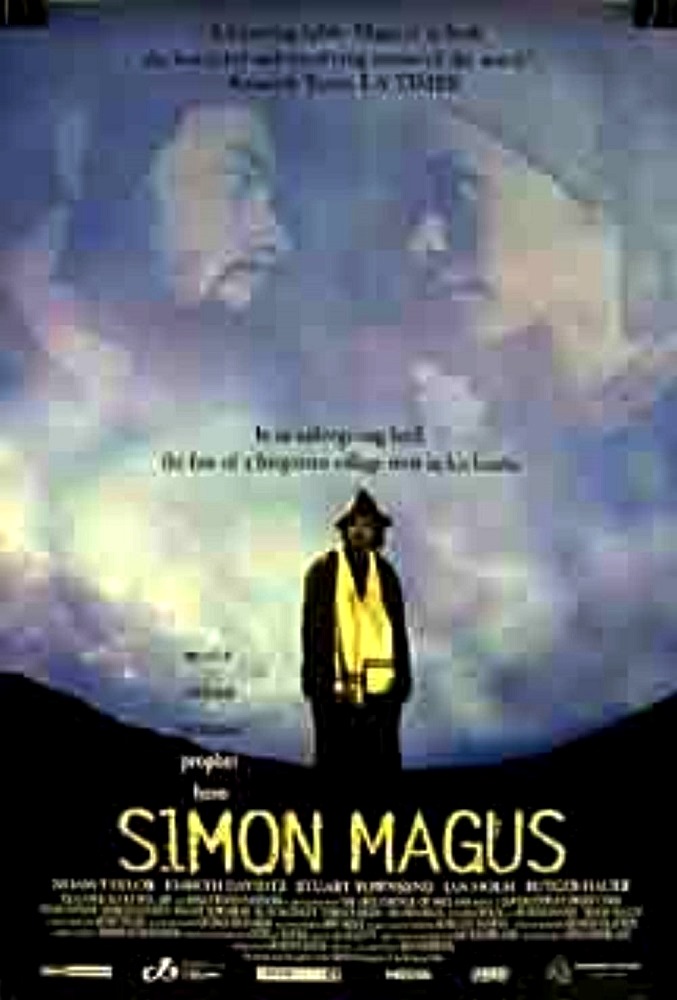
Director/Screenplay – Ben Hopkins, Producer – Robert Jones, Photography – Nic Knowland, Visual Effects – Digital Film, London, Special Effects – Stuart Murdoch, Makeup – Roseann Samuel, Production Design – Angela Davies. Production Company – Jonescompany/Film Four/Lucky Red/ARP/Hollywood Partners/The Arts Council of England.
Cast
Noah Taylor (Simon), Stuart Townsend (Dovid Bendel), Rutger Hauer (Squire), Sean McGinley (Maximilian Hase), Embeth Davidtz (Leah), Amanda Ryan (Sarah Heschel), Terence Rigby (Bratislav), Ian Holm (Sirius), Toby Jones (Buchholz), David De Keyser (Rabbi)
Plot
In a small European village of Orthodox Jews in the 19th Century, Simon is troubled by visions of The Devil. He is regarded as alternately a fool, mad or in league with The Devil by the rest of the villagers. The village is dying because people are leaving – if one more goes, the temple will not have enough men to hold a reading of the Torah. Dovid Bendel goes to the local squire with a plan to purchase some land from him so that they can build a railway station, which will bring more Jewish settlers. The Squire agrees and in return requests that Dovid read a book of the poetry he has published. In order to understand the poetry, Dovid goes to the Gentile girl Sarah Heschel. At the same time, the wealthy Maximilian Hase desires also to build a railway station. When he hears there are rival plans, he determines to quash the competition. To this end, he recruits Simon, whom The Devil has told to convert to Christianity, to spy for him.
The publicity machine for Simon Magus compared it to the work of Tim Burton and Terry Gilliam. Of which it in actuality resembles neither. It is fantastical and has a slightly stylised setting but it lacks either the dark pessimism of Gilliam or the quirky eccentricity of Burton.
The director whose work it might be most easily compared to is actually Vincent Ward – in particular, Ward’s The Navigator: A Medieval Odyssey (1988). Both Simon Magus and The Navigator are films set in the past and concern a small village of people whose culture the respective directors evoke with painstaking attention to authenticity, detail and dirt. In both cases, the villagers are caught between the past and the modern world and interpret the modern world in Mediaeval terms – there is a striking vision here where Simon sees a train for the first time and thinks it is carrying souls to Hell, something that could have been transplanted from The Navigator.
All of which emphasises one thing – that Simon Magus is a work that defies any easy pigeonholing. There is no other film out there that can lay claim to being set around Orthodox Judaism, not to mention taking a cabbalistic worldview – even simply telling a story that deals with a love of German poetry. This pigeonholing is something that has eluded arthouse theatres when Simon Magus was released and where it was not a huge success despite good reviews.
Director/writer Ben Hopkins creates a fascinating film. Simon’s visions of the supernatural are strikingly stylised. There is a breathtaking opening, with the credits designed as though they were cabbalistic symbols and an opening scene shot undercranked like an Expressionist silent movie, which gives one the impression that the film is going to be something completely out of the world. Ian Holm has a startling presence as The Devil.
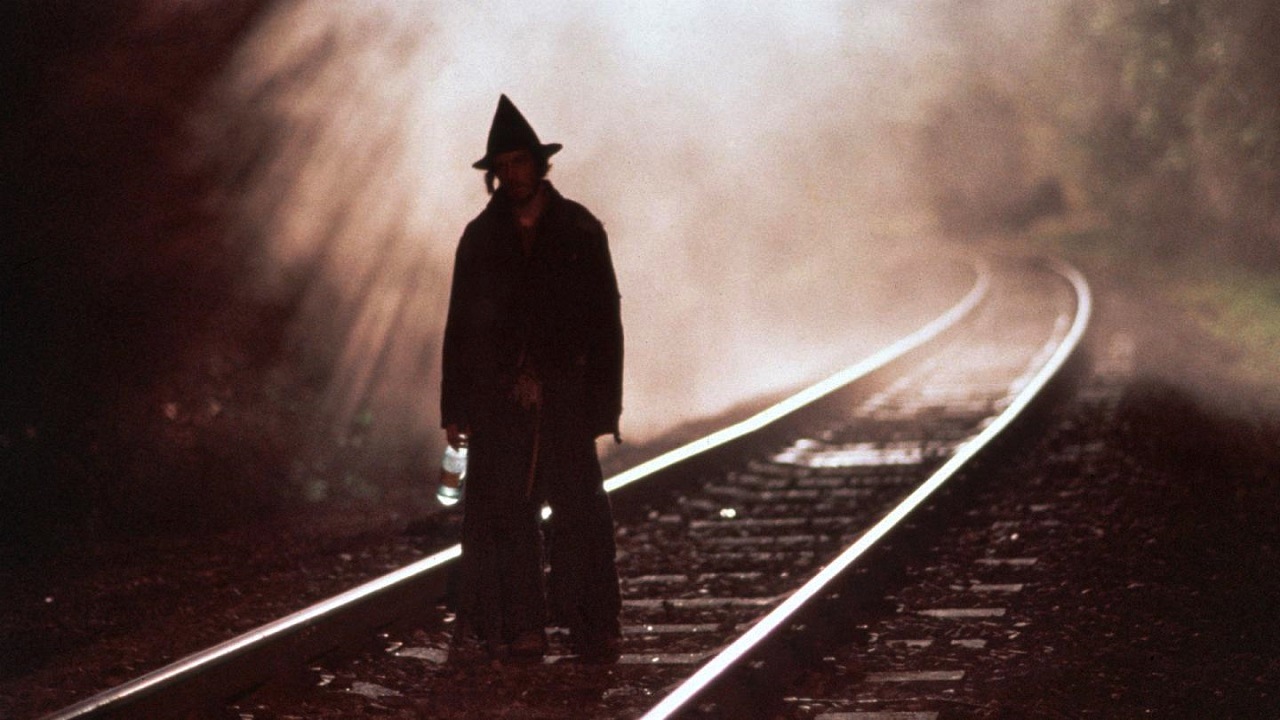
However, the odd thing is that this is not what the film is about at all. Simon’s visions and Holm’s appearances drop out of the show about the halfway point and Simon himself evolves more into a catalyst for the story going on with the other characters. The story that Ben Hopkins does end up telling is a surprisingly traditional one about love, decency, the enlightenment of the arts and respect for tradition winning out over greed. This – the story evolving into something other than what the film is initially pitched as – is the biggest complaint one has about the film.
That said, the characters that Hopkins arranges and the actors playing them deliver a literate and heartfelt film that gently moves. The film also gives Rutger Hauer the most substantial acting part he has had after more than a decade of roles in B action/sf films, one where his boredom was starting to evidently show through, and at which he is great.
Ben Hopkins next went onto make The Nine Lives of Tomas Katz (2000), a surreal film about London undergoing an apocalypse. He has made a handful of other films and documentaries, as well as wrote the screenplay for Marionette (2020) about a therapist and a young patient who claims to predict the future.