
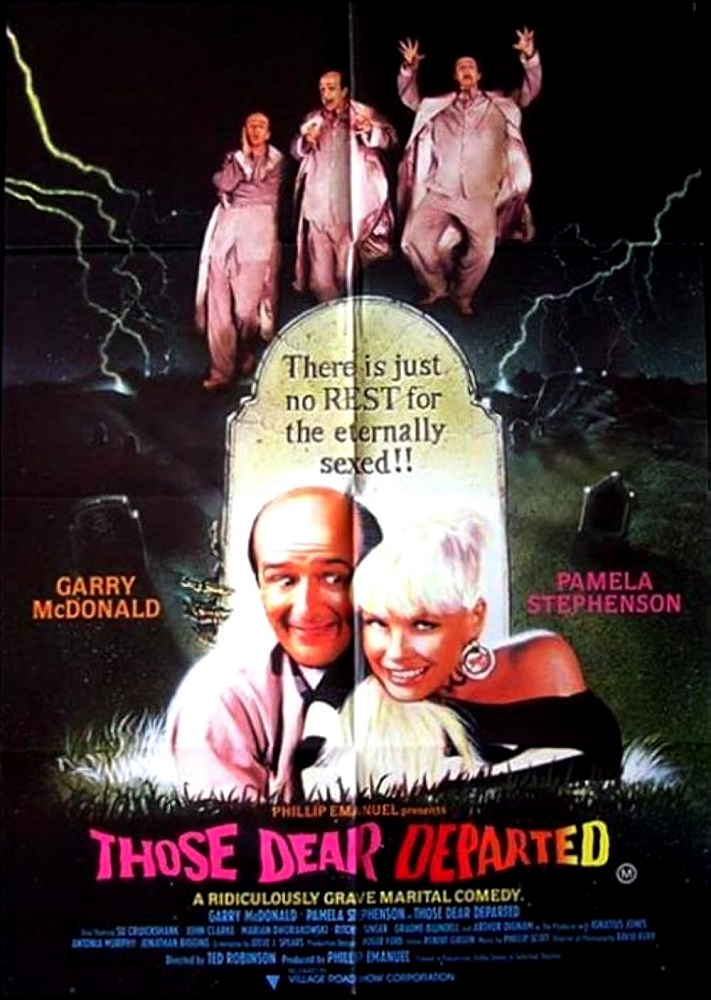
aka Ghosts Can’t Do It
Crew
Director – Ted Robinson, Screenplay – Steve J. Spears, Script Developed in Association with Hilary Linstead, Creative Consultant During Development – Brian Thomson, An Extra Idea or Two – John Clarke, Producer – Phillip Emanuel, Photography – David Burr, Music – Phillip Scott, Visual Effects – Flicks Animation, Production Design – Roger Ford. Production Company – Phillip Emanuel Productions Ltd.
Cast
Garry McDonald (Max Falcon), Pamela Stephenson (Marilyn Falcon), Su Cruickshank (Norda Thompson), Marian Dworokowski (Richard Kowalski), John Clarke (Inspector Jerry White), Ritchie Singer (Gordon Towers)
Plot
Marilyn Falcon and lover, her chauffeur Richard Kowalski, attempt to kill off her husband, the highly successful actor Max Falcon, who is currently appearing in ‘Freud – The Musical’. After several failed attempts, they eventually succeed in killing Max by filling his car with carbon monoxide. Max finds himself caught in Limbo where he learns he has to complete his Unfinished Business by bringing Marilyn to justice, before he can go onwards. And so he, his late agent and deaf father return and start haunting Marilyn and Richard.
This Australian afterlife comedy plays itself for black farce. However, the results are utterly grotesque – there are few forms of misery worse than failed farce. The acting is abominably overblown. Everybody smirks and winks to the gallery with a hideous indulgence – the worst offender being Garry McDonald’s intensely irritating nervous and whiny performance. The whole tone is shrilly overindulgent.
Those Dear Departed is a film to which the concept of subtlety, in performances, direction or comedy, is entirely alien. The idea of Freud the Musical is a potentially amusing one but the film, in its clumsily loud and brassy way, fumbles it. The animated effects look extremely cheap.
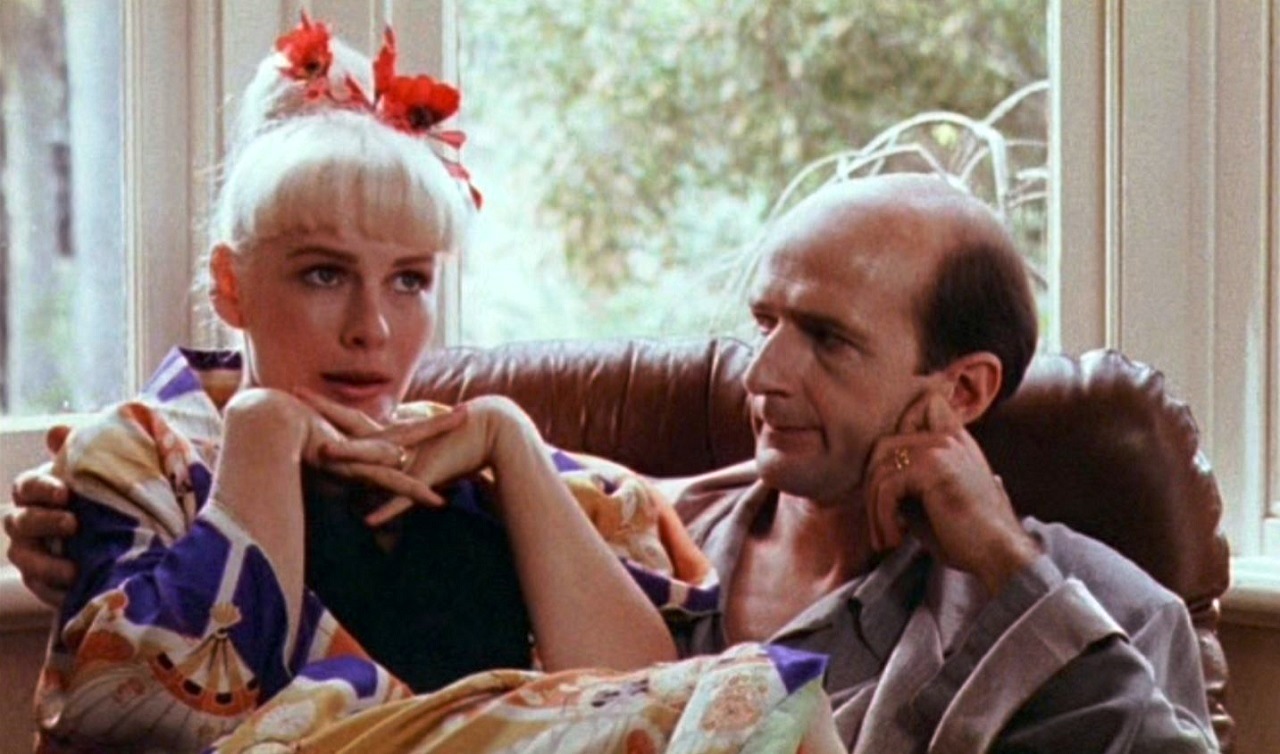
The film was designed for cinema but sold off for directly to television only a year after its release, indicating that its producers (and probably audiences too) found it a failure. In US video release, Those Dear Departed was retitled Ghosts Can’t Do It, which caused some confusion with the more well known but no less terrible Bo Derek softcore comedy Ghosts Can’t Do It (1990) a couple of years later.