
Crew
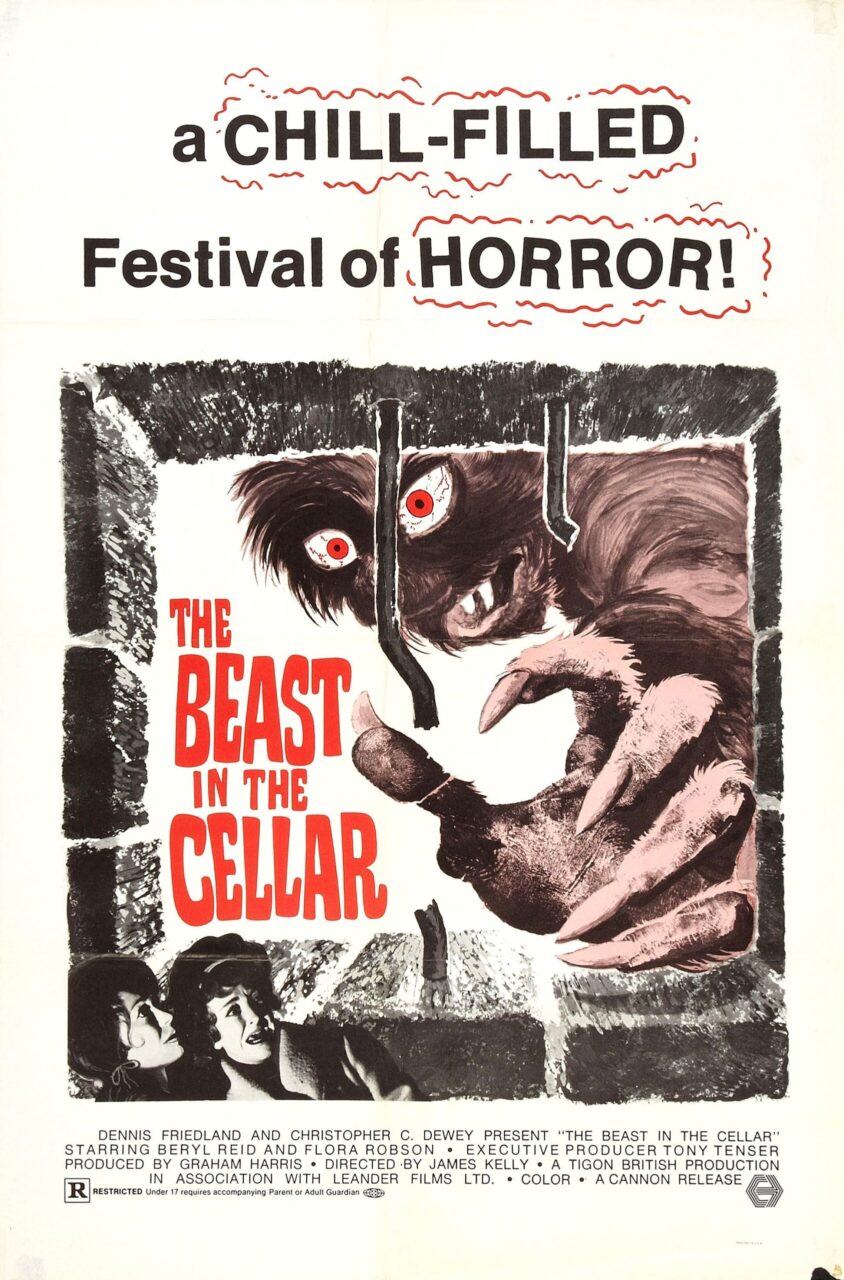
Director/Screenplay – James Kelly, Producer – Graham Harris, Photography – Desmond Dickinson & Harry Waxman, Music – Tony Macauley, Makeup – W.T. Partleton, Art Direction – Roger King. Production Company – Leander Films/Tigon British.
Cast
Beryl Reid (Ellie Ballantyne), Flora Robson (Joyce Ballantyne), Tessa Wyatt (Joanna Sutherland), John Hamill (Corporal Alan Marlow), T.P. McKenna (Detective Chief Superintendent Paddick)
Plot
Police investigate the murders of several soldiers around the small English country town of Littlemore. Two elderly sisters, Joyce and Ellie Ballantyne, fear that something they keep bricked up in the cellar may be responsible. They then discover that it has managed to burrow out. When Joyce twists her ankle and a home-help nurse is sent to tend her, their secret starts to come out. It becomes apparent that their father returned from World War I shell-shocked and transformed into an abusive monster before he died. When their brother Stephen wanted to enlist in World War II, the sisters drugged and bricked him up in the cellar to prevent a repetition of the same horrors. Still alive and having now escaped, Stephen has been rendered a mindless idiot by his imprisonment.
The Beast in the Cellar was one of the efforts from the latter-day Anglo-horror company Tigon who made several key films of the cycle including Matthew Hopkins – Witchfinder General (1968), Blood on Satan’s Claw (1971) and The Creeping Flesh (1973).
The Beast in the Cellar reads like a valiant attempt to play Arsenic and Old Lace (1944) straight – indeed, one always had the feeling that Arsenic and Old Lace would have been better off set in England. The comparison extends further than that – the film is burdened with a static talkiness that gives the feeling it would be better off on stage (where Arsenic originated) than it would on film.
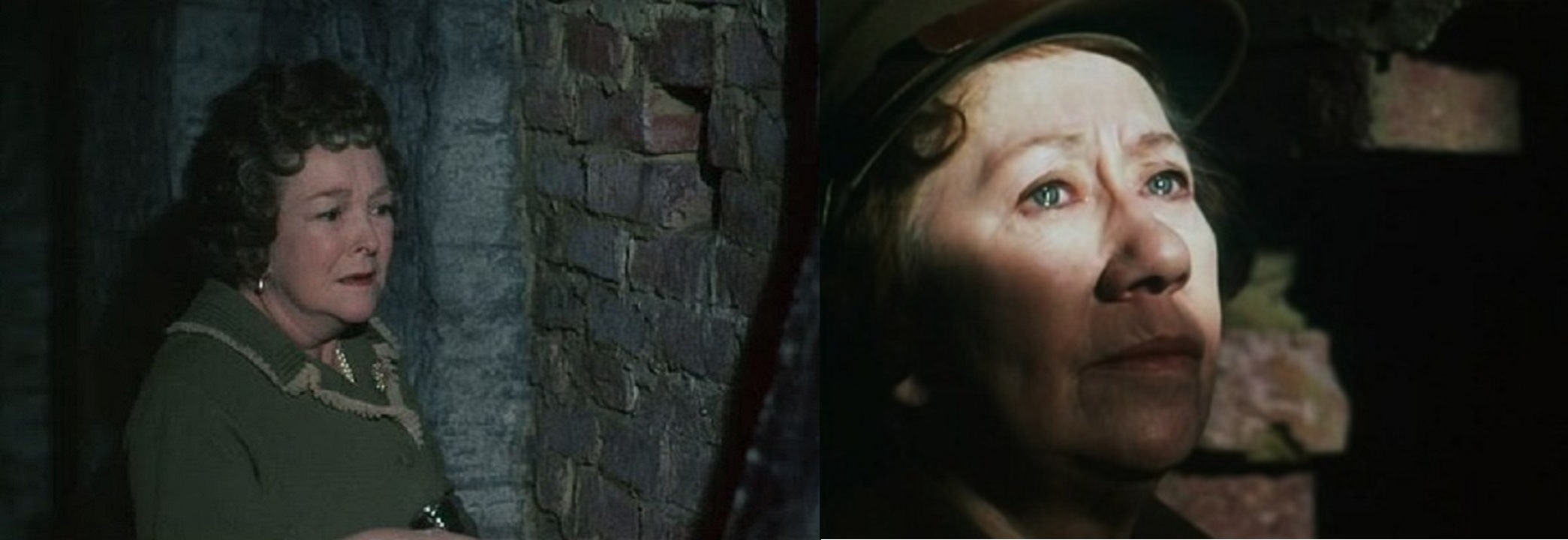
The two old ladies perform well – especially Flora Robson playing all ponderous gravity and duty. Beryl Reid plays the part of the slow-witted spinster thrust into having to make decisions for the first time in her life well, although her familiar sharp caustic bite does sneak through from time to time, seeming somewhat out of place. Unfortunately, Flora Robson, who is the strongest of the two characters, is dropped out of the action during the second half.
With the set-up it has, The Beast in the Cellar could have been good, especially if it had kept the drama tightly constricted and built a claustrophobic siege mentality, pitting the sisters against those that threaten to uncover their secret. The film’s greatest failing is that it plods – the thrills are nothing particularly exciting, the secrets are not terribly dark and twisted, and the killings hold no interest. Screenwriter James Kelly reveals the story’s only surprise about the identity of the killer early on in the show and the film thereon meanders on to a maudlin non-ending.
James Kelly went on to direct one other film with the psycho-thriller Night Hair Child (1972). Kelly spent much time working in British tv comedy. He did write several thriller scripts including the early Anglo-horror film Doctor Blood’s Coffin (1961) and the US psycho-thriller W (1974)
Trailer here