
UK. 1992.
Crew
Director – Michael Winner, Screenplay – Michael Winner & Helen Zahavi, Based on the Novel Dirty Weekend (1991) by Helen Zahavi, Producers – Robert Earl & Michael Winner, Photography – Alan Jones, Music – David Fanshawe, Production Design – Crispian Sallis. Production Company – Scimitar Films/Michael Winner Ltd.
Cast
Lia Williams (Bella), David McCallum (Reginald Mudd), Rufus Sewell (Tim), Michael Cule (Norman Fletcher), Ian Richardson (Nimrod), Miriam Kelly (Marion), Mark Burns (Mr Brown), Nicholas Hewetson (Bitter One), Christopher Ryan (Small One), Matthew Marsh (Detective-Sergeant William Bascombe), Shaughan Seymour (Charles), Jack Galloway (David), Sylvia Sims (Mrs Crosby), Sean Pertwee (Silent One), Christopher Adamson (Serial Killer)
Plot
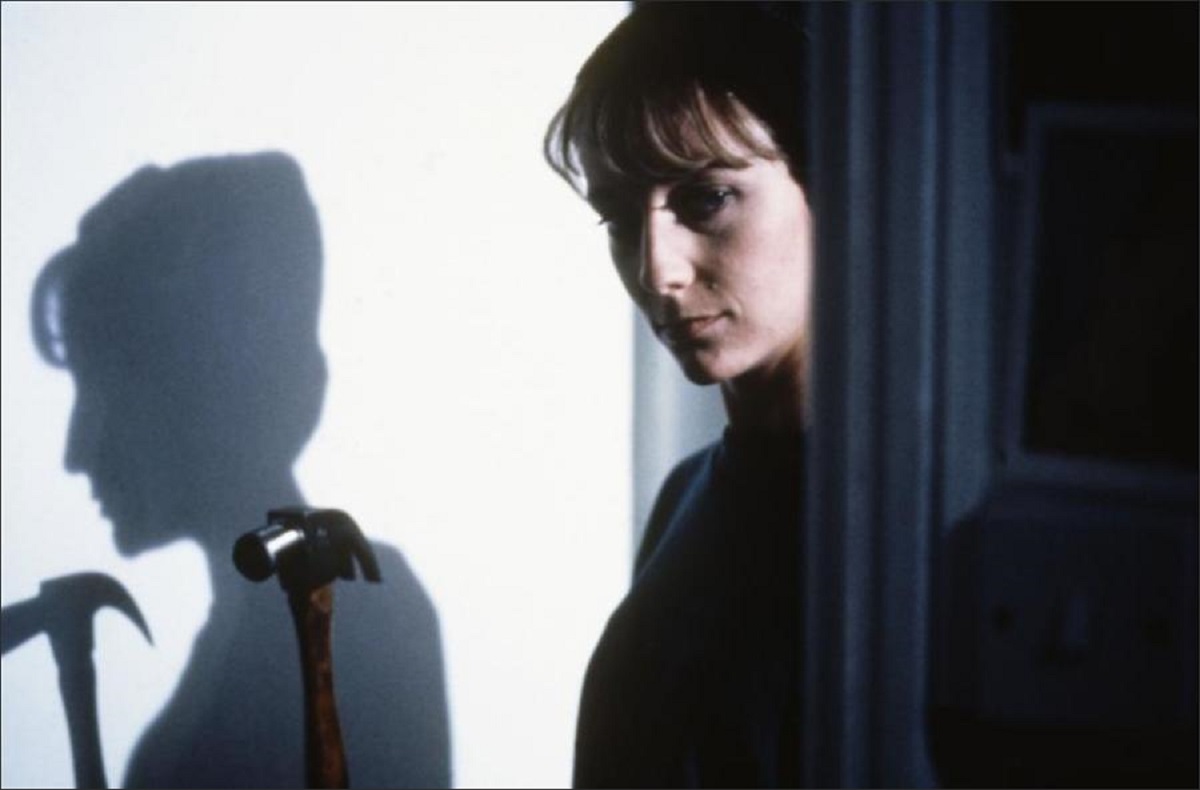
After finding her boyfriend with another woman, Bella leaves London and moves to Brighton, taking an apartment and a low-paying job as a temporary secretary. Immediately after she moves in, the guy in the apartment across the yard begins harassing her, making obscene phone calls and repeatedly telling her how he wants to torture and kill her. Bella is terrified but there is little she can do – she is unable to afford adequate security and the police sergeant who comes after she calls seems more interested in having her than helping her. A chance encounter with an Iranian clairvoyant inspires Bella to action. She purchases an illegal handgun. She then breaks into the apartment of her caller and beats his head in with a hammer. With newfound confidence, she goes out into the streets dressed to kill and begins to methodically slaughter all men who make sleazy come-ons.
Dirty Weekend was a film of some notoriety when it came out. It was made by British director Michael Winner who, of course, became well known as the director of the seminal vigilante fantasy Death Wish (1974) and its first two sequels. Dirty Weekend is fairly much Death Wish revised following the gun-toting feminist liberation fantasy of Thelma and Louise (1991). When it came out, Dirty Weekend was heavily condemned and regarded as utterly vile by the British media – lead actress Lia Williams even protested against it herself, saying she had no idea that that was what she was making (something that one finds somewhat difficult to believe). It was called “one of the most pornographic films ever made,” although oddly this seems like a statement made by someone who has never seen the film.
Compared to the similar Baise-Moi (2000), which indulges in the same kind of female revenge fantasy and justifiably ended up on the wrong side of the censorship debate in many countries due to its no-holds barred sexual content, Lia Williams never gets undressed here beyond her lingerie. Unless one counts simulated sex scenes or some of the sicko threats made by Rufus Sewell’s character, neither of which appeared designed to titillate, as pornographic, this reaction is moralistic claptrap.
In the spirit of sheer perversity, one quite liked Dirty Weekend. It is certainly a lot more savagely barbed and articulate a revenge fantasy than Michael Winner’s Death Wish was. Author Helen Zahavi appears to be someone who embraces some extreme feminist notions – that all men should be castrated, that all heterosexual sex is an act of rape etc etc – and at the very least has a chip on her shoulder about the size of a small forest when it comes to men. Every man in the film is regarded as sleazy – the cheating and indifferent boyfriend; the cop who makes crude sexual jokes at the dinner table and then withdraws the offer of police protection after Lia Williams refuses to let him have his way with her; while Rufus Sewell’s neighbour is not merely a peeper, he is also a dirty phone caller and makes nasty threats about raping and mutilating her.
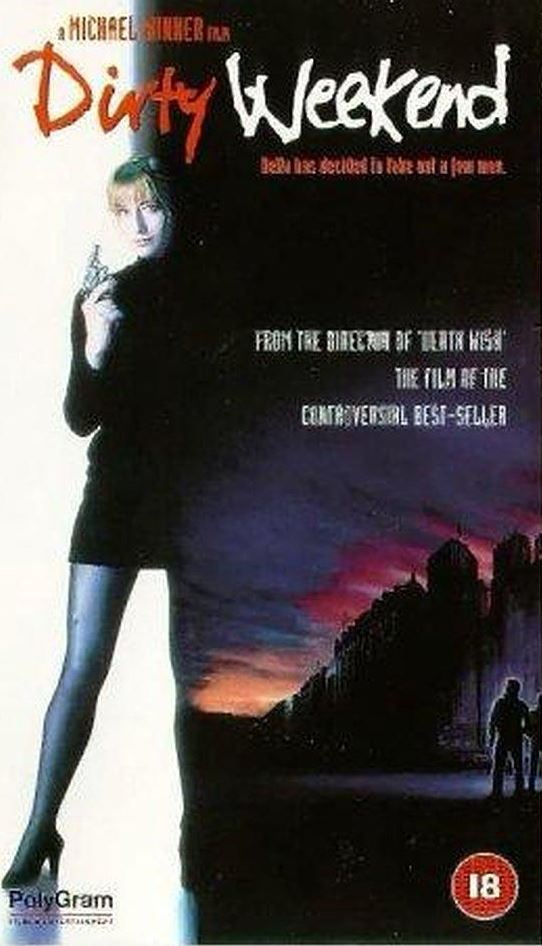
Everything is unsubtly spelt out. The film, for instance, opens on a title card: “This is the story of Bella who woke up one morning and decided she’d had enough.” The video box cover announces it even more catchily: “Bella has decided to take out a few men,” accompanied by the picture of Lia Williams wielding a handgun. In the end credits, the cast are listed as either ‘The Ladies’, ‘Bella’s Victims’ or ‘The Men That Got Away’. Michael Winner emphasises everything with characteristically unsubtle regard – in the opening scenes, we get meaningful shots of Lia’s boyfriend kissing other female students and Lia ominously clutching a knife and then plunging it into his birthday cake.
Certainly, screenwriter Helen Zahavi is on the ball when it comes to portraying the economic vulnerability of single women – we get the sense of Lia Williams’s powerlessness in the face of Rufus Sewell’s peeper – of being unable to afford to move anywhere else or even decent security precautions for her flat. It is even implied that were she able to appear cuter and more obliging for clients, her temp agency would be able to get her more work.
It is in the latter half of the film, once Lia Williams becomes empowered and gets a gun, that the film begins to become darkly nasty and contrarily emerges at its most outrightly enjoyable. Michael Winner has thrown all notions of good taste to the wind and goes for it in ways that take one aback. Helen Zahavi’s dialogue here is wonderfully sardonically laced.
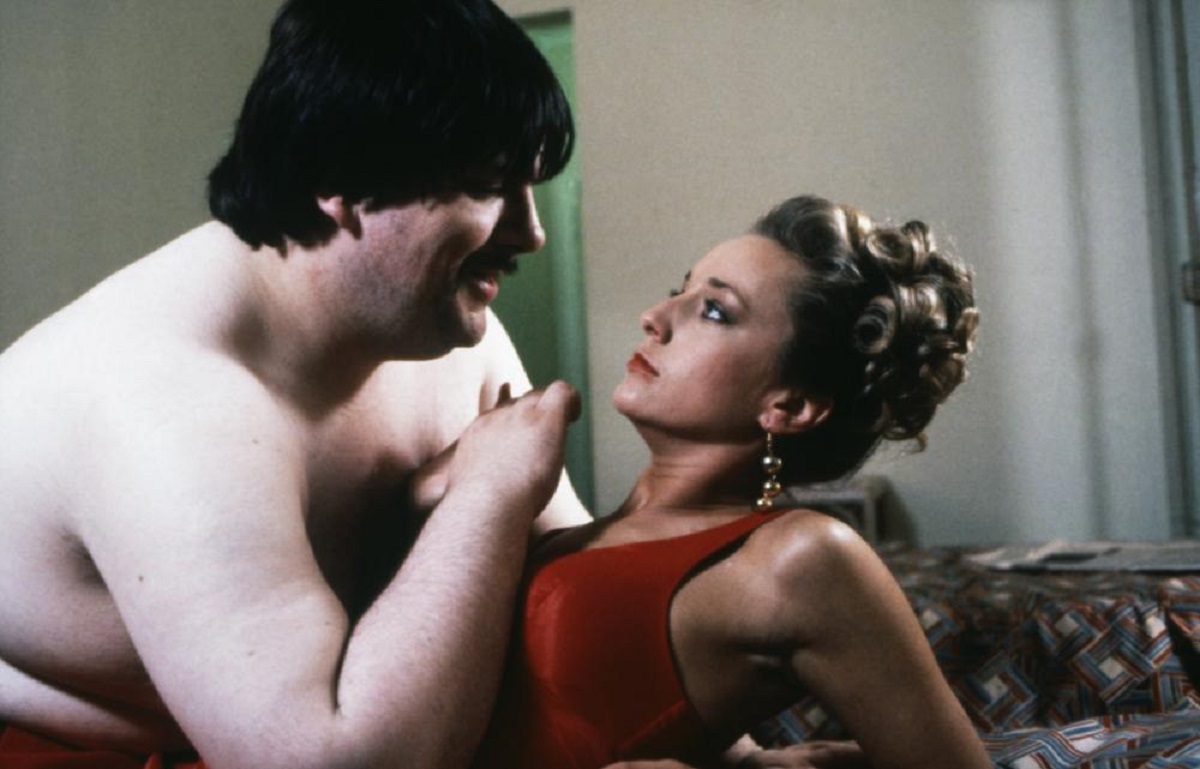
There is a grotesque scene where Lia Williams lets Michael Cule’s fat, naked professor fuck her, where she chides him for prematurely ejaculating and then he starts to beat her, whereupon she turns the tables, ties him up and puts a plastic bag over his head and watches him expire. There is also a perverse performance from David McCallum as a dentist who forces Lia Williams to perform oral sex on him in an empty carpark building, and an acerbic scene where Lia confronts three men attempting to set alight an old bag lady in an alleyway.
None of the violence is particularly convincingly directed but there is something refreshingly sordid to the film. All the moralistic outrage aside, Dirty Weekend is considerably better a film than most of Michael Winner’s others – Helen Zahavi’s almost monomaniacal venting of bile against men gives it a dark intensity that Winner’s Death Wish films lack. Certainly, it is a film that, for all its un-PC liberation fantasy, is much more honest and has more sincere feeling than the so-called feminist empowerment fantasies of big-budget junk like Enough (2002).
Michael Winner’s other films of genre note are:– The Nightcomers (1971), a prequel to Henry James’ oft-filmed The Turn of the Screw (1898); the classic vigilante film Death Wish (1974); the occult film The Sentinel (1977); Death Wish II (1981); the psycho-thriller Scream for Help (1984); Death Wish 3 (1985); and Parting Shots (1999) where a dying man sets out to eliminate those who made his life miserable.
Trailer here