

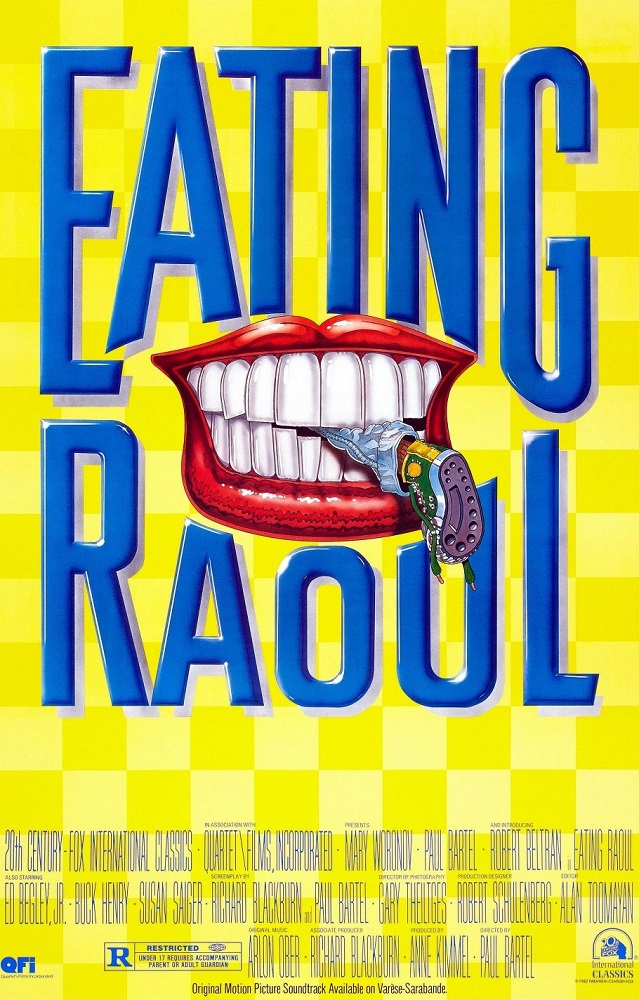
USA. 1982.
Crew
Director – Paul Bartel, Screenplay – Paul Bartel & Richard Blackburn, Producer – Anne Kimmel, Cinematography – Gary Thetges, Additional Photography – Karen Grossman, Music – Arlon Ober, Pyrotechnic Effects – Frank Pope, Makeup Effects – Peter Knowlton, Production Design – Robert Schulenberg. Production Company – Bartel Films Inc.
Cast
Paul Bartel (Paul Bland), Mary Woronov (Mary Bland), Robert Beltran (Raoul Mendoza), Susan Saiger (Doris the Dominatrix), Garry Goodrow (Drunk Swinger), John Shearin (Ed Folsey Jr), Richard Blackburn (James), Buck Henry (Mr Leech), Hamilton Camp (John Pegg), Richard Paul (Store Owner), Lynn Hobart (Lady Customer), Mark Woods (Hold-Up Man), Darcy Pulliam (Nurse Sheila), Ben Haller (Dewey), Ed Begley Jr (Hippie), Dan Barrows (Bobbie R)
Plot
Husband and wife Paul and Mary Bland live in disdain of the L.A. swinger culture around them. Their dream is to set up an exclusive restaurant in Valencia but this is thwarted by lack of money. Their problems are added to after Paul is fired from his job as a wine store clerk for refusing to sell cheap wine and when a buyer steals several valuable bottles of wine Paul was planning to sell. When one of the swingers in the apartment block tries to force himself on Mary, Paul is forced to brain him with a frying pan. When they discover several hundred dollars in the man’s wallet, they take the money and dispose of the body. They then come up with a scheme to lure rich swingers to their apartment by advertising as dominatrixes and then killing the swingers for their money. This idea proves very successful. However, when they go to have a new set of locks installed, their scheme is discovered by Raoul Mendoza, who advertises as a locksmith and then returns to burgle his customer’s apartments. They agree to a profit-sharing arrangement with Raoul, with Raoul selling the bodies and belongings while they take the money. This is endangered when Raoul seduces Mary and then decides that Paul must be bumped off so that Mary can be his.
During the 1980s, Paul Bartel gained a reputation as a minor cult director. Bartel first appeared with the acclaimed but little-seen short film The Secret Cinema (1969) about a woman who discovers that her life is secretly being filmed. Bartel then raised the money independently to make Private Parts (1972), which prefigures much of Eating Raoul in its tale of fetishists living at a skid row L.A. hotel. Bartel then fell into the Roger Corman/New World Pictures camp where he acted in several New World films and then directed the hit sf black comedy Death Race 2000 (1975) and its non-genre follow-up Cannonball (1976).
The majority of Paul Bartel’s cult however rests on Eating Raoul, a film that Bartel raised the finance for himself and made over a period of several years. Eating Raoul was brief festival favourite around the world and gained a healthy cult afterlife. Bartel went onto make several other better-budgeted films including Not for Publication (1984), Lust in the Dust (1985), The Longshot (1986), Scenes from the Class Struggle in Beverly Hills (1989) and Shelf Life (1993). He even remade The Secret Cinema as an episode of Steven Spielberg’s Amazing Stories (1985-7) tv series.
However, none of these subsequent efforts ever enjoyed the success that Eating Raoul did. For many years, Bartel also attempted to mount an Eating Raoul sequel entitled Bland Ambition but this never emerged before his death in 2000. Bartel is probably better known as an actor, having appeared in supporting roles in numerous B movies for Roger Corman as well as Tim Burton’s first film the short Frankenweenie (1984), the Sesame Street film Follow That Bird (1986) and The Pope Must Die (1991) among others. Bartel also wrote and starred in the bad taste comedy Mortuary Academy (1988).
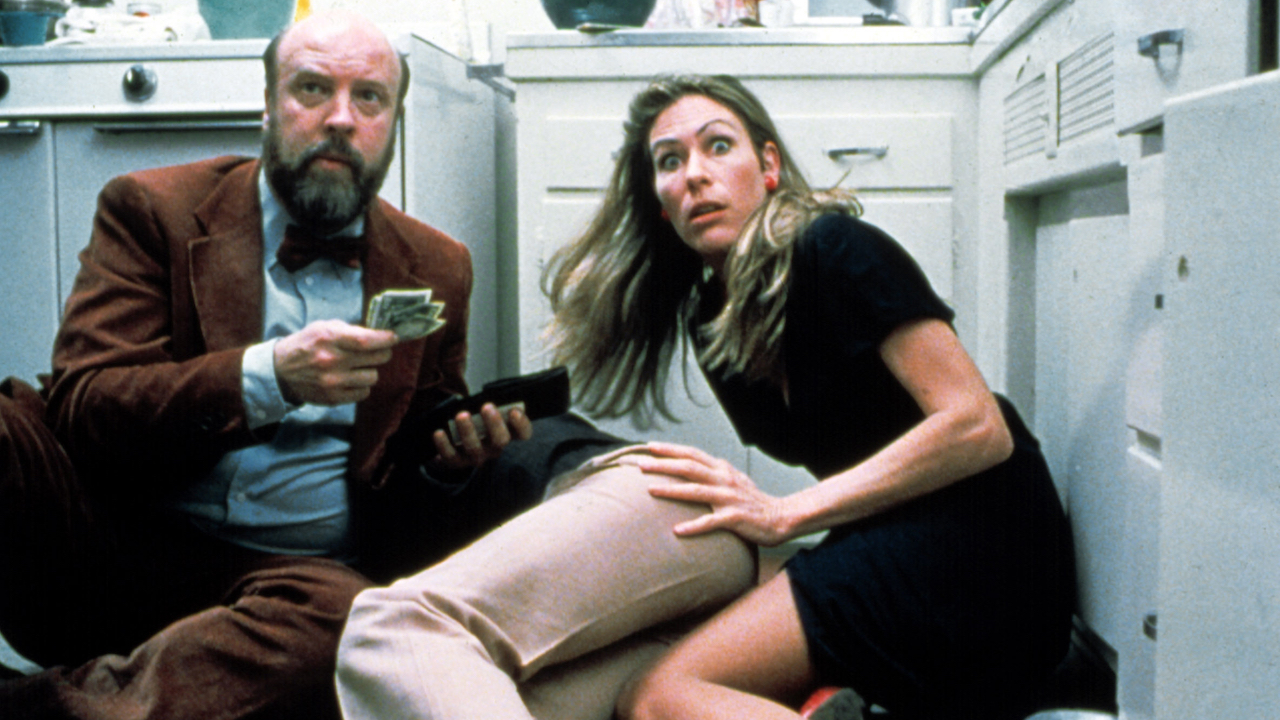
Personally, I find both Eating Raoul and the Paul Bartel cult to be overrated. Bartel is like a lesser John Waters. Both Bartel and Waters love delving into bad taste, sexual perversity and mount satiric attacks on middle-class mores, although Bartel certainly shies away from any of the full-on assaults on good taste that early John Waters films like Pink Flamingos (1972), Female Trouble (1974) and Desperate Living (1977) do. If you want a John Waters film to compare Eating Raoul to, think more of the farcical black humour of Serial Mom (1994). The difference between Paul Bartel and John Waters might be that while Waters gleefully enjoys the company of the perverts and is in there like a kid who has just discovered he can be naughty and get away with it, Bartel stands back in affected mock disdain.
I actually found myself bored with Eating Raoul both when I initially saw it and upon subsequent re-reviewing. Paul Bartel is a director who lacks subtlety. Maybe it is just that I have been hanging out in the company of fetishists for too long but Bartel’s portrait of the swingers and various kinksters throughout the film lacked a satiric wit. (That said, there are many other reviewers who find Eating Raoul outrageously funny). Bartel has a tendency – one also shared by John Waters’ more mainstream films – to hit people over the head until every single person in the audience gets the gag. Take away the risque sexual element, which ended up being Eating Raoul‘s sole cause celebre, and all that is left is often a series of shrill one-dimensional cartoon cut-out figures flouncing around hysterically.
The similarities between Paul Bartel and John Waters do not end there. Both Waters and Bartel are/were gay men. One certainly does not wish to criticise a film based on someone’s sexual preferences. That said, you cannot help but see Eating Raoul as a film made by a rather prissy gay man – it reads exactly like it were made by someone who is obsessed with the snobbery of good taste and deplores vulgarity with a catty sarcasm. Most of all, Bartel maintains a mock disdain for 80s swinger culture:– “This world is overflowing with sexual freaks – I’m glad we’ve found each other”, “Horrible sex-crazed maniacs that nobody in the world would miss,” he and Mary Woronov are constantly telling one another.
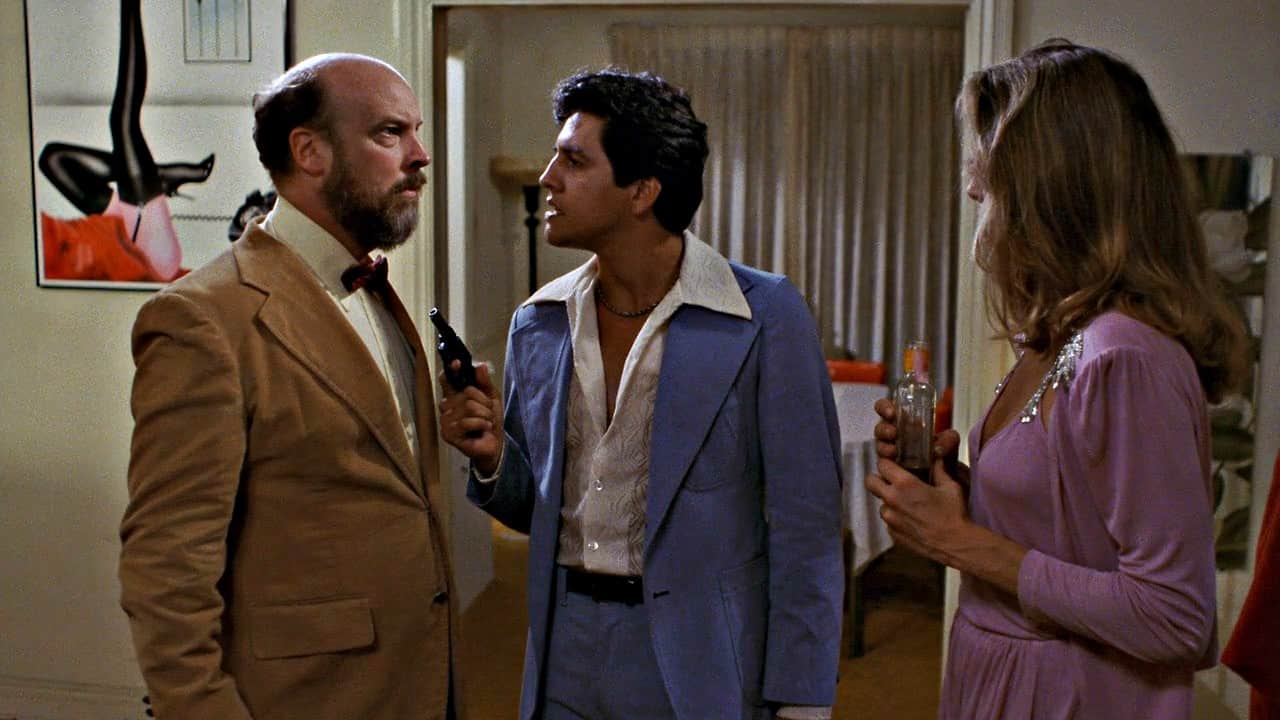
The more one reads about Paul Bartel, the more Eating Raoul feels like it is an unconscious outthrust of Bartel’s ego (and certainly of the characters he often played on screen). On one level, it is a film about sticking a knife into middle-class morality and satirising the 70s swinging fad but beneath that it also reads like Bartel maintaining a sarcastic disdain for the world around him and where it seems all that matters is conducting oneself with the snobbish affectations of good class. Bartel also seems to deplore the messy business of sex – the swingers and kinksters are seen as disposable because they are vulgar, while Bartel and Woronov’s characters sleep in two different beds (it is hard to tell if this is part of the satire or a comment on platonic marriages).
Even here, Bartel has a sad cynicism. The film gets bent out of shape at times to include an element where wife Mary Woronov falls prey to the temptations of earthy (hetero)-sexual desire. It feels in all this that it is Bartel passing a sad kind of judgement on her too (his platonic wife) for failing to meet his standards – in the end, the only real character who seems uncorrupted in Bartel’s farce is the one played by Bartel himself. As a film, Eating Raoul treads a fine line between satire and between what starts to blur into its creator’s own snobbery – it feels like one man being bitchy and sarcastic simply because the world fails to meet his standards.
The only player to emerge from Bartel’s cartoonish farce is his frequent collaborator Mary Woronov. Indeed, Woronov became a cult queen during the 1980s, a large part of which was due to her performance in Eating Raoul. Alas, Woronov is almost too strong a presence for Bartel’s satire of sexuality. The role of Mary should have been prim and straight-laced, only Woronov plays with her usual arch sultriness whether she is playing the straight-laced part or whether she is being tempted and as a result ends up stealing a large part of the film. Quite well placed up against her is Robert Beltran – later to play Commander Chakotay, the second-in-command about tv’s Star Trek: Voyager (1995-2001) – who gives an amusing performance of macho Latin cocksureness. Woronov comes to life during the scenes being seduced by Robert Beltran but these scenes have an oddly erotic charge that seems out of place amidst the rest of Bartel’s mock outrage against sexual vulgarity, as though they have strayed in from another film altogether.
Trailer here