

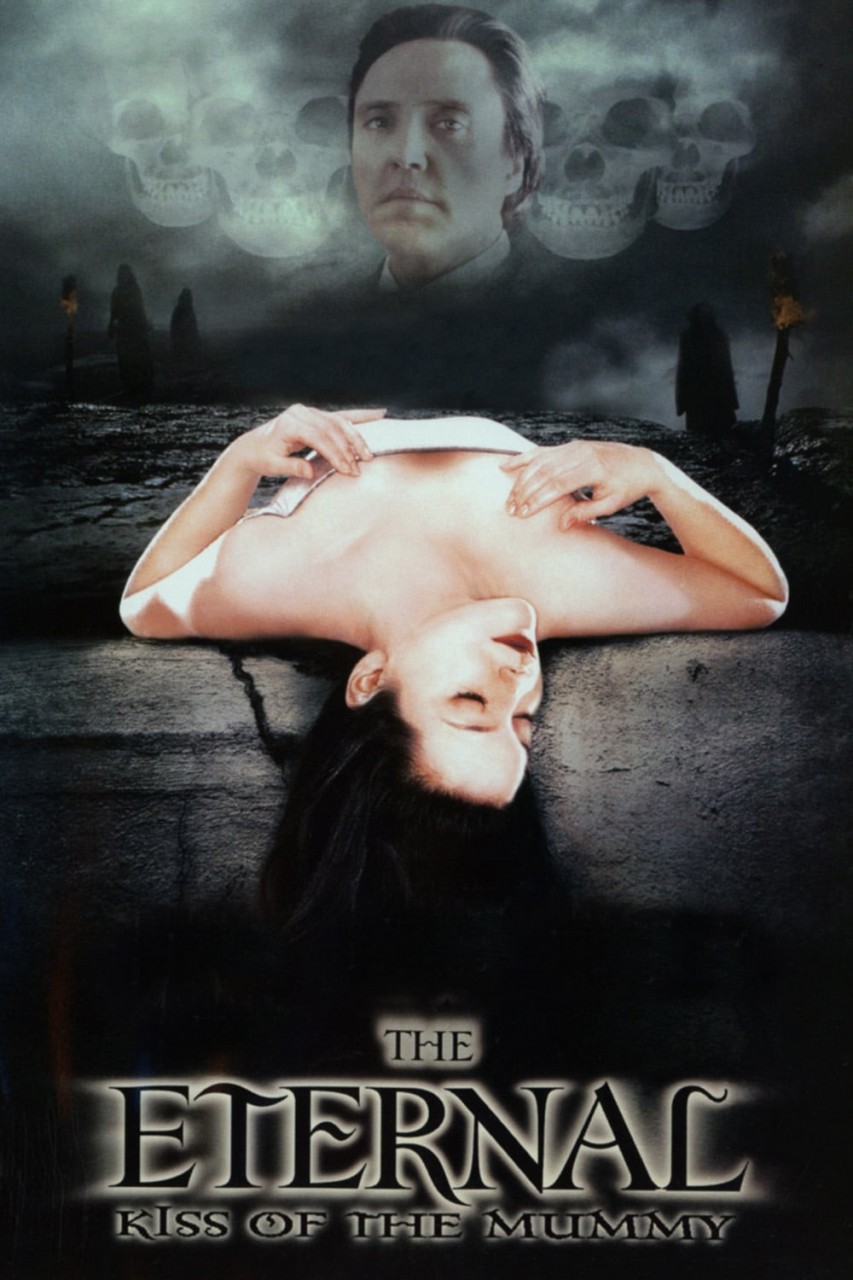
aka Trance
USA. 1998.
Crew
Director/Screenplay – Michael Almereyda, Producers – Mark Amin & David C. Bushnell, Photography – Jim Denault, Music – Simon Fisher Turner, Music Supervisor – Barry Cole, Special Effects – Team FX, Makeup Effects – Todd Kleitsch & Neal Martz, Production Design – Ginger Tougas. Production Company – Trimark.
Cast
Alison Elliott (Nora/Niamh), Jared Harris (Jim), Jeffrey Goldscharfe (Jimmy Jr), Christopher Walken (Bill Ferriter), Rachel O’Rourke (Alice), Lois Smith (Mrs Ferriter), Karl Geary (Sean), Paul Ferriter (Joe Boylan), Jason Miller (The Doctor)
Plot
Husband and wife Jim and Nora leave New York to visit her family home in Ireland and, upon medical advice, to dry out from their mutual drinking problem. At the old family home, they find Nora’s uncle Bill has unearthed the mummy of a Druidic witch from a nearby peat bog. The mummy now comes to life whereupon it transforms into a doppelganger of Nora and starts killing people. The others try to stop it but the doppelganger proves invulnerable to all damage.
Michael Almereyda was one of the more potentially promising genre directors to have emerged in the 1990s. Almereyda has yet to have a hit to solidify his name, although there is a small cult around his second film Nadja (1994). All of Almereyda’s films overhaul old stories and themes – Nadja is a scene-for-scene reworking of Dracula’s Daughter (1936), although it is also Almereyda’s least interesting film, being too much style and too little substance. The Eternal/Trance was a commercial flop.
Almereyda next went on to make Hamlet (2000), which intriguingly transplanted Shakespeare into the modern day. Following this, Almereyeda made the baffling Happy Here and Now (2002) about the search for a woman who has gone missing on the internet, and then subsequently turned to documentary making, before returning to fiction with another modernised Shakespeare adaptation Cymbeline (2014) and the acclaimed Experimenter: The Story of Stanley Milgrim (2015), his best film to date, the sf film Marjorie Prime (2017) set in a future where people recreate holograms of their departed loved ones, and the biopic Tesla (2020).
Despite being the least successful of Michael Almereyda’s films, The Eternal is actually his best. Again Almereyda revises a well-used them – in this case the mummy story – but does fascinating things with it. The mummy genre is one that seems to exude as much in the way of dusty creakiness as its main character. There is almost nothing original that has been conducted with the mummy film for decades. However, 1998-9 suddenly offered a number of major revampings with the big-budget, effects-driven likes of Talos the Mummy/Tale of the Mummy (1998) and The Mummy (1999).
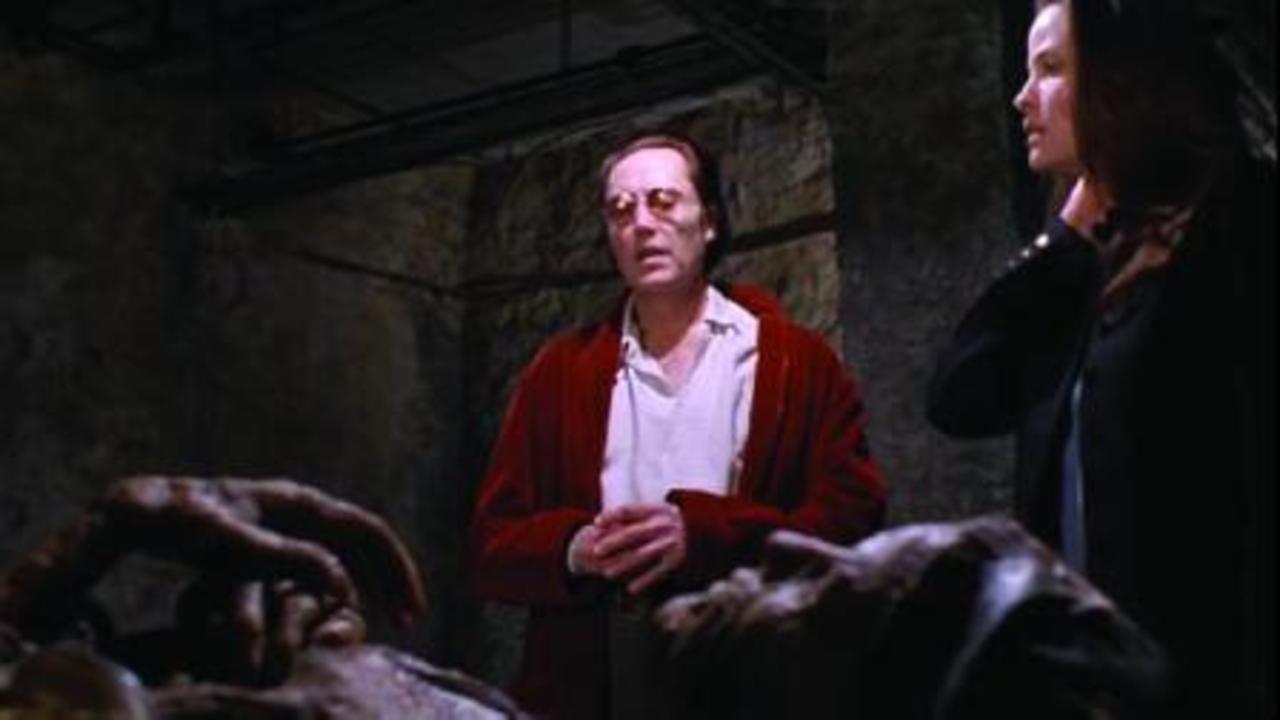
95% of all mummy films circle around the cliche images of Ancient Egypt, while there are a handful of Mexican films that feature Aztec mummies. Almereyda’s considerable novelty is in transplanting the character to come up with what at face value seems the quite incompatible image of a mummy film located in Ireland. The initial concept seems bizarrely incongruous but as soon as Almereyda starts to throw up ideas about Druidic witches buried in peat bogs, the idea develops remarkable plausibility.
Almereyda quickly despatches with any idea of shuffling, bandage-enwrapped creatures and develops a remarkably haunting story at the centre of which lies, as in Nadja, an ethereally mysterious yet deadly woman. Almereyda creates a great deal of atmosphere, slowly drifting through the large old haunted mansion, developing an increasingly spooky tone with images of the mummy transforming into a doppelganger of Alison Elliott and a series of hypnotically dreamy scenes of it seducing and killing its way through the household.
The film becomes particularly good during its latter third with the images of the doppelganger as a creature that cannot be killed, continuing on despite gunshot wounds and electrocution. The Eternal alone of Almereyda’s works so far pegs him as a director of much promise.
Trailer here