
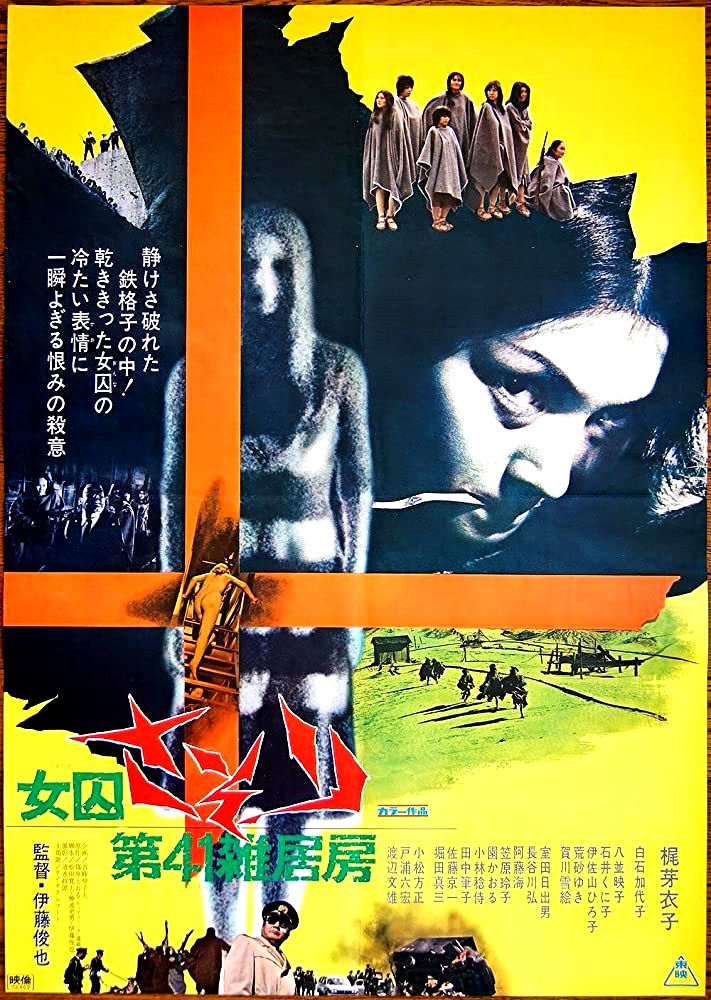
(Joshu Sasori Dai 41 Zakkyobou)
Crew
Director – Shunya Ito, Screenplay – Shunya Ito, Norio Kanami & Hiro Matsuda, Based on the Comic Strip Created by Tooru Shinohara. Production Company – Toei.
Cast
Meiko Kaji (Matsu/Sasori/Scorpion), Kayoko Shiraichi (Oba), Fumio Watanabe (Warden Goba), Yukie Kagawa (Haru)
Plot
In a Japanese women’s prison, the female prisoner Matsu, nicknamed Scorpion, is treated with extraordinary cruelty and sadism by the warden Goba. While being transferred, she is able to affect an escape along with six other women. Leading them across the wastelands, all the while pursued by Goba, they take their revenge on the men who seek to abuse them.
This is a film that comes with a reputation that, as it is becoming more well known, has turned into a psychotronic cult favourite. It was the second in a series adapted from a manga by Tori Shinohara that began in 1970. First in the film series was Female Convict 701: Scorpion (1972) and this was followed by Female Convict Scorpion: Beast Stable (1973) and Female Convict Scorpion: Grudge Song (1973), all starring Meiko Kaji and directed by Shunya Ito. The series was later revived as New Female Prisoner Scorpion: #701 (1976), New Female Prisoner Scorpion: Special Cellblock X (1977), Female Convict Scorpion: Death Threat (1991), Female Convict Scorpion (2008) and Female Prisoner No. 701: Sasori (2011).
The reputation Female Convict Scorpion: Jailhouse 41 has is of a Women in Prison film of wild ferocity – although this is one that, once the film is seen, does seem overrated. In many ways, the actual film is tame – there is little in the way of the usual exploitative bare female flesh that inhabits the rest of the 1970s Women in Prison films, the gore is pulpishly silly, and when it comes to the requisite rape scene the camera tastefully looks away and allows everything to take place off-screen. Not to say that the film fails to work, it is just that the ferocity is something that works on a much more cerebral level.
In interviews, Shunya Ito says he saw the film as a statement about revolt against institutionalised force, that Scorpion acts as a single voice of defiance to say “No”. In truth though, the film’s politics are not that different from the primal red-bloodedness of revenge films such as Straw Dogs (1971), The Last House on the Left (1972) and especially women’s revenge films such as Day of the Woman/I Spit on Your Grave (1978), Dirty Weekend (1992) and Baise-Moi (2000). Throughout all men are painted as cruel and sadistic oppressors and rapists – from the prison guards to the bourgeoisie tourists who gleefully relive their experiences forcibly taking peasant women in China during the War and manhandle the female tourguide.
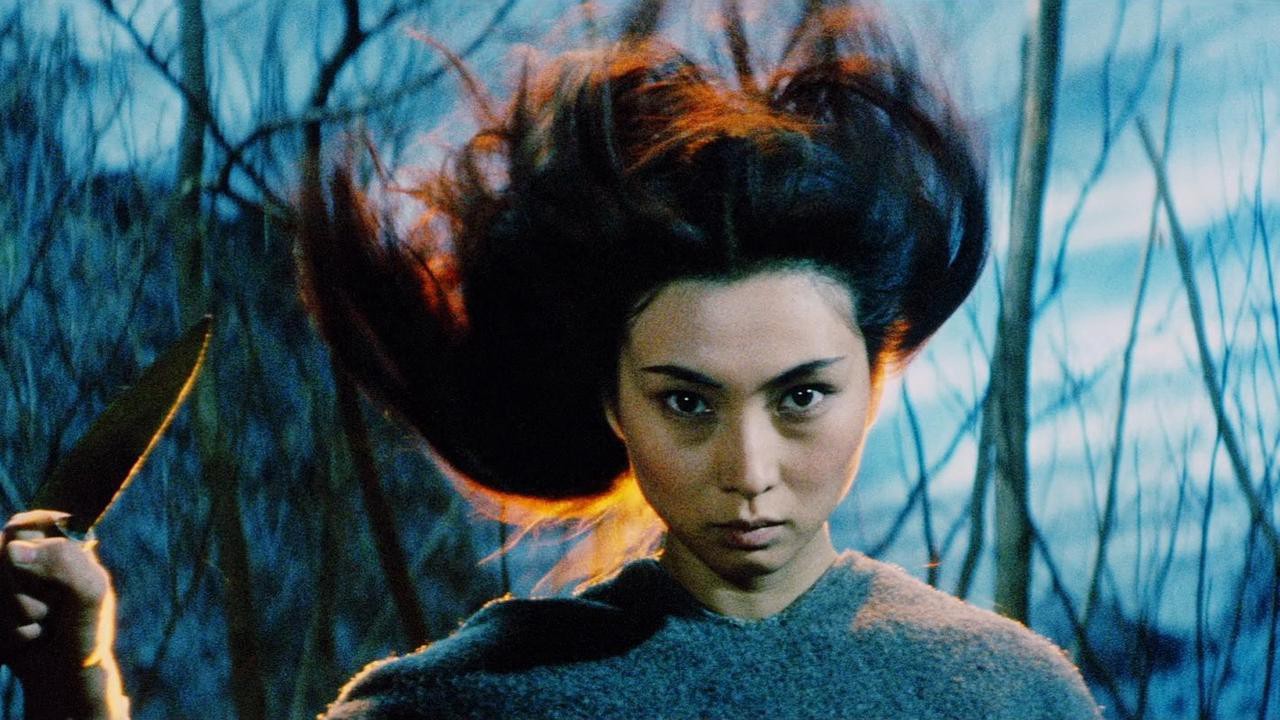
What makes Female Convict Scorpion: Jailhouse 41 more interesting than your average Jess Franco WIP film is Shunya Ito’s strikingly stylised approach. Lead actress Meiko Kaji gives a remarkably intense performance, one that is communicated entirely through stares of hatred and ferocity – she has a total of two lines of dialogue in the entire film. Equally, Kayoko Shiraichi as Oba gives a theatrically OTT performance, such that at times you think you are in the midst of a noh theatre version of a WIP film.
Shunya Ito uses narrative devices such as randomly cutting the sound off for about 30 seconds at a time and at one point breaking into traditional Japanese narrative song to tell the stories of the seven escapees. The landscape is also made to physically echo the girls’ state of mind – a mysterious wind echoes Scorpion’s anger; and a river turns to waterfalls of blood to echo the spilt blood of a rapee.