
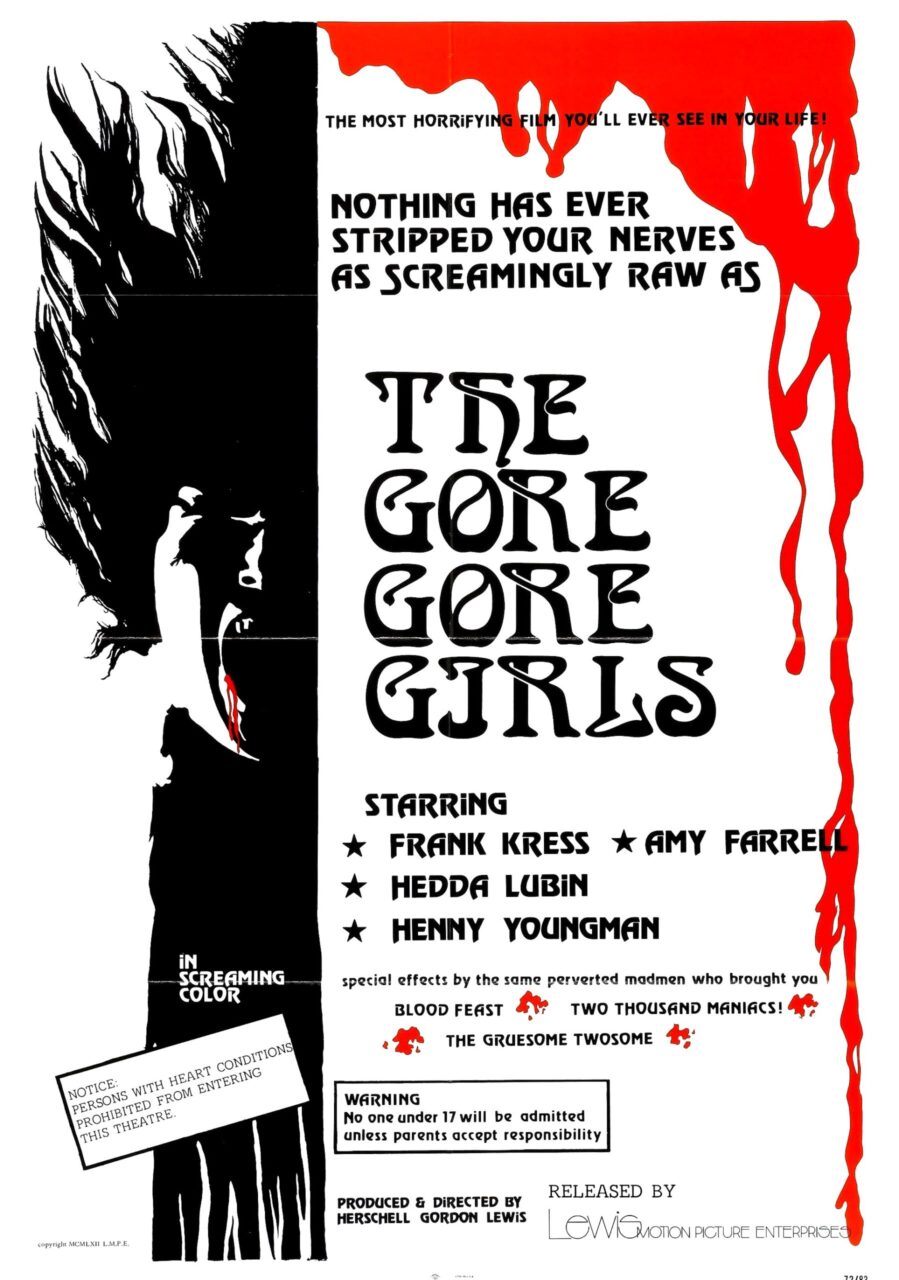
aka Blood Orgy
USA. 1972.
Crew
Director/Producer – Herschell Gordon Lewis, Screenplay – Alan J. Dachman, Photography – Alex Ameri, Background Music – Sheldon Seymour [Herschell Gordon Lewis], Music Coordinator – Larry Wellington. Production Company – Lewis Motion Picture Enterprises.
Cast
Frank Kress (Abraham Gentry), Amy Farrell (Nancy Weston), Henny Youngman (Marzone Mobily), Hedda Lubin (Marlene), Russ Badger (Lieutenant Anderson), Nora Alexis (Lola Prize)
Plot
After a stripper is sadistically murdered, Abraham Gentry is offered $25,000 by the local newspaper The Globe to investigate. As Gentry and junior reporter Nancy Weston begin frequenting strip clubs in search of clues, other strippers are murdered in sadistic and extreme ways.
Herschell Gordon Lewis developed a notoriety in the 1960s after making the first splatter film Blood Feast (1963). Lewis went onto make a series of similar films, which included the likes of Two Thousand Maniacs! (1964), Color Me Blood Red (1965), The Gruesome Twosome (1967), Something Weird (1967), A Taste of Blood (1967) and The Wizard of Gore (1970). All of these were based around not much more than the presentation of frequent episodes of extreme gore. Lewis displays little in the way of filmmaking skill, while the acting in his films verges on near ineptitude.
In between making splatter films, Herschell Gordon Lewis worked in various other exploitation genres, most notably the 1960s nudie film, although it is for his splatter films that his notoriety rests today. Lewis’s reputation was sufficient for the Medved Brothers to nominate him as one of the four Worst Directors of All Time in The Golden Turkey Awards (1980), only to be beaten out for the honour by Edward D. Wood Jr.
The Gore Gore Girls was Herschell Gordon Lewis’s last splatter film, before he retired as a director. He subsequently went onto even greater success, becoming a direct-marketing millionaire and now lectures on the subject in universities. Although Lewis did come out of retirement 30 years later at the age of 76 to make the long promised Blood Feast 2: All U Can Eat (2002), followed by The Uh-Oh Show (2009). He passed away in 2016.
It is hard to offer an objective review of The Gore Gore Girls. This video version available in New Zealand is clearly one that has been heavily cut. US running time is listed as 84 minutes and the version seen here is missing at least ten minutes of that. Reading through other comments on the film, it is clear that some of the gore set-pieces have simply been removed – the scenes where a woman’s buttocks are beaten with a meat tenderiser and then salted; where a woman’s face is shoved into a vat of French Fries; and the infamous tongue-in-cheek scene where a woman’s nipples are sliced off and white milk flows from one breast and chocolate from the other.
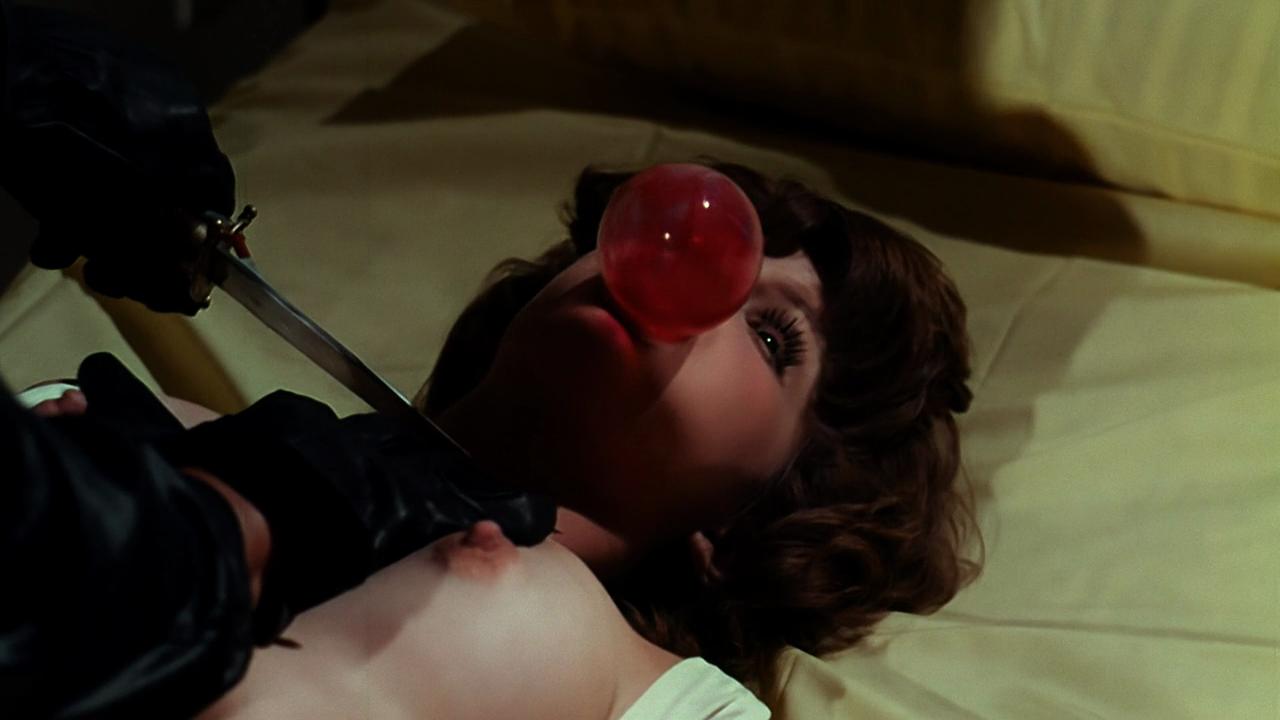
There is still one or two scenes left in this version – the opening where a girl’s face is shoved into a mirror in her dressing room and an incredibly fake-looking scene where a head is split open with a machete – but even these have clearly been trimmed. While you can debate the moral merits of a trimming a film that revels in such extreme sadism against women, cutting a Herschell Gordon Lewis film of its gore effects does remove the single reason that anyone might have to want to view it.
Effectively emasculated of its sadism, all that leaves The Gore Gore Girls as is a tawdry, badly made film. And with the main purpose for which the film was made almost entirely removed, it is impossible to give an objective opinion of whether The Gore Gore Girls is a good or a bad splatter film. Among comments made by others, The Gore Gore Girls is regarded as the film where Herschell Gordon Lewis takes his gore to some of its most sadistic extremes, while others regard Lewis’s clearly having planted his tongue in his cheek and not taking too much of it seriously as a redeeming factor.
Throughout his directorial career, Herschell Gordon Lewis vied between both nudie and splatter films. He often gives the impression of having regarded these genres as being fairly interchangeable – in either women were objectified and Lewis would offer up various set-pieces where we either saw them divesting their clothes or else having their body parts removed. These set-pieces would be offered up at timed intervals and were either films’ only raison d’etre. The connection is a good deal more overt here where Lewis seemed to have finally hit upon an idea for combining both genres – thus he spends much time titillating us with various scenes of the strippers doing their act (the women cast are clearly non-professionals and dance badly) before they are hacked apart. (In many regards, this idea of titillating an audience with naked women before hacking them up is prototypic of some of the more extreme examples of the slasher film in the 1980s).
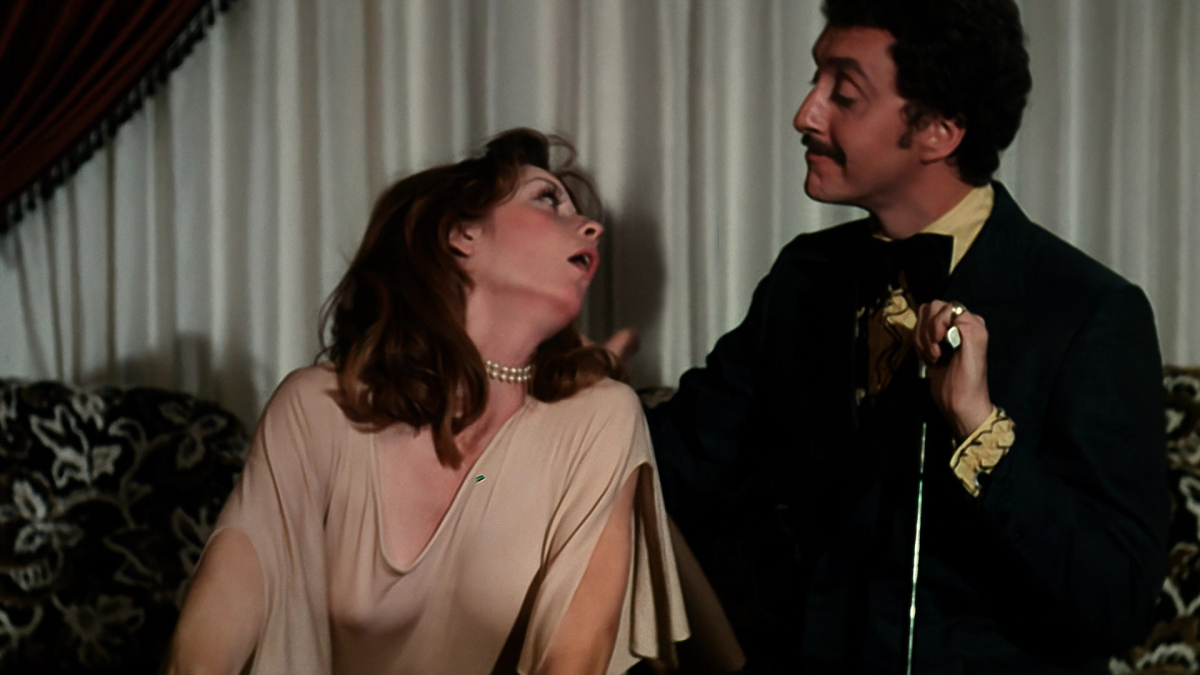
Even aside from the gory set-pieces killing the strippers, The Gore Gore Girls has a nasty underlying misogyny. The (female) killer’s eventual motivation is extremely chauvinistic – she hates and kills other women because her looks have been disfigured and because all the other girls have been making out with sleazy, mid-50s club owner Henny Youngman and she has been missing out. Hero Frank Kress goes through the film making some bad puns. His epitaph for the villainness, after she falls off a balcony and gets her head run over by a car, is thoroughly obnoxious: “Poor Marlene, hers is the saddest story of all. She lost face three times. First with her wrestling fans, then with the striptease patrons and finally between a layer of concrete and the wheel of a car. She did go out in style though – it was a new car.”
In other regards, The Gore Gore Girls, the last film that Herschell Gordon Lewis made before his retirement, is also his most professional. It is the only one where he managed to cast anything vaguely even approaching a name actor – stand-up comic Henny Youngman, who has an amusing part as a strip club owner. Lewis also has somewhat better actors here than he usually does. The hero and heroine’s relationship is charted with some amusement and the two actors present (Frank Kress and Amy Farrell) are at least competent (although in a modern film Kress’s foppish dandy hero would almost be certainly regarded as gay).
With his previous splatter film The Wizard of Gore, Lewis showed an intriguing move towards meta-fiction. Here there is an amusing fadeout where Kress and Farrell start making out and he turns to the camera and announces “You’ve seen enough” and pulls a blind down over the screen, whereupon a title card comes up and informs us, perhaps with totally accurate reflection upon Lewis’s part, that: “We announce with pride: the movie is over.” The score, pseudonymously written by Lewis, consists of dreary lounge muzak.
Trailer here