
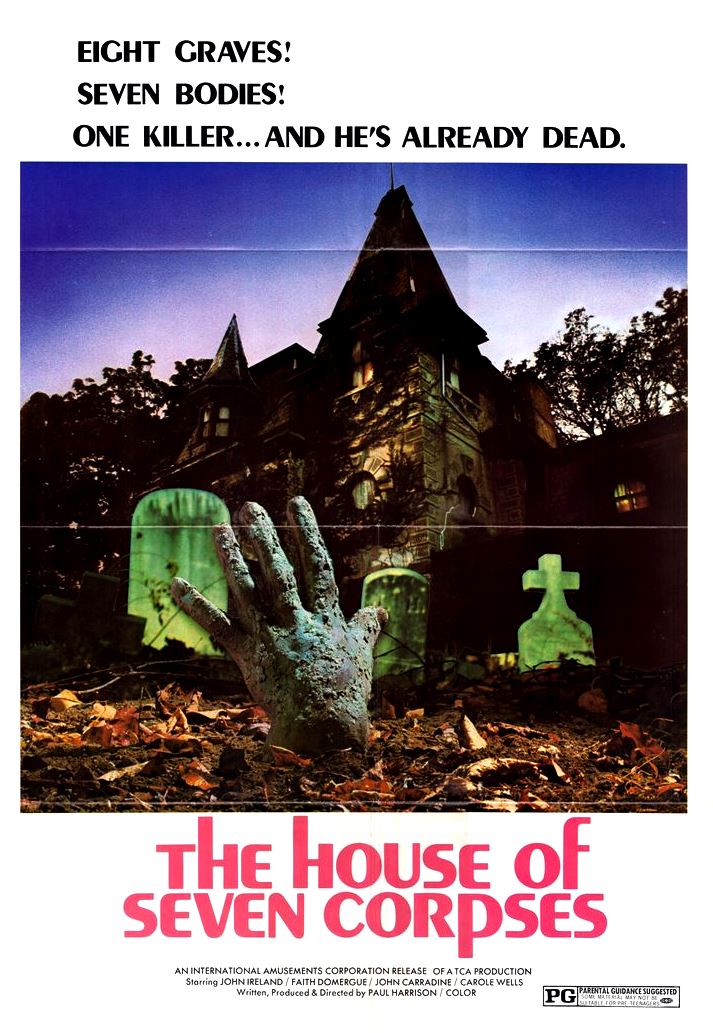
USA. 1973.
Crew
Director – Paul Harrison, Screenplay – Paul Harrison & Thomas J. Kelly, Producers – Paul Harrison & Paul Lewis, Photography – Don Jones, Music – Bob Emenegger, Makeup – Ron Foreman, Art Direction – Ron Garcia. Production Company – TCA Productions.
Cast
John Ireland (Eric Hartman), Faith Domergue (Gayle Dorian), Jerry Strickler (David), Carol Wells (Ann), Charles Macaulay (Christopher Melon), John Carradine (Edgar Price)
Plot
A production crew go to the notorious Beal mansion to make a film based on the gruesome murders that occurred there in the last century. One of the actors finds a copy of the Tibetan Book of the Dead and decides to combine readings from that into the script. This inadvertently raises a ghoul from the grave, which then starts to slaughter its way through the film crew.
The House of Seven Corpses is a cheap and shabby post-Night of the Living Dead (1968)-influenced haunted house film. It is also one that rides its shortcomings with an occasionally not untoward likeability.
If nothing else, it has an amazing cast that includes legendary B movie horror star John Carradine as the sinister caretaker; 1950s B movie queen Faith Domergue of This Island Earth (1955) fame as a vain and catty Hollywood has-been; Charles Macaulay who was Dracula to Blacula (1972) the previous year as a ham actor; and John Ireland as the hard-headed director.
The dialogue has a sometimes snappy wit – John Ireland to novice actress: “You’re supposed to be going into a trance, not an orgasm.” Some of the intercuttings of film and reality show a promise, if one that is unfulfilled. There is one good scene with John Carradine’s caretaker being seen disappearing into a grave that is revealed to be only a shot from the film but then not after all, leaving the film with an edgy flip-flop uncertainty – although director Paul Harrison never follows up on this.
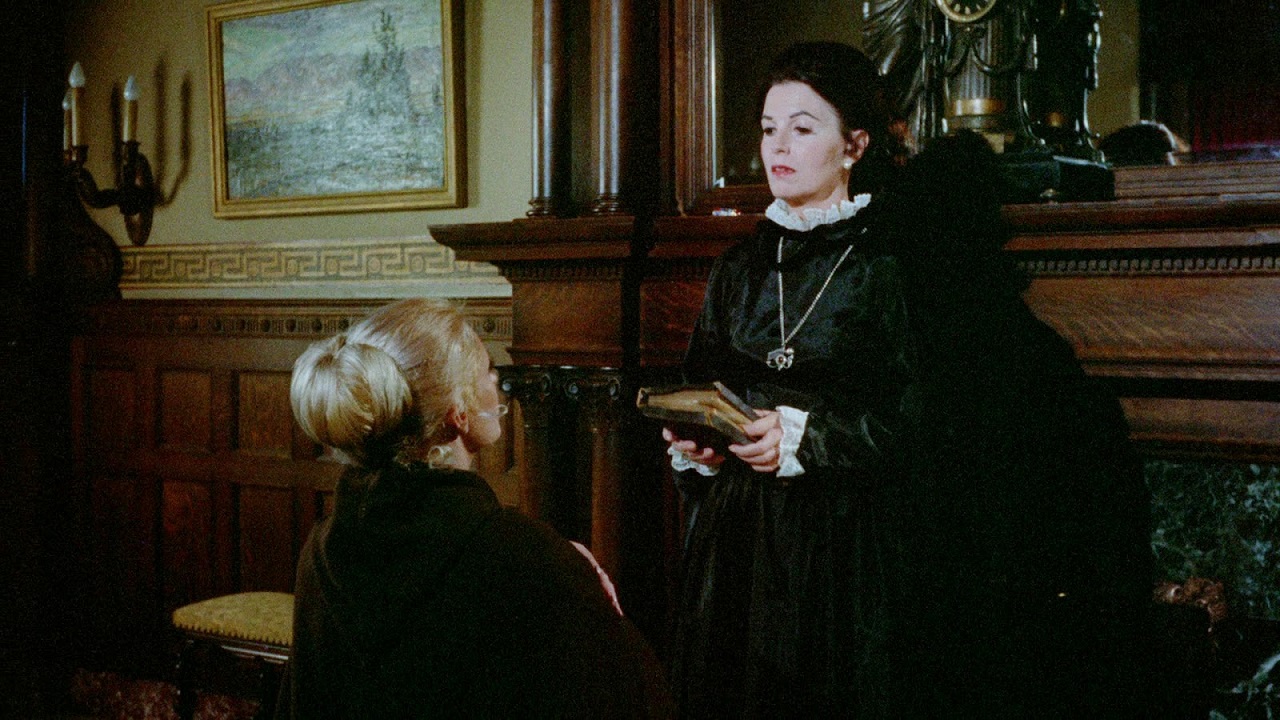
The scene intercutting between the film-within-the-film’s resurrection of a corpse and the real resurrection is a rudimentary but okay one. The atonal choral wailing seem a dreadfully pseudo attempt at occult atmosphere. The readings from the Tibetan Book of the Dead (an actual book) offer the peculiar news that the Tibetans wrote in Latin.
This was the only film directed by Paul Harrison who otherwise worked in television, best known for writing the tv series H.R. Pufnstuf (1969-70) and creating an animated version of Doctor Dolittle (1970-2).
Trailer here