
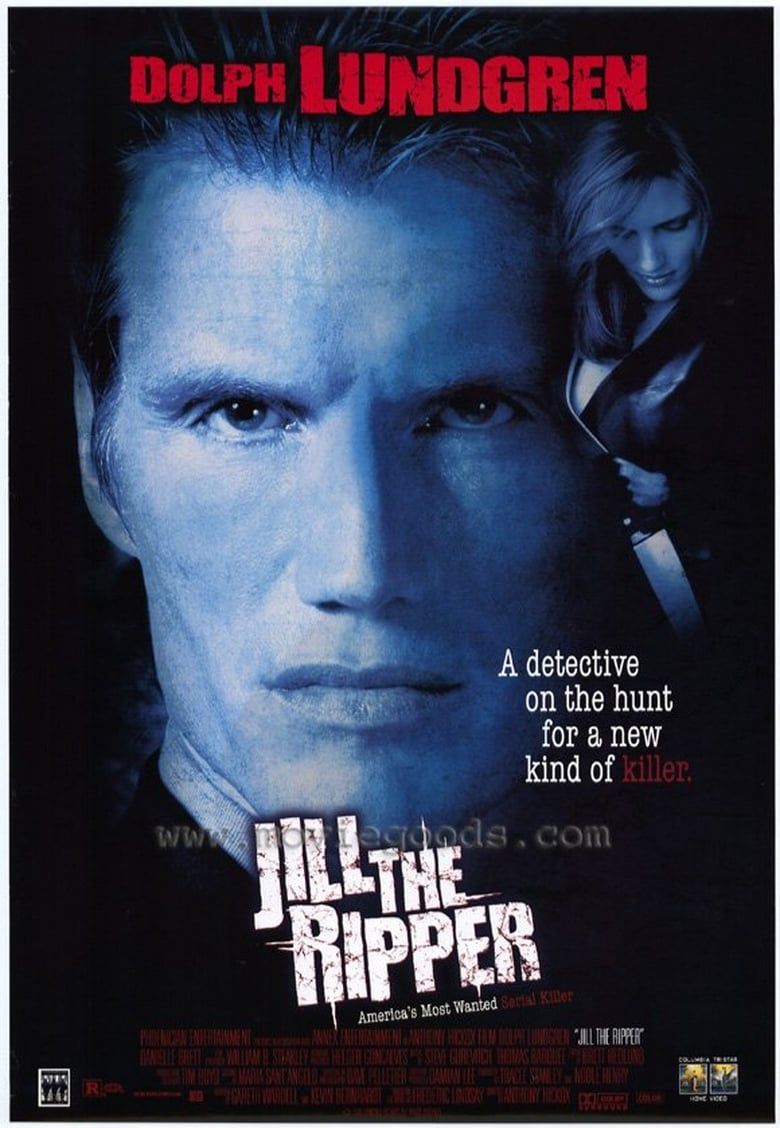
aka Jill Rips; Tied
USA. 2000.
Crew
Director – Anthony Hickox, Screenplay – Kevin Bernhardt & Gareth Wardell, Based on the Novel by Frederick Lindsay, Producers – Noble Henry & Tracee Stanley, Photography – David Pelletier, Music – Thomas Barquee & Steve Gurevitch, Production Design – Tim Boyd. Production Company – Phoenician Entertainment/Annex Entertainment.
Cast
Dolph Lundgren (Matt Sorenson), Danielle Brett (Irene Sorenson), Richard Fitzpatrick (Eddy), Sandi Ross (Mary O), Charlie Siexas (Big Jim Conway), Susan Kottman (Mrs Sorenson), Greg Ellward (Captain Reese), Kirsti Angus (Frances Reed), Victor Pedtchenko (Joe Jujavia)
Plot
Matt Sorenson, a burned-out former police detective, returns home to Boston for the funeral of his brother Michael who has been murdered. Sorenson determines to find the cause of his brother’s death. He pursues mob connections but it becomes increasingly evident that his brother was involved in sadomasochistic sex with prostitutes. Sorenson’s investigation angers both the mob and his former police colleagues. Soon Sorenson comes to realise that he is dealing with a female serial killer and that she is claiming other victims.
Jill the Ripper is another in a series of films that tail-jumped on the success of Basic Instinct (1992). Like Basic Instinct, Jill the Ripper offers up a series of killings by a female serial killer and ties in a torrid plot that delves into the seedier side of sexuality. However, Jill the Ripper is somewhat better than most Basic Instinct copycats. It has a solid plot and is directed with believability rather than an exploitative trashiness.
When it comes to sexuality, Jill the Ripper does reiterate the view promulgated by Hollywood from Cruising (1980) through Blue Velvet (1986) and the odious Blindfold: Acts of Obsession (1993) that BDSM is an unsavoury practice where practitioners, not unakin to mad scientists in 1930s films, end up unleashing forces that invariably go amok. (For a more detailed listing see BDSM in Fantastic Cinema).
However, the film also goes some way toward redressing that view. There is a highly effective speech from Danielle Brett about how BDSM is not about pain but about choosing roles and people finding ways of letting go, which hits the nail right on the head. There is also a decided kick to the film in a scene where he-man Dolph Lundrgren gets tied up and walked on by a woman clad head to toe in red leather.
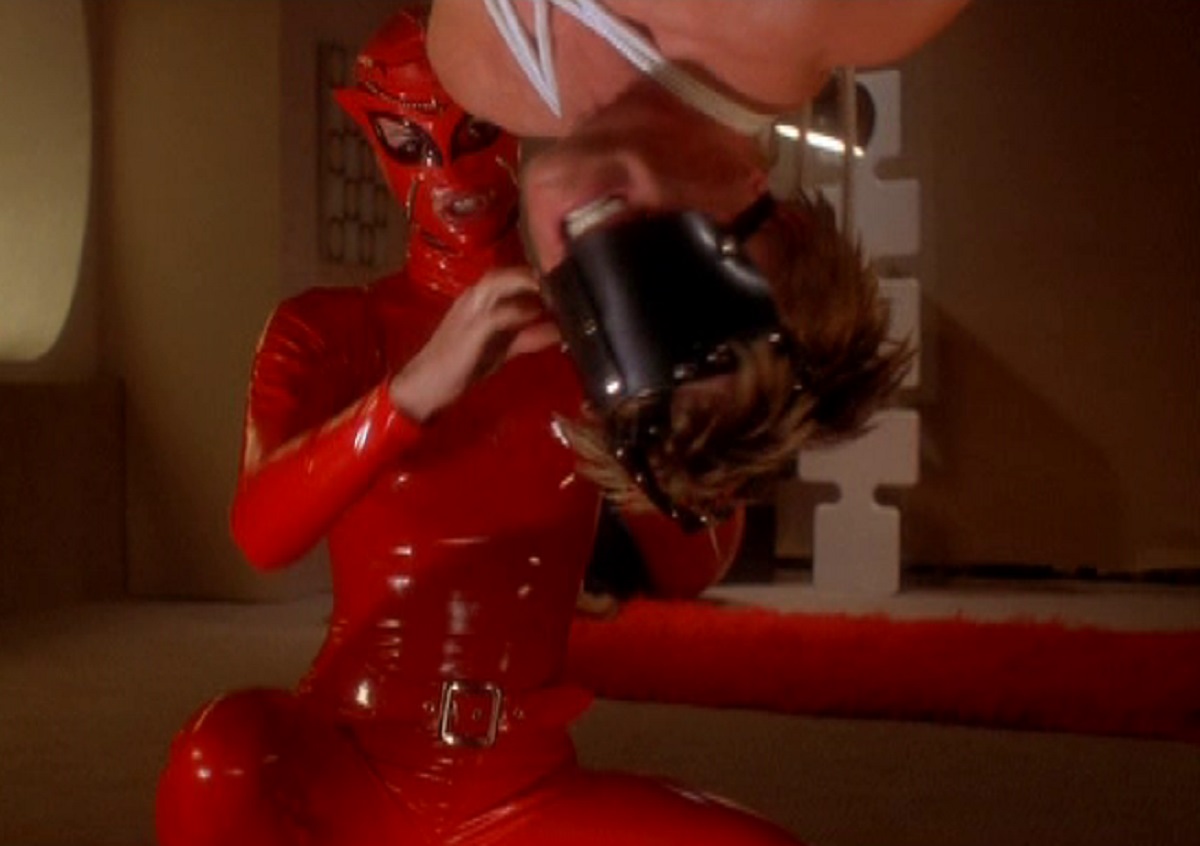
There is also a rather effective scene where Dolph Lundgren is tied up in a love scene only to find out halfway through that the woman he is with could be the killer he is hunting. The script is surprisingly sympathetic in its treatment of the female killer’s motives. The ending with her being redeemed by the hero’s love is conducted with a great deal more plausibility than the similar ending of Basic Instinct.
Jill the Ripper was directed by Anthony Hickox who has made a number of other genre outings including Waxwork (1988), Sundown: The Vampire in Retreat (1989), Hellraiser III: Hell on Earth (1992), Waxwork II: Lost in Time (1992), Warlock: The Armageddon (1993), Full Eclipse (1993), Prince Valiant (1997), Contaminated Man (2000), Blast (2004), Submerged (2005) and Knife Edge (2009), while he has also produced Children of the Corn III: Urban Harvest (1995) and Carnival of Souls (1998) and written Prisoners of the Sun (2013).
The only notable aspect of Anthony Hickox’s films up to this point has been an adolescent enthusiasm for gore effects and OTT direction. Jill the Ripper was the first of Anthony Hickox’s films that one can say they have liked and represents a promising maturation of Hickox as a director.
Trailer here