
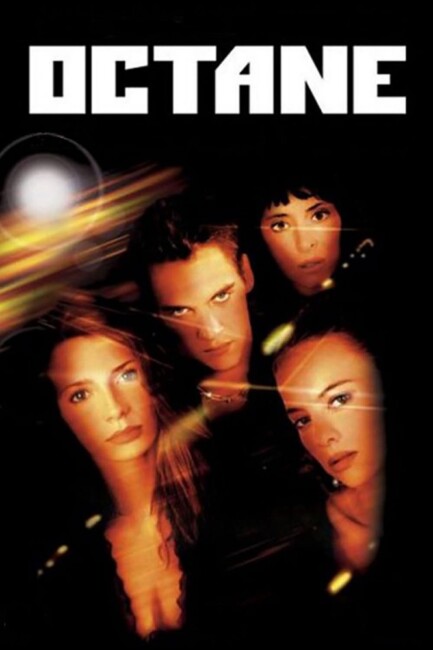
Crew
Director – Marcus Adams, Screenplay – Stephen Volk, Producers – Alistair McLean Clare & Basil Stephens, Photography – Robin Vidgeon, Music – Simon Boswell & Orbital, Digital Visual Effects – The Moving Picture Co, Special Effects Supervisor – Alain Couty, Production Design – Max Gottlieb. Production Company – Random Harvest/Harvest Pictures PLC/Harvest Pictures II/Take and Partnership/High Octane Productions/Deluxe Film Productions/The Film Fund Luxembourg.
Cast
Madeleine Stowe (Senga Wilson), Mischa Barton (Natasha ‘Nat’ Wilson), Norman Reedus (Recovery Man), Bijou Phillips (Backpacker), Jonathan Rhys-Meyers (The Father), Amber Batty (Vacation Woman), Jenny Jules (Highway Patrol Sergeant), Samuel Fröler (Marek Wilson), Gary Parker (Vacation Man), Martin McDougall (Motivational Speaker), Nigel Whitmey (Detective Stephens), Patrick O’Kane (Trucker)
Plot
Senga Wilson is driving home with her teenage daughter Natasha but they are constantly arguing. Tired of her mother’s controlling ways, Nat walks out when they stop at a roadside diner. However, when Senga goes to look for her, Nat has vanished. Senga believes that Nat has been abducted aboard a campervan and tries in vain to get the police to do something. Pursuing the campervan on her own, she discovers that Nat has been snatched by a sinister cult that practices blood drinking.
British music video director Marcus Adams made his theatrical debut with Long Time Dead (2002). Long Time Dead was a generic horror film but Adams delivered it with a fair degree of competence and style that made one look forward to seeing what else he could do, while the only other film he has delivered subsequently was the action film The Marksman (2005) and after a long absence spent directing music video to make the killer shark film Deep Fear (2023). Octane was his second film.
The script for Octane comes from British writer Stephen Volk who has written a number of silly horror films – Ken Russell’s Gothic (1986), The Kiss (1988), William Friedkin’s The Guardian (1990) and the good but absurdly contrived The Awakening (2011) and was also responsible for the BBC’s live ghost investigation special hoax Ghostwatch (1992), as well as created the tv series Afterlife (2005-6) and the mini-series Midwinter of the Spirit (2015). Octane is very much an international production – being British and Luxembourg financed, shot in Canada, featuring an American, British and Canadian cast, while pretending to be set in the American Midwest.
It would be easy to pass Octane by as a genre film on the video shelves – the title seems more appropriate to an action film than the psycho-thriller it is. Marcus Adams certainly gives the film an eerie promise at the outset. He opens with an intriguingly disorienting shot on a man’s face as blood drips down into his eye, only for the camera to then turn upside down and reveal that the man is caught inside a crashed car.
The next few scenes present a coolly alienating view of the American highway as Madeleine Stowe and daughter casually pass a crash scene with cops ominously staring at them, visit diners filled with sinister figures, rednecks and the annoyingly intrusive presence of motivational speakers on tv. It is almost certainly the vision of the American Midwest that a foreigner might glean. With the scene where the daughter suddenly vanishes and the mother is left looking around a truckstop diner trying to find clues as to where she has gone, the film promisingly looks as though is heading in the direction of the classic Dutch psycho-thriller The Vanishing (1988).
There is a reasonable suspense sequence shortly after with Madeleine Stowe climbing into an RV through the roof hatch, searching for her daughter, and left trying to escape through a narrow window as the owners of the vehicle return while at the same time trying indicate to the little girl in the car parked opposite to not give her away. Subsequent scenes where Stowe cannot be sure if the cop is on her side, the abrupt surprise return of the hippie chick and where even Stowe’s ex-husband appears to be involved in the conspiracy, attain an effectively paranoid uncertainty.
On the other hand, Octane also collapses into abject pretension. The images of the abducted Mischa Barton’s corruption are so clichéd as to verge on laughable – she is characterised as going through a teen rebellion phase, suddenly takes to wearing black eyeliner the moment she is corrupted, while everything comes at the hands of a sexually magnetic cult leader. A scene with three of them dancing in jumpsuits and taking drugs as images intercut from videogames and of cars crashing and loud music plays on the soundtrack has a ridiculously clichéd tameness that is laughable.
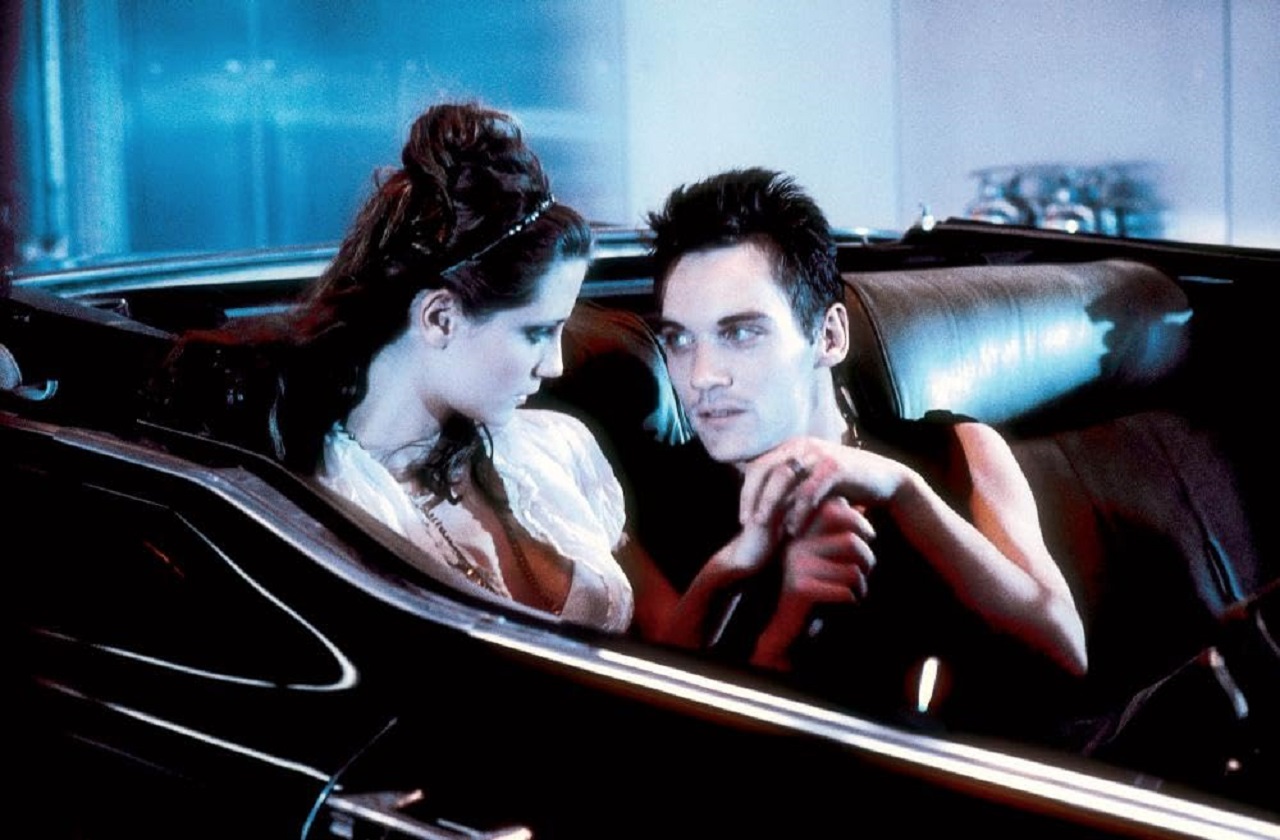
The point that the film collapses into ludicrousness is the scene where we finally meet the orgiastic cult who for no discernible reason decide to hold their activities in the middle of a factory and we come to the entirely laughable image of cult leader Jonathan Rhys-Davies trying to seduce Mischa Barton into biting razors while cavorting in the back of an open-top convertible that has been parked in the middle of a wind tunnel.
There is no credibility established to the cult. It is, for example, not at all clear how Jonathan Rhys-Davies knows about Madeleine Stowe’s abortion or why they conduct such elaborate disguises throughout. Or for that matter what they are doing holding orgies in the middle of a factory and a wind tunnel. There is a silly passover ending where Stowe and Mischa Barton stop at a gas station on the way home, a dark mirror-windowed car pulls up, Stowe thinks Barton has gone missing again, but it turns out that she hasn’t, although a razor blade has been left hanging from the car’s rearview mirror while she wasn’t looking.
Full film available online here:-