
Crew
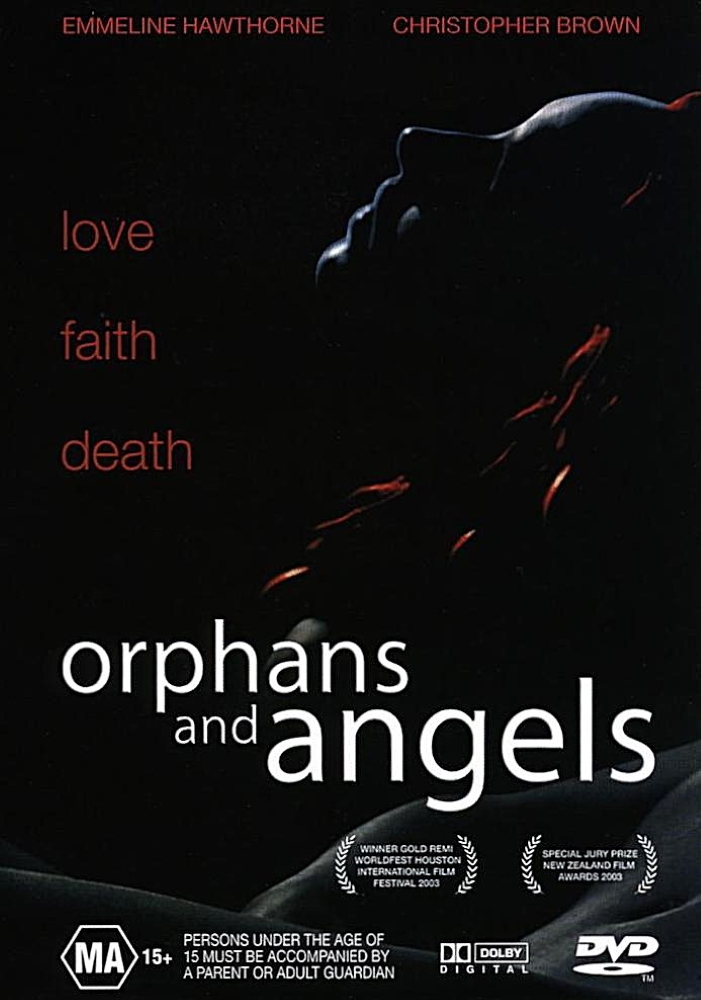
Director/Screenplay – Harold Brodie, Photography – Ian Beale, Music – Blind Divine, Special Effects Supervisor – Jason Durey, Production Design – Phil Gregory. Production Company – Karmik Films.
Cast
Emmeline Hawthorne (Theresa), Christopher Brown (John), Aaron Ward (Billy), Cal Wilson (Kim)
Plot
Theresa meets John in the street as her friend Kim is taken away by an ambulance. Unaware to her, John has just come from a bar where he bet a man $1000 to drink a jug of whiskey, something that ended up killing the man. Theresa invites John out and the two are attracted. Together they take Ecstasy and engage in mutual masturbation sessions, although do not have sex due to the fact that Theresa was raped as a teenager. Theresa begins to become increasingly exhausted and neglects her job and friends. Kim finds that John is a drug dealer and that he may have murdered another girl also called Theresa. When she taunts him about it, he retaliates by killing her with a drug overdose. However, Theresa insists on not listening to the truth, even though it becomes apparent that there is an increasingly sinister intent to John’s relationship with her.
The New Zealand-made Orphans and Angels is an interesting feature directorial debut for American-born editor Harold Brodie. The film received minor attention when it came out but has since been largely forgotten.
Harold Brodie has clearly set out to make a dark indie film. Although for its ambitions in this direction, Orphans and Angels only succeeds in being mildly subversive. Considering that it involves a good deal of drug use and dealing, various sex scenes including mutual masturbation and one of erotic asphyxiation, a scene where a lesbian singer engages in a piece of self-mutilating performance art, and a plot involving a man drugging a woman to become his slave, all things considered, Orphans and Angels only succeeds in being tame in the sordidness department. It is a little too cleanly photographed and Harold Brodie never dives into the darkness that underlies it all.
Contrarily, Brodie has artistic ambitions, preferring instead to wander through artfully decorated bedrooms and into surreal drug hallucinations. These are occasionally imaginatively presented, and there is a nicely ambient score. While Brodie’s darkness leaves somewhat to be desired, the plot doglegs with occasional artfulness. Brodie lets us believe one thing – that Billy is obsessed with Theresa, the ambiguities over whether John is dealing, his past, the other Theresa, how complicit he was in the murder at the bar – with a reasonable cleverness.
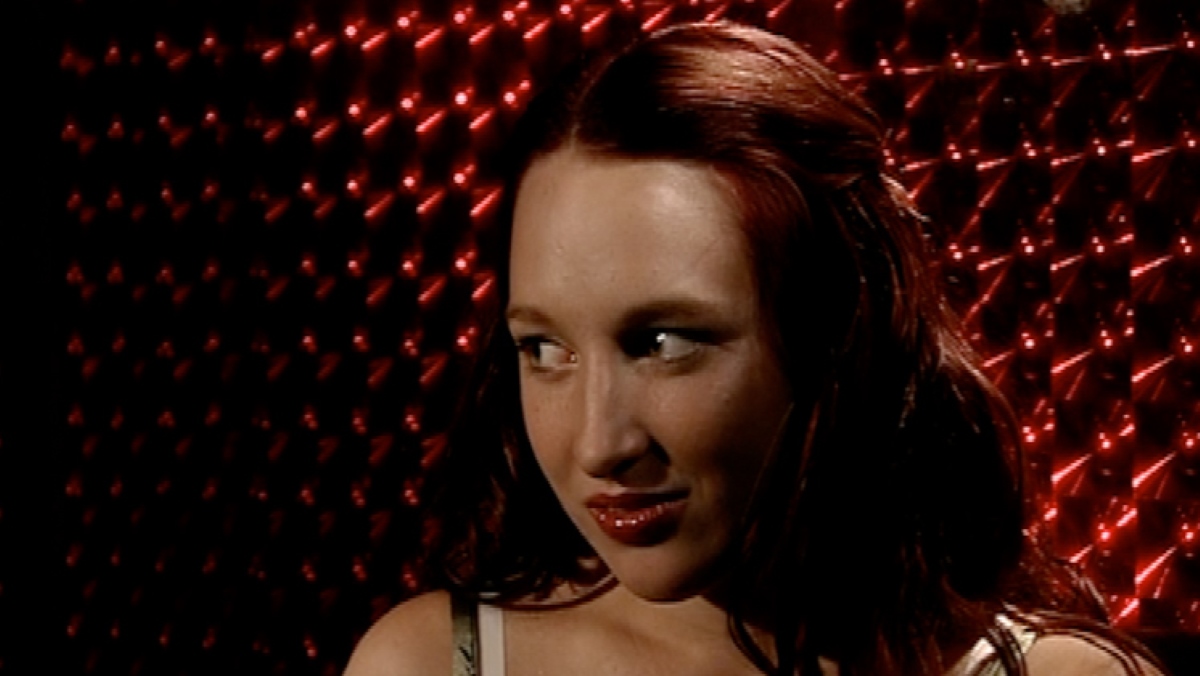
In these scenes, Brodie oddly eschews standard thriller plotting – a thriller plot would almost certainly not have allowed us to become party to the information that Theresa later comes to question about John earlier on but delivered it to us as a jolt that she uncovers. Brodie, it seems, is more interested in the drug-taking relationship, which he at least portrays competently.
The cast perform capably, apart from Aaron Ward’s over-the-top performance as Billy. Christopher Brown has a strong charismatic presence as John, none the more so than his captivating first scene where he turns up at the bar and makes the bet to drink a jug of whiskey.
Harold Brodie subsequently went onto make The Map Reader (2008), another film about addictions and problem friendships, and the Found Footage horror film The Video Diary of Madi O, Final Entries (2012).