
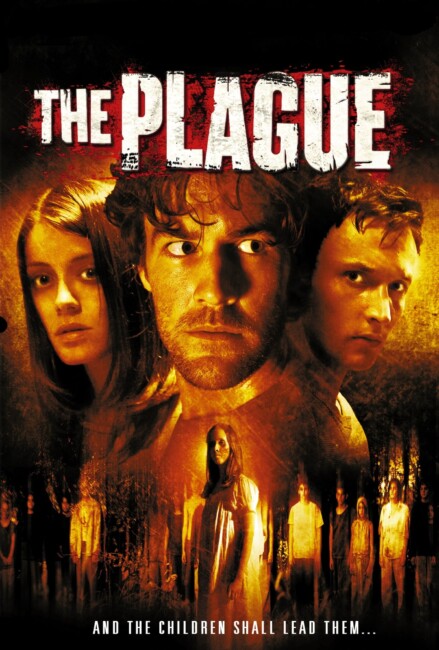
USA. 2006.
Crew
Director – Hal Masonberg, Screenplay – Hal Masonberg & Teal Minton, Producers – Clive Barker, Matt Milich, Tim O’Hair, Jorge Saralegui & Martin Wiley, Photography – Bill Butler, Music – Laszlo Remenyi, Visual Effects – Visual Stimulus Inc. (Supervisor – Dale Tanguay), Special Effects Supervisor – Jason Gibbs, Makeup Effects – Paul Jones, Production Design – Gordon Wilding. Production Company – DH Blair Pictures/Armada Pictures/Woeful Pond Productions/Plague Productions, LLC.
Cast
James Van Der Beek (Tom Russell), Ivana Milicevic (Jean Raynor), Brad Hunt (Sam Raynor), Brittany Scobie (Claire), Josh Close (Kip), Arnie McPherson (David Russell), John Connolly (Sheriff Stewart), Bradley Sawatzky (Deputy Nathan), Dee Wallace (Nora Stewart), Genevieve Pelletier (Nurse Daniels), Chad Panting (Eric Russell)
Plot
All at once, all the children around the world go into convulsions and then fall into comas. Ten years later, the children remain in their comas, while no woman has been able to give birth and the youngest unaffected have now grown to adulthood. Tom Russell is released after a jail term for murder. He returns to his New Hampshire hometown where he goes to stay with his brother David who tends his comatose son Eric. Suddenly, all at once, the children emerge out of their comas, whereupon they turn on and begin killing the adults. Tom rushes to the hospital to rescue his ex-wife Jean and they and a handful of others try to survive as the children kill all they come across. However, the children also seem to work as a gestalt and rapidly learn new behaviours to deal with everything the survivors bring against them.
The Plague – which should not be confused with any of the other films of the same title such as the Canadian Plague (1978) and the Albert Camus adaptation The Plague (1992) – is an interestingly original horror film. It is more than likely that The Plague was conceived in the wake of the renewed interest in zombie films that came about after the successes of 28 Days Later (2002) and Dawn of the Dead (2004). Surprisingly, The Plague was the second film of 2006 about the sudden catastrophic and inexplicable failure of childbirth on the part of the human species alongside the more high-profile Children of Men (2006). Both films have similar opening scenes that depict people mourning the youngest children growing up and the image of a world where schools have become useless.
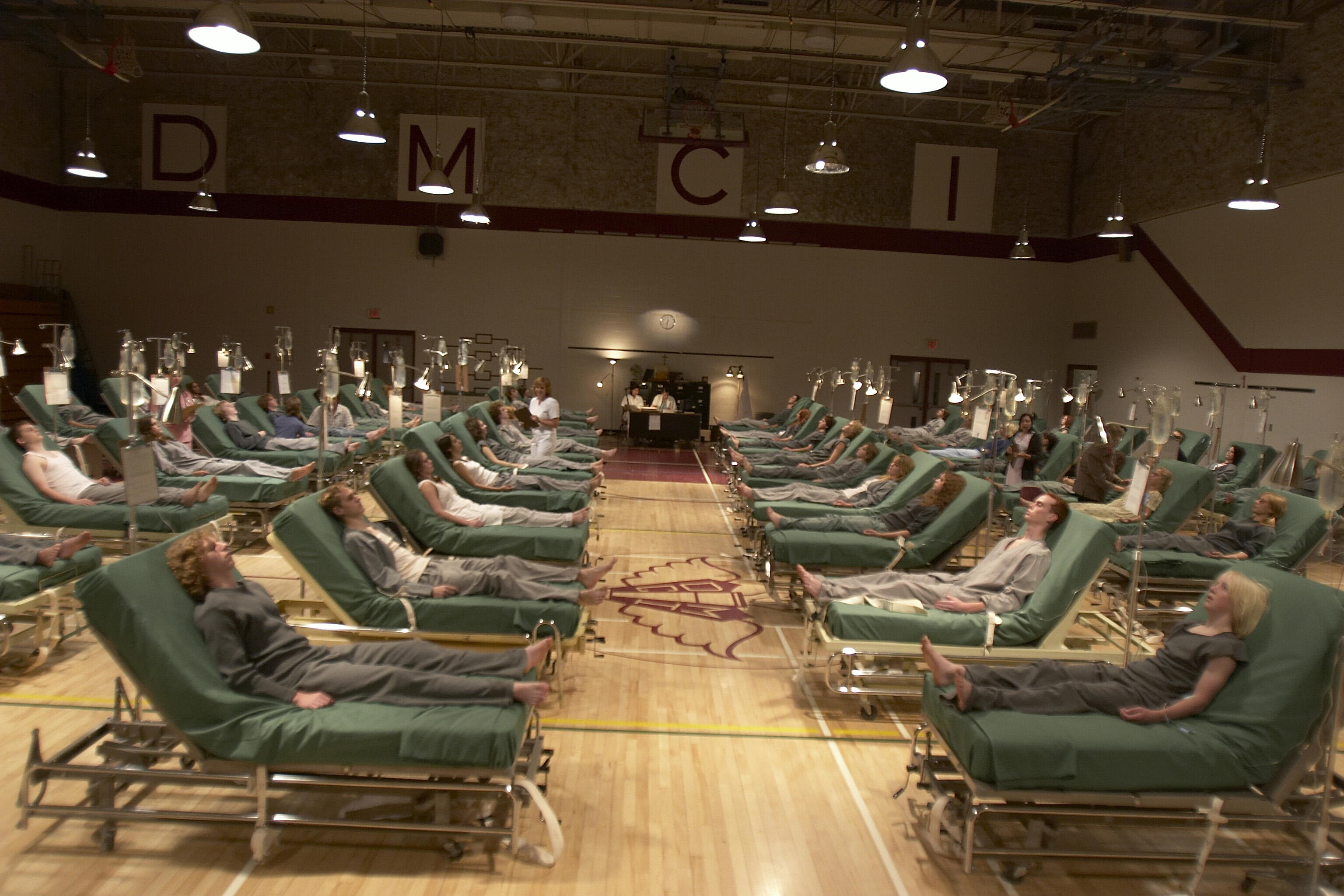
The Plague has a number of captivatingly weird moments that make it undeniably interesting – like the scenes of the comatose kids lined up on camp stretchers in the school gymnasium who start convulsing in unison as the clock hits the hour, while in the background the staff converse as though this is absolutely normal. A few scenes later, a nurse sits in the foreground as all the kids abruptly wake and turn in unison to look at her but are then back in their places when she glances up. The unusualness of these scenes creates an intriguingly different anticipation and a strong sense of foreboding. Certainly, the idea of children turned into a sinister gestalt is an interestingly different menace that makes The Plague stand out above the horde of other zombie film copycats that came out after Dawn of the Dead 2004.
On the minus side, the first half-hour of the film is slow going. However, when the film finds its stride, director Hal Masonberg creates a number of gripping scenes. There is a reasonable level of tension engendered with the various scenes of zombie kids running around. Especially good is one scene where the party are trapped in the hospital and try to escape down the laundry chute using sheets tied together, think they are free only for one character to turn around and find a horde of zombie kids waiting and then Ivana Milicevic being caught halfway down the chute as this happens and trying to climb back up as something starts coming up the chute after her, while at the same time the children start breaking through the door topside.
Perhaps the most unusual point The Plague reaches is its ending, which had almost every single person who saw the film scratching their head. [PLOT SPOILERS]. Here James Van Der Beek and Ivana Milicevic find themselves surrounded by the children. He tells her to kneel and concentrate on thinking herself in a safe place and then surrenders himself to the children. When she opens her eyes, both he and the children are gone. We next cut to her sitting relaxing on the doorstep of his home and the children gathering at a distance outside. The camera pans in closeup past the back pocket of one of the children, which contains the copy of The Grapes of Wrath (1939) that James Van Der Beek was reading earlier.
You sit watching the credits run straight after this and wonder what the heck all of that meant. It is evidently laced with symbolism but the meaning of it clearly eluded one. (And it appears everyone who saw the film – I have searched in vain among other reviews for someone who can offer insight but come a complete blank). Did it in some way allegorically refer to the ending of John Steinbeck’s The Grapes of Wrath, which is referred to throughout and also featured an ex-con as central character and was all about making humanitarian sacrifices for the greater good? You do have to give it to Hal Masonberg and his writers for having the daring to go out on such a baffling ending – it makes The Plague surely into the zombie film equivalent of Alfred Hitchcock’s The Birds (1963).
Director Hal Masonberg has yet to make another film. He has however expressed vast disappointment about how The Plague was changed, re-edited and turned into a film that was wildly different to his original conception. To this extent, Masonberg has created a website Surviving the Plague and an online petition to allow the studio to release a director’s cut of the film that he wanted to make, although the site has not been updated for some time and the cut yet to be released.
The Plague is also co-produced by horror writer Clive Barker who for a time in the late 1980s/early 90s was a cult figure as director of films like Hellraiser (1987), Nightbreed (1990) and Lord of Illusions (1995), as well as wrote the stories that became Candyman (1992), Quicksilver Highway (1997), The Midnight Meat Train (2008), Book of Blood (2009), Dread (2009) and Books of Blood (2020).
Trailer here