
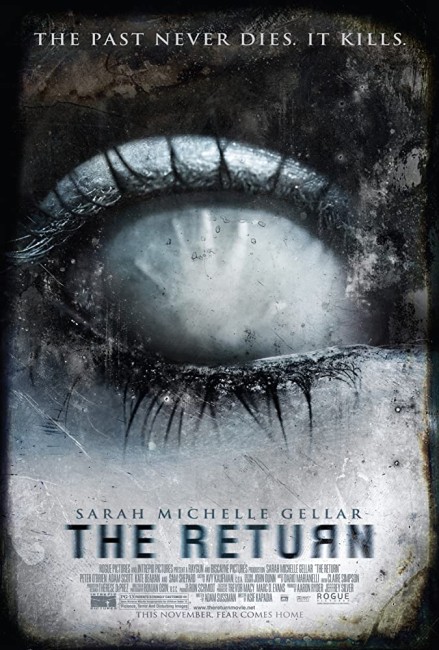
Crew
Director – Asif Kapadia, Screenplay – Adam Sussman, Producers – Aaron Ryder & Jeremy Silver, Photography – Roman Osin, Music – Dario Marianelli, Visual Effects – Mr. X VFX (Supervisor – Evan Jacobs), Special Effects Supervisor – Joe DiGaetano, Makeup Effects – KNB EFX (Supervisor – Greg Nicotero), Production Design – Therese Deprez. Production Company – Intrepid Pictures/Rogue Pictures/Raygun Productions/Biscayne Pictures.
Cast
Sarah Michelle Gellar (Joanna Mills), Peter O’Brien (Terry Stahl), Sam Shepard (Ed Mills), J.C. MacKenzie (Griff), Adam Scott (Kurt), Kate Beahan (Michelle), Bonnie Gallup (Bella), Erinn Allison (Annie Stahl)
Plot
Joanna Mills travels all across the US as a successful sales rep. For the first time since she grew up there as a child, Joanna returns to Texas. Once there, she has a series of disturbing visions in which she is being pursued by a sinister man. She is drawn to visit the small town of La Salle. She seems to be familiar with places there, despite having never visited La Salle before. As she befriends local Terry Stahl, she discovers that events of the past are coming to be revisited through her.
The Return was an attempt to jump aboard the modern supernatural horror bandwagon. It also headlined Sarah Michelle Gellar of tv’s Buffy the Vampire Slayer (1997-2003) fame in a leading role. Gellar’s attempts to create a cinematic career for herself have been uneven – she has appeared in some films that were hits like Scooby-Doo (2002) and The Grudge (2004), both of which were successful enough to produce sequels; on the other hand those that were unmitigated flops like Simply Irresistible (1999). Sadly, most of those that were successful were because of reasons other than Sarah Michelle Gellar’s presence. The Return, despite a promised high-profile release, promptly vanished after its opening week, earning only $4 million at the US box-office.
The Return was the US directorial debut of British-born Indian Asif Kapadia, who had previously made the acclaimed Indian historical film The Warrior (2004). (Kapadia has since only made the Arctic Circle thriller Far North (2007) and the Azerbaijani romance Ali and Nino (2016) plus a handful of documentaries).
The Return failed to get many very good write-ups, although you cannot deny that Asif Kapadia does not evoke some reasonable atmosphere. Perhaps, one suspects, the lack of the success enjoyed by The Return may well have had something to do with the fact that Kapadia’s atmosphere is so slow and laidback, a whole style of filmmaking that seems to have gotten lost amid the plethora of flashy CGI and pop-up shock driven modern horror stories.
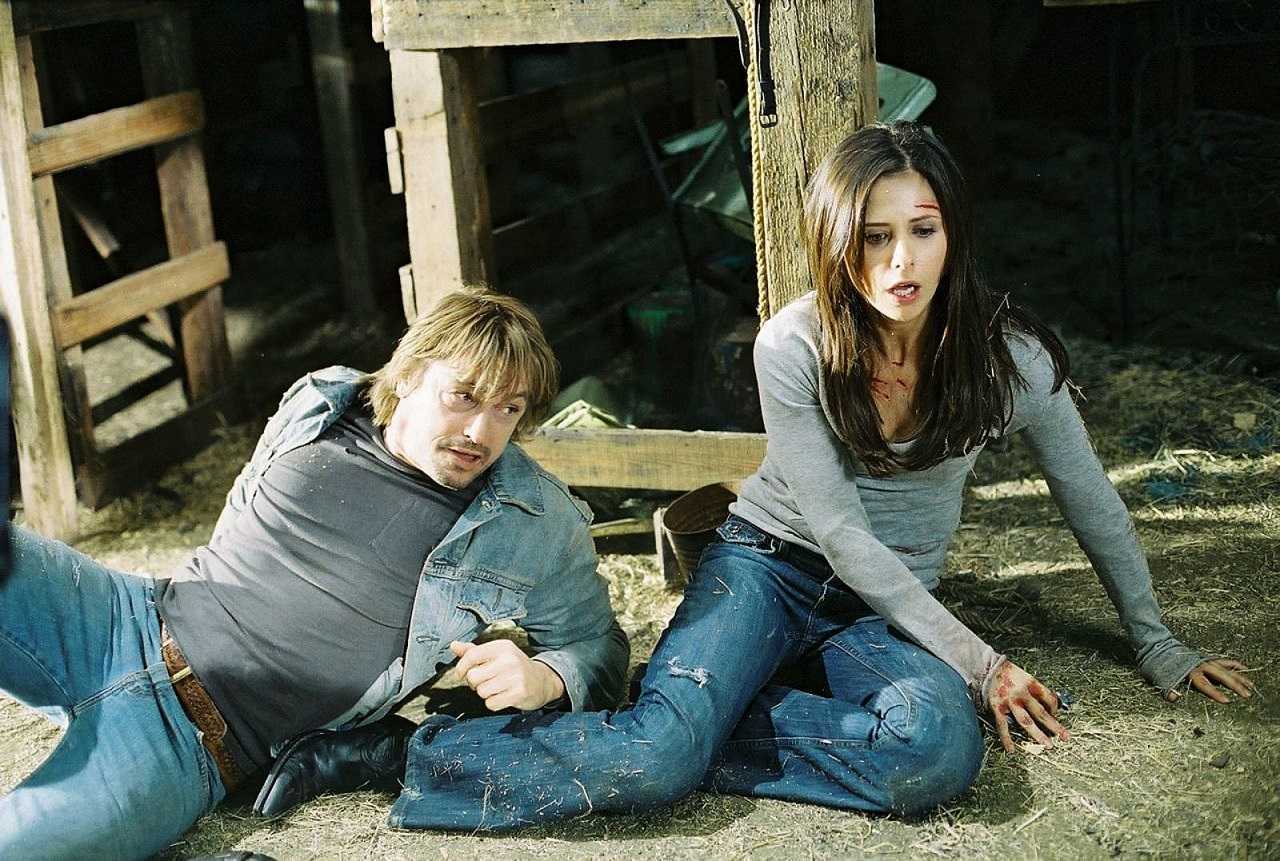
The Return certainly has an enormously well-evoked sense of place. Asif Kapadia absorbs us in the mundanity and background detail of the Texas landscape during Sarah Michelle Gellar’s cross-state journey or at the cattle shows and towns where she plies her business. The photography has been washed out and the film seems to redolate with a sense of subdued quietude. Into this come some often eerie intrusions of the supernatural – the radio abruptly playing a song, the moment where a voice starts to cut in on a phone call that Sarah Michelle Gellar is making, and particularly when Gellar sits in front of a mirror in her hotel room and her reflection stands still while she moves. There is an undeniable sense of building mystery about what these intrusions are.
The big disappointment about The Return is that the haunting element never amounts to anything more than that. Moreover, the eventual revelation of what is going on is disappointingly mundane. The film takes a long time – more than half its running length – to clue us in as to what is happening. This eventually transpires as being no more than a variant on the psychic/medium murder mystery wherein a person gets flashes and clues from a dead person that leads them to solve their murder.
This is a tired and hackneyed plot that we have seen conducted in numerous films and tv movies before and where The Return offers nothing new or unique in its treatment. Although unlike these other films, which tend to have their psychic just suddenly get insight out of the blue, the film does offer a reasonable explanation of how Sarah Michelle Gellar ended up with these insights during the climactic flashback.