

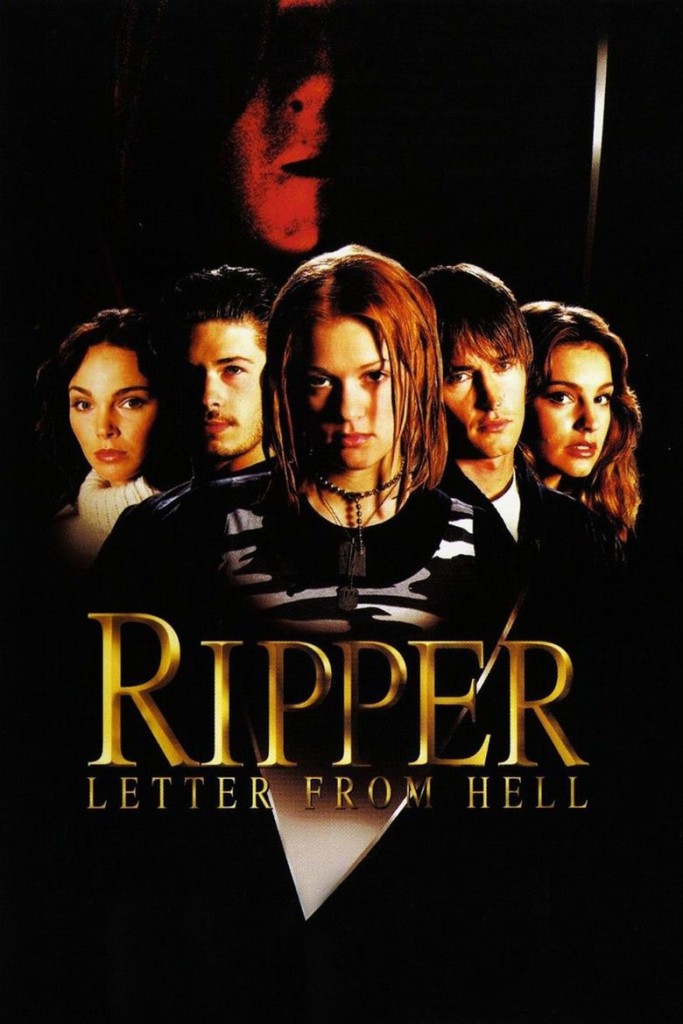
Crew
Director – John Eyres, Screenplay – Pat Bermel, Story/Producers – John Curtis & Evan Tylor, Photography – Thomas M. Harting, Music – Peter Allen, Visual Effects – Rainmaker Digital Pictures (Supervisor – Simon Lacey), Special Effects Supervisor – Bill Mills, Production Design – Mark Harris. Production Company – Prophecy Pictures International/Studio Eight Productions Ltd/Ripper Productions Inc/Ripper Productions (UK) Inc.
Cast
A.J. Cook (Molly Keller), Bruce Payne (Professor Marshall Kane), Ryan Northcott (Jason Korda), Jurgen Prochnow (Detective Kelso), Claire Keim (Chantal Etienne), Derek Hamilton (Eddie Sackheim), Danielle Evangelista (Mary-Anne Nordstrom), Emmanuelle Vaugier (Andrea ‘Andy’ Carter), Kelly Brook (Marisa Tavares), Courtenay J. Stevens (Aaron Kroeker)
Plot
The students in the criminology class of Professor Marshall Kane are studying serial killer profiling. One of the classmates Marisa Tavares is then brutally killed at a rave. The study group that she belonged to decide that this would be a perfect opportunity to conduct a field-test of what they are learning in class by attempting to work out who the killer is. However, as other bodies begin to pile up, they realize that the killer is somebody within the study group. Molly Keller, herself the traumatized survivor of a group killing several years ago, realizes that the killer is setting each killing up to mimic the Jack the Ripper murders.
Ripper: Letter from Hell came out the same year as the Hughes Brothers’ big-budget, theatrically released Jack the Ripper movie From Hell (2001). Ripper: Letter from Hell was clearly designed as a direct-to-video effort exploiting the success of From Hell and the same Jack the Ripper theme. There is the obvious similarity of titles between the two films, not to mention Ripper‘s subtitle Letter from Hell, which makes reference to the supposed Jack the Ripper letters from where the phrase “from hell” originated, even though the letters are never mentioned in the film here. That said, Ripper: Letter from Hell actually appears to have gone and studied its Ripperology. It nominates the identity of Jack the Ripper as being a suspect – Montague John Druitt – who is a good deal more credible than the one that From Hell proposed – the totally implausible Royal Freemason conspiracy theory.
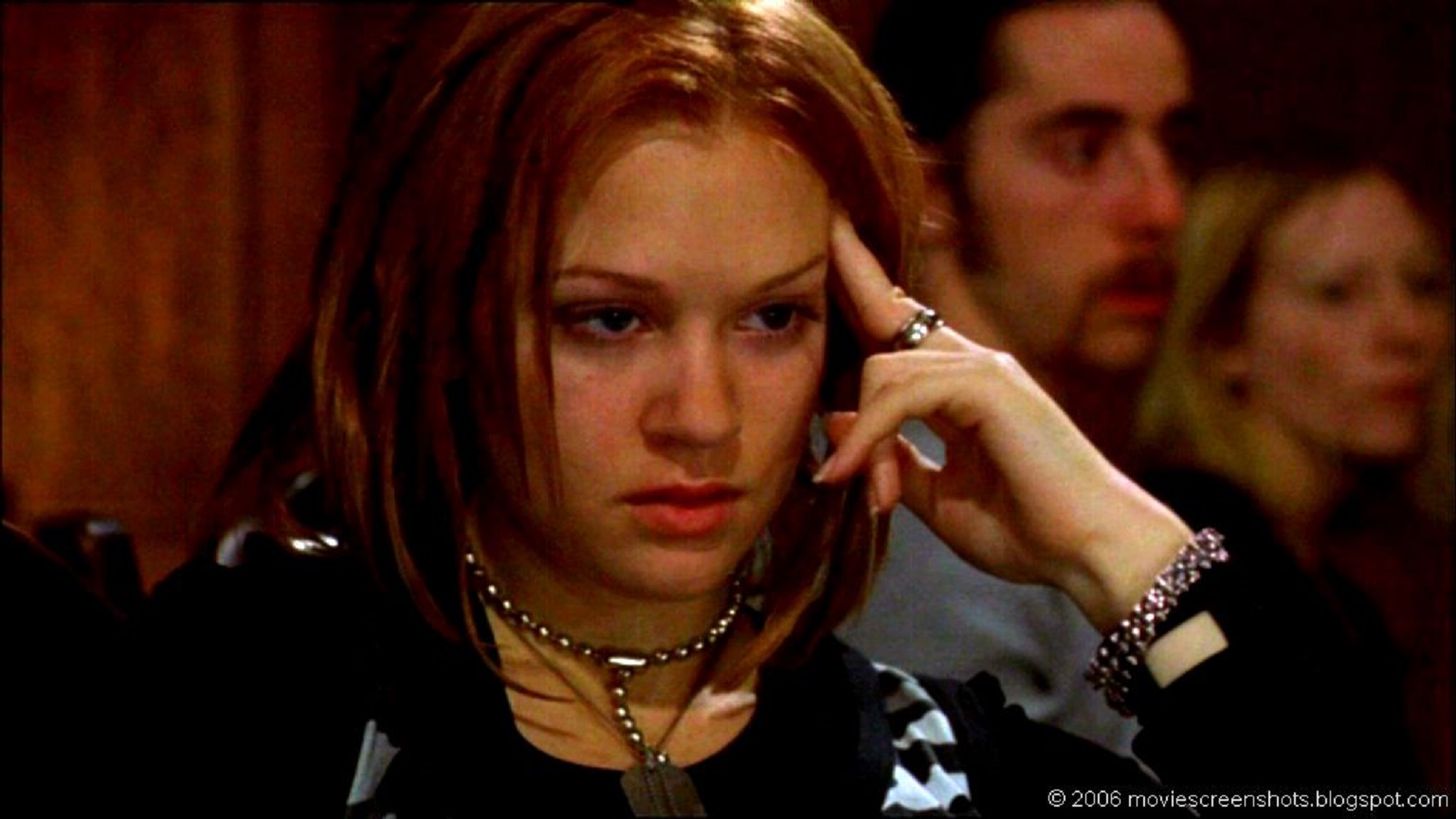
Surprisingly, considering its director (see next paragraph), Ripper: Letter from Hell has a good script. Screenwriter Pat Bermel has gone out and studied forensic profiling and the scenes in the criminology class exploring the mind and methods of the serial killer prove to be the most captivating in the film. Bruce Payne has a striking scene where he announces to his class: “What if I had decided to kill one of you today? What if I had medicated myself all these years, seen analysts to suppress the desire and finally two weeks ago I stopped taking medication and decided to step into the abyss?” and then abruptly turns around and slits a student’s throat. The scene where A.J. Cook explains her Ripper theory to the class is equally fascinating. The film goes out on an excellent twist coda that reveals the real killer’s identity.
On the other hand, Ripper: Letter from Hell also befalls director John Eyres. John Eyres has been responsible for films like Project Shadowchaser (1992) and sequels, Monolith (1994), Judge and Jury (1996) and Octopus (2000). Most of John Eyres’s films are filled with ridiculous and over-the-top action. Eyres is a director who gives the impression that he regards scripts as an only occasionally necessary evil that is way down the rung of priorities when it comes to making his films. Ripper: Letter from Hell is easily the best of John Eyres’s films by sole dint of the fact that he has a halfway decent script on board this time.
The corollary to this is that John Eyres’s usual OTT direction tends to drag down what in someone else’s hands might have amounted to a decent B-budget film. The first set-piece killing involves a girl being stabbed and then dropped off a balcony on the end of a pulley, from where her blood drips down onto a girl in a white dress dancing at the rave below, before the murder victim’s body is then smashed through a window. While the scene has a certain effective silliness in a slasher movie kind of way – and even if the set-up has been borrowed from Suspiria (1977) – what one defies John Eyres to do is cite evidence from any of the Jack the Ripper murders (which the killer here is meant to be imitating) where one of the Whitechapel prostitutes was killed in such a way. Ditto the subsequent killing of Daniele Evangelista where her car is rammed by another vehicle and left teetering on the side the edge of a cliff, before being rammed again and Evangelista propelled through the windscreen and left hanging from the side of the cliff by her fingertips. It is extremely silly – although Eyres does create one good suspenseful scene with two victims being caught in a sawmill buzzsaw, where one is sliced up and the other is left trying to escape from under the jammed blade where all that is stopping her from being chewed up is the other victim’s severed foot and shoe caught in the blade.
In the end, Ripper: Letter from Hell and its Jack the Ripper angle amounts to nothing more than another variation on the modern 90s/00s teen slasher films where the killer uses an improbable novelty motif – scary movies in Scream (1996), urban legends in Urban Legend (1998), Valentine’s Day in Valentine (2001) and so on.
Ripper: Letter from Within (2004) was a sequel, following the same lead character, played by a different actress. The script was from the same writers but neither John Eyres nor any of the writers return. This version was set in a therapeutic dream reality.
Trailer here