

USA. 2011.
Crew
Director – Mikael Håfström, Screenplay – Michael Petroni, Suggested by the Book The Rite: The Making of a Modern Exorcist (2009) by Matt Baglio, Producers – Beau Flynn & Tripp Vinson, Photography – Ben Davis, Music – Alex Heffes, Visual Effects – Digiscope (Supervisor – Mark Kolbe), Method Studios, Pixomondo & Prologue Films, Special Effects Supervisor – Gabor Kiszelly, Prosthetics – Ivan Poharnok, Production Design – Andrew Laws. Production Company – New Line Cinema/Contrafilm.
Cast
Colin O’Donoghue (Michael Kovak), Anthony Hopkins (Father Lucas Trevant), Alice Braga (Angelina Vargas), Ciaran Hinds (Father Xavier), Marta Gastini (Rosaria), Toby Jones (Father Matthew), Rutger Hauer (Istvan Kovak), Arianna Veronsei (Francesca), Andrea Calligari (Vincenzo), Chris Marquette (Eddie)
Plot
Michael Kovak has grown up working in his father’s funeral parlour. He makes a decision to enter Catholic seminary and undergo training to become a priest. As graduation nears four years later, Michael writes a letter of resignation, citing that he does not have the necessary faith to continue. His superior Father Matthew persuades him to instead travel to Rome and undergo a course to train as an exorcist that is being held there. Michael joins the course but has many questions and doubts about what is being taught. He is advised to seek out Father Lucas Trevant, one of the most experienced exorcists in Rome. Michael is witness as Father Lucas conducts an exorcism on a pregnant sixteen year-old girl Rosaria. Michael has difficulty with some of Father Lucas’s unorthodox methods and expresses considerable doubts whether there might not be more mundane psychological explanations. Next however, Father Lucas becomes possessed by a demon. It is up to Michael to overcome his lack of faith in order to perform the exorcism ritual.
The Exorcist (1973) will always be the film that popularised the themes of demonic possession and exorcism on screen. The film was a massive hit that brought a little known area of church doctrine into public attention – in fact, it was a case of a fictional film suddenly changing religious behaviour in the real world with there subsequently being a marked increase in reported cases of demonic possession and the emergence of an industry of specialists claiming to be able to identify and exorcise the possessed. The Exorcist spawned cheap exploitation copies for a number of years, although most of these had died out by the 1980s. (For a more detailed overview of the genre see Exorcism Films and Possession Films).
Come the 00s and the possession genre underwent a revival with the likes of Stigmata (1999), Lost Souls (2000), Possessed (2000), Exorcist: The Beginning (2004) and the BBC mini-series Apparitions (2008). The genre enjoyed an upsurge after the hit of The Exorcism of Emily Rose (2005), a film that was notable for making stringent claims to being based on a true story (which it had in fact heavily fictionalised) and holding an underlying evangelical Christian agenda that unquestioningly accepted the actuality of possession. Emily Rose spawned a number of copies such as Blackwater Valley Exorcism (2006), Exorcism: The Possession of Gal Bowers (2006) and Chronicles of an Exorcism (2008), as well as the German-made Requiem (2006), which told the original true-life Emily Rose story from a more sceptical perspective. One of the most impressive of these recent exorcism revival films was The Last Exorcism (2010), which took a Found Footage approach and underwrote the expectations of the genre in some astonishing ways. There was also the subsequent The Devil Inside (2012), which covered very similar territory to The Rite, and took the Found Footage approach as did several other subsequent films.
The Rite promptly becomes another exorcism film that is claiming to be based on a true story. It even opens with a credit that claims it is based on a true story, although this is watered down a few credits later where we learn that the film is only ‘suggested’ by Matt Baglio’s book The Rite: The Making of a Modern Exorcist (2009). Matt Baglio is an American journalist who in 2005 made a decision to accompany California priest Father Gary Thomas, a former funeral director, as he was sent to Rome to attend a course on becoming an exorcist in response to the Church’s reporting of an upsurge in claims of possession. Following Father Thomas through the course of his training, which included participation in some 80 exorcisms, Baglio was amazed at the modernity of the practice, which insisted on placing the possessed through a scrupulous battery of psychological and medical tests. Baglio eventually came away with a renewal of his own Catholic faith and a certainty in the actuality of possession.
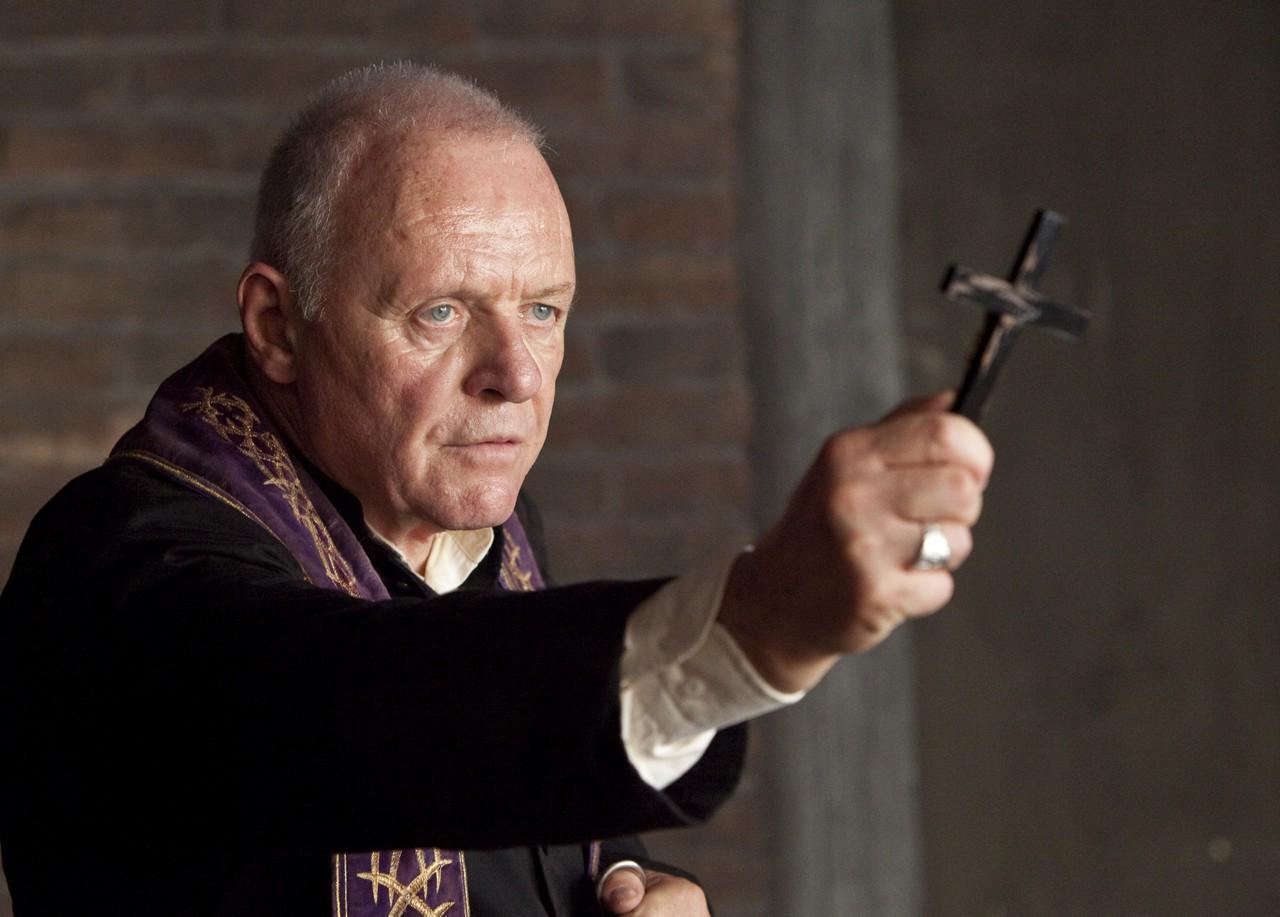
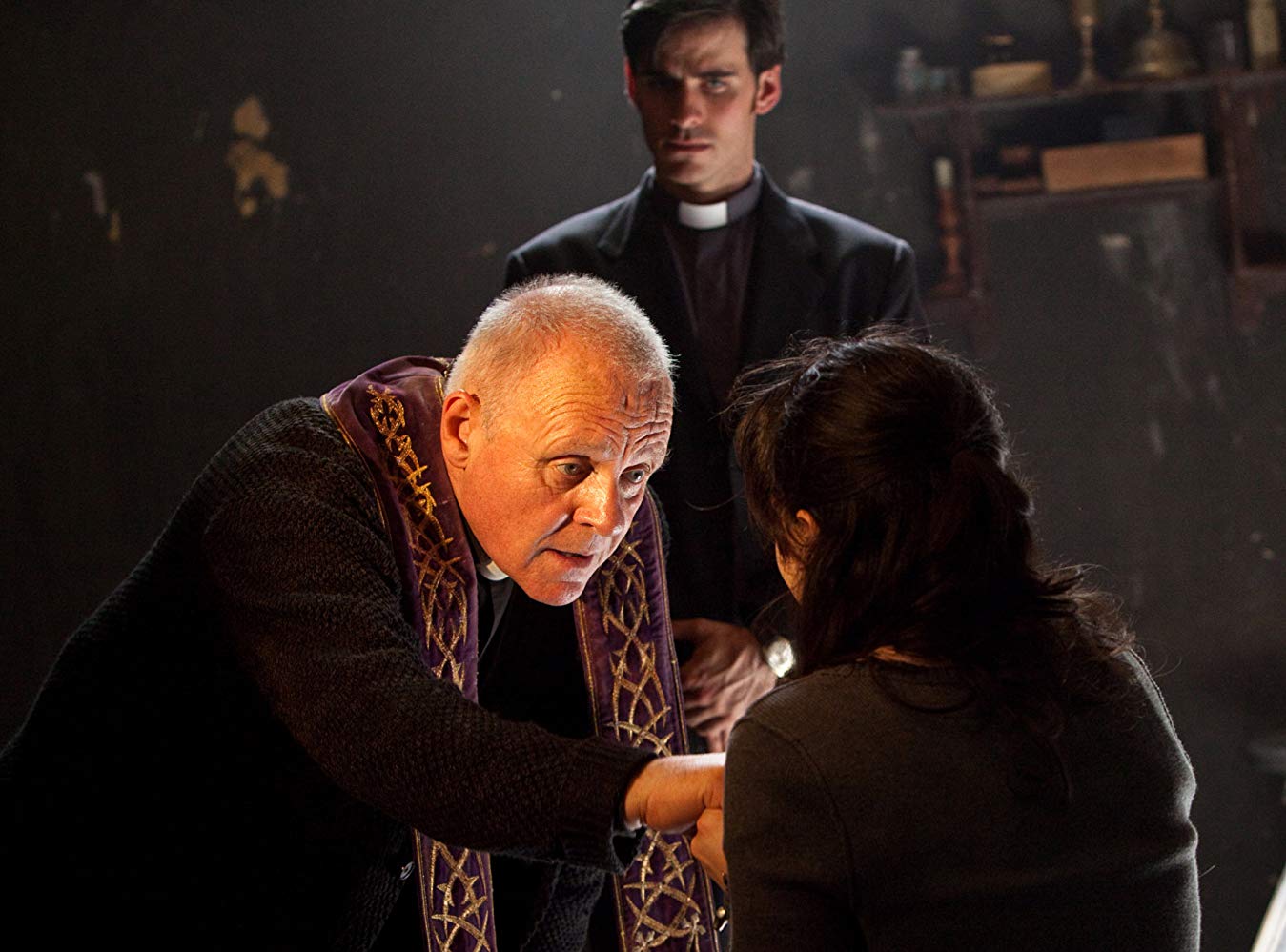
Much of this has been changed when it comes to the film. In the book, the central figure of Father Thomas was an experienced priest in his mid-fifties but here he has been rewritten as a handsome youth lead in the person of Irish actor Colin O’Donoghue. Matt Baglio becomes the largely peripheral character of Alice Braga’s journalist and is changed to a woman with there being the merest hint of attraction between her and Colin O’Donaghue.
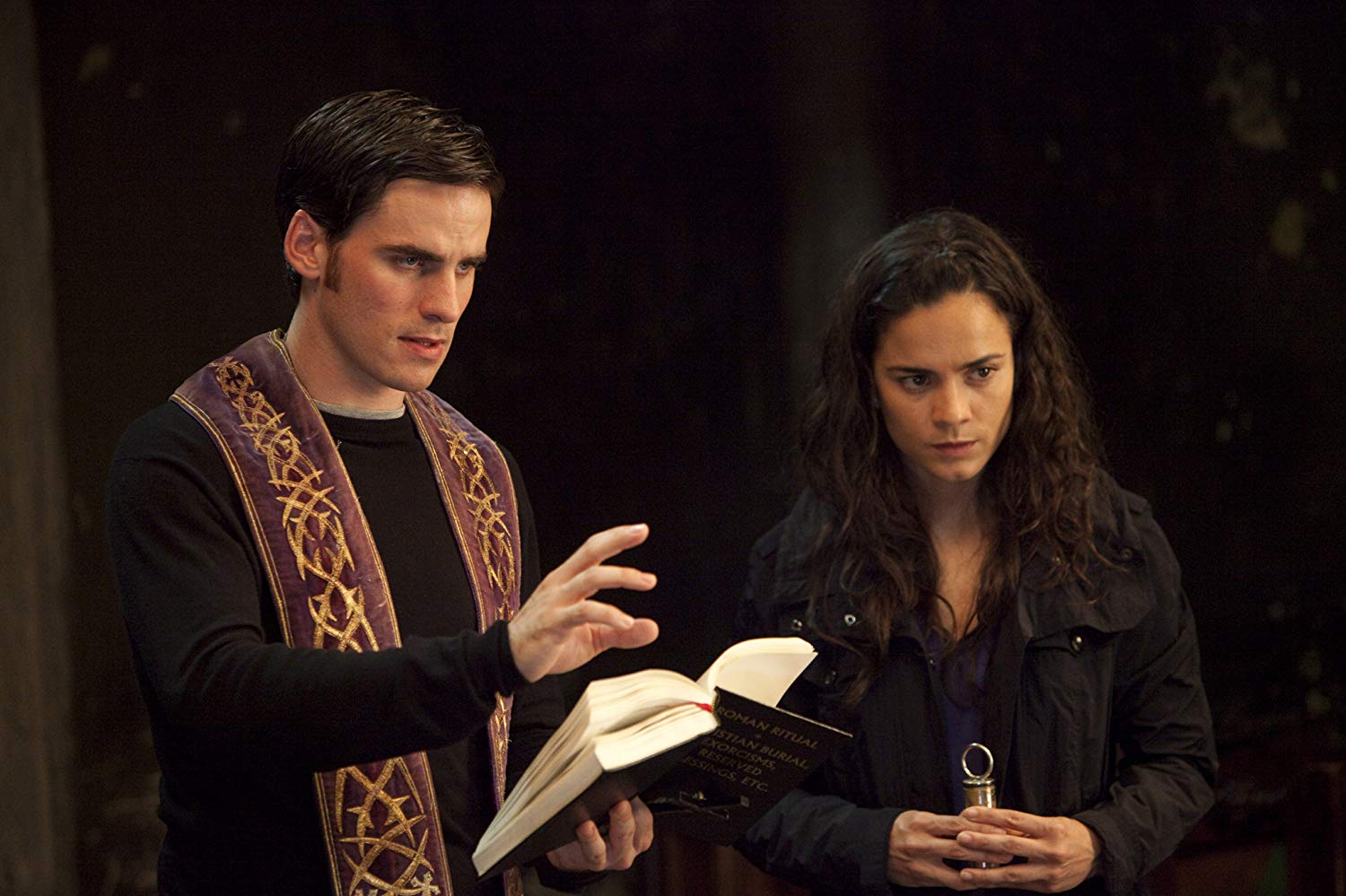
Anthony Hopkins’ Father Lucas Trevant is based on Italian priest Father Carmine de Filippis who had been performing exorcisms since 1987 and became Father Thomas’s mentor – although the latter half of the film where he becomes possessed by a demon does not have any equivalent in the book. In fact, the business of possession and exorcism would appear to be a good deal less dramatic in Matt Baglio’s experience than is portrayed in the film. The irony about this is that in his book Matt Baglio sought to dispel Hollywood cliches about exorcism and possession but then saw his book adapted into a film, which promptly rewrote the story into the very Hollywood vision of exorcism that he sought to challenge.
I have a certain problem with both Matt Baglio’s book and the film itself. Namely, the big issue is their acceptance of the existence of demonic possession as an actual phenomenon. Matt Baglio approached his book from a position of uncertainty about exorcism but eventually came out believing. It should however be noted here that Baglio grew up a Catholic and his journey was more one of reconnecting with the faith of his childhood than any conversion experience.
I approach such matters from a rigorously sceptical position and as an agnostic who leans heavily on the side of atheism. I do not believe in the notion of absolute evil, in malevolent spiritual entities, the existence of a Devil or that inanimate objects such as crucifixes and statues of the Virgin Mary can be imbued with any power. Most of all, I have a problem with the idea that the Catholic Church is the licensed voice of the Almighty on Earth and the absolute arbiter of matters spiritual – this is, for instance, the same church who refuses to condone the notion of divorce, contraception or regard homosexuality as a norm, while at the same time (as numerous scandals of recent years have brought to life) is complicit in covering the activities of its own priesthood in siring children to parishioners and engaging in paedophiliac activity.
In an excellent review of Matt Baglio’s book, Eat Your Saints, Purge Your Demons at Salon.com, Laura Miller points out some of the truths that underlie his certainty in possession – where mundane things such as tarot cards, crystals, reading Harry Potter books and heightened sexual interest can be sufficient evidence to act as ‘proof’ of possession. To me, this is not a rational examination of a phenomena, it is more a buying into the rampant superstitions that dominate evangelical Christianity.
Miller also aptly points out that the so-called upsurge in reported exorcisms and the establishment of the exorcist training program was backed by a right-wing sector of Catholicism who was seeking to reverse the mainstream church decree on these matters and how the program was instituted after the Italian government pushed to have something done about the Satanic cult hysteria that swept the world a few years ago (a phenomenon that began in evangelical Christianity and is noted for its failure to offer even a single credible example of the existence of Satanic cults and their supposed human sacrifice practices).
Given that I come from a position of rigorous scepticism, why then do I weigh in and give The Rite a positive review? It comes as some surprise to some people that I regularly write about films featuring UFOs, hauntings, possessions etc and yet in real-life maintain a rigorous position of sceptical denial about the existence of any of these. My response is that it is not necessary to have to be a Christian and believe that the crucifix has any power to be able to enjoy vampire films; that you don’t have to believe in the existence of elves and fairies to enjoy The Lord of the Rings and epic fantasy. There is a clear line between what is fiction and what is real and I see no incongruity about giving a work enough dramatic licence to work as fiction without having to take its worldview seriously. Certainly, The Rite is a film that unquestioningly buys into a Catholic line on the absolute nature of matters demonic and you have to set this to one side to appreciate the film as a work of fiction. That said, The Rite is one of the better films to emerge on the subject of demonic possession.
The Rite comes from Swedish director Mikael Håfström. Håfström made a number of genre items in Sweden with the haunted house tv mini-series House of Shadows (1996) and the film Drowning Ghost (2004), before being imported to the US mainstream to make the non-genre thriller Derailed (2004) and then enjoying acclaim with the Stephen King adapted haunted hotel film 1408 (2007) and subsequent to this going onto the non-genre Sylvester Stallone-Arnold Schwarzenegger prison break film Escape Plan (2013), the action film Outside the Wire (2021) with Anthony Mackie as a rogue military android and the spacegoing SF film Slingshot (2024).
When he wants to be, Mikael Håfström can be a director of quietly understated strengths. He never opts for flashy over-the-top editing schemes, gratuitous shock effects or any of the stylistic gimmicks that have become part and parcel of the modern horror film. Wisely, he does not worry too much about the doctrinal debates of Matt Baglio’s book but heads straight for horror movie territory and largely focuses the film around the major exorcism set-pieces. Here Håfström’s marshalling of shocks – be it rattling the audience with the sudden unexpected appearance of Anthony Hopkins behind Colin O’Donaghue on a stairwell or an incredibly eerie scene where O’Donaghue talks to his father in hospital on a telephone – is immensely skilful.
In at least keeping with Matt Baglio’s revisionist account, Håfström tones down the melodramatics and never makes the film a parade of obscenities and vomitings. In most other regards however, The Rite offers up a standard panoply of cinematic exorcism tropes – deep voices, psychokinetic activity, the priests commanding that “the power of Christ compels you”, bodies being physically contorted, manifestations of stigmata, the demon taunting the priest’s sins and failings, demonstrating apparent supernatural knowledge – despite the fact that Baglio went some ways to dispute this sort of thing. There are one or two new twists added to the mix – a harrowing scene where the possessed Marta Gastini starts hammering on her severely pregnant stomach in an attempt to self-abort, or the possessed developing an unnerving habit of coughing up six-inch nails.
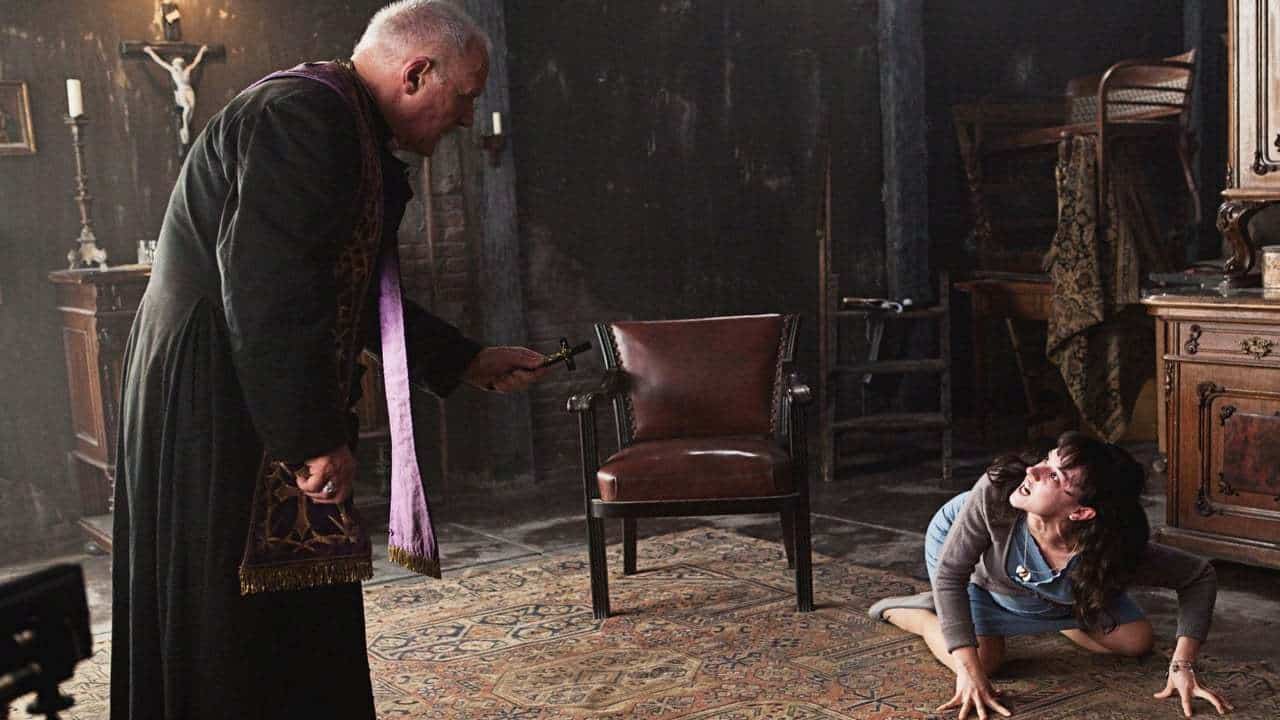
The film’s greatest ace is Anthony Hopkins. Hopkins has never appeared to be having as much fun on screen in some time – since at least his various Hannibal Lecter outings – as he is here. In fact, I would go so far as to say that his performance here eclipses what he did with the Hannibal Lecter films. Hopkins makes Father Lucas a fascinatingly ambiguous character – one part savant in the mould of Max Von Sydow’s Father Merrin, one part bullying shaman, another a snake oil conman verging on madman who has strayed way off church doctrine into a dubious territory where he seems to be making everything up as he goes along. Hopkins wittily undercuts the exorcisms with hilarious scenes of him breaking away from administering rites to answer his cellphone. Nothing suggests the idea of him taken over by dark forces better than a scene where he callously slaps a child to the ground. The last twenty minutes of the climactic exorcism run a real emotional rollercoaster ride, ending in the triumphant discovery of Colin O’Donaghue’s faith. The scene is a tour-de-force where Anthony Hopkins gets to deliver the performance of a lifetime.
One other aspect of The Rite that is highly commendable is its appearance of examining exorcism/possession rationally. The exorcism film has never yet managed to find any other way to characterise its priests than slavishly following the mould that William Peter Blatty established with Jason Miller’s Father Karras in The Exorcist – of the priest who has lost his faith and manages to find it again through confronting the actuality of demonic phenomena. Patrick Fabian’s evangelical minister in The Last Exorcism was one of the few to break this mould and took the faithless priest idea to an extreme.
The Rite is not quite as adventurous but one of the more interesting things here is how (in following Matt Baglio’s book) the film balances out the claims of possession with an equal degree of sceptical doubt. For fully three-quarters of the film, Colin O’Donaghue adopts a sceptical position and argues in terms of psychological explanations or the suggestion that Anthony Hopkins is a charlatan. Of course, The Rite being the film that it is (and something that has been given away by the film’s trailer), he soon gets to change his mind and learn the actuality of the phenomena. The film is to be commended for establishing an alternate side of things before leaping off into its theatrics. Contrast this to The Exorcism of Emily Rose, for instance, which paid lip service to alternate arguments about epilepsy and psychological explanations and then did no more than ridicule the straw figures it used to voice these arguments for not being open-minded enough to embrace the existence of spiritual phenomena.
(Nominee for Best Actor (Anthony Hopkins) at this site’s Best of 2011 Awards).
Trailer here