
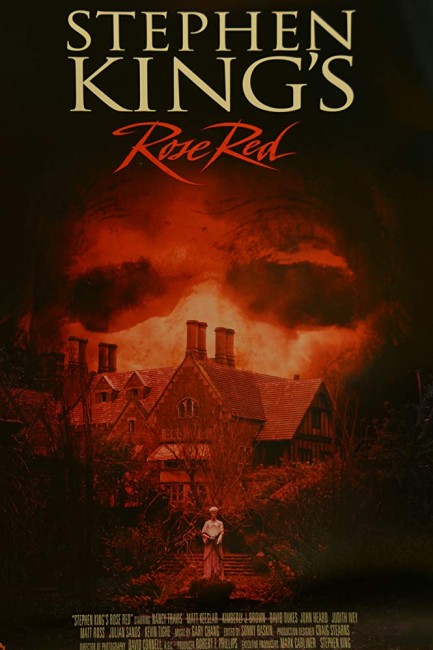
USA. 2002.
Crew
Director – Craig R. Baxley, Screenplay – Stephen King, Producers – Thomas H. Brodek & Robert F. Phillips, Photography – David Connell, Music – Gary Chang, Visual Effects Supervisor – Stuart Robertson, Special Effects Supervisor – Bob Riggs, Prosthetic/Animatronic Effects – Steve Johnson’s XFX, Production Design – Craig Stearns. Production Company – Victor Television Productions Inc.
Cast
Nancy Travis (Professor Joyce Reardon), Matt Keeslar (Steven Rimbauer), Matt Ross (Emery Waterman), Julian Sands (Nick Hardaway), Kimberly J. Brown (Annie Wheaton), Judith Ivey (Cathy Kramer), Melanie Lynskey (Rachel ‘Sister’ Wheaton), David Dukes (Professor Carl Miller), Kevin Tighe (Victor Kandinsky), Laura Kenny (Patricia Waterman), Emily Deschanel (Pam Asbury), Jimmi Simpson (Kevin Bollinger), Tsidii Leloka (Sukeena), Robert Blanche (George Wheaton), Julia Campbell (Ellen Rimbauer)
Plot
Parapsychologist Joyce Reardon is determined to mount an expedition to explore the phenomena at Seattle’s notoriously haunted Rimbauer house, which has been nicknamed Rose Red. She gathers a group of psychics, including the powerful but autistic psychokinetic Annie Wheaton. Her efforts result in her tenure being cancelled by her self-important department head Professor Carl Miller who is determined to embarrass her but she presses on. Once in the house, the psychics find that Rose Red is feeding upon their energy and using it to regenerate itself. Soon the manifestations they encounter become increasingly malicious and threatening.
Stephen King is the single most popular author in the USA. King has inspired numerous film adaptations of his works – usually, it is generally regarded, with unsatisfying results. The 1990s and beyond have shown an exponential increase in the number of Stephen King productions adapted for tv, which have included the likes of It (1990), The Tommyknockers (1993), The Stand (1994), The Langoliers (1995), The Shining (1997), The Dead Zone (2001-2), Carrie (2002), Firestarter Rekindled (2002), ‘Salem’s Lot (2004), Desperation (2006), Nightmares & Dreamscapes: From the Stories of Stephen King (2006) and Bag of Bones (2011) – as well as works that King has written direct for the small screen such as Golden Years (1991), Storm of the Century (1999), Rose Red and Kingdom Hospital (2004).
Rose Red was purportedly inspired by Steven Spielberg, who invited Stephen King to come up with the idea for the scariest movie he could think of. King appears to have taken inspiration from The Haunting (1963) and its story of a parapsychologist and a group of psychics investigating a haunted house. In his book-length horror essay Danse Macabre (1981), King spoke admiringly at some length of the original Shirley Jackson novel The Haunting of Hell House (1959) that was the basis for The Haunting.
The Rose Red mini-series has been deliberately cast with relative unknowns. This provides a distinct uncertainty factor – there is no identifiable handsome leading man and woman, for example, thus one is not in a position of being able to easily guess who is likely to survive. At the forefront of the show is the greatly under-appreciated Nancy Travis, who should have been a much more high profile actress than she is. Nancy Travis gives a wonderfully perky performance that becomes increasingly sinister throughout. Elsewhere, Matt Ross manages to give a remarkably unlikeable performance as the obnoxious Emery. Julian Sands, in one of his least over-the-top roles, plays with considerable handsome charm. The mini-series also gives an international break to Melanie Lynskey, the teenage find from Peter Jackson’s Heavenly Creatures (1994).
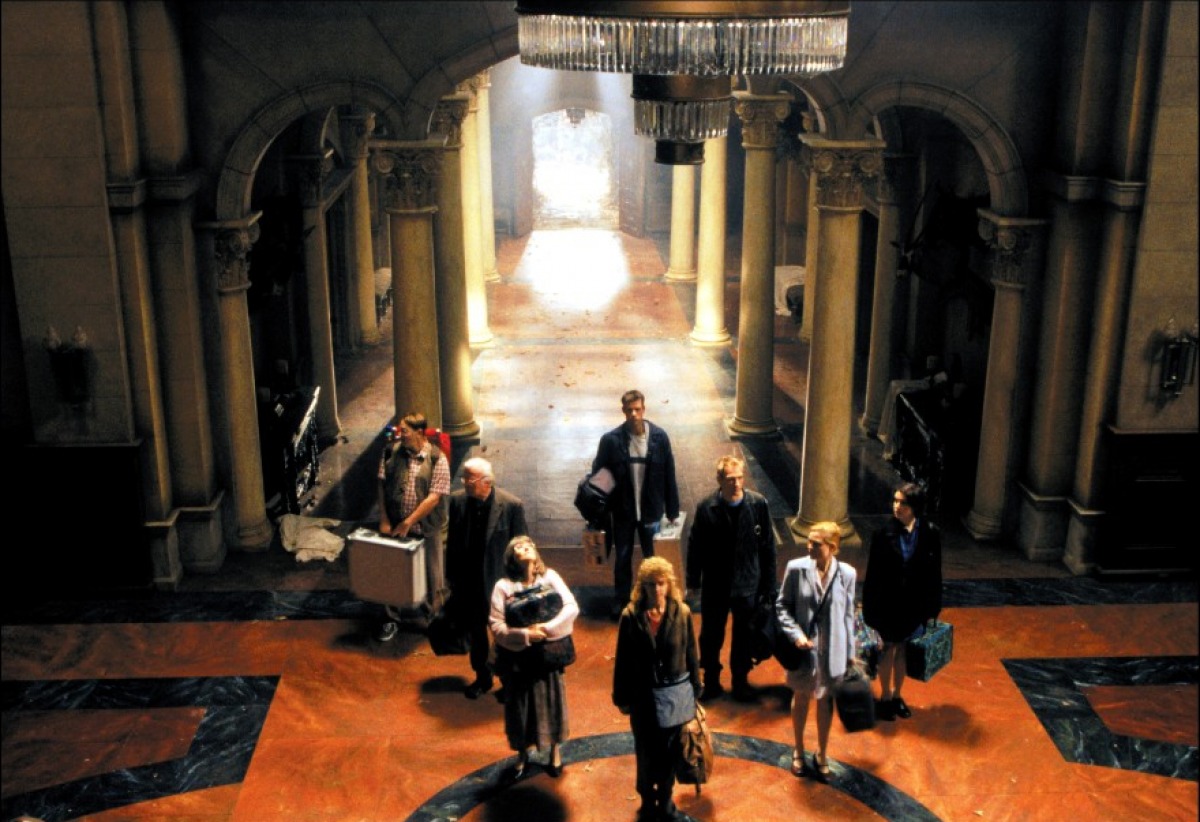
Direction of the show has been handed over to former stuntman Craig R. Baxley. Craig R. Baxley had previously directed the Stephen King tv adaptations of Storm of the Century and subsequently The Diary of Ellen Rimbauer and Kingdom Hospital, as well as made original genre films such as Dark Angel/I Come in Peace (1990), Deep Red (1994), Under Pressure/Bad Day on the Block (1997) and Left Behind: World at War (2005) and tv work like The Glow (2002), The Triangle (2005) and the amazing The Lost Room (2006).
Craig R. Baxley revs up some effectively spooky moments. There is one especially good scene early on in the show where student brownnose Jimmi Simpson turns up at the house and the door is mysteriously opened and he welcomed inside by Tsidii Leloka’s maid, whom we recognise from the flashbacks to the past. There is a particularly imaginative flashback to Annie’s psychic hailstorms and a beautiful shot where she causes the water pipes to burst all over the property and the water to suddenly freeze in mid-air. There are also some excellent sets – the Perspective Hallway, the Mirror Library and one room that is built upside down. King gives the house the intriguing feature of being able to spontaneously rearrange its spatial geometry, such that floor plans are useless and nobody knows how many rooms there are. This leads to one spooky moment where the party mark their trail with a rope and then return to find the rope buried inside the middle of a wall.
Sometimes Craig Baxley’s scares are a little schlocky – bodies popping up in bed with Matt Ross, out of mirrors – and the series is a little too reliant on visual and makeup effects rather than the subtle psychological ambiguity that Robert Wise imbued The Haunting with. There is also the need to have to go for a big effects-heavy climactic finale, where Nancy Travis’s otherwise worthy playing is allowed to become far too broad.
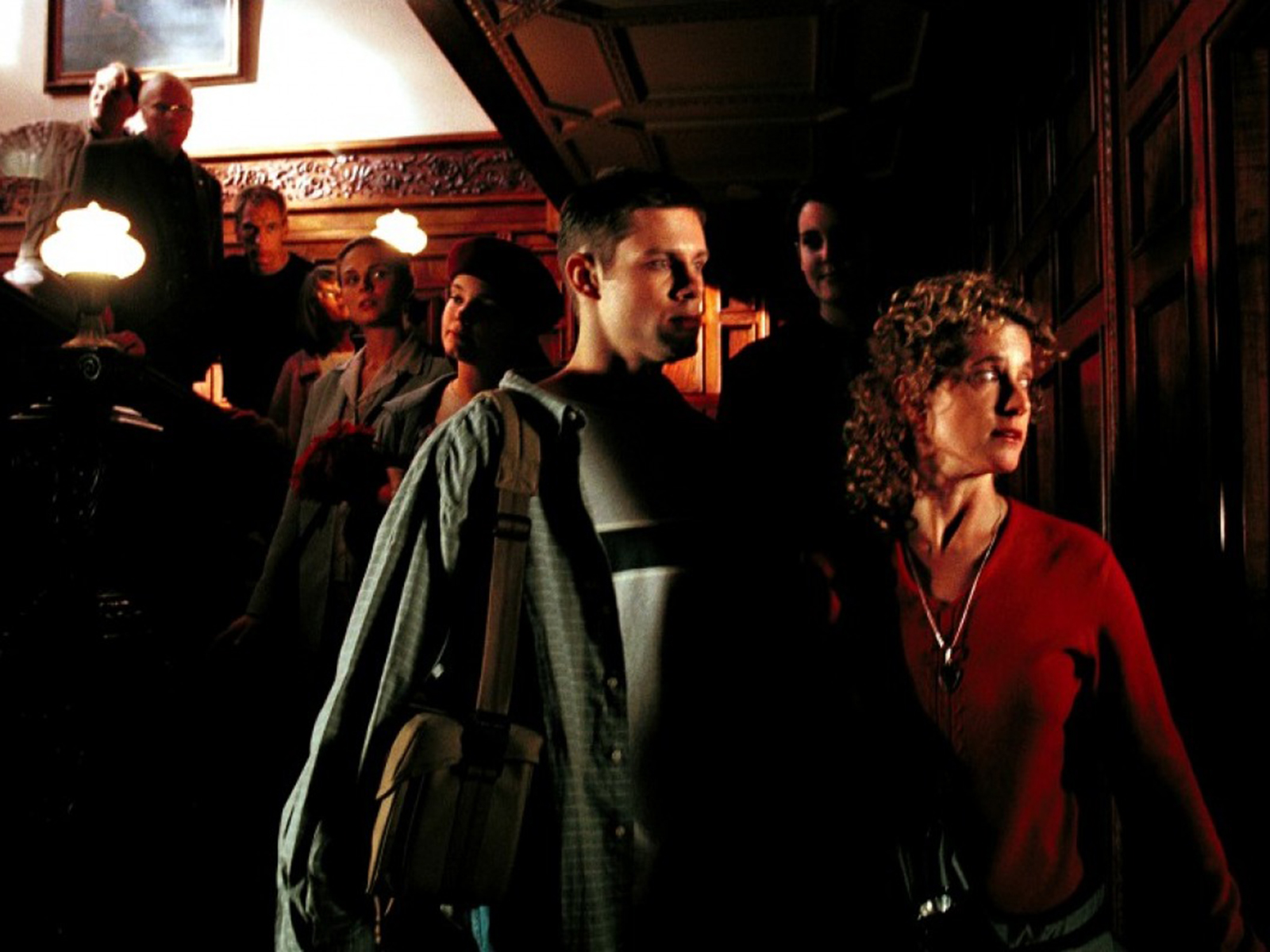
On the whole though, Craig R. Baxley does a fair job and racks up a reasonable scare show. Certainly, Baxley is a far better director than Stephen King’s other tv collaborator – the perpetually awful Mick Garris, who made the likes of Sleepwalkers (1992), The Stand, The Shining, Desperation and Bag of Bones. Perhaps Rose Red‘s ultimate weakness is that Craig R. Baxley, while a competent commercial craftsman, is not a Robert Wise and that Rose Red is merely a modestly effective haunted house story but not quite a classic. Rose Red stands too much in the shadow of The Haunting and the Haunting-influenced The Legend of Hell House (1973). Stephen King also wrote The Shining (1977), an excellent exhumation of the haunted house genre that delved deeply inside the psychological relationship between inhabitants and haunted dwellings. By contrast, Rose Red seems a competently made formula ghost story, although not one that pushes the envelope of the genre in a radically redefining or even classic way. Certainly, within the constraints of formula, Stephen King writes well. He has researched his parapsychological doubletalk and in the last episode manages to wind the various character tensions up to an effective pressure cooker situation.
The Diary of Ellen Rimbauer (2003), also directed by Craig R. Baxley and produced but not written by Stephen King, was a tv movie prequel that went back to tell the events leading up to the haunting of the house.
Other Stephen King genre adaptations include:- Carrie (1976), Salem’s Lot (1979), The Shining (1980), Christine (1983), Cujo (1983), The Dead Zone (1983), Children of the Corn (1984), Firestarter (1984), Cat’s Eye (1985), Silver Bullet (1985), The Running Man (1987), Pet Sematary (1989), Graveyard Shift (1990), It (tv mini-series, 1990), Misery (1990), a segment of Tales from the Darkside: The Movie (1990), Sometimes They Come Back (1991), The Lawnmower Man (1992), The Dark Half (1993), Needful Things (1993), The Tommyknockers (tv mini-series, 1993), The Stand (tv mini-series, 1994), The Langoliers (tv mini-series, 1995), The Mangler (1995), Thinner (1996), The Night Flier (1997), Quicksilver Highway (1997), The Shining (tv mini-series, 1997), Trucks (1997), Apt Pupil (1998), The Green Mile (1999), The Dead Zone (tv series, 2001-2), Hearts in Atlantis (2001), Carrie (tv mini-series, 2002), Dreamcatcher (2003), Riding the Bullet (2004), ‘Salem’s Lot (tv mini-series, 2004), Secret Window (2004), Desperation (tv mini-series, 2006), Nightmares & Dreamscapes: From the Stories of Stephen King (tv mini-series, 2006), 1408 (2007), The Mist (2007), Children of the Corn (2009), Everything’s Eventual (2009), the tv series Haven (2010-5), Bag of Bones (tv mini-series, 2011), Carrie (2013), Under the Dome (tv series, 2013-5), Big Driver (2014), A Good Marriage (2014), Mercy (2014), Cell (2016), 11.22.63 (tv mini-series, 2016), The Dark Tower (2017), Gerald’s Game (2017), It (2017), The Mist (tv series, 2017), Mr. Mercedes (tv series, 2017-9), 1922 (2017), Castle Rock (tv series, 2018-9), Doctor Sleep (2019), In the Tall Grass (2019), Pet Sematary (2019), The Outsider (tv series, 2020), The Stand (tv mini-series, 2020-1), Chapelwaite (tv series, 2021- ), Lisey’s Story (tv mini-series, 2021), Firestarter (2022), Mr Harrigan’s Phone (2022), The Boogeyman (2023) and Salem’s Lot (2024). Stephen King had also written a number of original screen works with Creepshow (1982), Golden Years (tv mini-series, 1991), Sleepwalkers (1992), Storm of the Century (tv mini-series, 1999) and the tv series Kingdom Hospital (2004), as well as adapted his own works with the screenplays for Cat’s Eye, Silver Bullet, Pet Sematary, The Stand, The Shining, Desperation, Children of the Corn 2009, A Good Marriage, Cell and Lisey’s Story. King also directed one film with Maximum Overdrive (1986).
Trailer here