
Crew
Director – Christopher Menaul, Teleplay – Kate Brooke, Based on the Novel Secret Smile (2003) by Nicci French, Producer – Jake Luckington, Photography – Jake Polonsky, Music – Edmund Butt, Production Design – Stuart Walker. Production Company – Granada Television.
Cast
Kate Ashfield (Miranda Cotton), David Tennant (Brendan Block), Claire Goose (Kerry Cotton), Robert Lowe (Troy Cotton), Susannah Wise (Laura Healey), Keira Malik (Naomi Stone), John Bowe (Derek Cotton), Jill Baker (Marcia Cotton), Daniel Ryan (Constable Rob Pryor), Rory Kinnear (Nick), Tim Faraday (Mick Mason), James Daffern (Tony), Rufus Jones (David), Badria Timimi (Detective Inspector Jean Holmes)
Plot
Aspiring London architect Miranda Cotton meets Brendan Block at a friend’s party and invites him back to her place that night. This begins a passionate relationship. Ten days later, she throws him out after when she finds him in her apartment reading her private papers, having taken her spare key. Some months later, Miranda’s sister Kerry reveals that she is going out with Brendan. Next, Brendan and Kerry announce that they are going to get married. Miranda thinks that Brendan is dishonest and dangerous, even though the rest of her family finds him entirely charming, but holds back on what she thinks for Kerry’s sake. She starts investigating Brendan, coming across stories about his deceit, vindictiveness and confidence scams. After befriending Brendan, Miranda’s bipolar teenage brother Troy goes off his medication and jumps from her apartment roof. Next, Brendan dumps Kerry just before the wedding and marries her best friend Laura instead. Not long after this, Laura is found drowned in her bath, although the police are unable to find any foul play, despite Miranda pushing them to suspect Brendan. And so Miranda goes out on her own, determined to make Brendan pay for what he did.
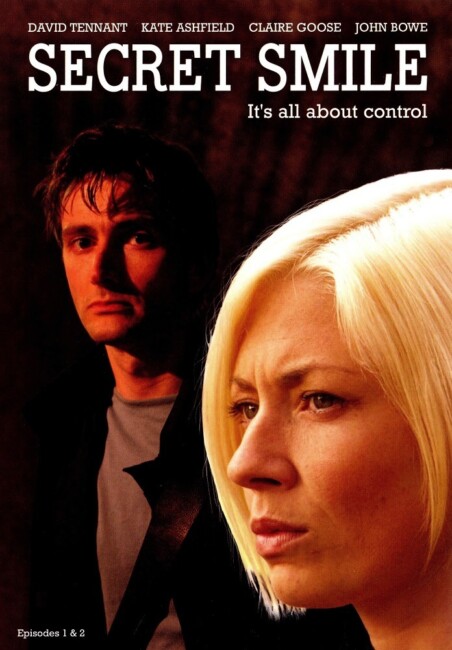
Secret Smile could be a Fatal Attraction (1987) with the sexes reversed. It is almost a Fatal Attraction updated to the Sex and the City (1998-2004) era of cosmopolitan women. Secret Smile was produced as a two-part tv mini-series by the UK’s Granada Television. It was based on a book Secret Smile (2003) by Nicci French, a husband-wife writing team (Nicci Gerrard and Sean French) who specialise in psycho-thrillers.
The attention-drawing piece of casting at the centre of the mini-series is that of David Tennant, best known as the tenth incarnation of Doctor Who (1963-89, 2005– ), as the disturbed ex-boyfriend. Moreover, Tennant plays the part employing the same cockily nonchalant cheer that he does as The Doctor, but twisting it towards a decidedly sinister undertow. At one point during the party held to announce his engagement to Claire Goose, he approaches Kate Ashfield while the others are away and smilingly tells her: “I was just looking at your mouth … and thinking I’d come into that mouth.” Perhaps the one thing we do not gain is any insight into is how Tennant manages to wield such hyper-charm on so many people throughout – all of whom seem to have switched off their safety regulations about strangers. There are also fine performances from both Kate Ashfield and Claire Goose as the two sisters.
We get a fine sense of Kate Ashfield continually biting down on what she thinks for the sake of sister Claire Goose as no-one else around her can see or is even willing to countenance the things that she knows about David Tennant. Especially good is a family dinner scene where she wheels out all the evidence she has gathered against Tennant and he effectively manages to turn it around or minimise it to make it seem that the real problem is her resentment. The story more than effectively draws us in inside Kate Ashfield’s obsession to frequent points where it can pull back and make us realise that, even though she might be right in what she believes, she has become unbalanced in her single-minded obsession.
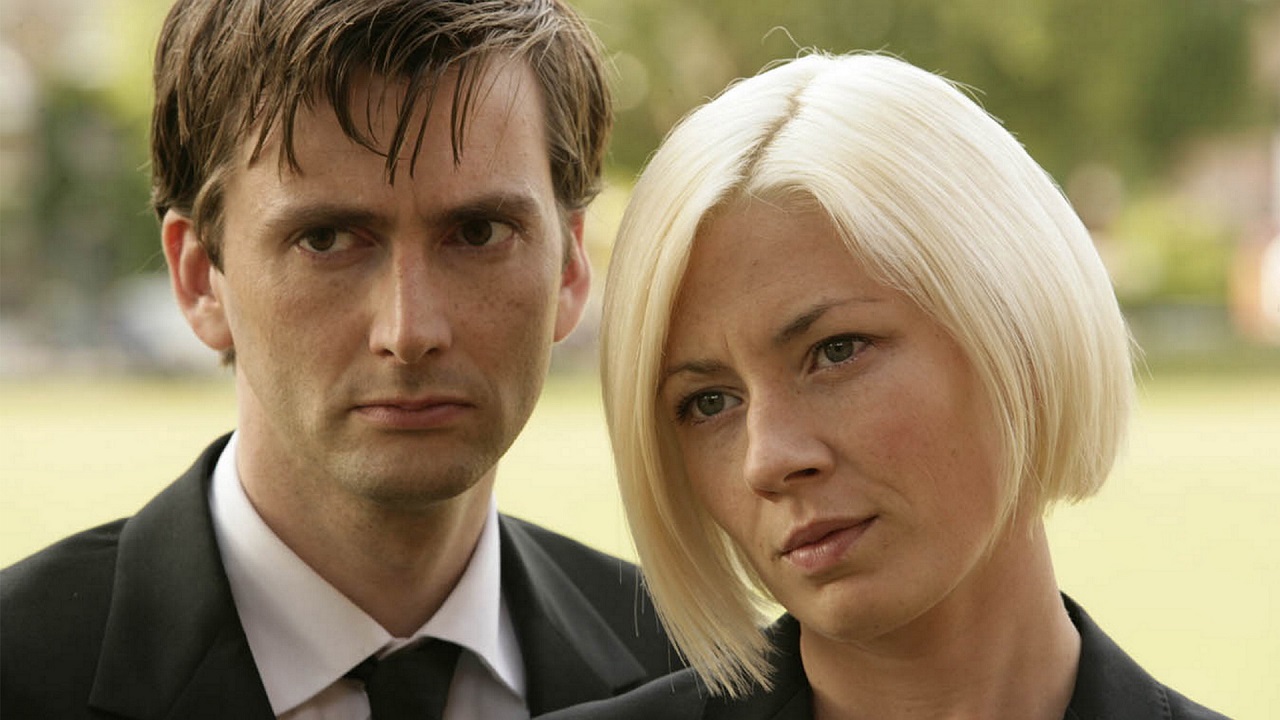
It is this that leaves one balking at the final solution to the problem that Kate Ashfield pulls off. [PLOT SPOILERS]. One where she, along with the help of David Tennant’s current woman (Keira Malik), conspire to make police think that Tennant has murdered her. Here the film has us swallow the fact that it is acceptable for the heroine to conduct a major fraud and frame a man to go to jail for life. Her only real reason for perpetrating this is that she merely believes he may have murdered her best friend (something that police can find no evidence of) and pushed her brother to stop taking his meds, which made him suicidal, all over a relationship that lasted for ten days. While Kate Ashfield is an entirely sympathetic character throughout, when the steadiness of the evidence is looked at in a more rational light, you cannot help but wonder who the unbalanced one was.
Christopher Menaul has been a regular director in British tv since the 1970s, mostly known for the acclaimed British mini-series Prime Suspect (1991) and Killing Jesus (2015). He has occasionally touched on other genre material such as the alternate history film Fatherland (1994), the biopic The Passion of Ayn Rand (1999) and the true-crime mini-series See No Evil: The Moors Murders (2006).