
Crew
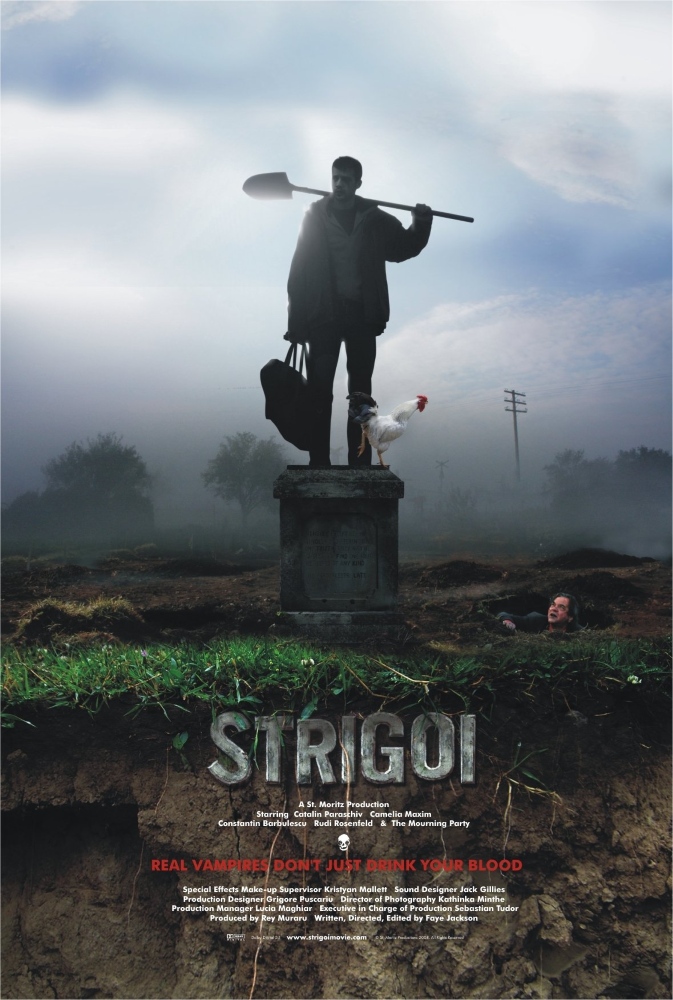
Director/Screenplay – Faye Jackson, Producer – Rey Muraru, Photography – Kathinka Minthe, Makeup Effects – Kristyan Mallett, Production Design – Grigore Puscariu. Production Company – St. Moritz Productions.
Cast
Catalin Paraschiv (Vlad Cozma), Rudi Rosenfeld (Nicolae Cozma), Camelia Maxim (Mara Tomsa), Constantin Barbulescu (Constantin Tirescu), Dan Popa (Todor), Vlad Jipa (Stefan), Roxana Guffmann (Ileana Tirescu), Ovidia Popa (Radu), Nicolae-Rulu Stingachu (Petre), Cristian Irimia (Aurel), Mircea Nicola (Vasile)
Plot
Vlad Cozma returns to his small hometown in rural Romania after an unsuccessful stint working in Italy. He finds that the aging Florin Cojocaru has died in mysterious circumstances with strangulation marks left around his neck. Moreover, someone has signed Vlad’s name on the death certificate because he was a medical student. In trying to out what happened, Vlad realises that the townspeople are covering up the circumstances and cause of Florin’s death. He also meets the town’s former mayor Constantin Tirescu but ridicules the locals’ insistence that Constantin is dead and has returned as a vampire or strigoi. As Constantin and his wife drink blood and infect others, Vlad comes to find how all of this is related to the decades-old rivalry and bitterness over land confiscated by the Communists and appropriated by Constantin following the revolution.
Strigoi offers up the unique notion of being a Romanian-made vampire film. It does seem odd given the association of the vampire film with Transylvania (which is in present-day Romania) that no filmmakers (at least to one’s knowledge) have ever gone to the actual location and filmed before. Bram Stoker, the author who created the modern vampire and started off its associations with Transylvania in Dracula (1897), notoriously never visited the region and his depiction of it was guesswork that appeared to have gone not much further than his copy of Bradshaw’s Guide.
Strigoi is nevertheless still a Western-made vampire film as opposed to an authentic Romanian film – the cast and locations are all Romanian but the actors speak in English, funding is from the UK and the director/writer is a British woman Faye Jackson. Faye Jackson has only made one film previously with Resurrecting Bill (2000), which does not appear to have been seen anywhere. Jackson is married to a Romanian man, her producer Rey Muraru. She explains in an interview at Quiet Earth that on various visits to Romania, she was inspired to read up on vampire folklore and look at the way the locals perceived it. Thus, the tenets of vampirism in the film are seen as an often confusing and contradictory set of pieces of tradition.
Faye Jackson places a good deal into a portrait of rural colour. The film is filled with eccentrically offbeat characters – most notable being Rudi Rosenfeld in a grand performance as Catalin Paraschiv’s doddering grandfather, blaming everything onto the Communists and Gypsies. The villagers and much of the tone of the film is played in a quirkily offbeat manner that seems like oblique black comedy that leaves you unsure whether you should be laughing at its dark under-the-radar ironies or not. The main problem with Strigoi is that these dryly ironic character quirks and the story of petty rural corruption is most of the film – far more so than the vampire element is.
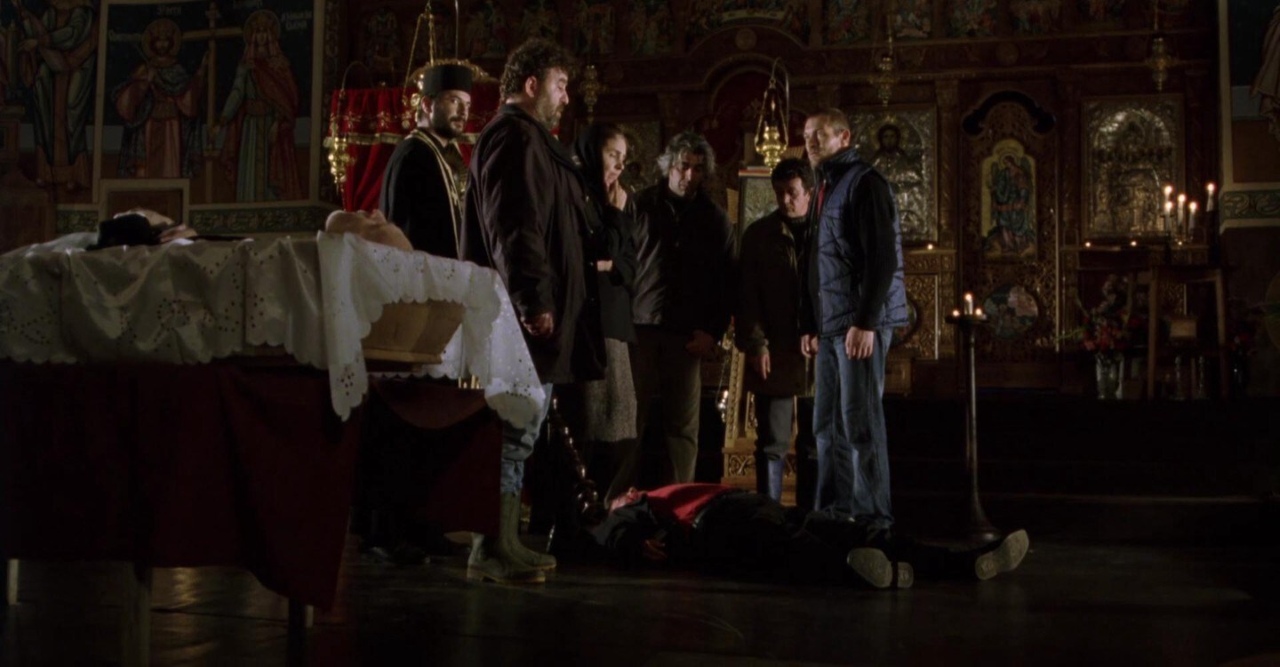
Most of the plot is taken up by the hero’s quest to find out who faked his name on the death certificate and killed Florian, and his becoming wound up in the rivalry over who stole whose land during the changeover between Communism and capitalism. Indeed, Strigoi never sits easily as a vampire film – it feels more like a version of an East European Coen Brothers film with the black humour toned waaaay down. The vampire element only ever seems to float around the edges of the film without doing much – an American vampire film by contrast would have created a siege, a sense of an infection spreading and a great struggle as the hero has to kill the chief vampire off.
It is eventually clear that the vampirism in the film is standing in for various political ideologies and their history in Romania. Here the vampires seem less predatory or darkly charismatic in the sense that we understand them in Western horror fiction than they stand in for buried secrets and/or petty bourgeoisie corruption. Constantin Barbulescu’s mayor is seen as a vampire because of his land-appropriating greed, although it is not clear then why the aging Rudi Rosenfeld (who is Babulescu’s bitterly opposed enemy) also turns out to be a vampire.
Similarly, you are not entirely sure what Babulescu’s wife (Roxana Guffmann) who turns up at neighbour Camelia Maxim’s house and starts to devour everything in her kitchen is meant to stand in for – at one point, Faye Jackson makes pointed contrast between her eating everything and the greed of the customers in the fast food restaurant that Catalin Paraschiv was forced to work in while in Italy. The problem is that Faye Jackson seems willing to attach her vampires to everything around in search of a metaphor and creates too many analogies to make any one point with potency.