
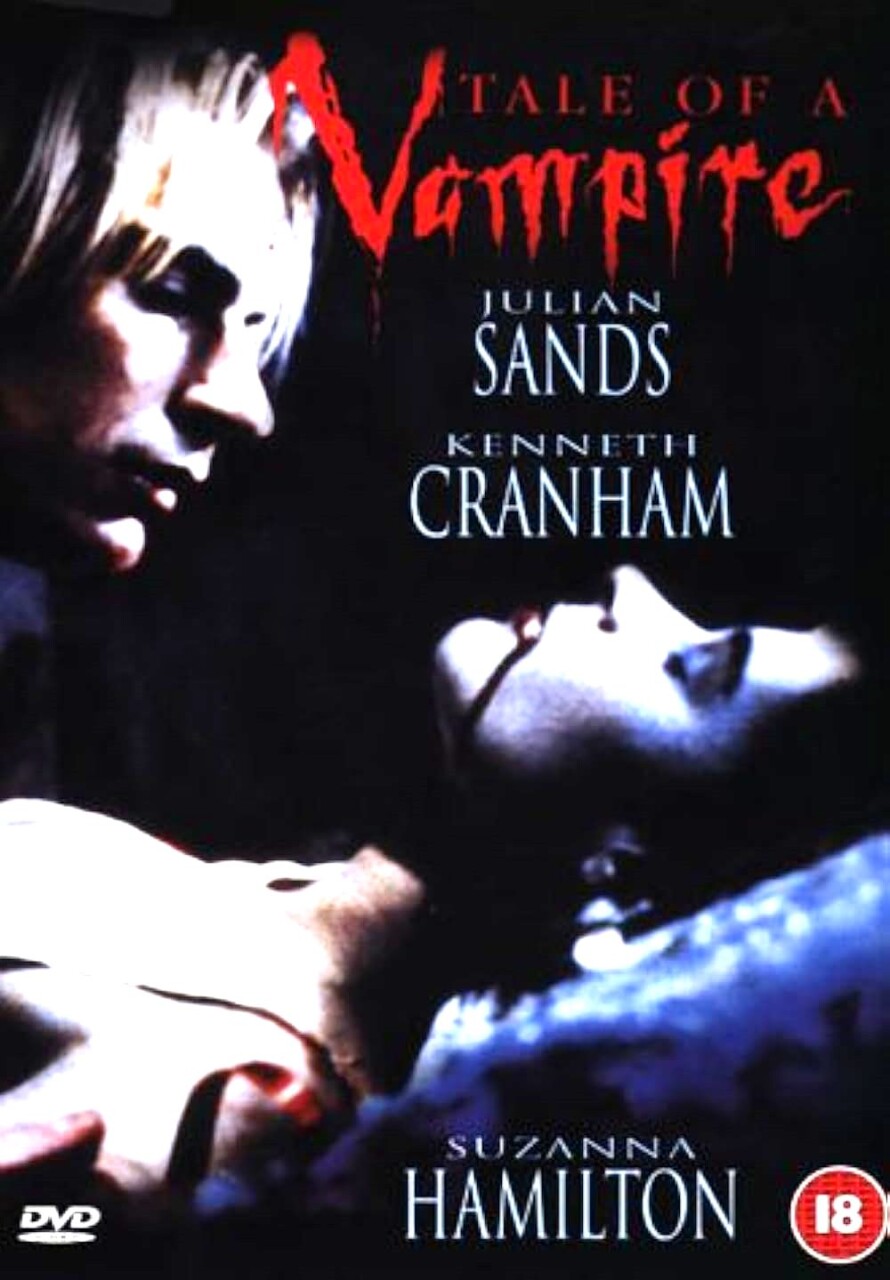
aka Warlock: Tale of a Vampire
Crew
Director/Story – Shimako Sato, Screenplay – Shimako Sato & Jane Corbett, Based on the Poem Annabel Lee by Edgar Allan Poe, Producer – Simon Johnson, Photography – Zubin Mistry, Music – Julian Joseph, Special Effects Supervisor – David Watkins, Makeup – Melanie Gibson, Production Design – Alice Normington. Production Company – State Screen Productions/Tsuburaya Eizo.
Cast
Julian Sands (Alex), Suzanna Hamilton (Anne/Virginia), Kenneth Cranham (Edgar), Marian Diamond (Denise), Michael Kenton (Magazine Man)
Plot
Anne receives a letter offering her a job at the Foster Library. She applies and receives the job, even though the librarian had not yet announced the vacancy. The moody Alex, who spends all his time researching the lives of martyrs, becomes fascinated with Anne and follows her. She learns that he is a vampire. He tells her that she reminds him of his love Virginia from the 1840s. As the two become romantically involved, she is approached by a vampire hunter who warns her that Alex is responsible for a series of killings around the city and that he will destroy her.
The popularity of Francis Ford Coppola’s lush, sexy reinvention of the vampire in Bram Stoker’s Dracula (1992) begat a new breed of vampire films. From Innocent Blood/A French Vampire in America (1992), Interview with the Vampire: The Vampire Chronicles (1994), The Addiction (1995), Nadja (1995) and Dracula 2000 (2000) to the B-budget likes of To Sleep with a Vampire (1992), Dracula Rising (1992), Addicted to Murder (1995), The Nosferatu Diaries: Embrace of the Vampire (1995), Embrace the Darkness (1998) and tv’s Forever Knight (1992-6), vampire cinema seems to have at last ditched classical stereotypes of evil predator vampires and turned instead towards exploring the darkly tortured soul of the vampire, not to mention more explicitly probing the erotic potential the vampire film had always offered. The plot of the film here is often closely modelled on an earlier romantic vampire film To Die For (1989).
Amidst the 1992 fad for vampires, Tale of a Vampire proved to be disappointment. Japanese director Shimako Sato certainly has artistic pretensions but these go nowhere, possibly due to a low budget. The film’s opening scene with a white-skinned Julian Sands waking up, grabbing a cat and draining its blood over his face is promising but then the film peters out. It becomes slow paced and meanders around without anything ever happening. Even when something does happen, Shimako Sato is vague about what it is. Tale of a Vampire is possibly one of the most trivial seeming of vampire films – the vampire spends his entire time hanging about a library in tortured indecision about whether to bite or love the girl. Nothing else happens.
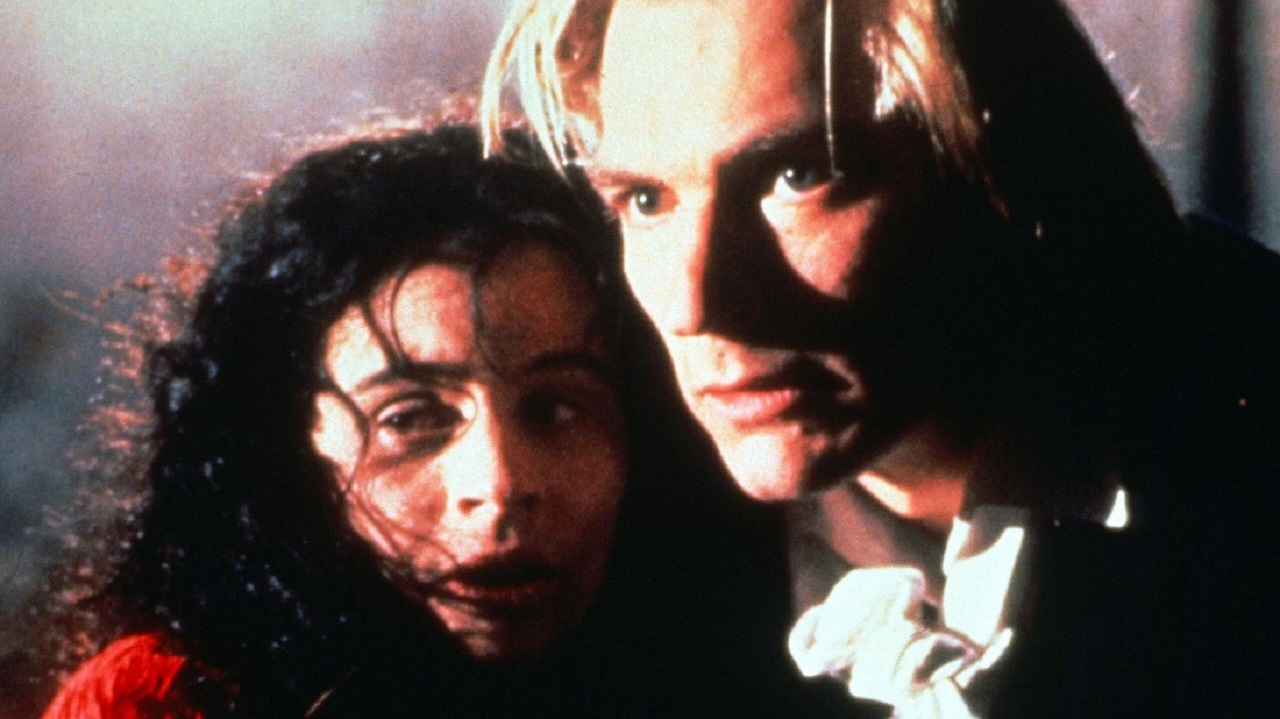
Julian Sands makes for the most neurotic of the new breed of angst-ridden Byronic vampires. Up against him, Suzanna Hamilton is wildly miscast. She is a fine actress – see Nineteen Eighty-Four (1984) – but she is made to subdue herself and seem dumpy and drab, which is exactly the opposite of what this romantic/erotic vampire fantasy requires of its women. Kenneth Cranham – another good actor – gives an effectively sinister and ambiguous performance.
Shimako Sato continued in the horror genre, returning to her native Japan to make Wizard of Darkness (1995) and Wizard of Darkness II (1996), as well as wrote the sf film The Messiah from the Future (1997), although these have been barely distributed in the West. More recently, she has returned as director of K-20: Legend of the Mask (2008), a masked vigilante film set in an alternate world Japan; the serial killer thrillers Unfair: The Answer (2011) and Unfair: The End (2015); and the fantasy film The Yin Yang Master Zero (2024). She has also written the scripts for the medium film Ghost (2010) and the live-action remake of Space Battleship Yamato (2010).
In the UK, Tale of a Vampire was renamed Warlock: Tale of a Vampire to capitalise on Julian Sands’ name in Warlock (1989) and sequels.
Film online in several parts beginning here:-