
Hong Kong/South Korea/Japan. 2004.
Dumplings
Crew
Cast
Miriam Yeung (Mrs Li), Bai Ling (Aunt Mei), Tony Leung Ka-fai (Mr Li)
Cut
Crew
Cast
Lee Byung-hun (The Director), Lim Wong-hie (The Extra), Kang Hye-jeong (Wife)
Box
Crew
Cast
Kyoko Hasegawa (Kyoko), Atsuro Watabe (Stepfather/Editor)
Plot
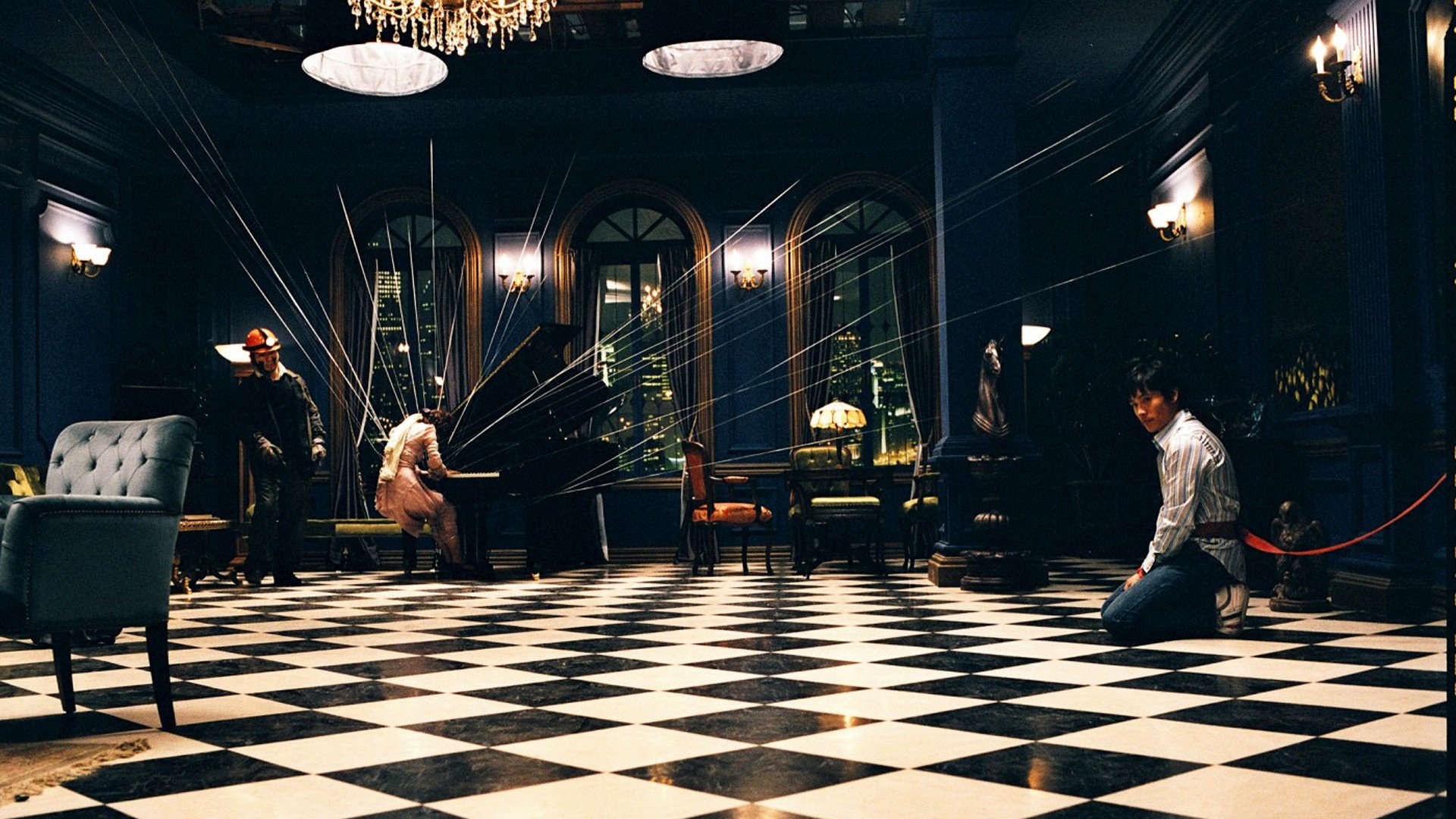
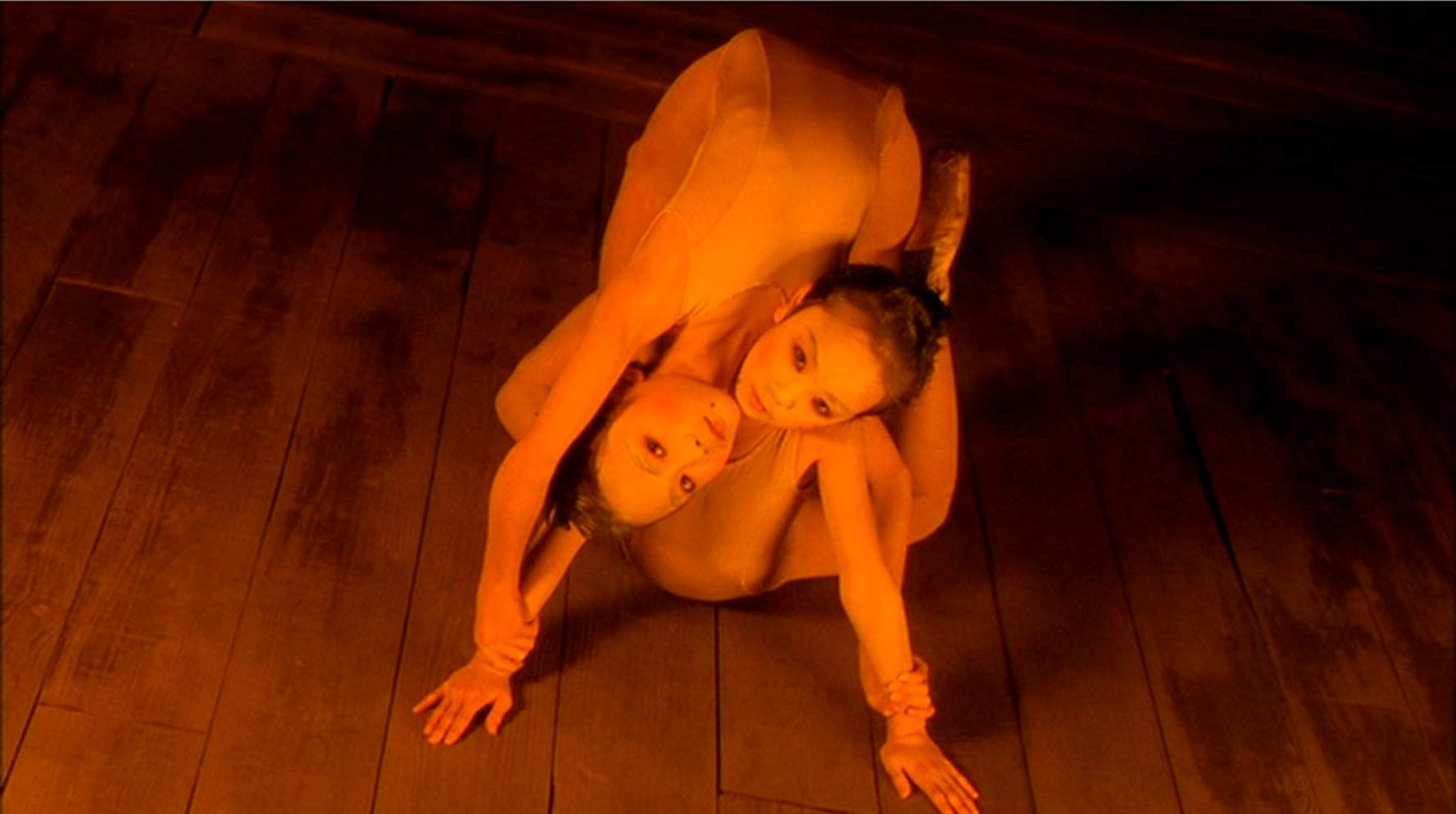
Dumplings:- The aging actress Mrs Li goes to Aunt Mei whose dumplings are reputed to have the ability to help one regain their youthfulness. However, after she starts the treatment, Mrs Li discovers that the principal ingredient in the dumplings is aborted human foetuses. Cut:- A successful South Korean film director has his home invaded by a man who appeared as an extra in several of his films. The extra is determined to expose the sins in the director’s life and ties his wife, a successful concert pianist, to her piano and promises to chop off one of her fingers every five minutes if the director does not make the choice to strangle a child he has prisoner. Box:- Kyoko, a Japanese novelist, is haunted by a dream and the appearances of a girl. These obsessively draw her back to her childhood when she and her twin sister Shoko were a performing contortionist act. Kyoko was jealous of how Shoko was her stepfather’s favourite. She locked Shoko in their performing box for one night but the tent was accidentally set on fire and Shoko burned alive. The dreams draw Kyoko back to the tent where something starts stirring inside the box.
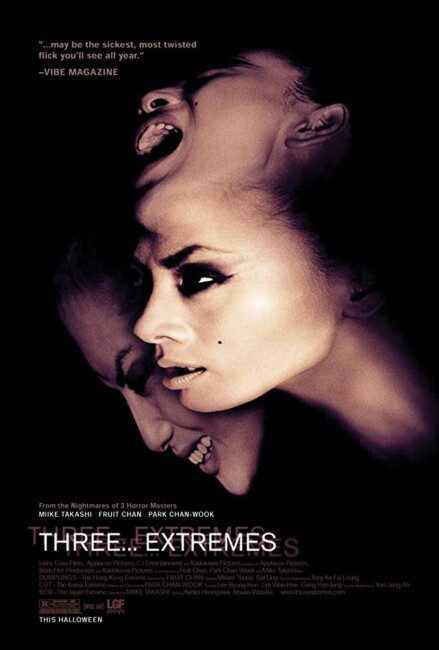
Three … Extremes is a horror anthology. It is a sequel to an earlier anthology Three (2002), which did not enjoy the same exposure as this follow-up. (Subsequently, Three was released in English-language markets as Three Extremes II). Three … Extremes, like Three, has been put together to capitalise on the current interest in Asian horror with the successes of Ring (1998), Ju-on: The Grudge (2003) et al.
In the case of Three … Extremes, the producers have chosen three directors each from a different one of the top three Asian filmmaking countries – Japan, Hong Kong and South Korea. The directors in question are Takashi Miike, the cult Japanese director of gruelling and ultra-violent films like Audition (1999), Ichi the Killer (2001) and Visitor Q (2001); South Korea’s Park Chan-wook who made the previous year’s Cannes award winning Oldboy (2003), a similarly gruelling and ultra-sadistic horror that pushes a number of taboo boundaries; and Hong Kong’s Fruit Chan, who has yet to make a horror film but is known for strong, socially conscious portraits of disenfranchised people on the edges of Hong Kong society and his critique of rule by mainland China.
The first episode Dumplings was later expanded by director Fruit Chan into a feature-length film Dumplings (2004). Due to film festival scheduling, I ended up seeing the feature film version of Dumplings less than a week before Three … Extremes, where in fact they were originally released the other way around. The two are essentially the same film. The shorter version of the film here covers all the basic points in the longer film but what becomes apparent in watching both films close together is that Fruit Chan has not made two different versions but shot both films once.
The longer version, Dumplings, features all the same shots that appear in the shorter version but there is more to each scene, while the shorter version has edited each scene and shot down to a bare minimum. The shorter version loses many of the aspects that work much better in the longer version – we do not get to see the full hilarity of Bai Ling’s sublime performance, while Fruit Chan’s directorial style is much the less. On the plus side, the shorter version works much more effectively as a horror story. The nonchalant humour comes more concisely and makes sharper contrast to the grim revelations about the dumplings containing human foetuses and the depiction of the abortions, whereas the longer version draws these things out to lesser effect.
The most notable change between the shorter and longer versions of Dumplings is in the ending. The feature film version has Miriam Yeung persuading her husband’s lover to surrender her baby and the film goes out on her preparing to devour it, while this version has a much nastier and completely different ending where Miriam Yeung finds that she is pregnant herself and the episode goes out on her conducting a wire coat hanger abortion in the bathtub. It is not certain why Fruit Chan displaced the thrust of this scene onto the character of the husband’s lover but the way the scene comes here certainly has a much grimmer and nastier kick than it did in the feature film version.
Park Chan-wook’s episode Cut is another strong segment. Cut shows Park Chan-wook revisiting the basic idea of Oldboy – a character abducted out of the blue and tortured in sadistic ways. Both Cut and Oldboy see the torture as a transformative psychological process where the central character is forced to peel away their life and confront harsh truths about the past, and in both films there come a number of jolting revelations. Like Takashi Miike, Park Chan-wook revels in sadistic and psychological extremes. There are some extremely nasty scenes in Cut with the wife having her fingers severed one at a time and of course the grim position the protagonist is put in where he is asked to choose to strangle the child or see his wife lose all her fingers. Lim Wong-hie, the actor playing the extra, plays to the gallery and is clearly having the time of his life (and proves an excellent dancer into the bargain). The opening of the segment also offers up a rather funny spoof of the Asian vampire movie.
Surprisingly, Takashi Miike’s segment Box is the weakest of the three. Miike seems to have played against type and not gone the route that both Fruit Chan and Park Chan-wook have in pushing for queasy horror (which could almost be regarded as Miike’s home territory) but instead created a more abstract arty subject. Box starts out seeming like a traditional Japanese ghost story. This soon moves into a blurred series of childhood reminisces and dream sequences where we get the impression that the protagonist is being haunted by the vengeful ghost of the twin sister she killed during childhood. Miike creates all manner of weird synchronicity between the sister locked in the box, the adult heroine trudging through the snow and then seemingly being folded up like a voodoo doll by her stepfather. Ultimately, Box seems like an experimental short where Takashi Miike is more interested in visual abstraction than he fully is in narrative. However, an unusual twist ending brings the episode together most effectively.
Trailer here