
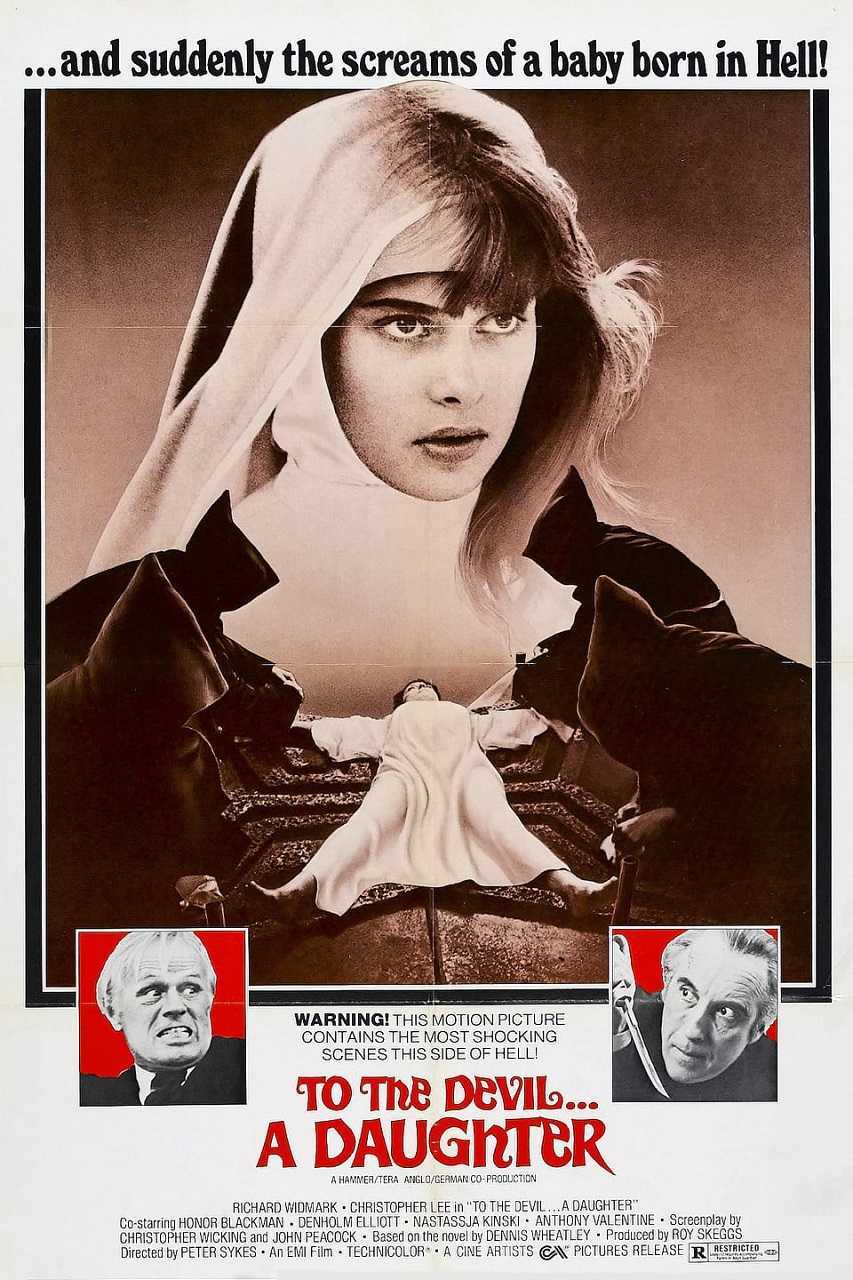
UK/West Germany. 1976.
Crew
Director – Peter Sykes, Screenplay – Chris Wicking, Adaptation – John Peacock, Based on the Novel by Dennis Wheatley, Producer – Roy Skeggs, Photography – David Watkin, Music – Paul Glass, Special Effects – Les Bowie, Makeup Effects – Eric Allwright & George Blackler, Art Direction – Don Picton. Production Company – Hammer/Terra Filmkunst.
Cast
Richard Widmark (John Verney), Nastassja Kinski (Catherine Beddows), Christopher Lee (Father Michael Rayner), Denholm Elliott (Henry Beddows), Anthony Valentine (David), Honor Blackman (Anna Fountain), Eve Maria Meincke (Eveline de Grass)
Plot
Occult writer John Verney is asked by his friend Henry Beddows to pick up his teenage daughter Catherine from the airport. Catherine is a nun with The Children of the Lord, a mysterious Catholic order located in Bavaria. She is allowed to visit her father once a year on her birthday. After Catherine arrives, Beddows insists that she stay with Verney. However, the order, headed by the sinister Father Michael Rayner, make all effort to get Catherine back and marshal black magic to stop Verney as he protects her. Verney learns that the order harbours a group of practicing Satanists who have prepared Catherine to become an avatar of Astaroth upon this, her eighteenth birthday.
To the Devil a Daughter was the second-to-last theatrically released film ever made by Hammer Films – their remake of Alfred Hitchcock’s The Lady Vanishes (1979) would be their last – and was their last-ever theatrical horror film. Hammer had had enormous success in the late 1950s with their various Frankenstein and Dracula films and on into the 1960s with various sequels to these and florid revamps of other monster themes. Into the 1970s, their domination of the horror field had begun to falter. This period saw a much higher sex content enter the Hammer film, something that had previously remained repressed. It was The Exorcist (1973) that brought the Hammer horror film to an end.
Up against The Exorcist, with its full frontal barrage of obscenities and blasphemous shock theatrics, the traditional Hammer film, which was rooted in the Victorian past and where sexuality when it eventually emerged came with a giggly adolescence, looked staid. Indeed, around the same time as The Exorcist, Hammer attempted to modernise Christopher Lee’s Dracula with Dracula A.D. 1972 (1972) and woefully showed how outdated they were by entirely avoiding bringing Dracula into contact with the modern world. With To the Devil a Daughter, they tried to join the bandwagon and exploit the box-office interest in the occult and Satanism that The Exorcist and before that Rosemary’s Baby (1968) had stirred up.
With To the Devil a Daughter, Hammer adapted a 1953 novel by British occult writer Dennis Wheatley. Hammer had earlier adapted Dennis Wheatley’s occult works with The Devil Rides Out/The Devil’s Bride (1968), which is considered one of their best films, as well as the lost world film The Lost Continent (1968). They announced plans to film several other Wheatley works such as The Haunting of Toby Jugg (1948) and The Satanist (1960) around the same time.
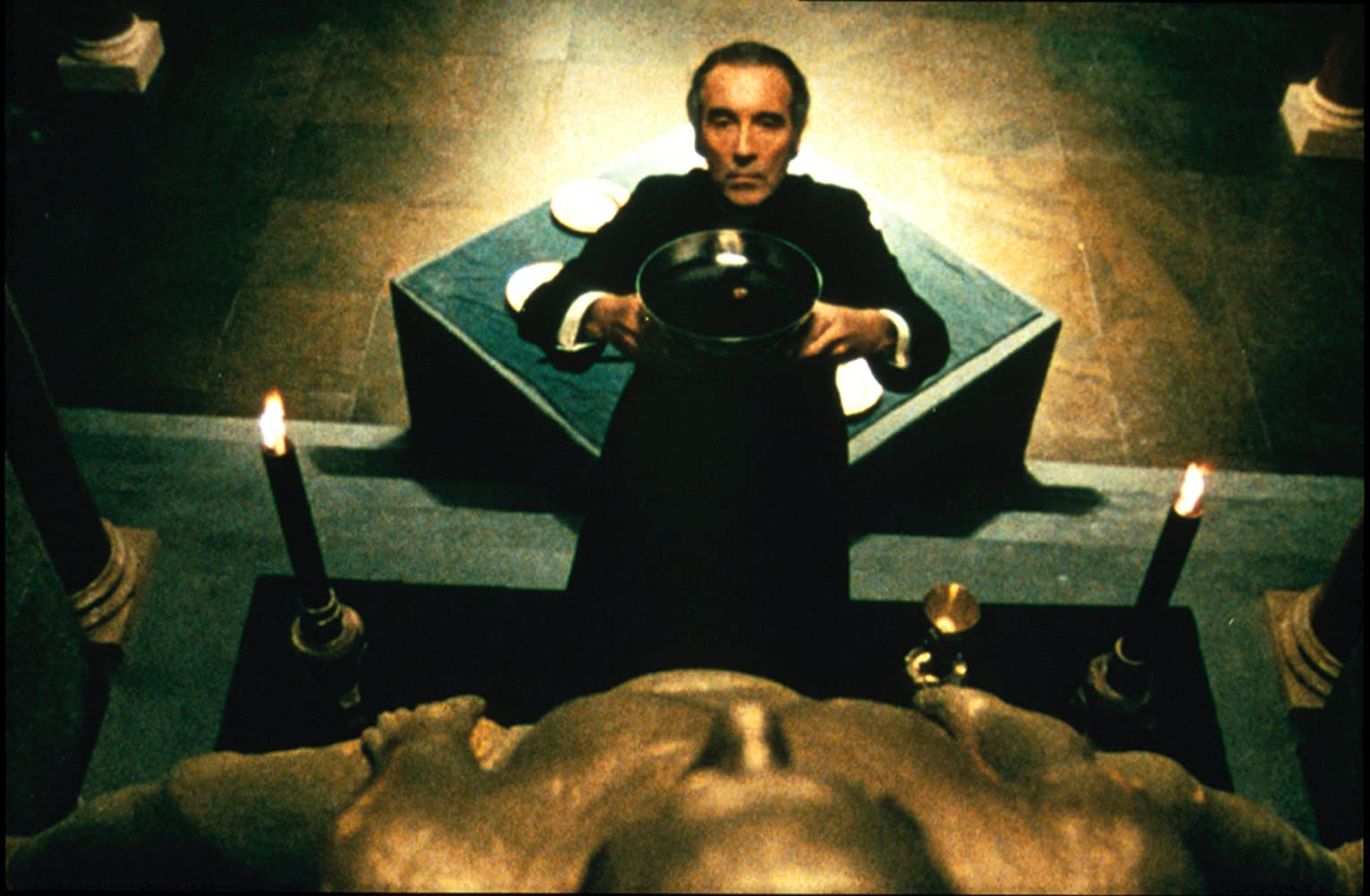
Comparison between The Devil Rides Out and To the Devil a Daughter shows just how much Hammer was trying to jump onto the Exorcist bandwagon – The Devil Rides Out, which came out before Rosemary’s Baby and The Exorcist, offers a very literate depiction of black magic but when it comes to all the obscenities, its orgiasts remained chastely clothed and their diabolic depravities discreetly unmentioned; To the Devil by comparison shows full-frontal nudity and contains several nastily sadistic set-pieces with a pregnant woman’s thighs being bound and a demonic foetus tearing its way out, and another scene with a woman hand-pumping the blood out of her own veins.
Most people hate To the Devil a Daughter but I enjoyed it. It strays widely from the Dennis Wheatley source work. The original is a demented piece about a defrocked Anglican canon who conjures up various homunculi in a war against Devil-worshipping Communists for the soul of an English girl. There is almost nothing in common in the finished film version, which was widely subject to script revisions during shooting – only the names of about two of the characters and the character of the virgin girl who has been intended as a sacrifice. (Wheatley was so annoyed with the end result that he wrote a letter to Hammer saying he did not wish to be associated with any further adaptations of his works).
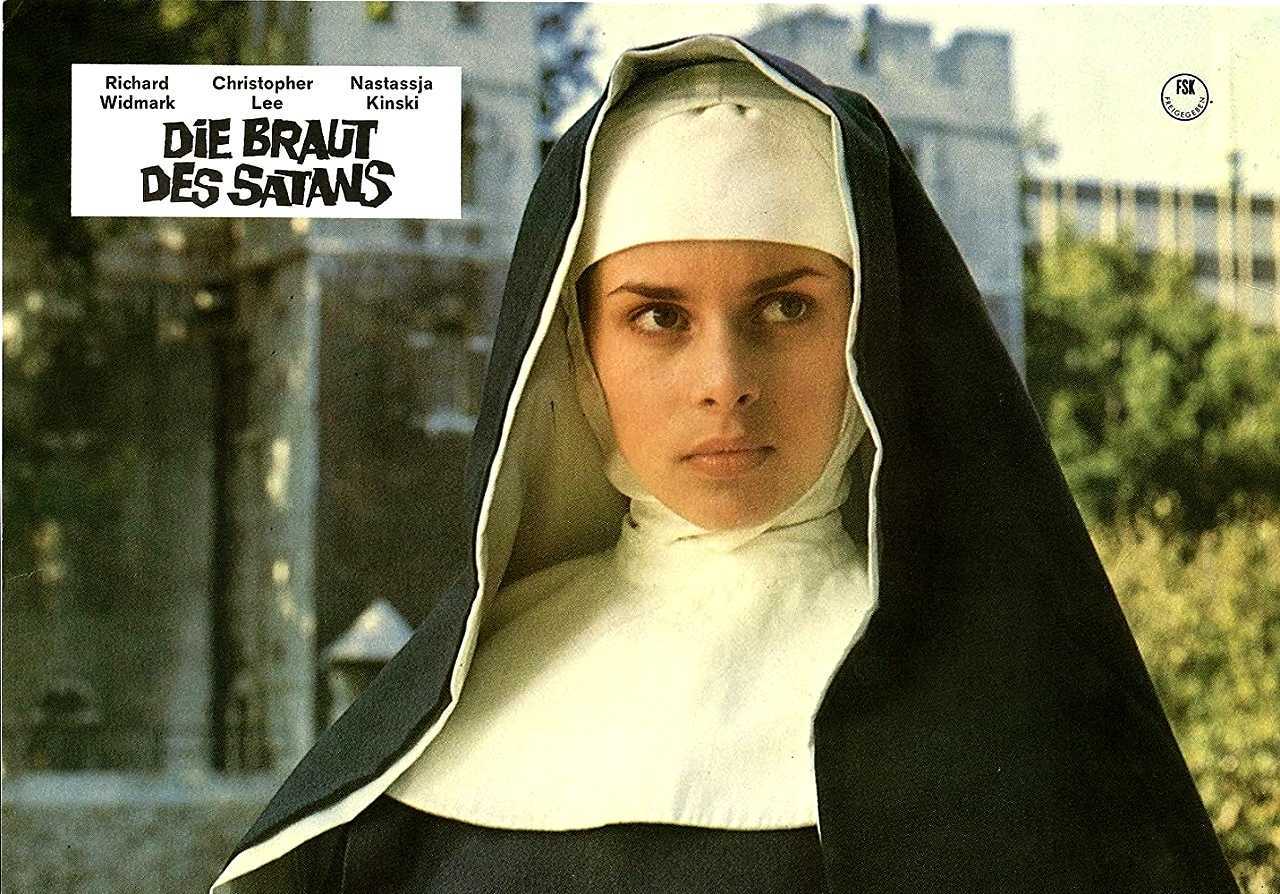
For all the abandonment of the source, the film’s demonology is still literately written, much better than the usual occult films of the period. There has also been the addition of a number of German locations and actors to accommodate the fact that the film was a West German co-production. The classical Hammer Gothic surroundings are left behind and the story well integrated into the modern world, where the characters have much more flesh than usual – Richard Widmark does well enough with his role and a seventeen-year old Nastassja Kinski brings her customary earthy Gypsy sensuality.
Peter Sykes, a minor latter day Hammer director (see below for his other films), directs some effective scares – like the scene where a rope draped over a phone turns into a snake. Particularly standout is Christopher Lee who gives a performance of towering, lascivious evil that dominates the whole film.
The only part where the film disappoints is at the climax, where Richard Widmark’s struggle against a demonic wind proves a far cry from the clash of forces of light and dark promised. Comparison to the epic psychological war between the forces of light and darkness that came at the climax of Hammer’s The Devil Rides Out makes this seem all the more disappointing.
Director Peter Sykes also made the likes of Venom (1971), Hammer’s interesting Demons of the Mind (1972) and the Old Dark House comedy The House in Nightmare Park (1973). The script was from Christopher Wicking, one of the most intelligent writers to emerge during the Anglo-horror era, responsible for Anglo-horror items such as The Oblong Box (1969), Cry of the Banshee (1970), Scream and Scream Again (1970), Blood from the Mummy’s Tomb (1971), Murders in the Rue Morgue (1971) and Demons of the Mind.
The only other of Dennis Wheatley’s works on screen has been The Haunted Airman (2006), a BBC adaptation of The Haunting of Toby Jugg.
Trailer here