

Crew
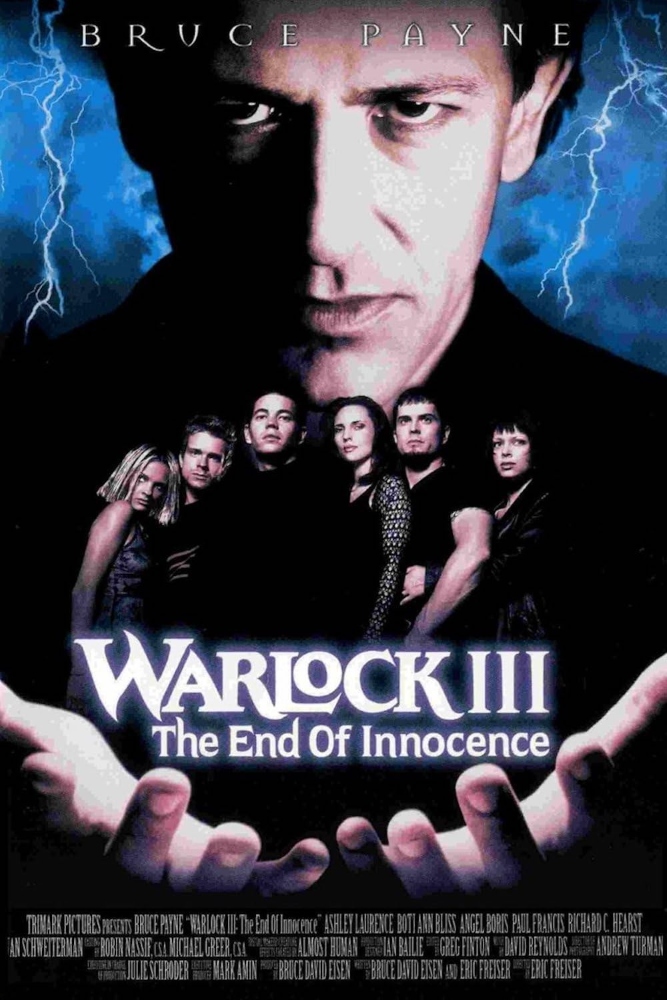
Director – Eric Freiser, Screenplay – Eric Freiser & Bruce David Eisen, Producer – Bruce David Eisen, Photography – Andrew Turman, Music – David Reynolds, Digital Effects – Look! Effects Inc (Supervisor – Kevin Mullican), Mechanical Effects Supervisor – Mike Regan, Makeup Effects – Almost Human (Supervisors – Anthony Gaillard, Robert Hall & Pierre-Oliver Thevenin), Porcelain Shatter Effects – Hammerhead Productions (Supervisors – Constance Bracewell & Jamie Dixon), Production Design – Ian Bailie. Production Company – Trimark Pictures.
Cast
Ashley Laurence (Kris Miller), Bruce Payne (The Warlock/Philip Covington), Paul Francis (Michael), Jan Schweiterman (Jerry), Boti Ann Bliss (Robin), Angel Boris (Lisa), Richard C. Hearst (Scott), Eamon Draper (Mr Butterfield)
Plot
Art student Kris Miller receives a phone call informing her that a family home she never knew about is about to be demolished. Seeking answers to her past, she goes there, later being joined by several of her friends from school. They are also joined by the mysterious Philip Covington, who claims to be an architect. However, Covington is in fact an agent of The Devil who wants Kris as a sacrifice. To do so he must exploit the wants and weaknesses of each of her friends to get them to willingly give her up as a sacrifice.
Warlock: The End of Innocence is the third film in the series begun with the quite good Warlock (1989) and was followed by the lame Warlock: The Armageddon (1993). The only point of connection in each film is the central character. With each film, the character seems to change in nature – in the first film he is a time-traveling black sorcerer; by the second film, he is The Devil’s son; and here he is demoted to an unspecified demonic envoy. The tone of the films also changes somewhat – this one is almost a haunted house film in its contained setting.
Warlock: The End of Innocence is even less related to its predecessors – most obvious is that it dispenses with Julian Sands in the title role and casts Bruce Payne, the villain from films like Passenger 57 (1992), Highlander: Endgame (2000) and Dungeons & Dragons (2000). Moreover, it is no longer even an American film – while American financed, this one has been made wholly in Ireland with an Irish supporting production crew.
The good news is that Warlock 3 is better than the second film. It is flatly lit but director Eric Freiser generates some unusual atmosphere – like scenes where Ashley Laurence turns away from a mirror and unseen by her her reflection starts screaming; one victim being transformed into glass and then shattered; and a scene where Ashley Laurence thinks she has broken through a wall and runs away to freedom, only to become caught in a loop where she is not only running over and over but also watching herself run.
The victimology is standard slasher movie complement – this copies the second film in creating a series of set-pieces giving victims bizarre fates but it adds a more interesting psychological undertow where each of the victims must betray the heroine in order to relieve suffering. The end is generic – it leaves us with no explanation of why the Warlock wants Ashley Laurence in particular as a sacrificial victim, and why the knife she suddenly uses at the end has particular power over him.
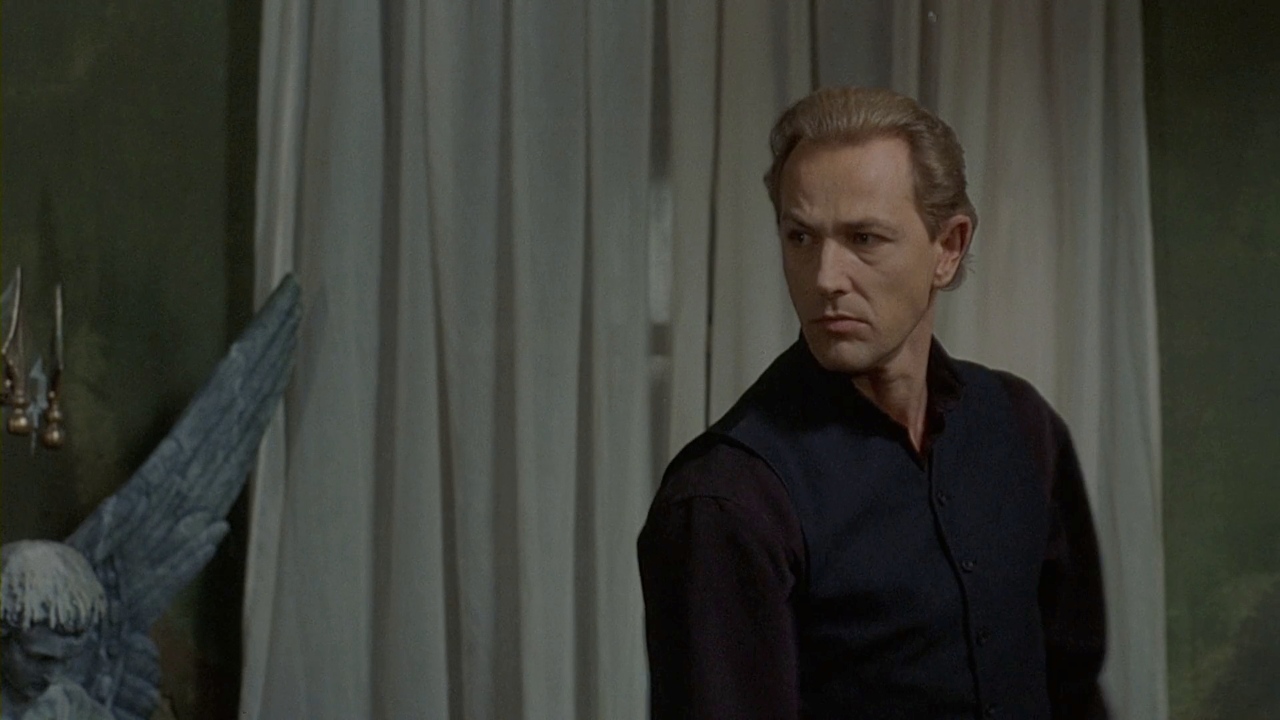
As the Warlock, Bruce Payne, an actor who has magnificently theatrical charisma and presence, is actually better in the part than the perpetually overwrought Julian Sands.
Eric Freiser has yet to make another film.