
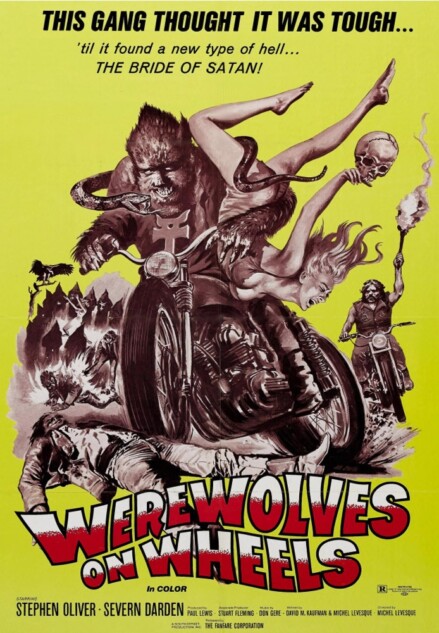
USA. 1971.
Crew
Director – Michel Levesque, Screenplay – David M. Kaufman & Michel Levesque, Producer – Paul Lewis, Photography – Isidore Mankofsky, Music – Don Gere, Art Direction – Allen Jones. Production Company – The Fanfare Corporation.
Cast
Stephen Oliver (Adam), D.J. Anderson (Helen), Deuce Berry (Tarot), William Gray (Pill), Gary Johnson (Movie), Barry McGuire (Scarf), Severn Darden (One), Owen Orr (Mouse), Anna Lyn Brown (Shirley), Leonard Rigel (Mr Burke)
Plot
The Devil’s Advocates biker gang are on a cross-country journey. They stop by at a monastery where the monks come and feed them bread and wine. However, the food is drugged and causes the gang to fall unconscious. The monks are in fact Satanists who take the gang leader Adam’s woman Helen away to become Satan’s bride. The bikers manage to regain consciousness and rescue Helen. However, as they head into the desert, someone comes at night and starts to slaughter their number. Slowly they wake up to the fact that one of the gang has become a werewolf.
Werewolves on Wheels is a fascinating artifact from the 1970s. It came out just at the point where the standard B movie monsters created by Universal and Hammer were being replaced by a series of horror films that were updating and giving classic monsters demented conceptual spins – we had Western, Blaxploitation and softcore variations on the vampire and Frankenstein film; numerous modern updatings; Hammer’s Dracula was blended with the kung fu film in The Legend of the 7 Golden Vampires (1974); and then there was a series of spoofs beginning with Young Frankenstein (1974). Amidst this, the werewolf film underwent the likes of the cutely titled The Boy Who Cried Werewolf (1973), the werewolf whodunnit The Beast Must Die (1974), The Werewolf of Washington (1973) featuring a lycanthropic Washington politico and The Werewolf of Woodstock (1975).
Werewolves on Wheels has taken the conceptual notion of mixing a werewolf movie with the biker movie and in particular the then-recent hit of Easy Rider (1969) – indeed, Werewolves on Wheels was even produced by Easy Rider producer Paul Lewis. (The supernatural biker gang theme was also played out in the bizarre Psychomania (1973) around the same time and the Chopper (1975) episode of Kolchak: The Night Stalker). The other trend that Werewolves on Wheels taps into is the fad for occult and Satanism movies that came out after the then-recent success of Rosemary’s Baby (1968).
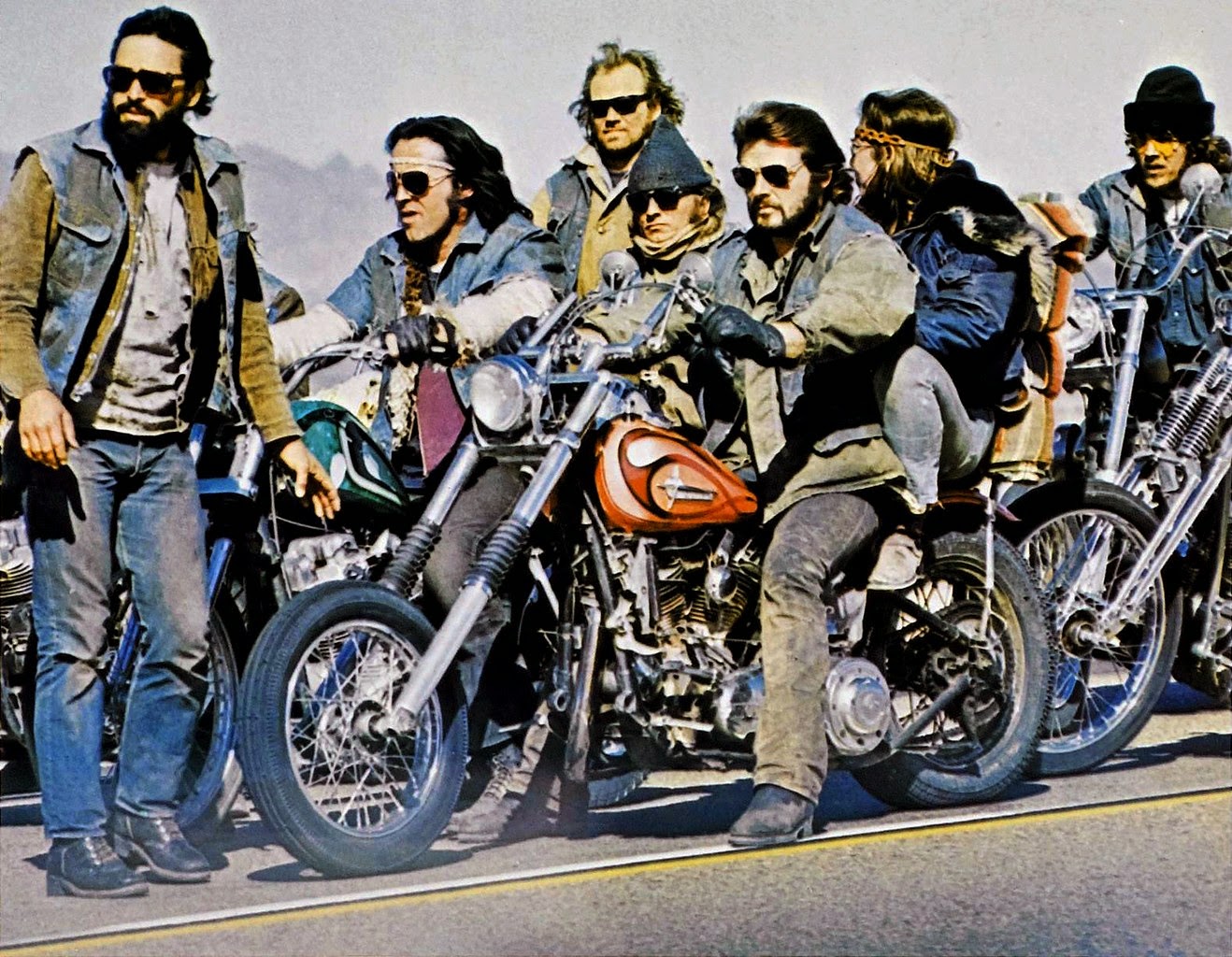
For the most part Werewolves on Wheels does a fine job of presenting itself as a serious biker movie. The bikers look like real bikers – in fact, the dvd’s director’s commentary tell us that there were only six actual actors in the film, the rest were stuntmen or genuine bikers. For the majority of the film, director Michel Levesque convinces us that we are seeing a real biker gang on the road.
Levesque has an interesting way of directing – he sets up long pieces of mise en scene – and the whole film seem to come in a series of self-contained scenes – drunken tomfoolery around a pit stop cafe; the bikers arguing with a peppery gas station owner (Leonard Rigel) in the middle of the desert; accusations that one of their number is hoarding all the beer; the monks presenting them with a meal of bread and wine; and the lengthy Satanist ceremony.
When it comes to the werewolf half of the premise, Levesque interestingly keeps the werewolf attacks all off-screen. It is over 70 of the film’s 85 minute running time before we actually get to see a werewolf, for instance. This has the effect of transcending the film’s undeniable schlock premise and treating the concept with a seriousness that is very different to what one expects of the film.
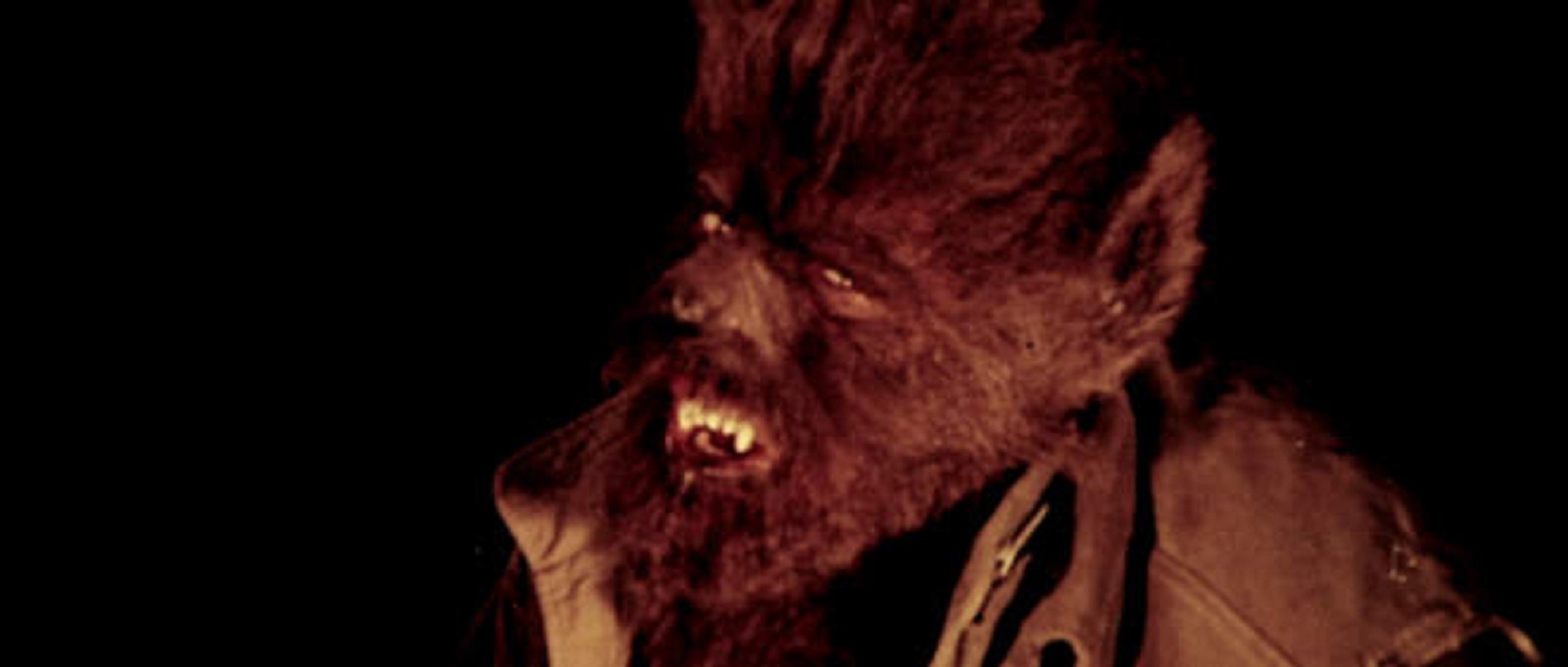
Ultimately though, the downside of this is also an avoidance of the premise – the werewolf is on screen so little that the only dramatic thing for the film to do is play a game of whodunnit in trying to work out which of the gang is the werewolf and then, once it is found, quickly mount a climax to kill it off.
The last few scenes do have the great schlock image of the werewolf fleeing on a motorcycle pursued by the rest of the gang on bikes with burning torches just like the villagers in a standard B werewolf movie of the 1940s. The Satanic ceremony – upon which the film spends a lengthy fifteen minutes or more – comes with a flavour of authenticity as though the filmmakers had gone out and researched the real rituals.
Trailer here