

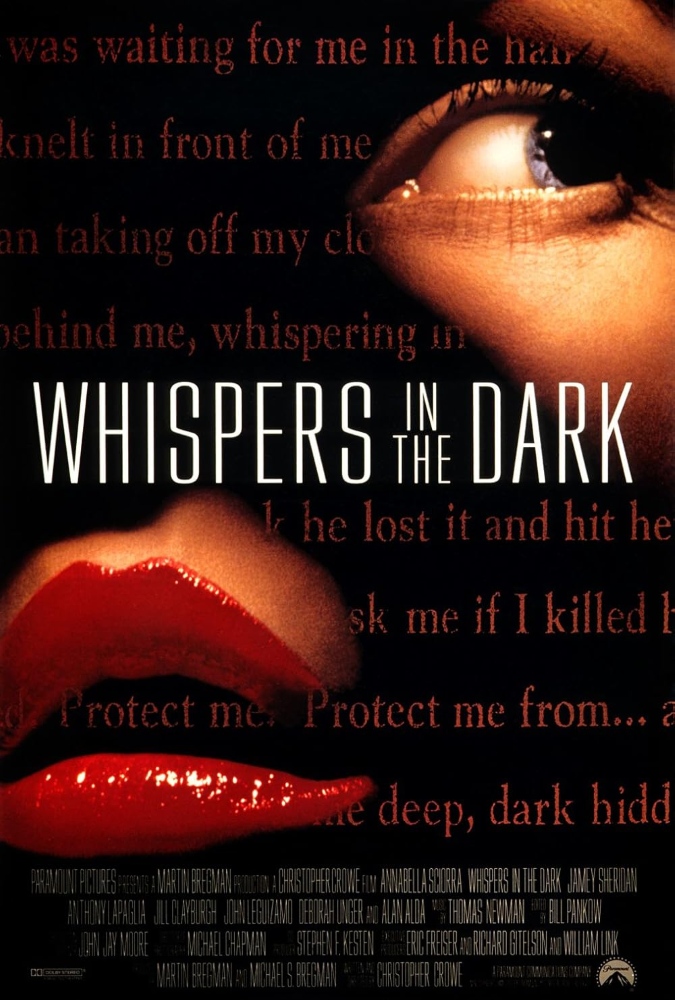
Crew
Director/Screenplay – Christopher Crowe, Producers – Martin Bregman & Michael S. Bregman, Photography – Michael Chapman, Music – Thomas Newman, Special Effects – Connie Brink Sr, Makeup – Neal Martz, Production Design – John Jay Moore. Production Company – Paramount.
Cast
Annabella Sciorra (Dr Ann Hecker), Jamey Sheridan (Douglas McDowell), Anthony LaPaglia (Detective Larry Morgenstern), Alan Alda (Dr Leo Green), John Leguizamo (Johnny C.), Deborah Unger (Eve Abergray), Jill Clayburgh (Sarah Green)
Plot
Therapist Ann Hecker meets Douglas McDowell in the elevator of her office building and becomes involved with him. She then discovers that Douglas may be involved with one of her patients, the volatile Eve Abergray. After Eve finds Ann together with Douglas and swears vengeance, she is then found murdered in her apartment. As the police investigate, Ann hides behind patient confidentiality, uncertain whether Douglas or others around her are the murderer.
Christopher Crowe is a director/writer who has kicked around the thriller genre for more than a decade now, turning out scripts for films like Nightmares (1983), The Last of the Mohicans (1992) and Fear (1996) and subsequently creating the time travel tv series Seven Days (1998-2001) without having made any significant name for himself. Crowe made his feature debut with Saigon/Off Limits (1988), an interesting attempt to combine film noir and the mid-1980s vogue for Vietnam War redemption films in a serial killer plot. At least on the basis of Whispers in the Dark, Christopher Crowe should have achieved considerably more of a name than he has so far.
Whispers in the Dark is an impressive thriller – indeed, it reads like a much better version of the same year’s failed psycho-therapy thriller Final Analysis (1992), which ended up doing all the business while the superior Whispers in the Dark was only seen by few.
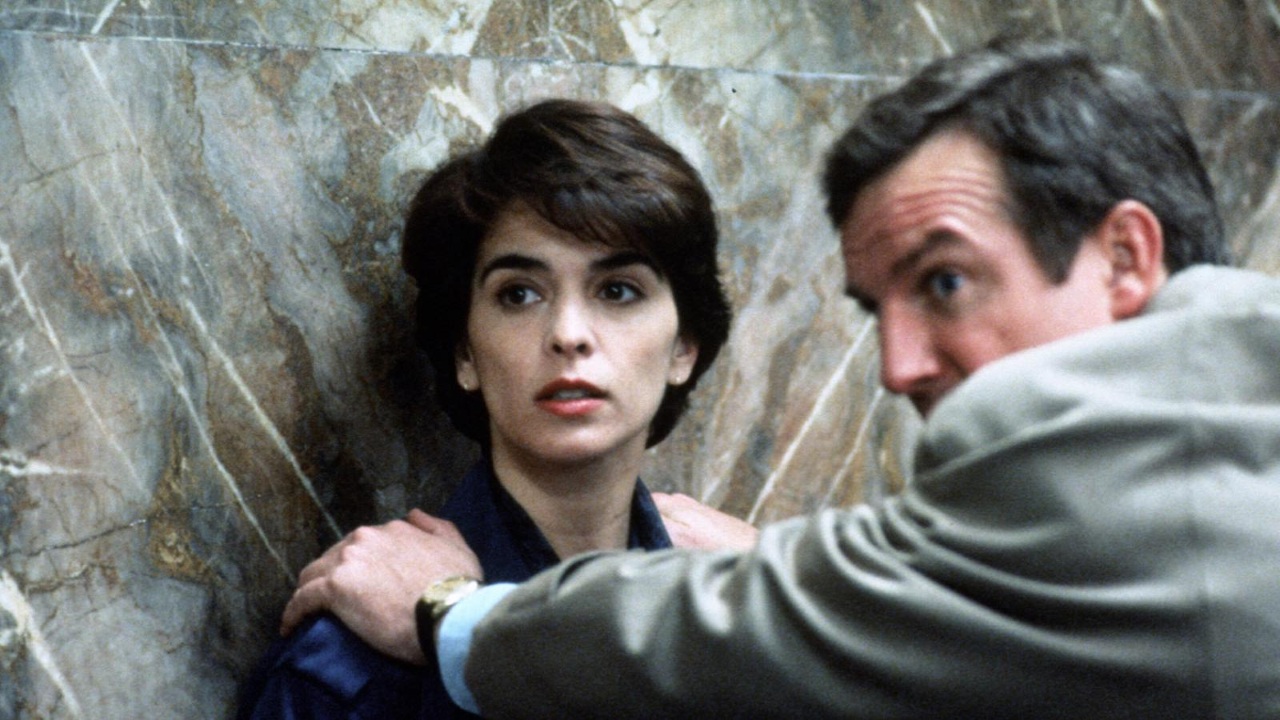
Crowe holds one from his opening, which he constructs as a romance. Here the softness of Crowe’s touch and the deftness of his writing immediately absorbs one in the film. Crowe then propels one through a sharply plotted series of rug-pulling twists – the revelation that patient Deborah Unger’s fantasy man is the same one Annabella Sciorra is seeing; detective Anthony LaPaglia’s games with Sciorra as to how much he knows all along; and the dance of doubt as to whether love interest Jamey Sheridan is or isn’t the killer.
Crowe also manages to perfectly believably and without contrivation turn most of the principal cast into suspects. The end revelation of the killer’s identity is a considerable surprise – one where the cast member in question plays notably against type. Above all, unlike Final Analysis, Crowe never lets any of the twists occur in contravention of logic or plausibility. One wishes Christopher Crowe would get the opportunity to make more films.