
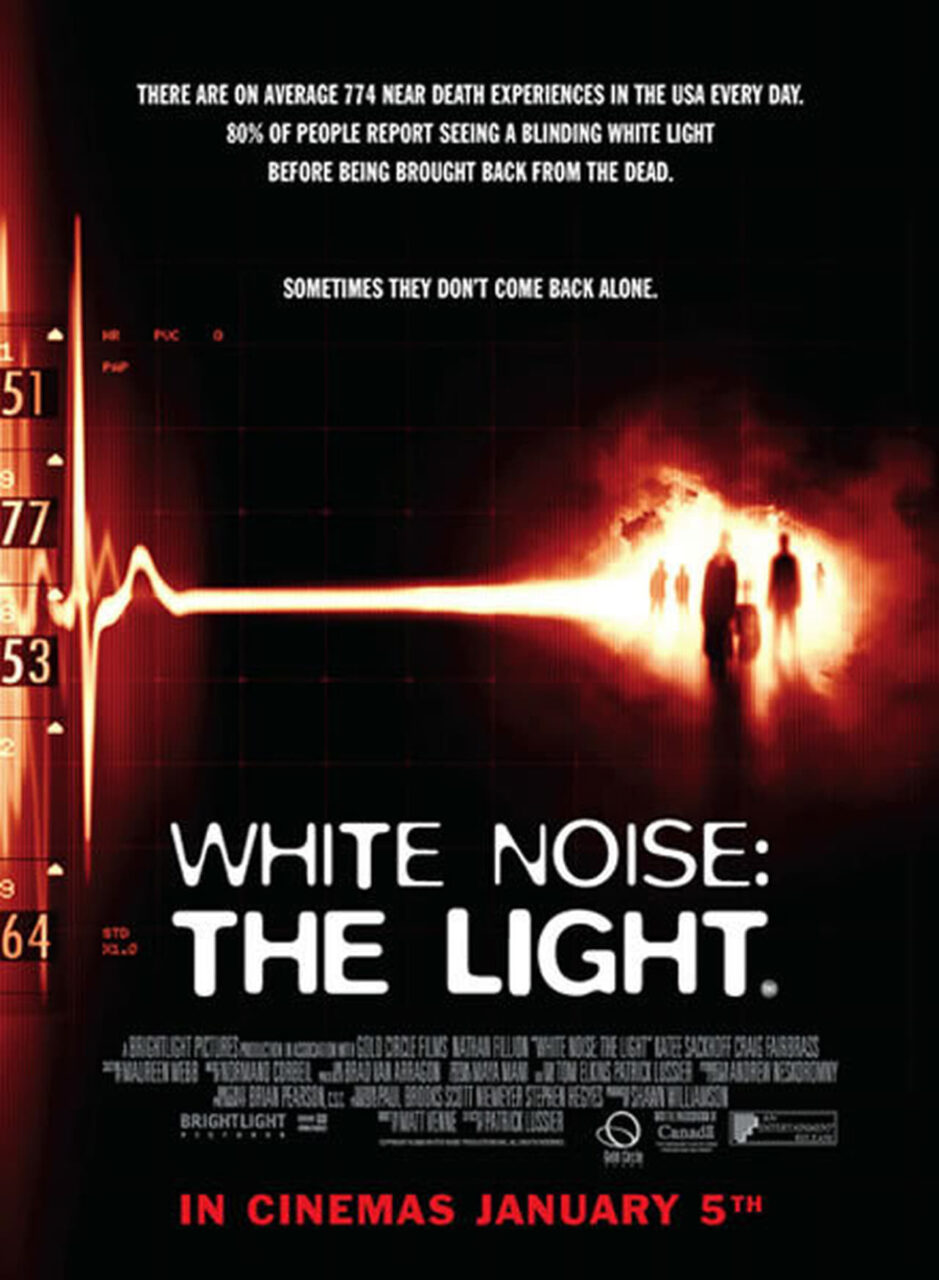
Canada/USA. 2007.
Crew
Director – Patrick Lussier, Screenplay – Matt Venne, Producer – Shawn Williamson, Photography – Brian Pearson, Music – Normand Corbeil, Additional Music – Hal Foxton Beckett, Visual Effects – Frantic Films (Supervisor – Mike Shand), Image Engine Design Inc. (Supervisor – Shawn Walsh), Technicolor Creative Services (Supervisor – Bruce Turner), Special Effects Supervisor – Jak Osmond, Makeup Effects – Julie Beaton & Bill Terezakis, Caine Makeup Created by Gary Tunnicliffe, Production Design – Andrew Neskoromny. Production Company – Rogue Pictures/Bright Light Pictures/Gold Circle Films.
Cast
Nathan Fillion (Abe Dale), Katee Sackhoff (Sherry Clarke), Craig Fairbrass (Henry Caine), Adrian Holmes (Marty Bloom), Kendall Cross (Rebecca Dale), Teryl Rothery (Julia Caine), William MacDonald (Dr Karras), Josh Ballard (Danny Dale), David Milchard (Kurt Green), Tegan Moss (Liz)
Plot
A stranger walks into a diner and shoots Abe Dale’s wife Rebecca and son Danny, before turning the gun on himself. Abe is so shattered that he subsequently attempts to kill himself with an overdose but is rushed to hospital in time. Just as Abe’s soul departs his body to travel up into the white light where his wife and son await, he is shocked back to life on the operating table. Recovering afterwards, Abe believes that he can see ghostly faces on tv screens, voices coming out of the static on speakers and some people emitting auras. He realises that the auras he can see are those of people who are about to die. He intervenes to prevent these people from their fates, including saving his nurse Sherry Clarke from a mugger. He also discovers that his wife and son’s killer Henry Caine had a similar Near Death Experience and afterwards could see the same auras that he can now. After intervening to save people, Caine discovered that three days later each of the people would go crazy and kill people en masse, possessed by The Devil. As he becomes involved with Sherry, Abe tries to find a way of stopping those he has saved, including Sherry, from going on killing rampages.
The British-Canadian made White Noise (2005) was a modestly effective ghost story, even earning a wide cinematic release when it came out. White Noise: The Light is a sequel, although a sequel in name only – there are no characters connecting the two films, while the treatment of the afterlife/ghost story themes are very different here to what they were in the original.
Director Patrick Lussier certainly takes the film in some potentially interesting directions at the outset. There is an unusual image when Nathan Fillion wakes up from his suicide attempt and we see from his point-of-view as something invisible seems to move across the hospital room, causing the lights to fade, the static to shift on a tv monitor and the doctor who comes in to exhibit an aura. Later out in the street he hears distorted whispers and sees flickers of energy coming from cellphones, ghetto blasters and a neon sign that has rather improbably been placed on a street vendor’s stand – and even more strikingly, auras coming from people that he randomly passes. All of this certainly starts out creating a film of unusually haunted atmosphere.
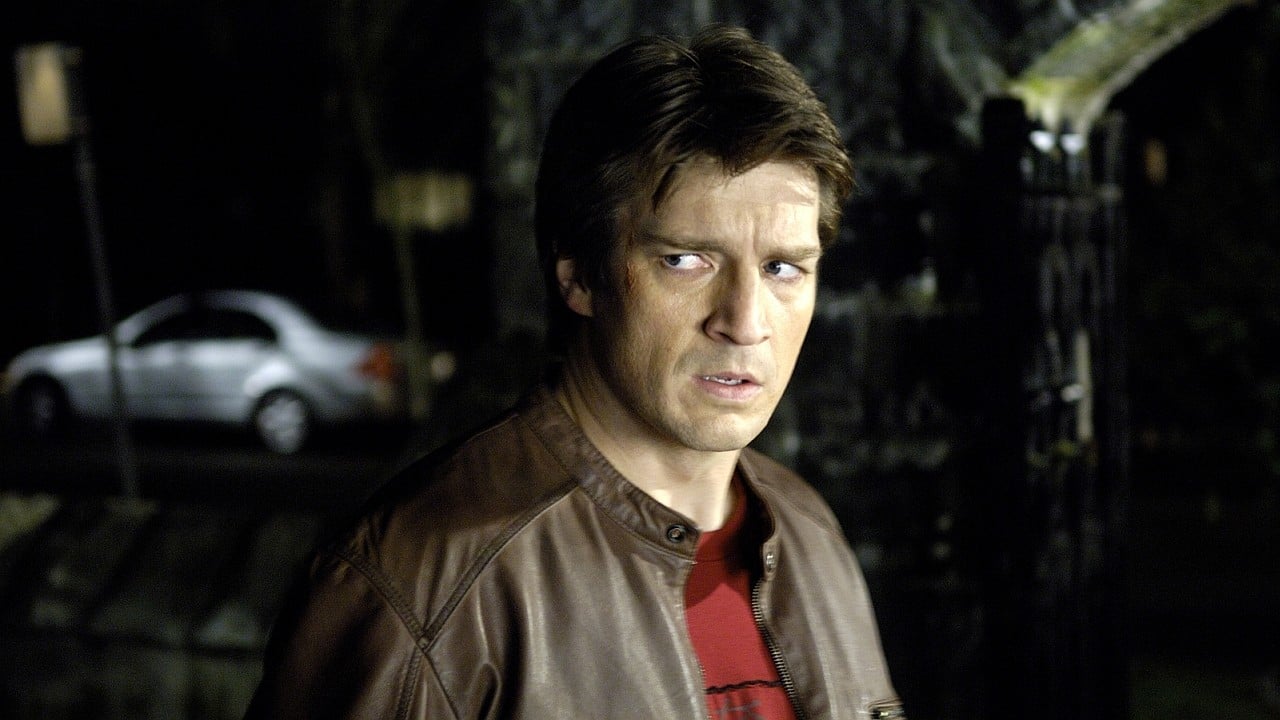
However, the main premise has strayed widely from what it was in White Noise. White Noise took as its basis the so-called phenomenon of EVP (Electronic Voice Phenomenon), featuring Michael Keaton as a distraught recent widower who believed he could detect communications from beyond the grave coming through in the static on his tv or audio recordings. In White Noise: The Light however, EVP phenomenon barely even gets a mention – Nathan Fillion seeing a few tv screens turning to static is about the sum of it. Instead, White Noise: The Light now falls more into the territory of Final Destination (2000) and sequels with Nathan Fillion being granted premonitions of people’s death where his preventing them doing so somehow disrupts the natural order of things, causing fate to start intervening and arranging bad fates for those people.
Eventually, Patrick Lussier’s initially unusual atmosphere dissipates into gimmicky CGI shocks that come with a routine tedium. Indeed, as soon as we get to Nathan Fillion’s realisation that people are going to go batshit in three days, all mention of the static on the tv’s and his visions of people’s auras is dropped and never mentioned again. In the second half, White Noise: The Light collapses into the completely silly. The most ridiculous plotting twists are when the script throws in the nonsense about the victims that Nathan Fillion saves going psycho on the third day. It gets even sillier when Fillon starts trying to translate phrases and names in terms of numeric values, which are all found to add up to 666. Rather absurdly, what starts out as an exercise calculating numeric value for Greek letters has by the end of Nathan Fillion’s translation suddenly turned into words written in English.
The ending of the film has an absurdity that slam-dunks any potential the early scenes might have had entirely into their coffin. [PLOT SPOILERS]. Nathan Fillion is shot in his attempts to stop Katee Sackhoff going nuts, whereupon his spirit turns into an electrical discharge that pursues the ambulance she is carted off in, blowing out all the streetlights along the way, while she suddenly becomes possessed (denoted by her eyes turning white) before his spirit causes the ambulance to crash safely rather than impact into a busful of people. He is then seen off into the afterlife by a corridor formed of the ghosts of all the people he has seen die throughout the film. Whether Katee Sackhoff lives or dies is never specified. In a last minute epilogue, the ghosts emerge and come after Craig Fairbrass in the asylum.
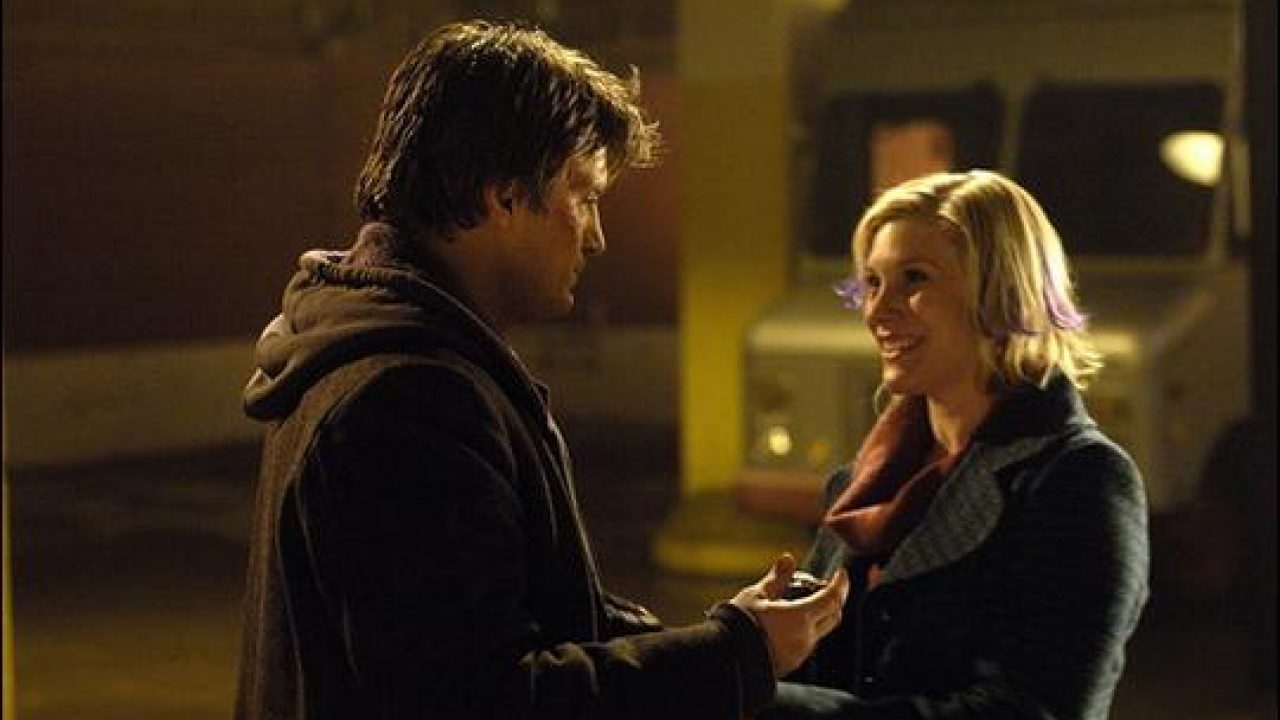
Nathan Fillion, an actor who has been promisingly on the rise in the last few years in works like tv’s Firefly (2002-3) and Castle (2009-16), and films like Serenity (2005) and Slither (2006), gives a workmanlike performance – enough to earn his paycheque without stretching his acting muscle. There is also Katee Sackhoff, a genuine discovery on tv’s Battlestar Galactica (2003-9). Katee Sackhoff is a major star in the offing one predicts – she has a perpetually warm and sparklingly perky, if not cheeky, presence, a winning smile and an intelligence that suggests she is perpetually three steps ahead of everybody else in the room, even when she is stuck in an entirely forgettable role like the one here.
White Noise: The Light is directed by Patrick Lussier, Wes Craven’s former editor who has become known for making horror sequels, he so far having turned out The Prophecy 3: The Ascent (2000), Dracula 2000 (2000), which he followed up with the back-to-back filmed Dracula II: Ascension (2003) and Dracula III: Legacy (2005), the remake of My Bloody Valentine (2009), Drive Angry (2011), Trick (2019) and Play Dead (2022), as well as writing the script for Terminator Genisys (2015).
Trailer here