
Crew
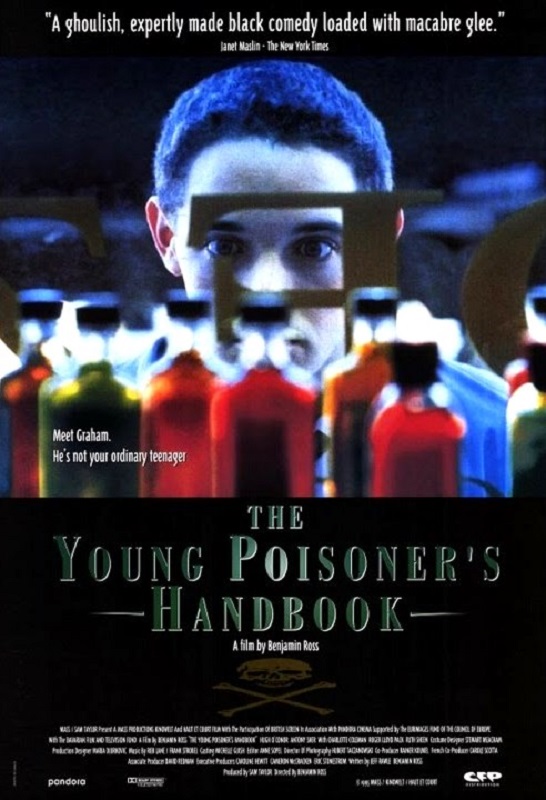
Director – Benjamin Ross, Screenplay – Benjamin Ross & Jeff Rawke, Producer – Sam Taylor, Photography – Hubert Taczmowski, Music – Bob Lane & Frank Grobel, Production Design – Maria Djurkovic. Production Company – Mass Productions Kinowet/Haut et Court/British Screen/Pandora Cinema.
Cast
Hugh O’Conor (Graham Young), Anthony Sher (Dr Ernest Zeigler), Roger Lloyd Pack (Frank Young), Ruth Sheen (Agnes Young), Charlotte Coleman (Wendy Young), Simon Kutz (John Stanwick), Jean Warren (Debra), Samantha Edmonds (Sue Butler), Paul Stacey (Dennis), Charlie Creed-Miles (Berridge), Jack Deam (Mick)
Plot
Growing up in the 1960s, Graham Young becomes obsessed with medicine and chemical experiments. When his best friend takes out the girl he desires, Graham places antimony sulphide on his sandwiches and kills him. After his mother throws out his chemistry set, Graham starts to poison her and it is assumed she has fallen ill. Graham follows this by substituting his sister’s eye drops with acid and then poisoning his father. He is arrested and sentenced to Harshhurst Hospital as an incurable psychopath. There he gradually finds rehabilitation under psychologist Ernest Zeigler. Released, he is given a job in a factory but the availability of chemicals soon proves too strong a temptation and he starts poisoning his workmates.
The Young Poisoner’s Handbook is loosely based on the story of real-life British murderer Graham Young who was nicknamed ‘The Teacup Murderer’. As the credits note, some of the details have been changed, but mostly the film is very faithful in following the details of Graham Young’s case. In the 1960s, as a teenager, Young poisoned his father, sister and a schoolfriend with chemicals he had obtained. He was sentenced to prison in 1962 and released in 1971, deemed cured. He then obtained a job in a factory where he poisoned some 70 work colleagues with chemicals placed in their tea, although only ever killed three people in total. Re-arrested, he was sentened to life in prison and died there in 1990.
The film is certainly uneven. It passes through several very different tones. The first third of it is a joyous black comedy with Hugh O’Conor poisoning his way through his family. Then the film suddenly changes into a very earnest and even moving story about the redemption of a murderer through psychotherapy. Then it goes off on a different tack altogether as the released O’Conor starts poisoning his way through the people at work – although this is different in tone to the gleeful blackness of the earlier poisonings.
There are times when these abrupt changes of tone leave one never sure where the film is heading. Nor is one ever sure which parts of the film director Benjamin Ross is interested in – for example, in the first third, he takes joyous glee in the poisoning of the family, yet we never see the collapse of the mother, while the poisoning and death of the father takes place entirely off-screen.
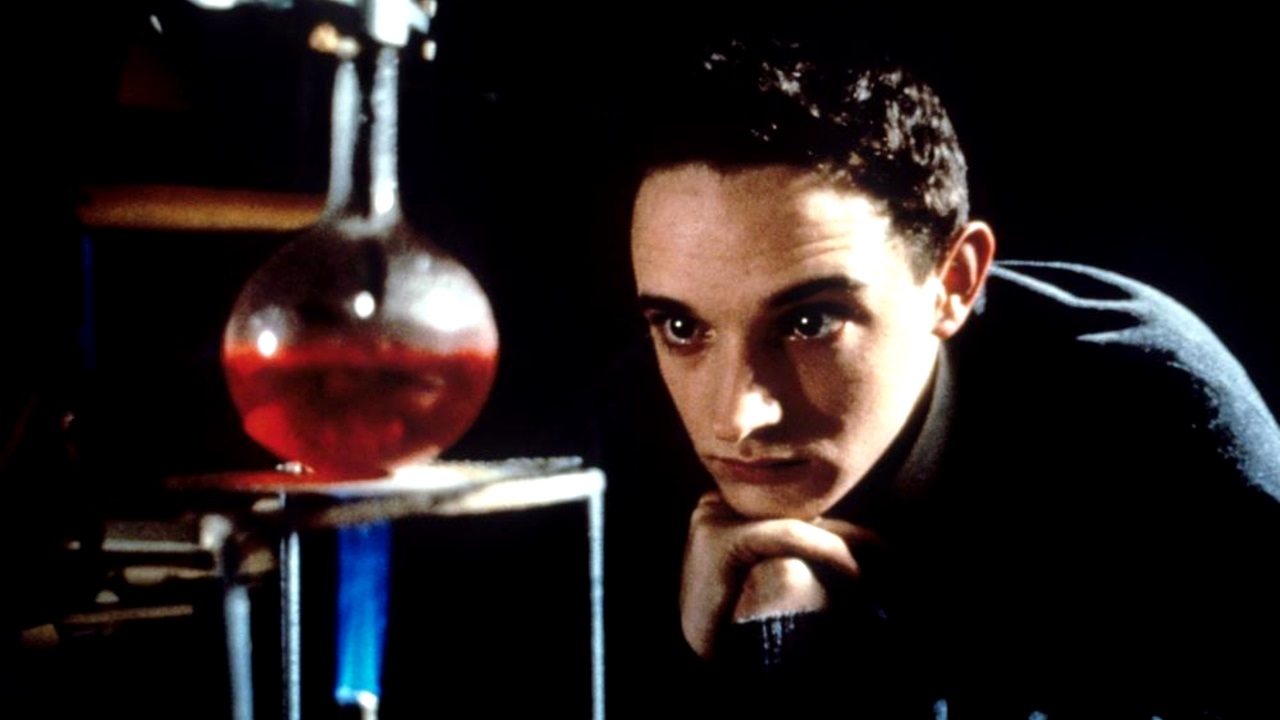
Nevertheless, the disparate parts add to a satisfying whole. The black comedy is genuinely funny at times, especially Benjamin Ross’s evocation of the sheer banality of working class life in 1960s Britain and the casual ways in which Hugh O’Conor manages to introduce poisons to his victims. The therapeutic transformation that comes in the middle section is surprisingly heartfelt and Anthony Sher’s performance here is very good.
Of course, the film would be nothing without the central presence of the wonderful Hugh O’Conor. He gives a remarkably creepy performance, his eyes radiating a piercing intensity, yet also counters the performance with a perfect politeness with often hilarious results. One wishes that Hugh O’Conor would appear on screen again but apart from playing the nervous young priest in Chocolat (2000), one has yet to see him in anything else.
Benjamin Ross has only sporadically continued to work on film. He did make the tv movie RKO 281 (1999) about Orson Welles and the making of Citizen Kane (1941). He returned to genre material as creator, writer and director of the British tv series The Frankenstein Chronicles (2015-7) about the investigation into a series of Frankenstein-like murders set in the aftermath of the writing of Frankenstein (1818).
(Nominee for Best Actor (Hugh O’Conor) at this site’s Best of 1995 Awards).