


Crew
Director/Screenplay – Franny Armstrong, Producer – Lizzie Gillett, Photography – Lawrence Gardner, Music – Chris Brierley, Visual Effects Supervisor – Greg McNeally, Animation Directors – Jonathan Hodgson & Martyn Pick, Production Design – David Bryan. Production Company – Spanner Films/Passion Pictures/One-Off Productions.
Cast
Pete Postlethwaite (The Archivist). With: Adnan Bayyoud, Jamila Bayyoud, Alvin DuVernay, Piers Guy, Layefa Malemi, Fernand Pareau, Jeh Wadia
Plot
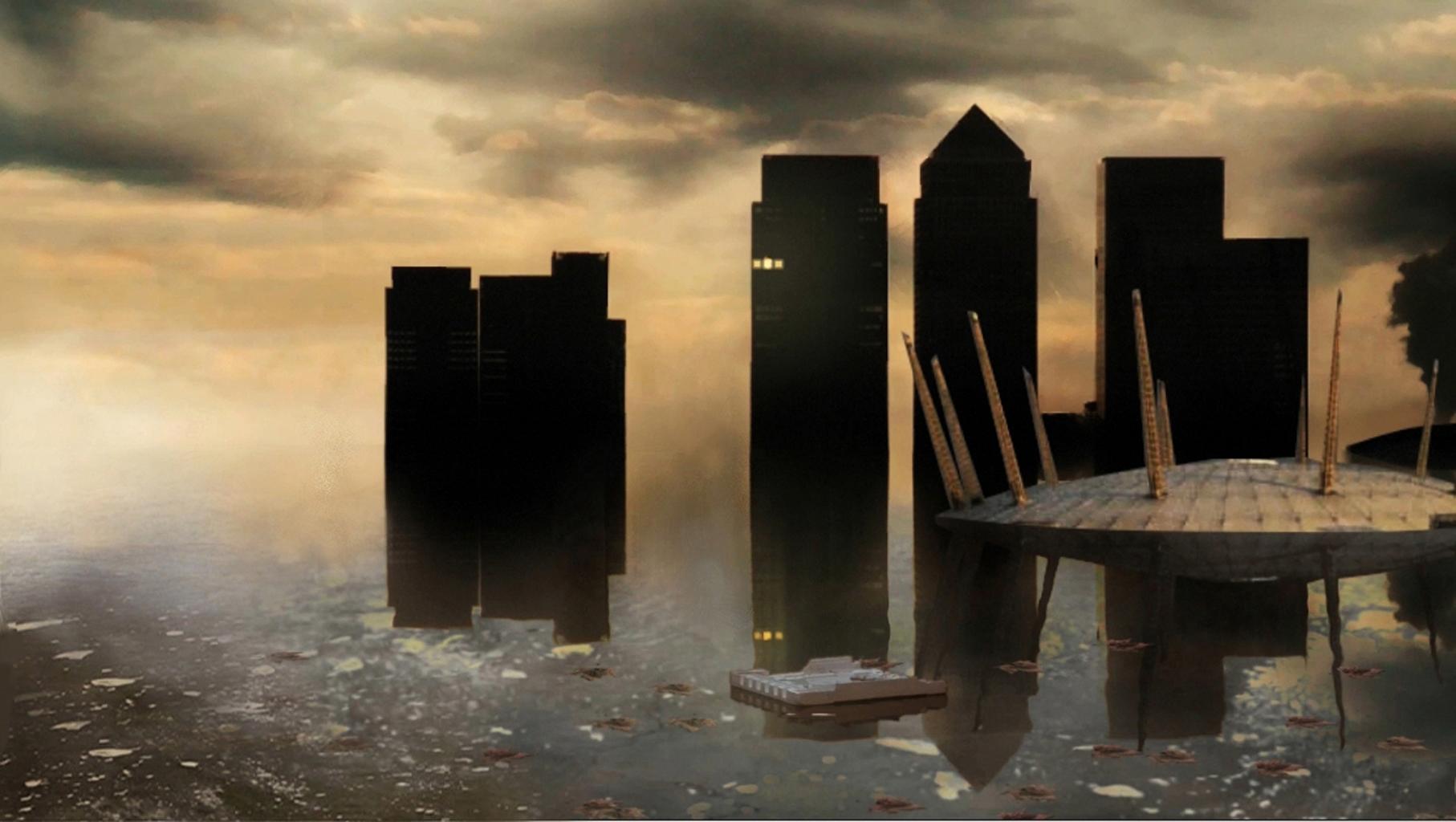
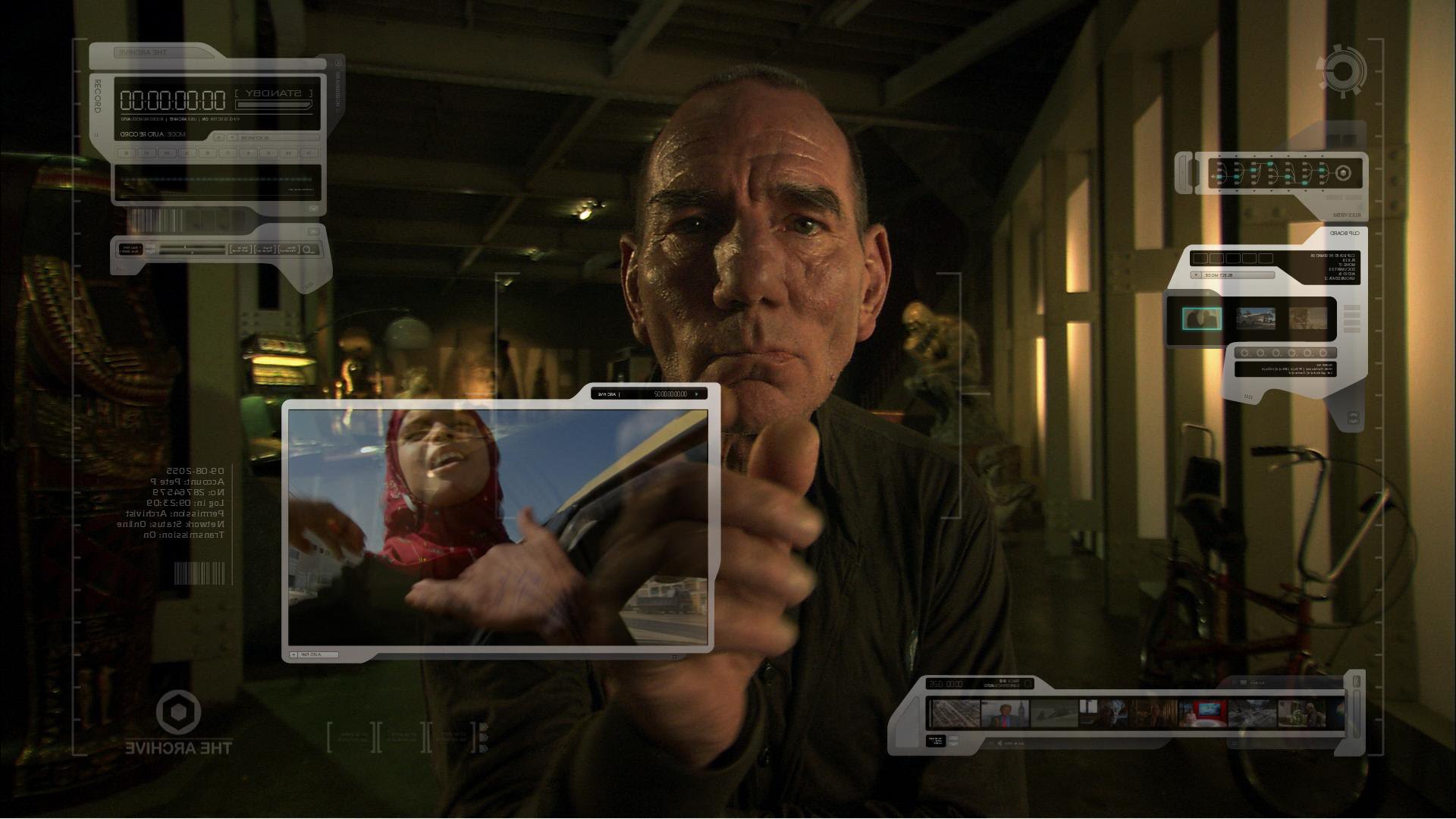
In the year 2055, global warming has devastated the Earth, raising tide levels everywhere, turning vast previously inhabited areas to desert and reducing humanity to a precarious existence. In a tower off the coast of Norway, a lone man has gathered the Earth’s remaining treasures and works of art. Attempting to piece together a memorial to ask how this could have happened, he searches the archives for documentary footage. He gathers the stories of:- Jeh Wadia, an Indian entrepreneur who is trying to create a budget airline for his country’s poor; Fernand Pareau, a mountain guide in France’s Chamonix Valley who reflects on the disappearance of his beloved glacier; Alvin DuVernay, a retired oil company scientist whose worldly possessions were destroyed in Hurricane Katrina who reflects on how humanity is wantonly squandering the precious remaining resources; Layefa Malemi, a Nigerian woman who shows how her people have been exploited by the Shell Oil Company’s drilling in the area; Adnan and Jamila Bayyoud, children who have been forced to live as refugees in Jordan because of the Iraq War; and Piers Guy, a British engineer who builds wind turbines as an alternate energy source for combating climate change, only to see his plans for a windfarm overturned by nearsighted local protest groups.
The last few years have seen a great expansion in the debate about global warming and issues of climate change. It is a disturbing problem facing the planet and one that requires humanity to act as a united body as opposed to individual national pockets of interest or economic influence. There has been a great deal of politically motivated attempts to dismiss or cast doubt on the increasing body of what almost all scientists now regard as incontrovertible evidence. Oddly it was a film, the Al Gore-fronted documentary An Inconvenient Truth (2006) that nailed the debate in earnest for the average person on the street. This in turn has seen a number of other documentaries jumping aboard the global warming bandwagon, including The Age of Stupid and other works such as Crude Impact (2006), The 11th Hour (2007), Home (2009) and A Sea Change (2009), as well as the odd contrary opinion like The Great Global Warming Swindle (2007).
One suspects that catastrophic climate change scenarios are soon going to become a major new theme for science-fiction. As the global effort heats up, expect a bunch of movies about the looming disaster or survival in a hothouse future world. Roland Emmerich has already had a field day in his own absurd way with The Day After Tomorrow (2004). There have been a number of copycat tv mini-series, while the threat of global ecological catastrophe also turns up in the likes of Waterworld (1995) and The Day the Earth Stood Still (2008). Surprisingly, given the author’s popularity on screen, nobody has yet rushed to make a film of Michael Crichton’s spiteful environmental-sceptic book State of Play (2004).
The Age of Stupid counts as science-fiction here because of a narrative framework that has Pete Postlethwaite as an archivist in an environmentally devastated year 2055 piecing together a document about the causes leading up to what happened. During these scenes, the film gives us some fine digitally rendered shots of well-known landmarks devastated by weather events. Indeed, you cannot help but think the background the film creates would make for a strong science-fiction film on its own.
Before going on to criticise The Age of Stupid, I will state upfront that I am in agreement with most of what the people behind the film believe. Without quite classing myself in the category of ardent activism, I have supported environmental causes for some time before it became fashionable. I cannot quite classify myself as living a Carbon Neutral lifestyle but I make a point of trying to minimise wastage of resources and it keeps me awake at night worrying what I as just one individual out there can do in trying to reduce their carbon credit. I share the apprehension that the majority of people do, which would seem to be that to meet the criteria of drastic carbon reductions by the year 2015 that the film claims we need to, this requires a drastic curtailment of the lifestyles of everybody on the planet. It is not just a question of turning a few extra lightbulbs off at night or recycling your trash, but one that requires a sweeping rethink about the feasibility of air travel, whether we have to give up the convenience of having personal cars, reconsidering the very diet we eat and possibly even the very notion of the disposable consumer society that much of Western capitalism is founded on.
If An Inconvenient Truth offered up incontrovertible proof that global warming was happening, then The Age of Stupid is a call to action. Although as such, I am not sure if it is a work that offers the average person on the street any ready answers about what to do. Far better in this regard was the BBC documentary series Ethical Man (2008-10) wherein a journalist and his family attempt to live by current required carbon reduction standards for the period of one year, showing up the mind-boggling difficulty about the reality of doing so.
Documentaries can take either of several approaches when it comes to illustrating their thesis – either that of the biographical interview, which follows one or a few subjects or an enterprise and tells their story (an approach that is usually best suited to notable peoples or those of strange lifestyle) or else the talking heads approach, which interviews several or many subjects and selects soundbites from their commentary to illustrate the overall thesis. The Age of Stupid oddly falls between either of these approaches.
The problem with The Age of Stupid is that it has is that it has a strong thesis – and one that most people who are reasonably informed about the world are aware of even if they do not agree with it. The stories of several people from different countries are featured but the film is not fully successful in drawing back from these individual stories to build a picture about how they relate to the wider thesis of global warming. It may just be that global warming is such a vast issue to grapple with that it is difficult to put everything that needs to be covered into a 90-minute film; on the other hand, the film strains to find relevance to some of its interviewees.
The film covers brothers and sister Adnan and Jamila Bayyoud, Iraqi refugees who have fled to Jordan, and at the end are reunited with their brother, but their story has little relevance to the one of global warming – except the allegation that they were displaced because the Iraq War was all about oil (although no direct evidence is ever offered to support this assertion). Similarly, the filmmakers travel to France to interview mountain guide Fernand Pareau, whose sole contribution to the film is that he misses the evaporating glaciers of his youth (oh, and that he has joined a protest group to block the expansion of the traffic lanes of the tunnel through nearby Mt Blanc). However, beyond the brief but potent shots of the scoured remains of where the glacier used to be, the film strains to find relevance of Pareau’s contribution to the film. Likewise, the film interviews Indian entrepreneur Jeh Wadia as he struggles to launch a budget airline in India – but the only relevance this has is the allegation that cheap start-up airlines like this are a major contributor to the world’s carbon debt, but again this is only add-on speculation (short on supporting evidence) that comes after we have followed Wadia’s story throughout the film.
In that these are three of the six stories strands that The Age of Stupid follows, the film feels like it is telling potentially interesting stories but struggling to find relevance as to how they add to its thesis. You cannot help but think the film could have made its points more effectively if it had interviewed people of greater significance to the topics it was discussing – like maybe an expert on glaciers or some carbon expert who could explain why budget airlines are such polluters of the skies (at least more so than mainstream ones). It should be also noted that there is nobody interviewed in the film who ever offers up an enviro-sceptic point-of-view, or for that matter anyone who attempts to offer a justification of why their use of resources is a good thing.
Certainly, the other interviewees do offer some potent illustration of the film’s points. With Alvin DuVernay, the film struggles to find relevance between what he underwent in Hurricane Katrina (aside from asserting that the cause of Katrina was climate change), but DuVernay’s reminisces on the wastage of resources do offer some potent soundbites, including giving rise to the film’s title. (Although the question I wanted to keep asking him (or perhaps the filmmakers) was what the difference was that made his involvement in oil drilling ethical as opposed to the other oil companies that the film regards as villains).
Some of the film’s strongest material comes from Nigerian woman Layefa Malemi who guides us through the exploitation wrought by the Shell Oil company in the Niger Delta, including promises to create schools, hospitals and freshwater wells, where all that we see are husks of uncompleted buildings overgrown with foliage, or how the burning off of the excess gas from the drilling (which we are told could power a city of 100,000 for a year) is causing respiratory illnesses and birth defects among the locals.
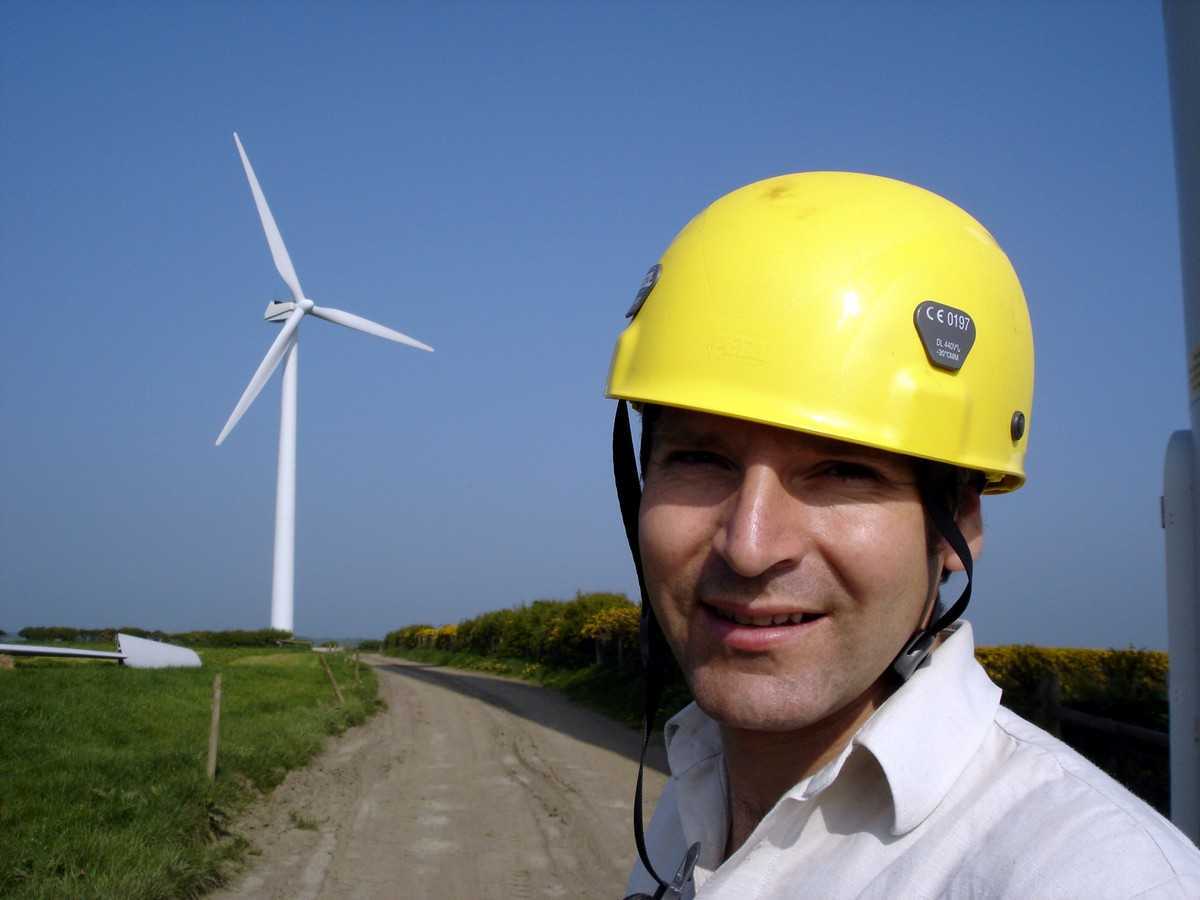
The film’s most potent story is of wind turbine builder Piers Guy whose plans to create a windfarm in rural Bedfordshire are blocked by a citizen’s action committee on the grounds that the windmills blot the landscape and bring down property prices. Guy’s frustration at the length of time it takes to get things past city council red tape, his anger at the shortsightedness of the locals in placing their comfort above saving the planet contain some of the most heartfelt parts of the film. Who cannot feel anger at the smug hypocrisy of the woman who comes from the council meeting that votes to reject Guy’s plans full of cheer at her triumph and then in the next sentence says “Of course we’re worried about global warming.”
The disappointment about The Age of Stupid is that it is only centred around a series of well-worn cliches that the filmmakers assume the audience already know – that multi-national corporations and especially Big Oil exploit the environment and the Third World; that the Iraq War was really all about oil; that our consumer lifestyle is going to prove our doom; that oil resources are nearing an end. The film also assumes that these claims are self-evident – to the extent that it does not see need to substantiate them with facts. I am not in broad disagreement that most of these are almost certainly true; unfortunately, there are many people in the world who do not think so and for The Age of Stupid to make a case it needs to be more persuasive in its presentation of the facts.
Some of the facts that we are offered are decidedly shaky – a statement from Alan Greenspan (who is the Chairman of the US Federal Reserve and not a politician who was part of the decision to go to war in Iraq) that the Iraq War was all about oil is merely an assertion of opinion, not a statement of fact. Elsewhere at various points, the film does produce a number of charts and quotes statistics but noticeably they pass one by too fast to ever take in what it is that they are demonstrating and all we are left with is what the narrator tells us they mean. Unfortunately, a documentary that assumes the audience already knows most of the facts of the case it is building can only be a case of preaching to the choir.