

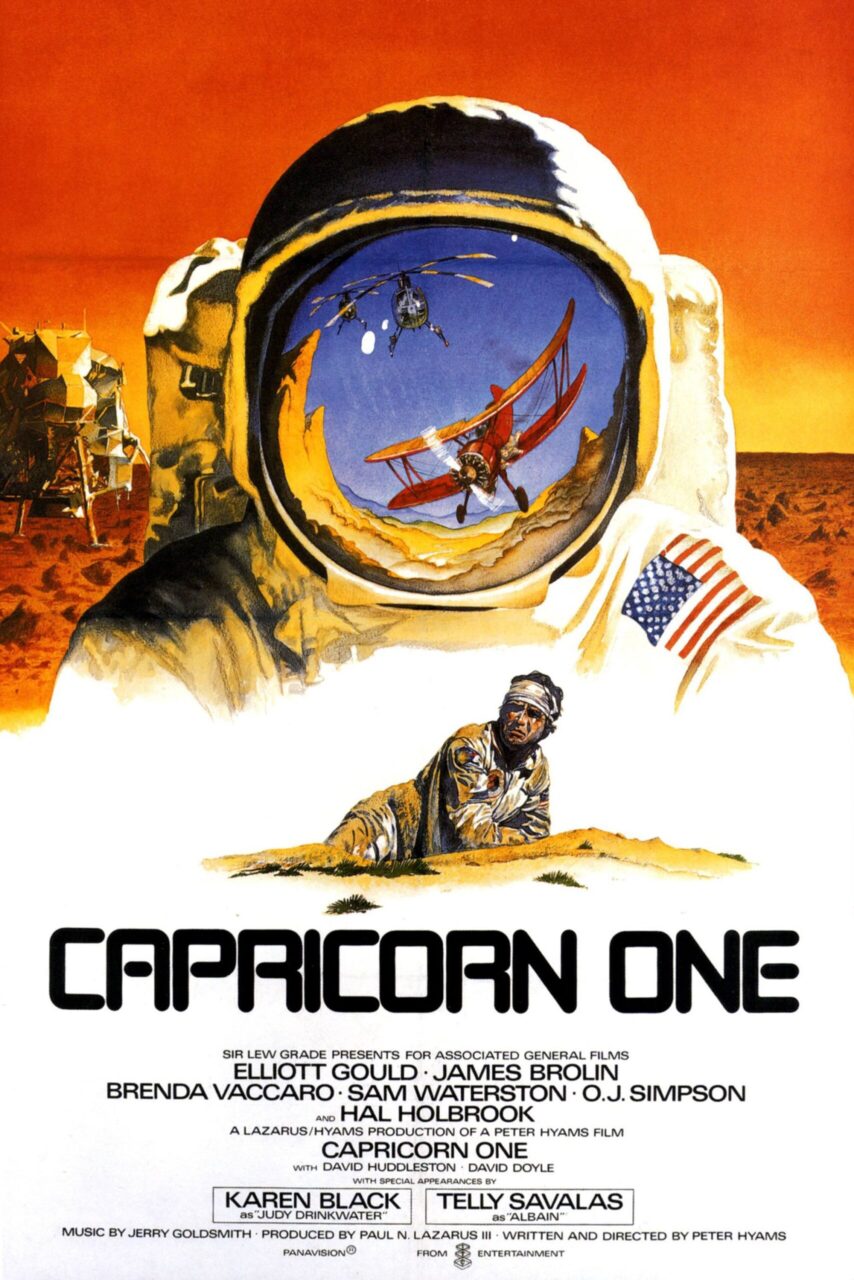
Crew
Director/Screenplay – Peter Hyams, Producer – Paul N. Lazarus III, Photography – Bill Butler, Music – Jerry Goldsmith, Visual Effects – Frank Van der Veer, Special Effects – Bruce Mattox, Henry Millar Sr & Jr & Bob Spurlock, Makeup – Mike Westmore, Production Design – Albert Brenner. Production Company – Capricorn One Associates/Associated General Films.
Cast
James Brolin (Colonel Charles Brubaker), Elliott Gould (Bob Caulfield), Hal Holbrook (Dr James Kelloway), Brenda Vaccaro (Kay Brubaker), Sam Waterston (Lieutenant-Commander Peter Willis), O.J. Simpson (Commander John Walker), David Huddleston (Congressman Hollis Peaker), David Doyle (Walter Loughlin), Telly Savalas (Albain), Karen Black (Judy Drinkwater), Robert Walden (Elliott Whitter)
Plot
Minutes before the launch of Capricorn 1, which is to be the first manned Mars landing, the three astronauts are ushered from the capsule and secretly flown away to a hangar in the desert, allowing the empty rocket to be launched behind them. It is explained to them that it was discovered only weeks before the launch that the contractor had delivered a faulty life-support system – had they gone up, they would have been dead within three days. The future of NASA depends on the success of the mission so rather than abort it has been decided to launch the capsule and fake the landing via tv transmissions. The astronauts are forced to cooperate with threat of their families’ lives held over them. All goes well until the capsule burns up on re-entry – whereupon the astronauts realise they are now meant to be dead.
Capricorn One was the first genre film (the fourth film overall) of director/writer Peter Hyams. Peter Hyams has made a frequent number of genre forays. It is common to deride Peter Hyams for the claims of bad science, something that has been over-emphasised by some genre critics. In fact, Hyams is an excellent and underrated director. Following Capricorn One, he would go on to make Outland (1981) and 2010 (1984), all three of which are solid and well worthwhile hard science-fiction films. During this time, he also produced the quirkily appealing Universal monster homage The Monster Squad (1987).
After that, Hyams fell silent within the genre for more than a decade, directing so-so action films and thrillers like Running Scared (1986), The Presidio (1988) and Narrow Margin (1990). In the 1990s, Hyams returned with another series of genre films, the awful tv spoof Stay Tuned (1992); Timecop (1994), a worthwhile Jean-Claude Van Damme vehicle about time police; The Relic (1997), a competent monster movie; the dull millennial Biblical end of the world action film End of Days (1999); and the disastrous Ray Bradbury adaptation A Sound of Thunder (2005), none of which, excepting perhaps Timecop, have reached the quality of his earlier work.
Peter Hyams’ plot is a devilishly clever one where he happily swipes more than an idea or two from writer Barry Malzberg’s satirical exhumations of the space-program. Hyams amusingly states that he shipped the idea for Capricorn One around for several years but it was not until Watergate made the idea fashionable that was able to sell the script. Nowadays, the idea behind the film has slipped into the cultural zeitgeist and the idea of the Moon Landing being faked by television has become a commonplace belief amongst conspriacy theorists.
When it came out, Capricorn One attracted a good deal of disdain in the science-fiction community for its less than reverent attitude toward the space programme. Writer David Gerrold pompously claimed “it [the film] belittles and demeans the highest aspirations of the mind … devalues the integrity of science itself. Those of us who stood in our backyards on quiet summer nights, gazing up at the stars and wondering, hoping … the makers of Capricorn One have taken our dream girl and portrayed her as a prostitute.” Although this was an argument that was defeated by the fact that NASA co-operated with and even loaned equipment and space modules for the making of the film.
Without feeling any of his dreams particularly tarnished, the author enjoyed the film. Indeed, rather than trashing its ideals, Capricorn One in fact seems to be lamenting the dream that inspired the space programme – Hal Holbrook has a magnificent soliloquy early on in the film that languishes the loss of the dream embodied by John F. Kennedy’s original call to space in the face of 1970s budgetary cutbacks.
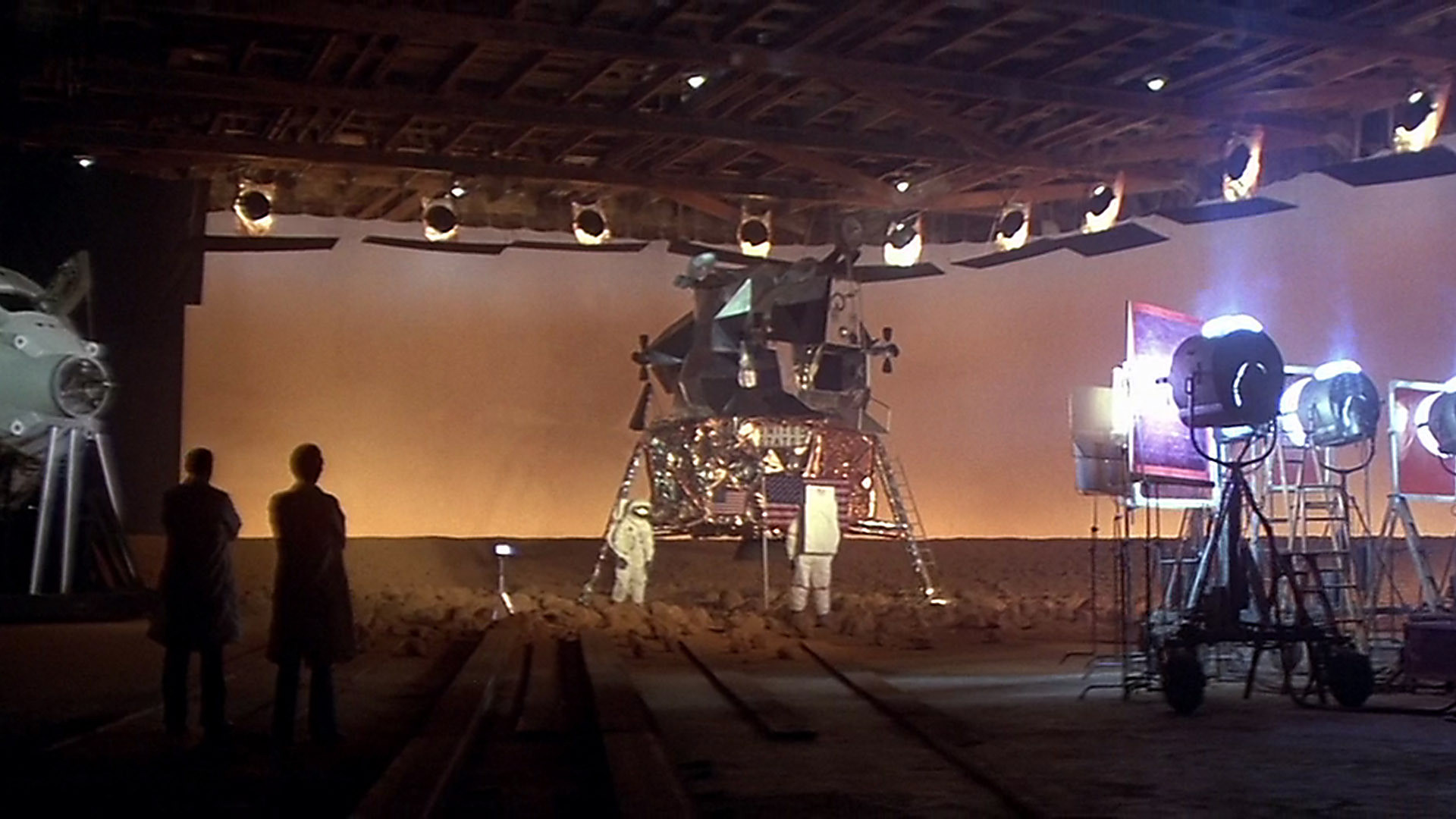
The dialogue is often beautifully written and the characterisations are spot-on. Hyams has this odd way of overlapping dialogue from one scene onto the next to provide haunting images – like the image of the Lear Jet with the escaping astronauts aboard taking off overlapped by the President’s funeral oration, or the pullback from the tv transmission to reveal the Martian landscape as merely a set.
The standard thriller aspects with car and helicopter chases are less interesting. Here the absurdity of the set-up is not equal to the astuteness of plotting elsewhere – the attempts to kill Elliott Gould become melodramatic, particularly in never explaining the agency behind this – it seems somewhat absurd to be asked to believe that NASA has a team of assassins on hand to deal with situations like this. One keeps wondering why NASA simply did not expose the faulty contractor in the first place.
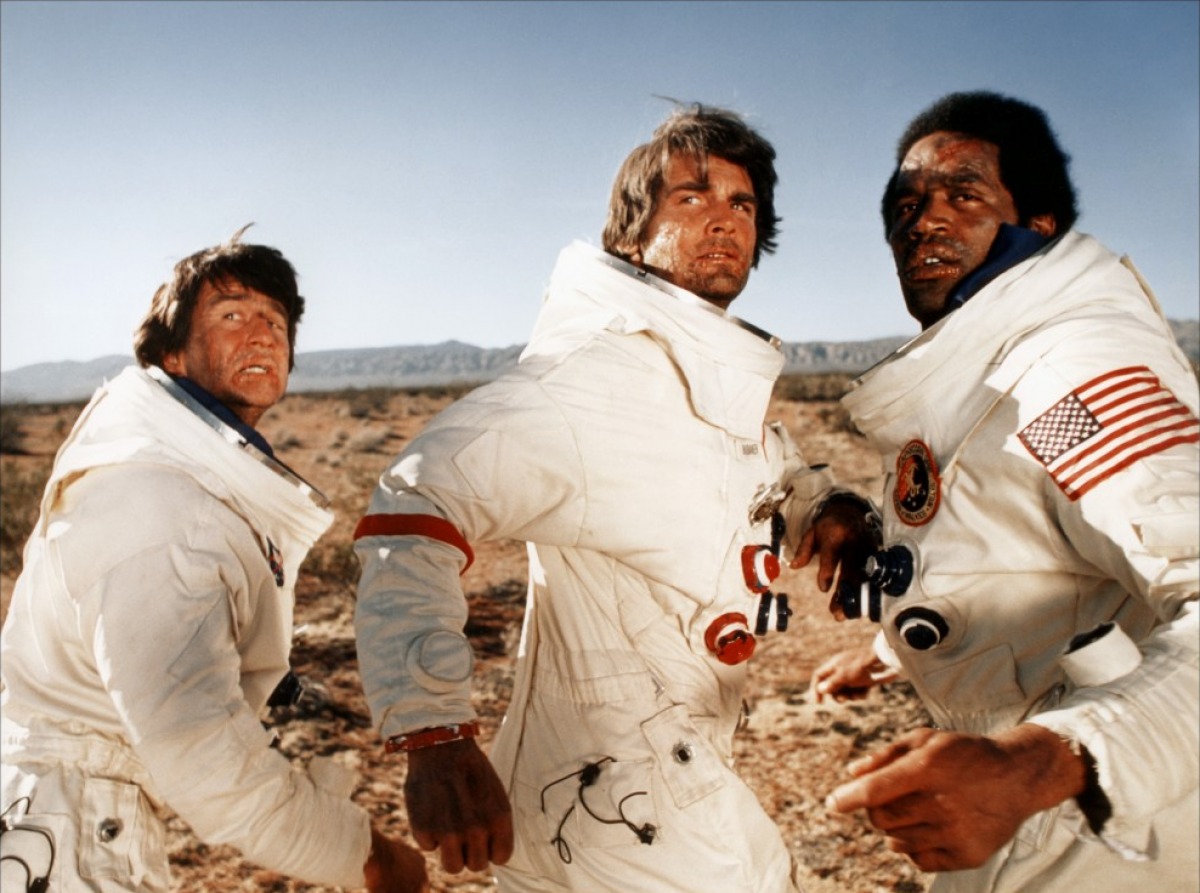
There is a substantial cast line-up. Among these lead actor James Brolin is stolid. O.J. Simpson, then just a pro-footballer and not having attracted the infamy he would a decade-and-a-half later, turns up as one of the astronauts. Telly Savalas has an awful piece toward the end as a cropduster pilot. There are also some nice performances tucked away, particularly from Brenda Vaccaro as James Brolin’s playful wife and David Huddleston as a deceptively smiling Southern Congressman. There is also an unusually good performance from Hal Holbrook as the NASA director who offers pained apologies at the same time as he commits to ruthless courses of action.
Trailer here