

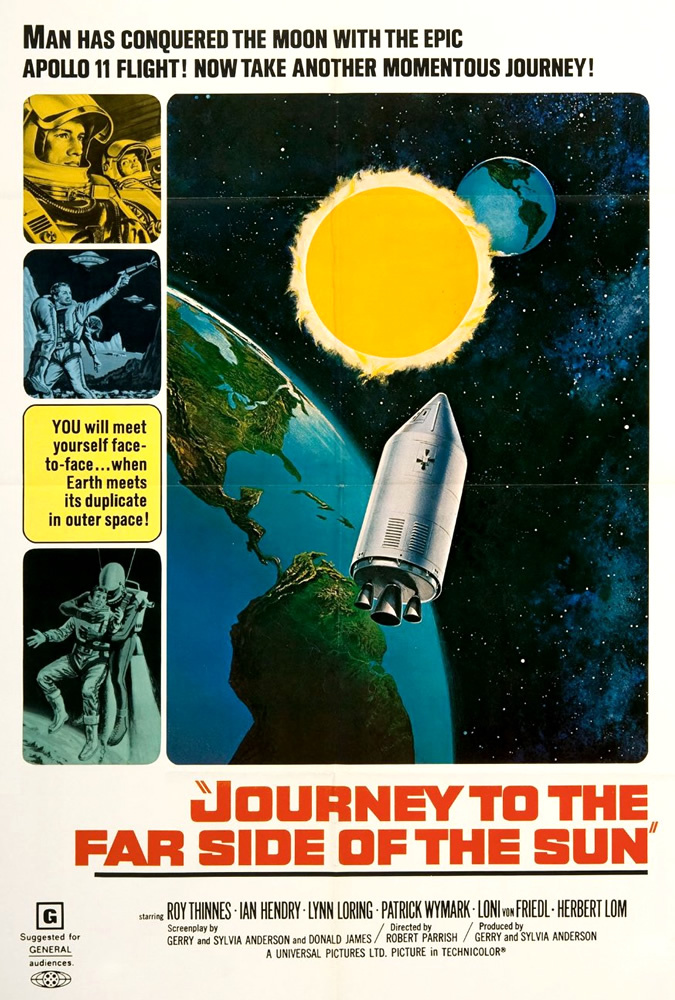
aka Journey to the Far Side of the Sun
UK. 1969.
Crew
Director – Robert Parrish, Screenplay – Gerry Anderson, Sylvia Anderson & Donald James, Story/Producers – Gerry Anderson & Sylvia Anderson, Photography – John Reed, Music – Barry Gray, Special Effects – Derek Meddings, Art Direction – Bob Bell. Production Company – Century 21 Productions.
Cast
Roy Thinnes (Glenn Ross), Patrick Wymark (Jason Webb), Ian Hendry (John Kane), Lynn Loring (Sharon Ross), Loni von Friedl (Lise Harpman)
Plot
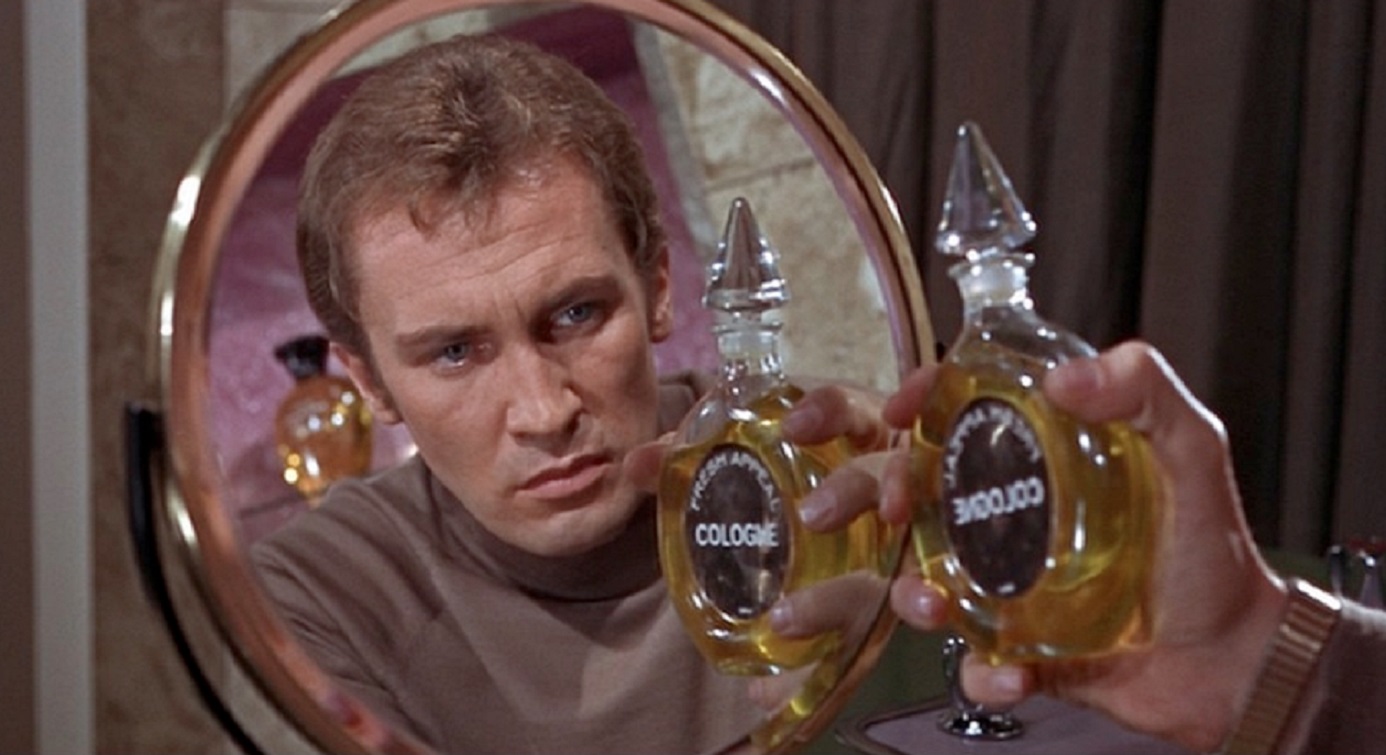
The Eurosec space agency discovers the existence of a new planet on an exact counter-orbit to Earth on the opposite side of the sun. The European nations and the Americans decline to fund a mission to investigate, so Eurosec director Jason Webb deliberately leaks the information to a Russian spy whereupon the Americans immediately agree. An expedition manned by Colonel Glenn Ross and English astrophysicist John Kane is duly launched. While surveying the new planet, the ship crashlands. The astronauts come around to find they are back on Earth. They are puzzled as they have not been gone enough time to make a return journey. Upon returning home, Ross finds that he can read the label on a cologne bottle in a mirror – that it is printed backwards – and comes to realise that he is not back on Earth, but that the world on the other side of the sun is an exact mirror opposite of Earth.
Husband and wife Gerry and Sylvia Anderson came to fame in the 1960s with their various puppet series, beginning with Torchy the Battery Boy (1957), The Adventures of Twizzle (1957), Four Feather Falls (1960) and Supercar (1959-60). A considerable cult developed around shows such as Fireball XL5 (1962-3), Stingray (1962-4), Captain Scarlet and the Mysterons (1967), Joe 90 (1968) and in particular Thunderbirds (1965-6). The Andersons’ love of fabulous vehicles, technological disasters and rescues, and the peculiarly unnatural movement of the puppets have endeared these series to a generation.
The Andersons branched out onto cinema screen with two Thunderbirds film spinoffs, Thunderbirds Are Go (1966) and Thunderbird 6 (1968). Doppelganger, titled Journey to the Far Side of the Sun in the US, was their live-action debut, as all their subsequent forays into television – UFO (1970-2), The Protectors (1972-3), the great and underrated Space: 1999 (1975-7) – would also be. Gerry did make a belated solo return to puppetry in later years with Terrahawks (1983-6), Dick Spanner P.I. (1986), Space Precinct (1994-6) and Lavender Castle (1999) but never again found the cult fanbase that his 1960s series enjoyed. Also of interest is Filmed in Supermarionation (2014), a documentary about Anderson’s puppet shows, and Gerry Anderson: A Life Uncharted (2022), a documentary about Gerry Anderson’s life.
A cutting nevertheless true comment often made about the Andersons’ live-action productions is that they are essentially puppet shows made with real people. All Anderson puppet characters seem to exist in a perpetual state of boyhood, youthful heroes off to save the world and to whom girls appear only peripherally or as an awkward embarrassment that leaves them tongue-tied. The live-action characters rarely even have these features. In these techno-heavy productions, humans seem like accessories to the marvellous vehicles and space age machinery in operation.
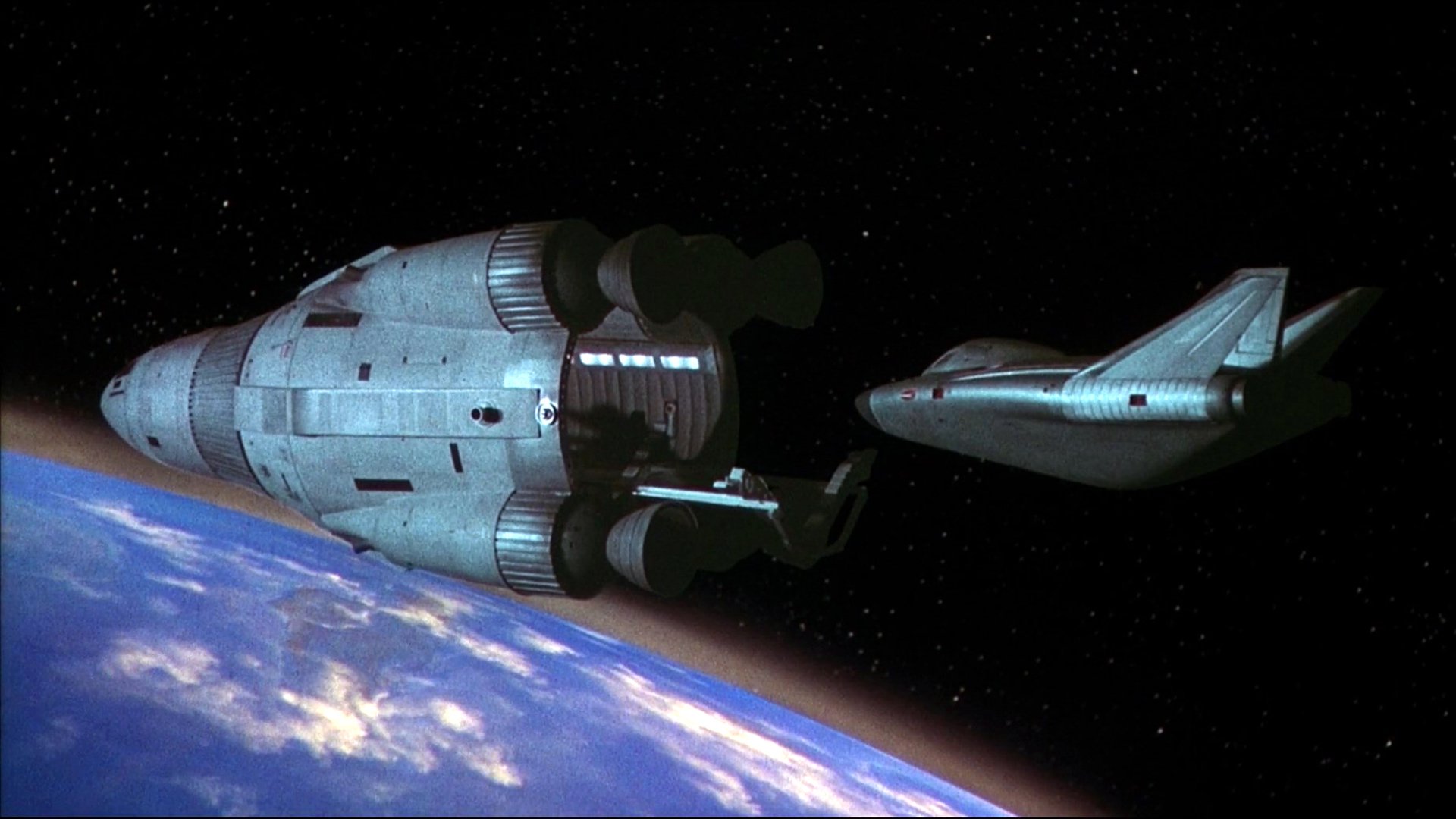
In Doppelganger, the astronauts are veritable blanks as characters and definitely play a very distant second-fiddle to the displays of technology and model effects. Certainly, the models and effects work here are up to the expectedly high Anderson standards – there is a glorious rocket launch sequence and a wondrous plane with a detachable pod (which would surely be of doubtful functional value). It is worth waiting to the climax to see everything go up in a massive explosion in characteristic Anderson style.
Unfortunately, it is the story that hobbles Doppelganger. The premise – of a planet on a counter-Earth orbit that is an exact mirror opposite of the Earth – has to count among one of science-fiction’s more hare-brained. The odds against two worlds evolving identically right down to the minutest detail is so astronomically absurd as to be impossible.
Nobody seems to have put much thought into the idea – How can the astronauts manage to conduct a survey orbit of the planet while failing to pick up sign of life or the fact that the world would surely have exactly the same continental configuration as Earth? Why is there just a counter-Earth, why not all the other planets too? To follow the film’s own lunatic logic, if the counter-Earth does everything as a mirror opposite, then why do people not speak backwards too?
It might have served as a cute half-hour episode of The Twilight Zone (1959-63) but at feature length the idea flounders. The presentation of the idea feels slim – three-quarters of the film is spent getting to the destination. Moreover, it is not a terribly interesting three-quarters, being padded out with spy dramas and dream sequences that have clearly been modelled on the light show in the previous year’s 2001: A Space Odyssey (1968). When the film gets to its destination, it is at a loss to know what to do once the main surprise has been let it out of the bag – and of course the only way to wind it up is in the Anderson tradition by blowing everything up.
Doppelganger/Journey to the Far Side of the Sun was only a moderate success, but did surprisingly inspire a spate of Counter-Earth themes over the next few years including the interesting Quest for Love (1971) and the tv movie The Stranger (1973), as well as the more recent Another Earth (2011).
Trailer here