

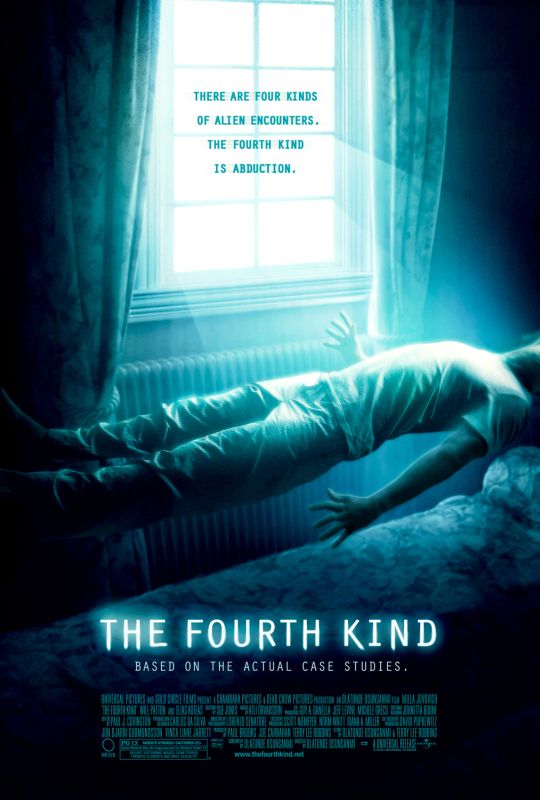
USA/UK. 2009.
Crew
Director/Screenplay – Olatunde Osunsanmi, Story – Olatunde Osunsanmi & Terry Lee Robbins, Producers – Paul Brooks, Olatunde Osunsanmi & Terry Lee Robbins, Photography – Lorenzo Senatore, Music – Atli Örvarsson, Visual Effects Supervisor – Andrew Somers, Visual Effects – Pacific Title & Art Studio (Supervisor – Mark Freund), Special Effects Supervisor – Ivo Jivkov, Production Design – Carlos Da Silva. Production Company – Gold Circle Films/Chambara Pictures/Dead Crow Pictures/SagaFilms/Focus Films.
Cast
Milla Jovovich (Dr Abigail Tyler), Will Patton (Sheriff August), Elias Koteas (Dr Abel Campos), Dr Abigail Tyler (Herself), Hakeem Kae-Kazim (Awolowa Odusami), Corey Johnson (Tommy Fisher), Enzo Cilenti (Scott Stracinsky), Olatunde Osunsanmi (Himself), Mia McKenna-Bruce (Ashley Tyler), Raphael Coleman (Ronnie Tyler), Eric Loren (Deputy Ryan), Alisha Seaton (Cindy Stracinsky)
Plot
A dramatisation of the true events that happened in Nome, Alaska, between October 1-9, 2000. Psychologist Abigail Tyler was concerned about a number of her patients who were reporting troubling dreams and visions of a white owl outside their window. When she placed patient Tommy Fisher under hypnosis to recall more details, he became acutely disturbed. That night Sheriff August called her to Tommy’s house as Tommy threatened and then shot his wife with a gun. August blamed her for stirring Tommy up. Replaying notes that she had recorded, Abigail discovered that something had entered her room and then heard herself yelling words in another language. An expert deciphered this as being Ancient Sumerian. Another patient she hypnotised became possessed and started spouting Ancient Sumerian before the effort broke his back. August then placed Abigail under house arrest – only for the beings to return and snatch her daughter.
The Fourth Kind is a film that offers dramatised accounts of a series of alien abductions and paranormal phenomena that supposedly occurred in the town of Nome, Alaska in 2000. In particular, it tells the story of psychologist Abigail Tyler whose child went missing during the incident. There have been films based on true-life alien abduction claims before – the Barney and Betty Hill story in The UFO Incident (1975), novelist Whitley Strieber’s own account in Communion (1989) and the Travis Walton incident in Fire in the Sky (1993). These are probably three of the most high-profile abduction witness accounts there are. Whatever one believes about whether alien abductions are real or not, the tellers of these accounts have an undeniable veracity in that they clearly believe that something happened to them. On the other hand, The Fourth Kind belongs in the territory of completely fictitious claims to be based on true stories – akin to films such as The Picnic at Hanging Rock (1975), The Amityville Horror (1979) and The Blair Witch Project (1999). (See Films That Make Dubious Claims to Being Based on True Stories).
The Blair Witch Project analogy is not too inapt as The Fourth Kind similarly makes rigorous claims to be factual and incorporates supposedly real video footage of what happened during the therapy sessions and some of the possessions. Unfortunately, what came to the fore at the time of the film’s release was that this claim to factuality was in fact an elaborate fiction created by the film’s marketing department. Alaskan journalists investigated the film’s claims and found that Nome had no higher rate of deaths and disappearances than any other part of the state. The Alaskan Psychological Association stringently claimed that there had never been any Abigail Tyler registered with them.
Furthermore, the various articles online supposedly giving weight to the story were found to be placed there by the studio publicity department a matter of months before the film’s release. This caused some outrage from families of people who had genuinely disappeared in Nome. In truth though, you cannot come down on The Fourth Kind for creating an effective marketing campaign and blurring the line so well that many people were taken in by the ‘authenticity’ of what they were seeing. If only there had been a worthwhile film to go along with such an ingenious promotion scheme.
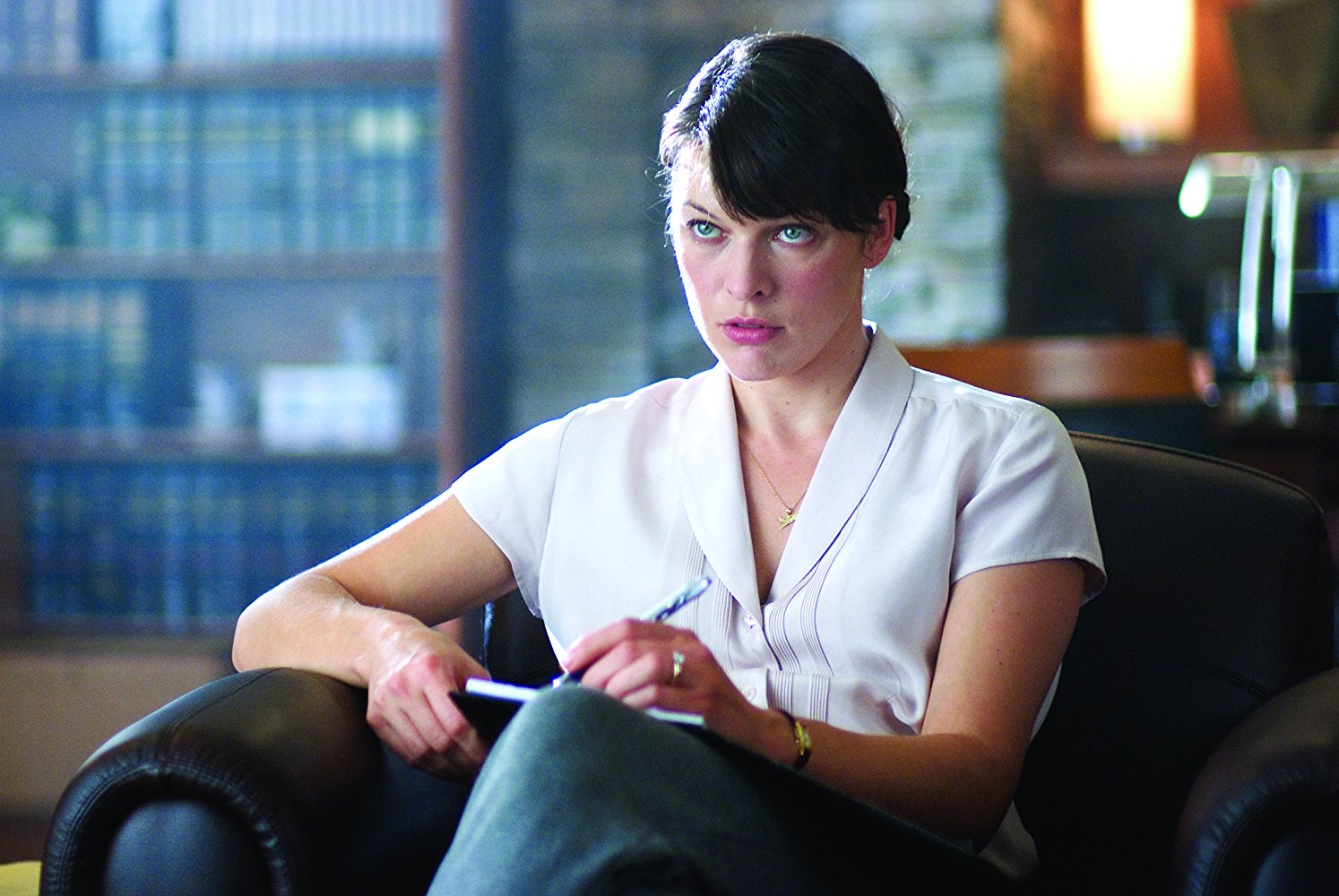
Director/writer Olatunde Osunsanmi does a fine job in immersing one into the ‘authenticity’ of the happenings – particularly good being his ability to use a split screen to contrast video footage with the ‘real’ person in one section and the dramatised footage using Hollywood actors to play out the identical thing in the opposite frame. Osunsanmi has even inserted himself into the film as an interviewer talking to the supposedly real Abigail Tyler. There are some undeniably spooky moments – like the scene where Enzo Cilenti suddenly becomes possessed, sits bolt upright and starts yelling in Ancient Sumerian.
However, Osunsanmi’s staging of the dramatisations is a little too calculated. When it comes to what is happening, he relies on the video footage, which is blurred out with static and overexposed light sources. Osunsanmi has chosen not to dramatise these scenes, which in effect pulls a curtain down and deliberately obscures what is happening from us. However, this is a film where, at least if you have brought the publicity claims, you come to see it wanting to know what happened. The result ends up being a film that talks about a number of frightening things happening but lets its most dramatically interesting moments happen behind a conjuror’s curtain, tossing no more than a few flashes of light and shadow in our direction.
With the actual abduction scenes frustratingly vague, that only leaves on Olatunde Osunsanmi’s screenplay to fill in the rest, but this offers little. When the film introduces the Sumerian language, it is not long before Osunsanmi starts to grasp at Erich von Daniken and Ancient Astronauts, claiming that various Sumerian religious artifacts depict aliens in spacesuits and spaceships. Erich von Daniken (a multiply convicted fraudster) found fame in the 1970s in a series of books beginning with Chariots of the Gods (1968) with his thesis that aliens had come to Earth in the past where they had helped build many major ancient monuments and that some ancient carvings depicted these aliens. See the documentary Chariots of the Gods (1970) and the theme page Films About Ancient Astronauts for more detail about these theories. These ideas were widely ridiculed by serious archaeologists and historians. Unfortunately, Osunsanmi shoots his claims to authenticity in the foot by jumping aboard such a long outdated bandwagon of pseudo-science.
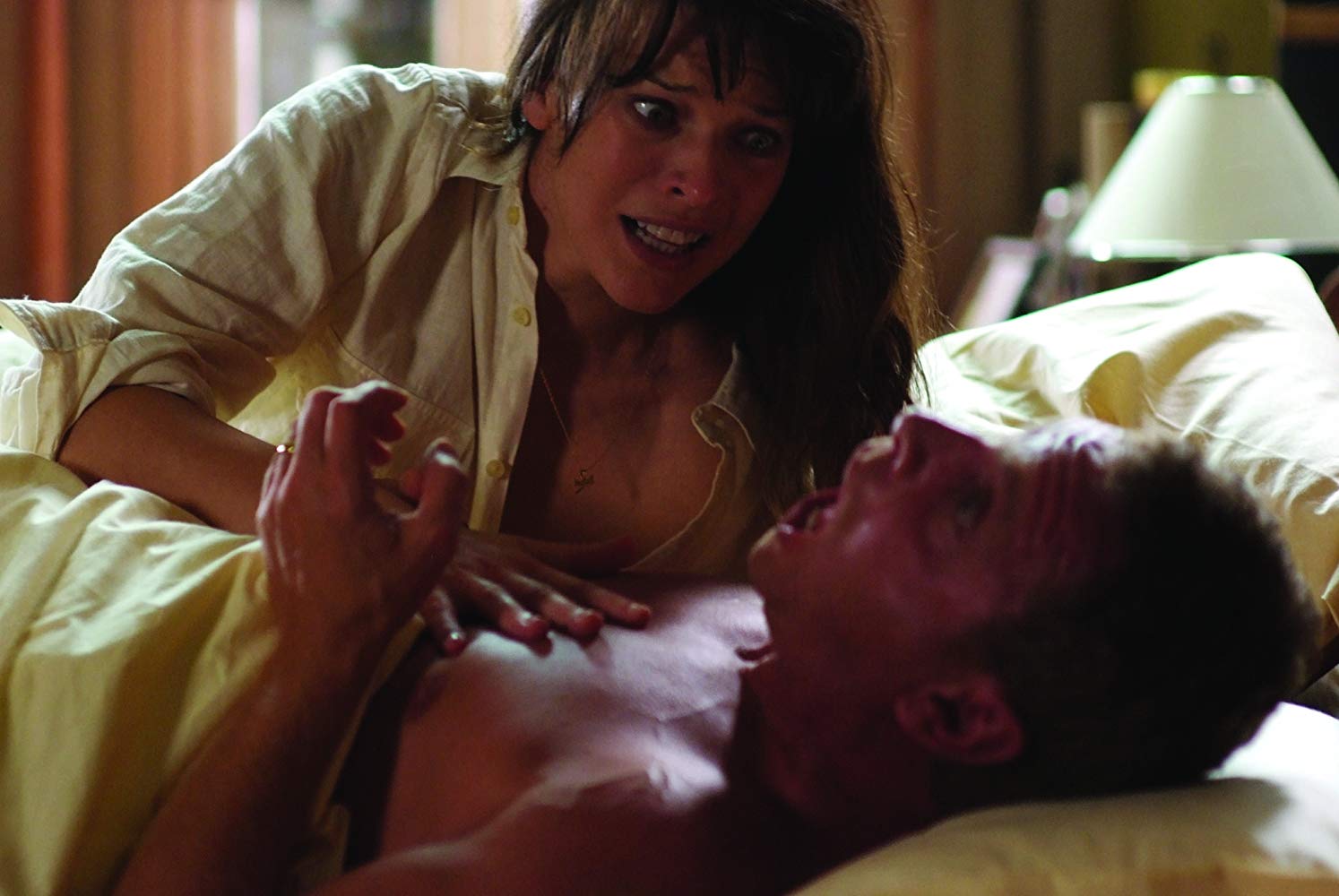
There is a downright weird section towards the end, which is never given proper explanation, where the agency possessing Dr Tyler makes the claim that it is God. She later states: “What I felt was hopelessness. It was not God but it can pretend to be.” If anything, this sequence seems to take The Fourth Kind into horror movie territory. However, the explanations that Olatunde Osunsanmi waves in our direction are too vague to ever provide an adequate handle on anything.
The Fourth Kind is also hamstrung due to the central role being cast with the perpetually non-acting Milla Jovovich. It is hard to accept her as a veteran psychologist, while her attempts to enact grief and upset at the disappearance of her daughter are embarrassingly inadequate. On the other side, she is at least boosted by a strong and angry performance from Will Patton as the sheriff and solid support from the always reliable Elias Koteas.
Olatunde Osunsanmi had previously worked in various production capacities and as an editor, before making his directorial debut with the horror film The Cavern/Within (2005) about underground monsters. Osunsanmi had previously worked as an assistant to Joe Carnahan who also acts as a producer here. Osunsanmi next made the Found Footage psycho film Evidence (2013), before becoming a regular tv director. He also serves as a producer on the tv series Star Trek: Discovery (2017-24) and directed the spinoff film Star Trek: Section 31 (2025).
Trailer here