

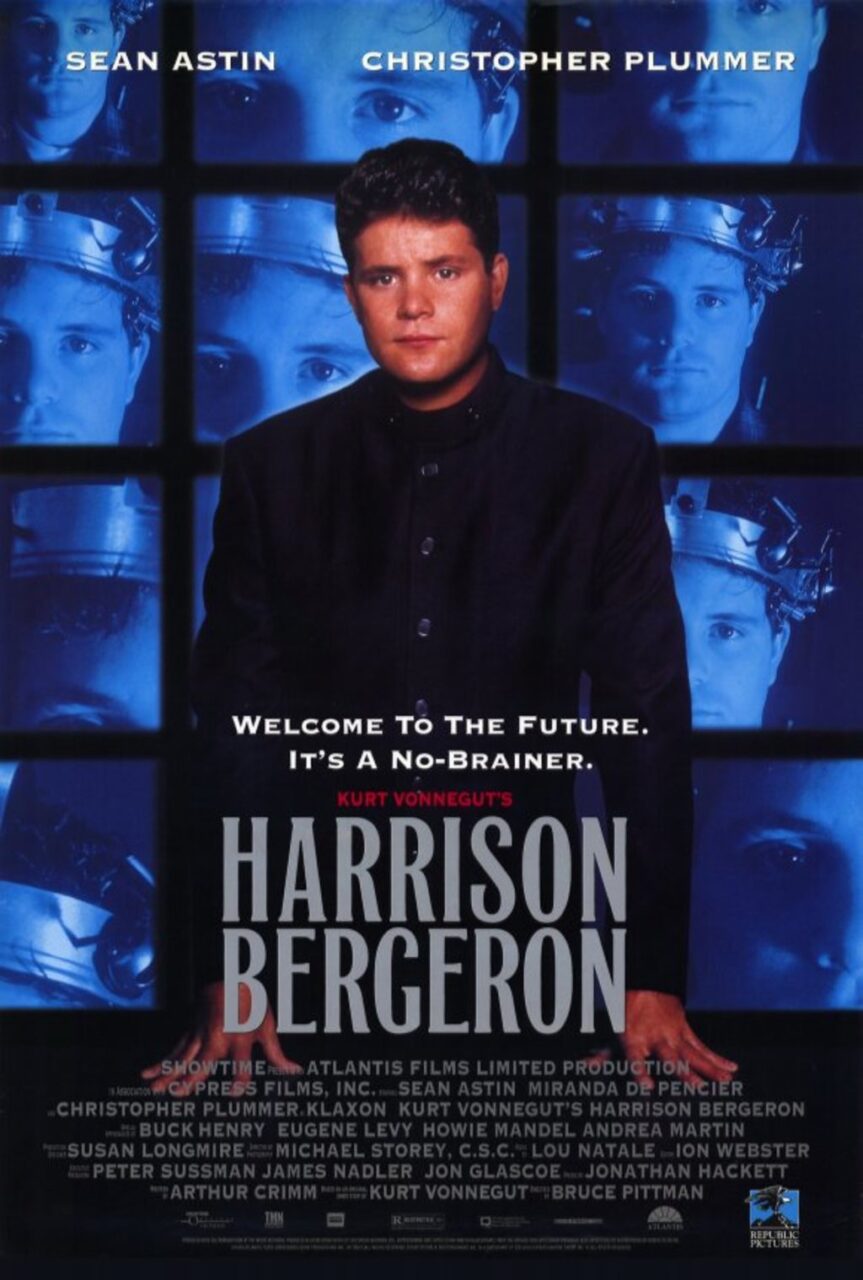
Canada. 1995.
Crew
Director – Bruce Pittman, Screenplay – Arthur Crimm, Based on the Short Story Harrison Bergeron (1961) by Kurt Vonnegut Jr, Producer – Jonathan Hackett, Photography – Michael Storey, Music – Lou Natale, Visual Effects Supervisor – Jon Campfens, Special Effects Supervisor – Jordan Craig, Production Design – Susan Longmire. Production Company – Atlantis Films Ltd/Cypress Films Inc.,/CTV Television Network Ltd/Superchannel/Super Ecran/The Movie Network/Bergeron Productions Inc – In Trust.
Cast
Sean Astin (Harrison Bergeron), Miranda de Pencier (Phillipa), Christopher Plummer (John Klaxon), Nigel Bennett (Dr Eisenstock), David Calderisi (Commissioner Benson), Matthew Ferguson (Garth Bergeron), Eugene Levy (President McCloskey), Natalie Radford (Alma Starbuck), Roger Dunn (George Bergeron), Linda Goranson (Hazel Bergeron)
Plot
It is the year 2053, following the Second American Revolution. The US government has instituted a series of laws that mandate that devices be worn on the head to dissuade too much intellectual activity. The idea is that by keeping everybody average, it discourages envy of high achievers and the populace is kept happy. Harrison Bergeron is one student who continues to get A’s in school despite the handicapping device. Just before he is about to undergo a legally mandated operation to make him average, Harrison’s doctor recommends him to a secret underground club for intellectuals. Shortly after Harrison visits, security forces raid the club. Harrison is taken and introduced to a cabal of intellectuals who secretly run the society and live free of the handicap devices. He is given the choice to join them or undergo the surgery. Harrison agrees to join. Living among the group, he becomes attracted to fellow intellectual Phillipa. Soon Harrison comes to disagree with leader John Klaxon’s belief that a society of average people without any creativity is better than the unrest supposedly caused by inequalities.
The late Kurt Vonnegut Jr (1922-2007) was one of the greatest satirists in the world. During his lifetime, Vonnegut wrote numerous books including Player Piano (1952), The Sirens of Titan (1959), Mother Night (1962), God Bless You, Mr Rosewater (1965), Slaughterhouse Five; or the Children’s Crusade (1969), Breakfast of Champions, or Goodbye Blue Monday (1973) and Slapstick; or Lonesome No More (1976) among others. Vonnegut’s work comes informed by a biting sense of pessimism about the human condition with the universe frequently being seen as absurd in nature and inherently weighed against humanity. Many of Vonnegut’s works cross over into the science-fiction genre.
Harrison Bergeron (1961) was one of Kurt Vonnegut’s earlier short stories. This adaptation was a Canadian-made cable tv movie. The film changes the basics of Kurt Vonnegut’s story considerably. The original story that Vonnegut wrote is farcical in tone. The principal characters are actually Harrison’s parents who are watching tv and constantly being jolted by their handicap devices. Their fourteen-year-old Harrison is so bright he has to wear giant handicappers, thick glasses, scrap metal hung all over him to offset his physical prowess and a clown nose and bad teeth dentures to handicap his looks. As the parents watch, Harrison escapes from jail and commandeers the tv studio, releasing some handicapped dancers and taking one whose beauty has been handicapped with a mask as his lover, before being shot down by the Handicapper General (who is a woman). The parents then return to watching tv, only vaguely remembering what they just saw.
All of this has been considerably changed in the film. The parents are still there and watching tv but are minor characters, and there are some handicapped dancers. However, Kurt Vonnegut’s farcical tone is replaced by a standard dystopian scenario that is played seriously, not satirically. Harrison Bergeron is now the main character but his handicapping amounts to only a device that looks like no more than a set of headphones worn on his head, while his seven feet height and fourteen year-old-age has been recast with 5’6″ 24 year-old Sean Astin.
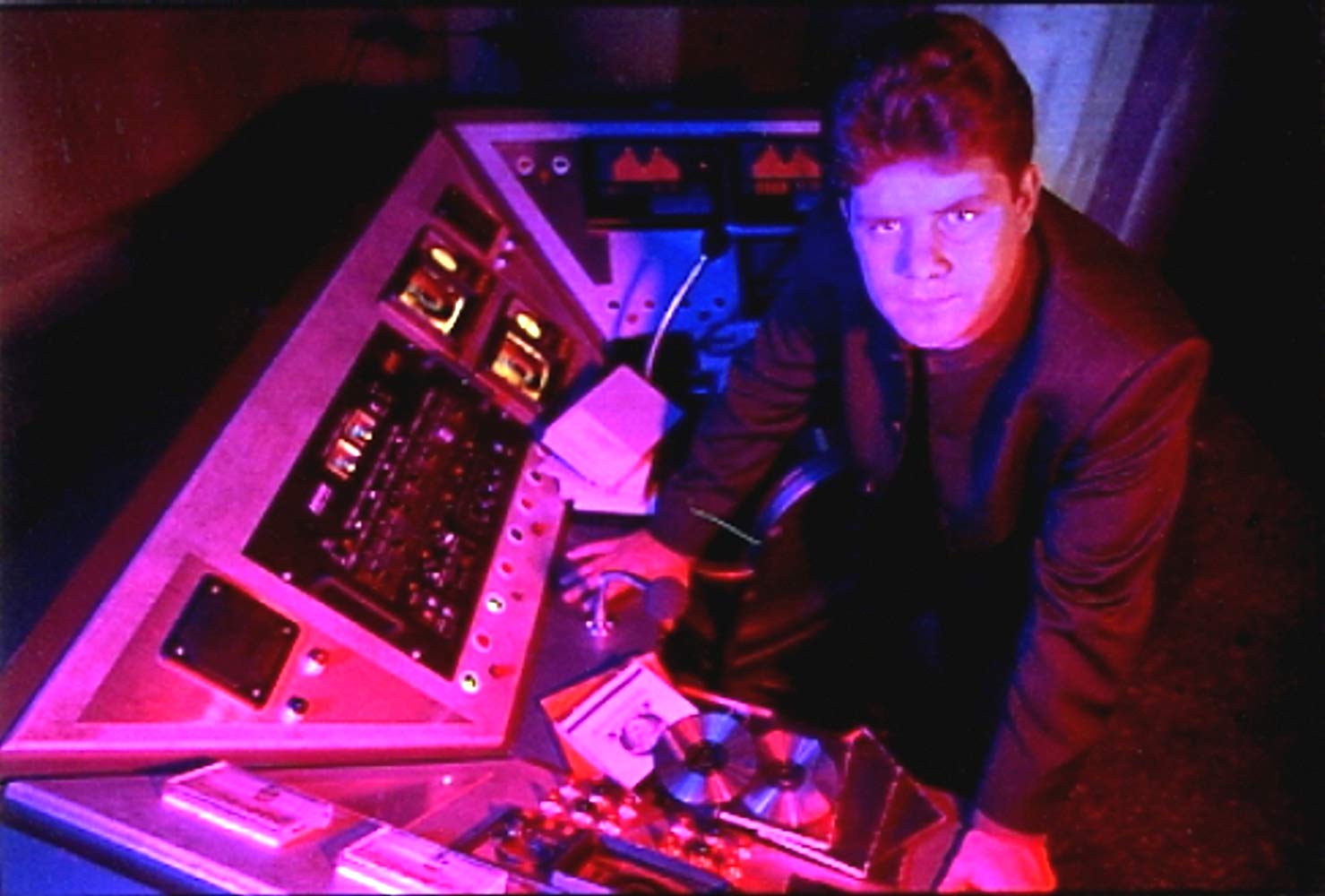
Moreover, another entire story has been padded out around Vonnegut’s admittedly short piece, in which Sean Astin is inducted into the group that runs the society (something that is never even speculated about in the short story). The film does eventually arrive at the scene where Harrison commandeers a tv studio, although rather than Vonnegut’s farce, this is a scene that tries to make a poignant point about all that this society is missing. The end of the film tries to conduct an interesting argument of asking whether the ease of having no wars, murders or genocide is worth the price of having no Beethovens and no great works of art anymore.
The fitful satire fails to come across with the sheer bizarreness and wild farce that runs through Kurt Vonnegut’s writing. At most, the story has been updated to become a mild satire against tv. There is the odd cutely satiric idea – like an underground brothel where the geniuses are taken so they can engage in intellectual discussions instead of sex, not to mention an amusing scene where a chess game is conducted as a flirtation.
Alas, Bruce Pittman’s standard middle-of-the-road tv handling never brings any of it to life. Nor does pudgy Sean Astin, caught at this point between being a forgotten teen actor and rediscovery with The Lord of the Rings, convince us that he is a genius. The film has been given a peculiar 1950s retro look, which is explained away with the cute justification “America was happiest in the 1950s.”
Other films based on Kurt Vonnegut’s books are:– Between Time and Timbuktu (1972), Slaugherhouse Five (1972), Slapstick of Another Kind (1982), Welcome to the Monkey House (1991), Mother Night (1996) and Breakfast of Champions (1999). Kurt Vonnegut: Unstuck in Time (2021) is a documentary about Vonnegut.
Director Bruce Pittman has made a great deal of Canadian or Canadian-shot tv. His other genre outings are the twin psycho-thriller The Mark of Cain (1985), the tongue-in-cheek horror film Hello Mary Lou: Prom Night II (1987), Alien Tracker (2003) about alien prison escapees and the film set thriller The Last Movie (2012).
Full film available here