
Crew
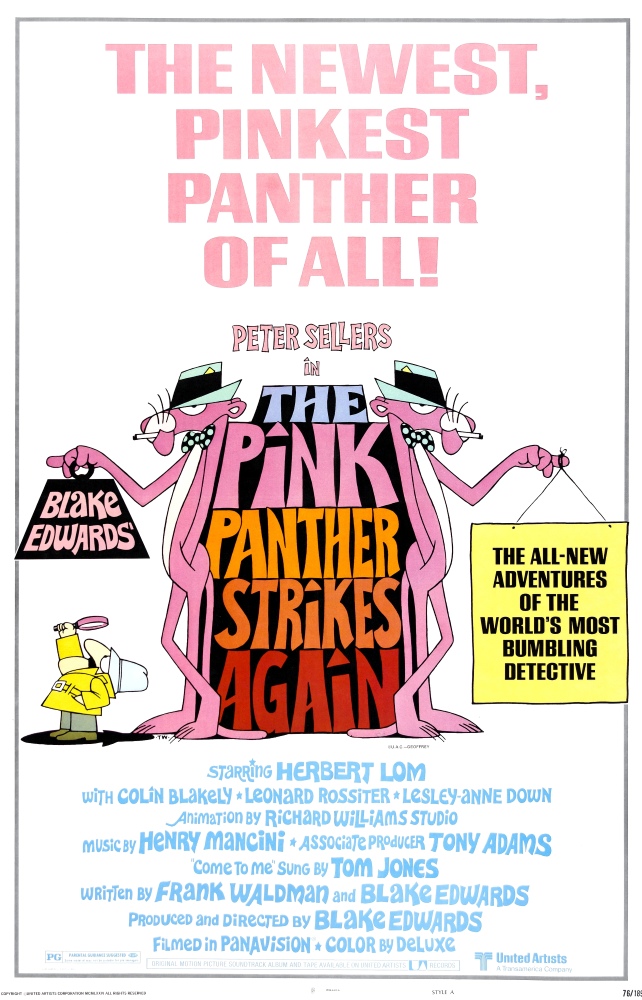
Director/Producer – Blake Edwards, Screenplay – Blake Edwards & Frank Waldman, Photography – Harry Waxman, Music – Henry Mancini, Lyrics – Don Black, Special Effects – Kit West, Animation – Richard Williams Studio, Makeup – Harry Frampton, Production Design – Peter Mullins. Production Company – Amjo Productions.
Cast
Peter Sellers (Inspector Jacques Clouseau), Herbert Lom (Charles Dreyfus), Lesley-Anne Down (Olga Valliasova), Burt Kwouk (Cato), Leonard Rossiter (Superintendent Quinlan), Richard Vernon (Dr Fassbender), Colin Blakely (Alec Drummond), Dick Crockett (US President)
Plot
Charles Dreyfus, former Chief Inspector of the Surete, has been driven insane as a result of Inspector Clouseau’s incompetent bumblings and had to be placed in an asylum. He now makes an escape and abducts the scientist Dr Fassbender and forces him to build a Doomsday Weapon, which he threatens to unleash upon the world unless Clouseau is killed. And so Inspector Clouseau goes into action to find the missing scientist and stop Dreyfus.
This was the fourth of the Peter Sellers Pink Panther films. The series was begun with The Pink Panther (1963) and followed by A Shot in the Dark (1964) and Return of the Pink Panther (1975). The series was at its height with Shot and Return but the high degree of inspiration was starting to wane here and this is the last entry in the series that is worth seeing. In the entry that follows this, Revenge of the Pink Panther (1978), the strain was starting to show. The two subsequent entries, Trail of the Pink Panther (1982) and The Curse of the Pink Panther (1983), both made following Peter Sellers’ death and tacked together from out-takes and unused footage from the previous films, and the last entry, Son of the Pink Panther (1993), where Sellers was replaced by Robert Benignini, are worth watching solely for completists. Of the two revivals with Steve Martin, The Pink Panther (2006) and The Pink Panther 2 (2009), most Sellers fans would prefer to forget they even exist.
With The Pink Panther Strikes Again here, director Blake Edwards seems determined to let loose all restraints on the series, sending its already whacked-out level of absurdity totally into orbit at times. The Quasimodo disguise sequence – half of which has been set up to allow Peter Sellers to conduct an outrageous pun, moaning “the bells, the bells” as the phone starts to ring – and which ends with Sellers floating out a window on the end of his overinflated blow-up hump while hanging onto the telephone cord is one such moment.
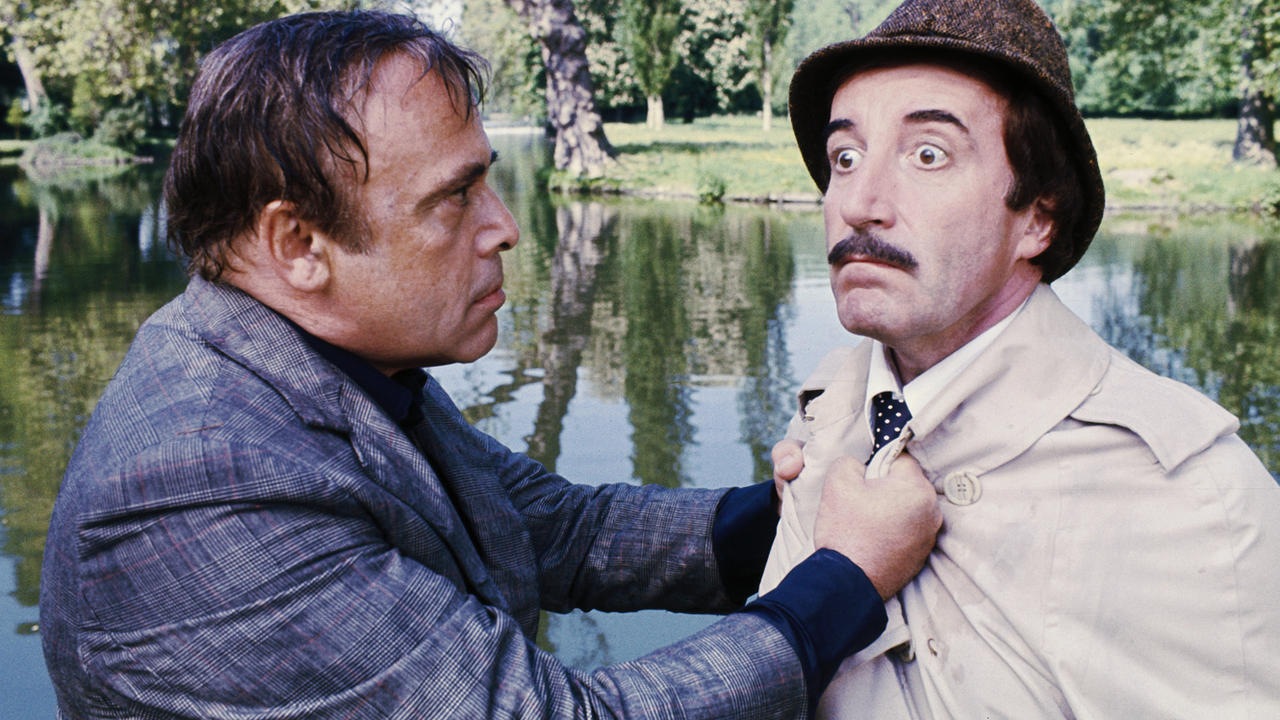
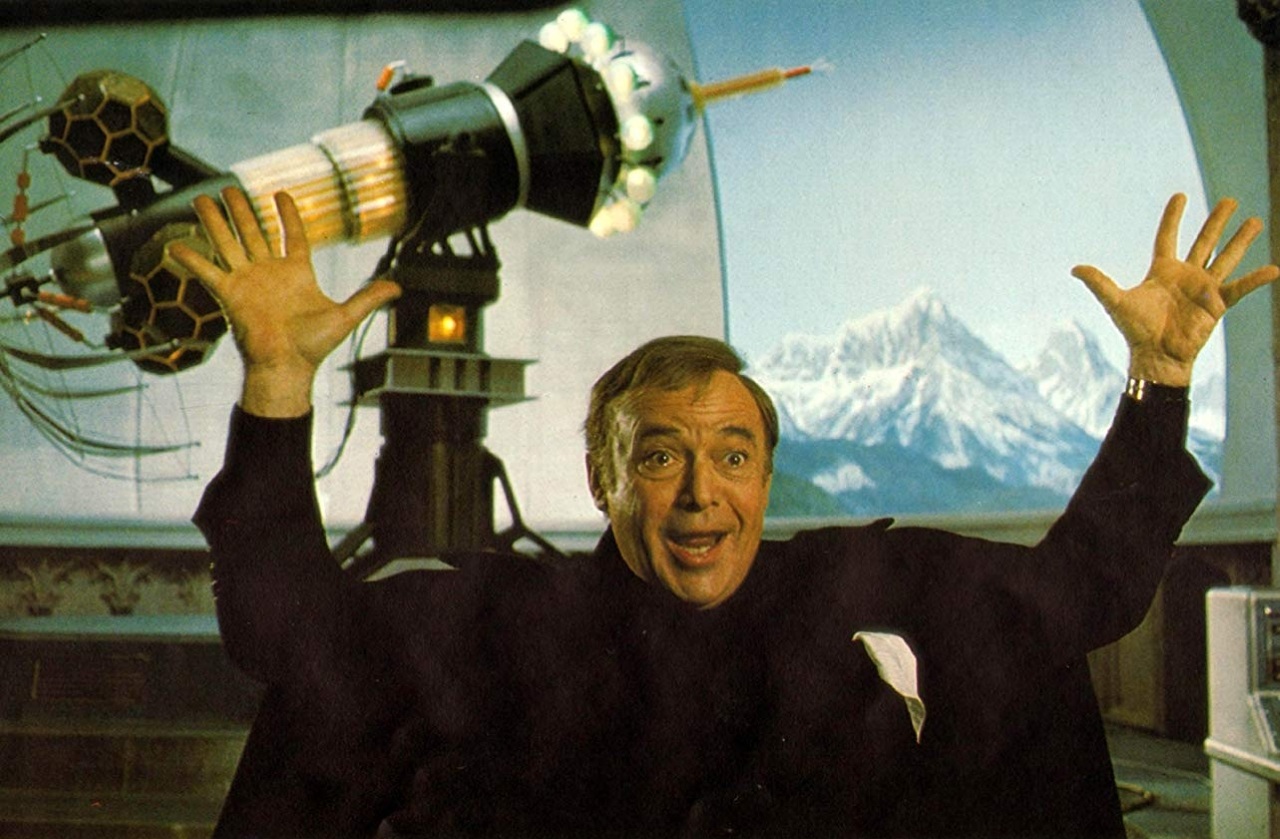
Sellers does his bumbling totally unaware routine over again with great deadpan panache. There is an hysterical sequence with him trying to conduct an investigation after getting his hand stuck inside the gauntlet and ball of a suit of armour; or his various attempts to enter the castle; and the sequence with he and Herbert Lom getting high on laughing gas. This time Herbert Lom is determined to have as much fun as Sellers. His role is the only one that has actually developed throughout the series – here he becomes a demented parody of a James Bond super-villain.
Yet for all the fun that everybody clearly has, The Pink Panther Strikes Again never quite succeeds in scaling the slapstick heights of pieces like the lightbulb sequence in Return of the Pink Panther. Most of the Oktoberfest sequences and certainly all of the sequences with Lesley-Anne Down and Jarvis the butler could have been trimmed down, while the film peters out at the climax.
The series for the first time engages in some real world satire – the US Secretary of State looks suspiciously like Henry Kissinger and the President is modelled on then US President Gerald Ford. The credits sequence is playfully amusing with the animated Pink Panther turning into a Hitchcock silhouette, Count Dracula, Batman, King Kong, Julie Andrews swirling across the hills in The Sound of Music (1965), and appearing in a Keystone Kops-like number and a Singin’ in the Rain sequence. (For the Batman and silent film pastiches, the familiar Pink Panther theme amusingly parodies the theme for the Batman tv series (1966-8) and switches to the speeded-up music associated with silent films). At the end of the film when Sellers, Lesley-Anne Down and Burt Kwouk are blown into the river, an animated Clouseau makes his way to the surface and a giant Pink Panther shark appears beneath him in a parody of the Jaws (1975) poster.
Blake Edwards had a long career directing comedies, including the likes of Breakfast at Tiffany’s (1962), The Great Race (1965), 10 (1979) and Victor/Victoria (1982). His only other genre film was the bodyswap comedy Switch (1991). He did however appear during his earlier career as an actor in the supernatural revenant film Strangler of the Swamp (1946).