

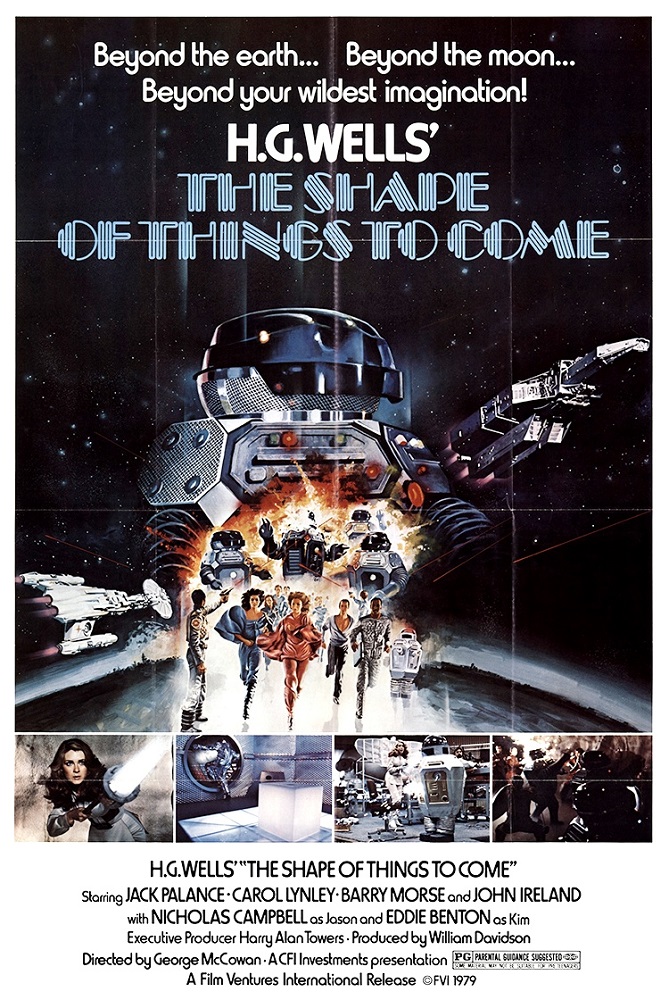
Canada. 1979.
Crew
Director – George McCowan, Screenplay – Martin Lager, Script Concept Development – Michael Cheda & Joseph Glazner, Producer – William Davidson, Photography – Reginald H. Morris, Music – Paul Hoffert, Visual Effects – Wally Gentleman, Special Effects – Bill Wood, Robots – Ralph Tillack, Makeup – Bill Morgan, Art Direction – Gerry Holmes. Production Company – SOTTC Film Productions/CFI Investments.
Cast
Barry Morse (Dr John Caball), Eddie Benton (Kim Smedley), Nicholas Campbell (Jason Caball), Jack Palance (Omus), Mark Parr (Sparks), Greg Swanson (Voice of Sparks), Carol Lynley (Niki), John Ireland (Senator Smedley)
Plot
Earth has been devastated by pollution and the great robot wars. Mankind has been forced to live on the Moon and further out into space but is dependent on the drug Radic Q-2, which can only be found on the planet Delta 3. The Moon colonists then receive a message from the mad roboticist Omus that he has taken over Delta 3 and will stop all shipments of Radic Q-2 unless he is allowed to become the Supreme Commander of the Solar Colonies. Dr John Caball, the leader of the New Washington lunar colony, defies council orders and launches his starship The Starstreak. Along with his son Jason, Jason’s girlfriend and a reconditioned robot, they set out on a dangerous mission to travel to Delta 3 and stop Omus.
This Canadian effort was one of a host of quickie cash-ins that suddenly came out attempting to exploit the runaway success of Star Wars (1977). As with a number of other such films made during this period – Battlestar Galactica (1978), The Black Hole (1979) and Krull (1983) being particularly guilty examples – The Shape of Things to Come was made by people with little idea what science-fiction is about and only seeking to exploit a successful trend. The film was originally planned as a tv series but, following the success of the theatrically released Battlestar Galactica pilot, the producers changed the intended medium to film.
What is detestable about The Shape of Things to Come is not just that it was a bad Star Wars clone – there were dozens of those – but that it has the audacity to use of the name of H.G. Wells in vain. The film billed itself as a sequel to Wells’ classic of future history Things to Come (1936). Things to Come was a serious work of social prognostication where Wells made an earnest plea for world peace and offered a grand vision of achieving a scientific Utopia; by contrast, The Shape of Things to Come is merely a witless Star Wars copy with robots, hammily overacting intergalactic dictators and lots of raygun shootouts.
There is absolutely nothing in common with the two films (or with Wells’ titular book of social projections that the film takes the name from). The nearest point of connection is that the hero and his father in this film share the same name as the central characters in Things to Come. Are they meant to be descendants – who knows? However, the film bungles it so badly it fails to even manage to spell the surname the same. Although the saddest part of the exercise is that H.G. Wells’ descendants apparently endorsed the film. One of them, Frank Wells, acted as the film’s scientific advisor – although from the appalling science on show, goodness knows where he obtained any scientific qualifications.
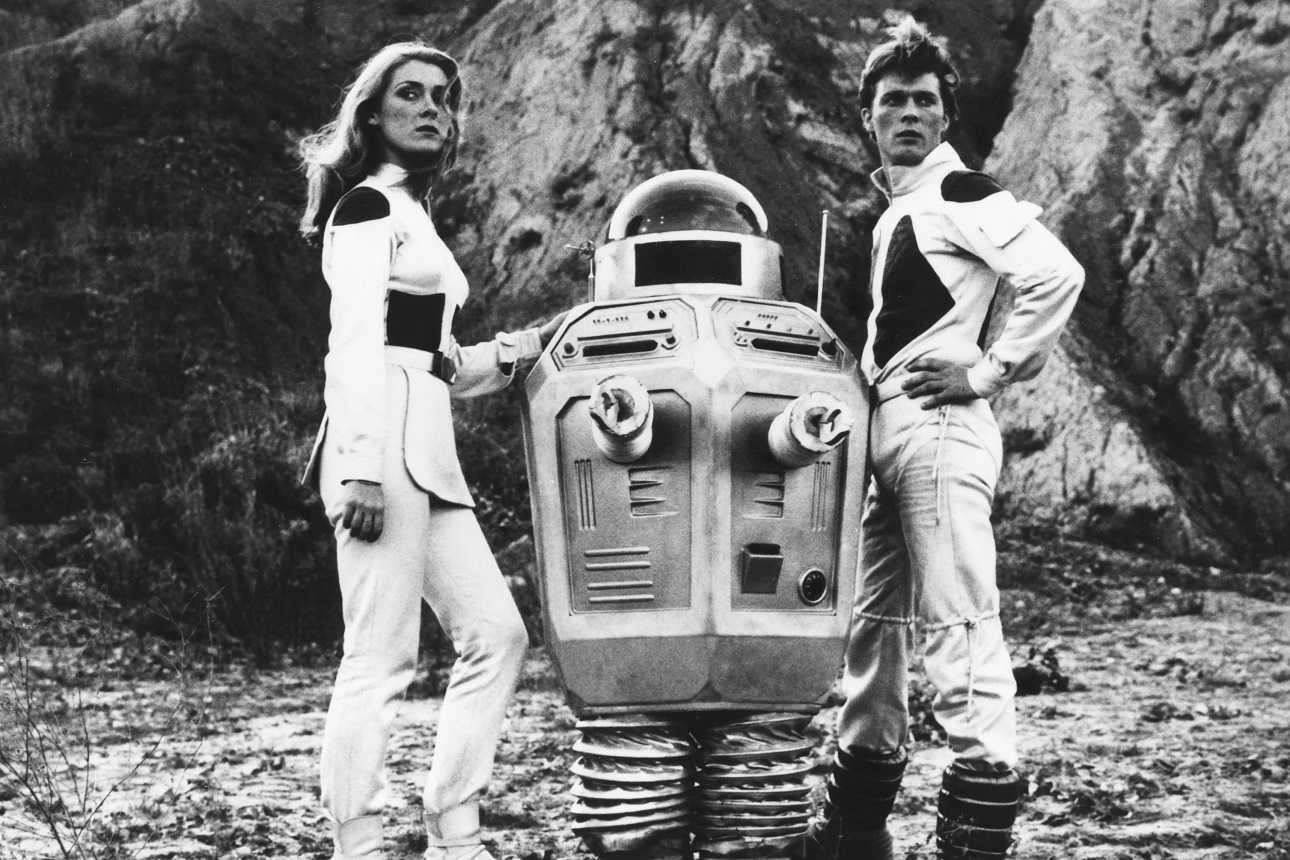
All of this might be excusable if The Shape of Things to Come was a halfway decent film but it is one of the cheapest and most poorly made of all the quickie Star Wars cash-ins. The sets are extremely cheap. The robots look like the lumbering tin cans out of 1940s serials. The models are poorly photographed and look just like models. The effects are so cheaply delivered they fail to even bother with optical process work – there are no mattes, the models are never seen against planetary backgrounds.
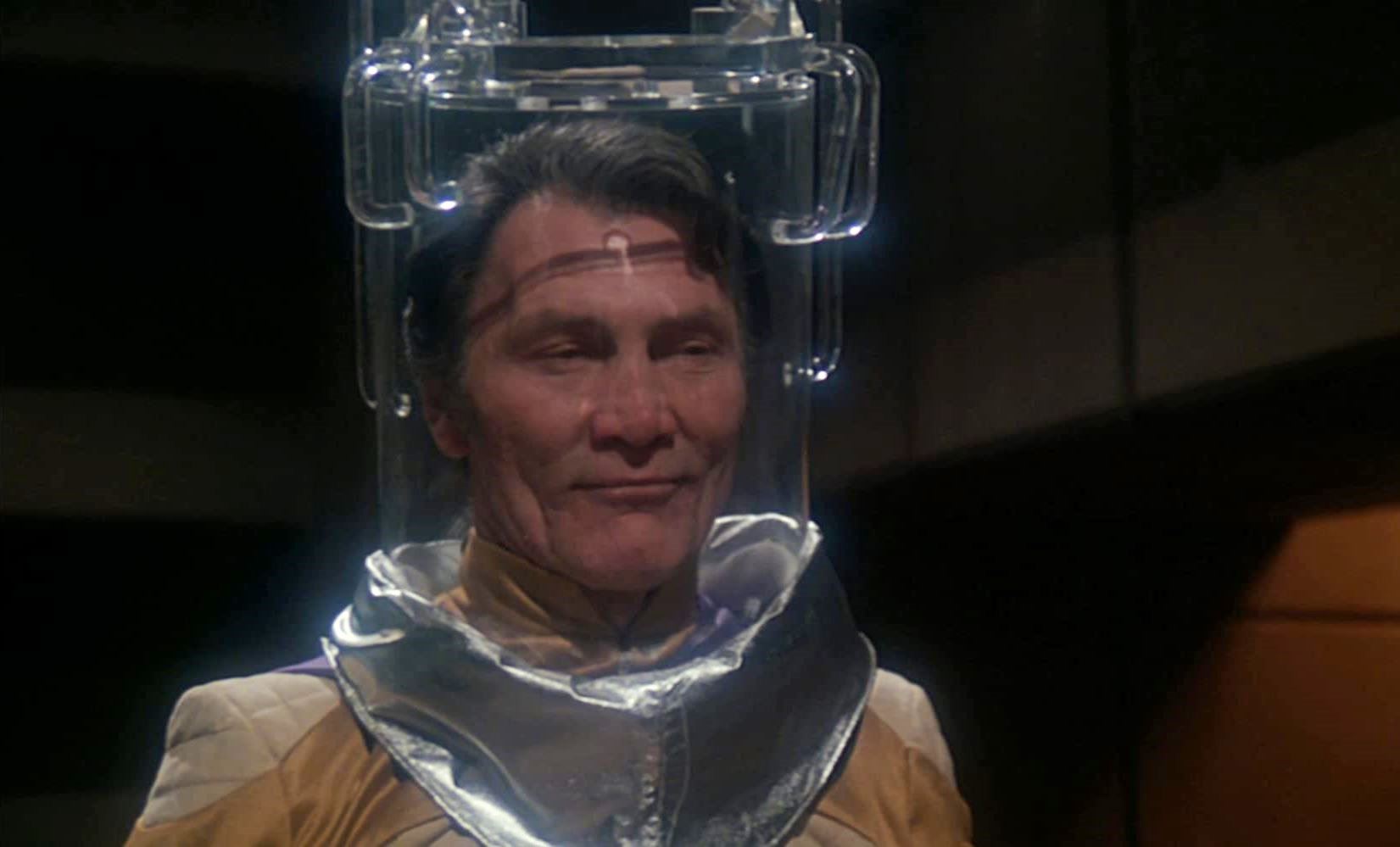
The plot is filled with gaping holes. For instance The Starstreak is supposed to stop off to Earth for repairs but then leaves without obtaining any. Similarly at the end, the ship leaves Delta 3 with a supply of Radic Q-2 but we never see them mining any or picking up any supplies in the few moments between Jack Palance’s announcement that he is going to destroy the planet and their race to get back to the ship. The film is dull the entire way. The only one in the show who shows any life is a slumming Jack Palance who sees it for the ridiculous effort it is and hams it up for all he can.
Director George McCowan had previously made such genre efforts as the tv movie The Love War (1970) about warring aliens on Earth, the Nature’s Revenge film Frogs (1972) and Shadow of the Hawk (1976) about warring American Indian sorcerers. The executive producer was notorious B-budget producer Harry Alan Towers, also responsible for the Christopher Lee Fu Manchu films, a host of Jess Franco exploitation nasties and various cheap horror films.
Trailer here