
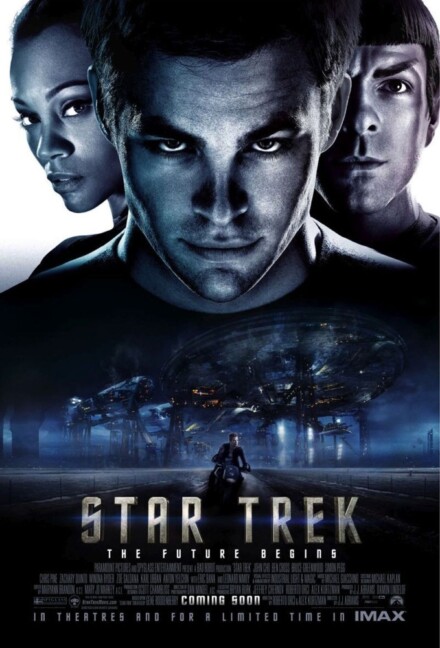
USA. 2009.
Crew
Director – J.J. Abrams, Screenplay – Alex Kurtzman & Roberto Orci, Based on the TV Series Created by Gene Roddenbery, Producers – J.J. Abrams & Damon Lindelof, Photography – Daniel Mindel, Music – Michael Giacchino, Visual Effects Supervisor – Roger Guyett, Visual Effects – Industrial Light and Magic (Supervisor – Russell Earl), Additional Visual Effects – Digital Domain (Supervisor – Kelly Port), Lola VFX (Supervisor – Edson Williams) & Svengali FX (Supervisor – Stefano Trivelli), Special Effects Supervisor – Burt Dalton, Prosthetic Makeup/Alien Design – Barney Burman, Joel Harlow & Page Neville, Production Design – Scott Chambliss. Production Company – Paramount/Spyglass Entertainment/Bad Robot.
Cast
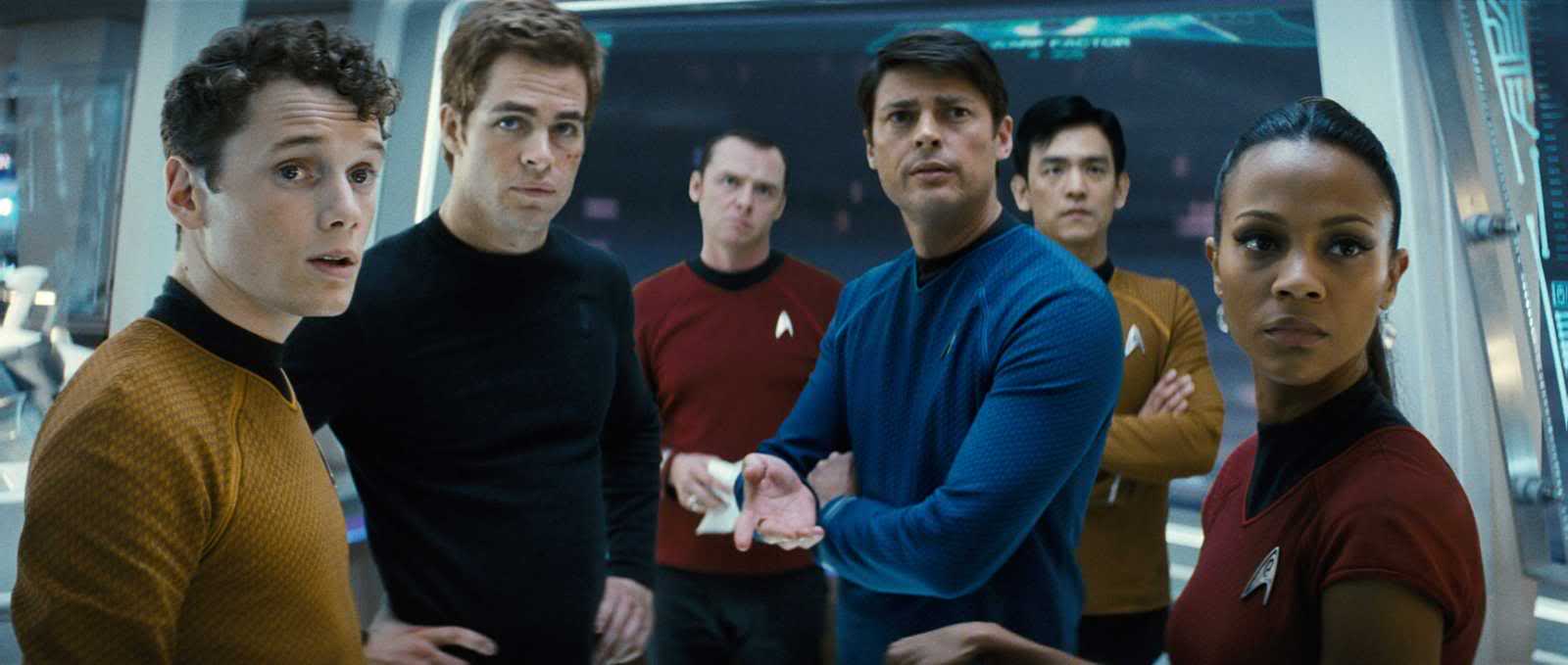
Chris Pine (James T. Kirk), Zachary Quinto (Mr Spock), Zoe Saldana (Nyota Uhura), Karl Urban (Dr Leonard McCoy), Eric Bana (Captain Nero), Bruce Greenwood (Captain Christopher Pike), Leonard Nimoy (Spock Prime), Simon Pegg (Montgomery Scott), John Cho (Hikaru Sulu), Anton Yelchin (Pavel Chekov), Ben Cross (Sarek), Winona Ryder (Amanda Grayson), Chris Hemsworth (Captain George Kirk), Jimmy Bennett (Young James T. Kirk), Jennifer Morrison (Winona Kirk), Faran Tahir (Captain Robau), Rachel Nichols (Gaila), Jason Matthew Smith (Burly Cadet), Deep Roy (Keenser)
Plot
The USS Kelvin is attacked by a ship commanded by the Romulan Nero that suddenly appears out of nowhere. As the Kelvin’s captain is taken prisoner, first officer George Kirk is appointed captain. He organizes the evacuation of the ship just as his wife gives birth to their son but is killed as the Kelvin is destroyed moments later. Their son James Tiberius Kirk grows up in rural Iowa. After getting into a barroom brawl with Starfleet officers, Captain Christopher Pike challenges Kirk to enlist. At the same time, the half-human, half-Vulcan Spock turns down an offer from the Vulcan Science Academy and decides to join Starfleet instead. In training, Kirk is brought up on disciplinary charges for reprogramming the unwinnable Kobayashi Maru simulation exercise. Nero’s ship appears over Vulcan and all Starfleet ships are mobilised to deal with the threat. Though suspended, Kirk’s friend Dr Leonard McCoy contrives to smuggle him aboard the USS Enterprise. Kirk realizes that the attack on Vulcan is a trap and warns Captain Pike. Pike is taken prisoner by Nero and hands command of the Enterprise over to Spock. Nero then detonates a singularity that destroys Vulcan. When Kirk tries to persuade Spock to go after Nero rather than head back to Earth, Spock abandons him on the ice planet Delta Vega. There Kirk meets the aging Spock who has come back from 150 years in the future. Spock tells Kirk how both he and Nero were thrown back in time by a black hole that destroyed Romulus and how Nero has determined to destroy Vulcan in vengeance for the destruction of his homeworld. With the aid of the engineer Montgomery Scott, Kirk attempts to return to The Enterprise to persuade Spock to turn back before Nero furthers his plan to destroy The Federation by dropping a singularity on Earth.
To anybody who is a science-fiction fan, Star Trek (1966-9) is unavoidable. Love it or hate it, Star Trek has a presence that takes up an enormous part of science-fiction fandom. The original series marked a maturation of science-fiction storytelling in the media that took the genre away from atomic monsters and fear of alien invaders into a more thoughtful arena. All modern media fandom – the conventions, the merchandisables and fan memorabilia, the erotic and slash fan fiction – essentially began, or at least gained wide exposure with Star Trek fandom. No other franchise has spread to so many niches and covered as much material – four tv series, one animated series, 11 feature films, around 500 books, something like eight different comic series and some 40 videogames. (See below for listing of the other filmed Star Trek incarnations). Almost all of the actors who have appeared in the original Star Trek and many from the modern series have published works of fiction, comic-book series or books about their experiences on the series. A measure of Star Trek‘s stature can surely be seen in that the prototype of the space shuttle was named Enterprise, while the ashes of the series’ late creator Gene Roddenberry were the first human remains to be launched into space.
Over the last few years, Star Trek has given impression that it was waning in interest. Both Star Trek: Voyager (1995-2001) and Enterprise (2001-5), as well as the last feature film Star Trek: Nemesis (2002) gave much appearance of creative ennui – perhaps due to the market having reached a saturation point with so many competing Star Trek media products around at the time. The storytelling seemed lacklustre, the fan enthusiasm not as strong as it has once been and the spark of originality that made the characters in the other series into iconic figures dimmer than it once was. This new Star Trek feature film emerges as an attempt to reboot the franchise. It returns to the original series and recasts the characters with younger faces. It is not the first time that Star Trek has attempted to venture back to its origins and the supposed first voyage. The premise of Enterprise was to do a Star Trek series that went back to the series roots and predated Star Trek, showing the evolution of the familiar aspects of the universe. Star Trek novelist Vonda McIntyre had earlier published Enterprise: The First Adventure (1986), while at one point Gene Roddenberry and other producers had touted the idea of Starfleet Academy as a series that followed Kirk, Spock et al through their early years.
One is uncertain as to whether Star Trek 2009 should be approached as yet another entry in the ongoing film series – it was referred to as Star Trek 11 in pre-production, giving the idea that it was a continuation of the canonical universe – or whether it can be seen more as a big screen remake along the lines of other tv series that have been reworked on the big screen in recent years such as The Addams Family (1991), The Beverly Hillbillies (1993), The Fugitive (1993), Car 54, Where Are You? (1994), The Flintstones (1994), The Brady Bunch Movie (1995), Flipper (1996), Maverick (1996), Mission: Impossible (1996), Leave It to Beaver (1997), The Saint (1997), The Avengers (1998), Lost in Space (1998), The Mod Squad (1999), My Favorite Martian (1999), Wild Wild West (1999), Charlie’s Angels (2000), I Spy (2002); Scooby-Doo (2002), Starsky & Hutch (2004), Thunderbirds (2004), Bewitched (2005), The Dukes of Hazzard (2005), The Honeymooners (2005), Miami Vice (2006), Transformers (2007), Get Smart (2008), Speed Racer (2008), Land of the Lost (2009), The A-Team (2010), Yogi Bear (2010), Dark Shadows (2012), The Sweeney (2012), 21 Jump Street (2012), The Equalizer (2014), Jem and the Holograms (2015), The Man from U.N.C.L.E. (2015), Dad’s Army (2016), Baywatch (2017), CHiPs (2017), Fantasy Island (2020) and The Munsters (2022)
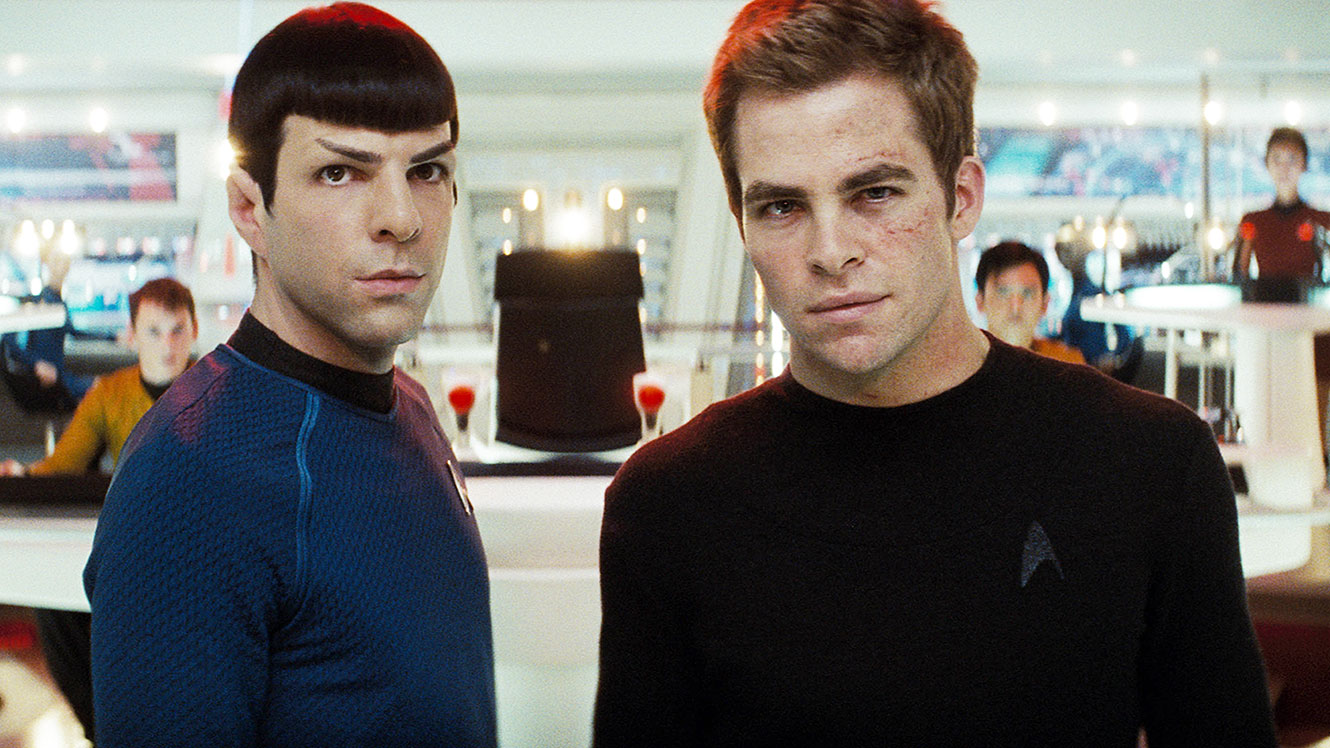
It emerges as both and neither at the same time. Certainly, the original has been recast with a set of younger faces and there are redesigns of the familiar elements such that it can be considered a reboot; on the other hand, it can be called a extension of canon in that it features continuity to the original series with Leonard Nimoy’s Spock turning up and bridging the two eras. It is explained at one point that due to Nero returning in time what has happened is taking place in a possible alternate timeline, a creative sleight of hand that cannily allows the writers to freely upset series continuity.
The film certainly makes some radical disruptions to established continuity – Vulcan is destroyed, Spock’s mother Amanda is killed, there is a romance between Spock and Uhura. The film also has the Enterprise crew encountering Romulans on their first adventure as opposed to the tv series, which had humanity doing so for the first time in the episode Balance of Terror (1966). On the other hand, the film pays more than considerable respect to series continuity, introducing a number of elements and references – Sulu’s penchant for fencing, Kirk’s birthplace in Iowa, Starfleet headquarters in San Francisco, reference to the Kolinahr ceremony, Kirk being the only one who beat the Kobayashi Maru simulation by reprogramming it (many of these being elements that were introduced in the films). There is the Enterprise’s original captain Christopher Pike (who does turn up in a wheelchair at the end, although not his familiar body-enveloping motorised box). There are also names of the main characters – Hikaru Sulu, Nyota Uhura and Kirk’s middle name Tiberius – which originated outside of televised/film continuity, while the names of Kirk’s parents are taken from one of the original novels. The Enterprise sets, the tricorders, phasers, shuttles, uniforms etc have been given redesigns, slightly different while remaining reasonably close to the originals.
Star Trek 2009 comes from J.J. Abrams who has become a cult figure in recent years. Abrams became a bright young, rising name with scripts for films such as Regarding Henry (1991), Forever Young (1992) and Joy Ride (2001), before creating/producing the tv series Felicity (1998-2002). The Abrams cult grew with his next two tv series – the smart and stylish spy series Alias (2001-6) and the massively successful hit of the cryptic desert island drama Lost (2004-10), as well the paranormal/fringe science investigator series Fringe (2008-13). In between one or two lesser tv works that failed to gain the same exposure – the relationship drama What About Brian (2006-7), Six Degrees (2006-7) about the interwoven fates of various people – J.J. Abrams made his feature film directorial debut with Mission: Impossible III (2006) at the personal behest of Tom Cruise. Star Trek was J.J. Abrams’ second directorial outing and he subsequently made the alien monster/Coming of Age film Super 8 (2011) and, after leaving the Star Trek franchise, went onto make Star Wars Episode VIII: The Last Jedi (2017) and Star Wars Episode IX: Rise of the Skywalker (2019). Abrams has also produced other genre works like Person of Interest (2011-6), Alcatraz (2012), Revolution (2012-4), Almost Human (2013-4), 11.22.63 (2016), Westworld (2016-22), Castle Rock (2018-19), Lovecraft Country (2020) and Lisey’s Story (2021) and the films Cloverfield (2008), Mission: Impossible – Ghost Protocol (2011), Mission: Impossible – Rogue Nation (2015), 10 Cloverfield Lane (2016), Star Wars Episode VIII: The Last Jedi (2017), The Cloverfield Paradox (2018), Mission: Impossible – Fallout (2018) and Overlord (2018).
I had mixed feelings about Star Trek 2009 before it opened. It seemed to get extremely good advance word; it had J.J. Abrams whose work I had admired elsewhere. Then there was the trailer(s), which seemed to only feature explosions and a prominent shot of Zoe Saldana stripping to her bra in slow motion. There was also the widely seen and muchly highlighted sequence with the young kid (Jimmy Bennett) crashing the Corvette over a cliff and being apprehended by a flying police officer before proudly announcing “I’m James Tiberius Kirk.” The sequence plays even more gratingly in the film, where it comes accompanied by the Beastie Boys on the soundtrack and blatant product placements for Nokia. “Is this really Star Trek?” those of us who grew up with the original sit wondering.
There was an episode of Star Trek: The Next Generation entitled Rascals (1992) where several of the regulars were reduced to children. You almost think that the same thing has happened here. This is perhaps being overly unkind to Star Trek 2009, which is by no means a bad film. However, it does seem to be making a concerted effort to reconceive the series for a much younger demographic. As the trailer gives evidence of, J.J. Abrams pumps up the humour and tries to make this a much sexier, hipper and more action oriented Star Trek than we have seen before. As a rule, classic and modern Star Trek series tended to be rather prudish. While Uhura is always a supporting character in classic Star Trek tv and movies, Zoe Saldana’s part here has been pumped up until she is the equivalent of the film’s female lead. Kirk, for instance, meets Uhura while trying to pick her up in an Iowa bar and there is the addition of a romance with Spock that almost seems in danger of becoming a love triangle between her, Spock and Kirk. J.J. Abrams even throws in the good old favourite of Kirk making out with a green-skinned girl (from the The Cage pilot). The film also goes for easy laughs. Most of the members of the supporting cast seem there for the purpose of humour – Dr McCoy mostly exists as a single xenophobic paranoid rant; Chekov only in terms of an overplayed Russian accent; while Simon Pegg at least steals much of the show as a cheerfully manic Mr Scott.
Chris Pine, who one had only seen previously in the Lindsay Lohan embarrassment Just My Luck (2006), nails the part of Captain Kirk well. He has not made any effort to get William Shatner’s famous cod-Shakespearean delivery and random dramatic pauses in mid-sentence down but at least gives us a Captain Kirk the way Kirk should be – wily, self-confident and perpetually womanising. On the other hand, what we also have is a Captain Kirk who is far more brashly cocky than William Shatner was – there are none of the great soliloquies Shatner used to deliver where he would wield fabulous diplomatic arguments seemingly with his charisma alone. Zachary Quinto, who came memorably to fame as the evil Sylar on tv’s Heroes (2006-10), does a fair and reasonable Spock. He does not quite get the Leonard Nimoy cool aloofness off, but once he is in the ears, eyebrows, haircut and uniform, he fills the part out as it should be.
On the other hand, one stops short of calling Star Trek 2009 a smart reboot of the franchise, even the best film of the 2009 summer season, as many did. It is a Star Trek film but strip away the top-notch special effects, the new cast and try to imagine the story as an episode of the original series and you cannot help but feel it would have been unmemorable. It should be noted that this is the only Star Trek incarnation since about 1991 where most of the regular creative team – Brannon Braga, Rick Berman, Michael Piller, Jeri Taylor – are nowhere to be found. The new scriptwriting duo of Roberto Orci and Alex Kurtzman have not exactly struck one with their outstanding contributions to the genre (see below for their other films and tv work). The plot here is surprisingly reminiscent of Star Trek: First Contact (1996) wherein a classic enemy from the series travels back in time with the intent of destroying the Federation in its infancy, character(s) from the familiar series travel back in time to prevent this, which in both cases becomes an opportunity for the story to contrast the original tv incarnations and embellish its own mythopoeia.
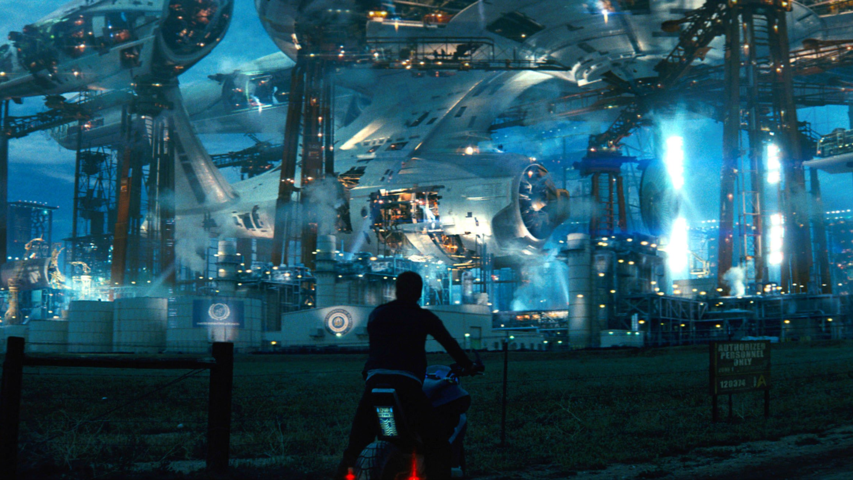
The film often feels crafted around various special effects and action set-pieces, which are certainly exhilarating and frequently breathtaking in their own right. However, Eric Bana’s Nero is a disappointingly routine menace – doubly disappointing in that it is cast with an actor of Bana’s calibre and he gets no opportunity to do anything to distinguish the part. Moreover, Nero only seems a pale copy of the much more memorable Khan in Star Trek II: The Wrath of Khan (1982). There is a completely routine battle to save the universe with the fate or Earth hanging in the balance yada yada. While J.J. Abrams has made a point of stripping out technobabble, far too much of the story is dependent on convenient plotting devices like ‘trans-warp teleportation’. Not to mention some decidedly credibility-defying pieces – like Kirk seeming to go from an untested recruit with no ship time to being suspended from duty and then second-in-command a full captain within a matter of about one day.
The problem that Star Trek 2009 faces is exactly the same ones that all that Star Trek films experienced in their move between the small screen and the big screen. On tv, both Star Trek and Star Trek: The Next Generation (1987-94) told strong science-fiction stories, dealt with galactic politics, created allegories for social issues and explored the nature of their ensemble characters. The films however became fan treats that centred around special effects spectacle with the regular characters coming on like a guest turn. In all of the films, the strong science-fiction stories were stripped back to no more than the menace that the story needed to drive it; the galactic politics and social allegories were forgotten altogether; and the character exploration where Data or Spock would discover what it meant to be human, where Worf would struggle with his warrior heritage degenerated into easy fan-pleasing humour.
To a large extent, the same criticism can be said here. If you examine the glowing reviews of Star Trek, most of them seem to be praising the film for its reinvention of the familiars (ie. playing to the recognised aspects of the characters and canon) and as action/special effects spectacle – which is surely exactly the fault that all the films can be accused of. That unfortunately is the disappointment of Star Trek 2009 – it is just another Star Trek film that is about playing to the fans and series familiarity, it is not something that tells an interesting story.
There were two sequels with Star Trek: Into Darkness (2013) and Star Trek: Beyond (2016).
The other Star Trek tv series are:- Star Trek (1966-9), the animated Star Trek (1973-5), Star Trek: The Next Generation (1987-94), Star Trek: Deep Space Nine (1993-9), Star Trek: Voyager (1995-2001), Enterprise (2001-5), Star Trek: Discovery (2017– ), Star Trek: Picard (2020-23), the animated Star Trek: Lower Decks (2020- ), Star Trek: Prodigy (2021- ) and Star Trek: Strange New Worlds (2022- ). The classic Star Trek films are:- Star Trek – The Motion Picture (1979), Star Trek II: The Wrath of Khan (1982), Star Trek III: The Search for Spock (1984), The Voyage Home: Star Trek IV (1986), Star Trek V: The Final Frontier (1989) and Star VI: The Undiscovered Country (1991). Star Trek: Generations (1994), Star Trek: First Contact (1996), Star Trek: Insurrection (1998) and Star Trek: Nemesis (2002) are film spinoffs from Star Trek: The Next Generation. Also of interest are Trekkies (1997) and Trekkies 2 (2004), two documentaries about Trek fandom; Free Enterprise (1998), an excellent fictional film about fans; GalaxyQuest (1999), a witty parody of both Star Trek and its fandom; and William Shatner’s documentary The Captains (2011) about the actors who played the captains in the various series, including Chris Pine.
Alex Kurtzman and his writing/producing partner Roberto Orci have been behind some of the biggest genre films of recent years. Kurtzman and Orci began work as writers/producers on tv’s Xena: Warrior Princess (1995-2001), Jack of All Trades (2000-1) and Alias (2001-6). Their first produced screenplay was Michael Bay’s The Island (2005) and they subsequently went on to write Mission: Impossible III (2006), Transformers (2007), Transformers: Revenge of the Fallen (2009), Cowboys & Aliens (2011), Star Trek: Into Darkness (2013), The Amazing Spider-Man 2 (2014) and Star Trek: Beyond (2016), as well as to create and produce the tv series’ Fringe (2008-13), Hawaii Five-O (2010-20), Sleepy Hollow (2013-7), Matador (2014) and Scorpion (2014– ), and to produce the films Ender’s Game (2013) and Now You See Me (2013). Alex Kurtzman had previously made his directorial debut on the non-genre drama People Like Us (2002). On his own, Kurtzman went on to direct The Mummy (2017) and produce the tv series’ Salvation (2017- ), Star Trek: Discovery (2017- ) and Star Trek: Picard (2020-23).
(Nominee for Best Special Effects and Best Production Design at this site’s Best of 2009 Awards).
Trailer here