

Crew
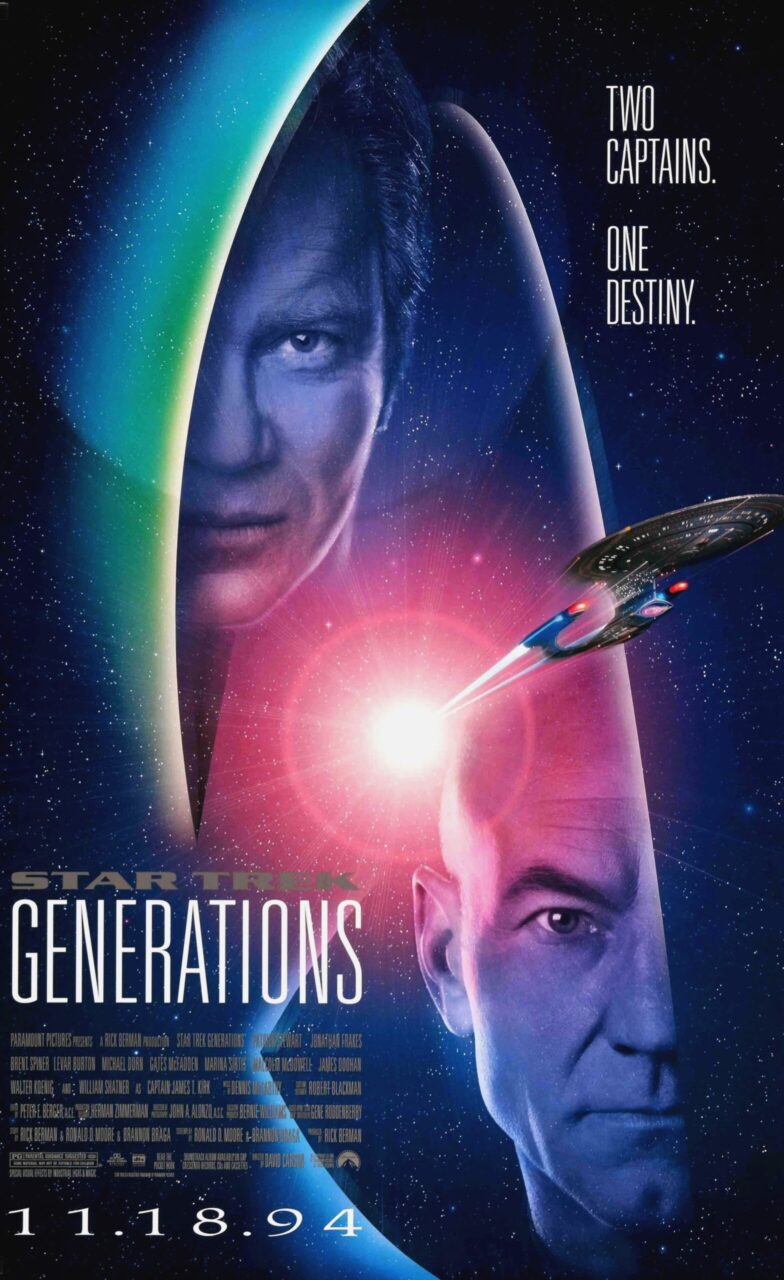
Director – David Carson, Screenplay – Brannon Braga & Ronald D. Moore, Story – Brannon Braga, Ronald D. Moore & Rick Berman, Producer – Rick Berman, Photography – John A. Alonzo, Music – Dennis McCarthy, Visual Effects – Industrial Light and Magic (Supervisors – John Knoll & Alex Seiden), Special Effects – Terry D. Frazee, Makeup – Michael Westmore, Production Design – Herman Zimmerman. Production Company – Paramount.
Cast
Patrick Stewart (Captain Jean-Luc Picard), William Shatner (Captain James T. Kirk), Malcolm McDowell (Dr Tolian Soran), Brent Spiner (Lieutenant-Commander Data), Jonathan Frakes (Commander William Riker), Marina Sirtis (Counselor Deanna Troi), LeVar Burton (Lieutenant-Commander Geordi La Forge), Michael Dorn (Lieutenant-Commander Worf), Gates McFadden (Dr Beverly Crusher), Whoopi Goldberg (Guinan), James Doohan (Scotty), Alan Ruck (Captain John Harriman), Walter Koenig (Chekov), Barbara March (Lursa), Gwynyth Walsh (B’Etor), Jacqueline Kim (Ensign Demora Sulu)
Plot
Captain James T. Kirk attends the launch of the USS Enterprise NCC1701B. Moments out of dock and with only a token crew aboard, The Enterprise receives a distress call from two ships trapped in an energy ribbon. They go to the ship’s aid but Captain Kirk is sucked into the energy ribbon while trying to repair the engines. He is presumed dead. 78 years later, aboard the Enterprise NCC1701D under Captain Jean-Luc Picard. The android crewmember Data inserts an emotion chip left by his creator but is overwhelmed by the tide of emotions that results. The Enterprise receives a distress call from an interstellar observatory where they encounter Dr Tolian Soran, a scientist who has become unbalanced by the death of his family. They discover that Soran is trying to detonate entire stars, including those with inhabited orbiting planets, to divert the course of the same energy ribbon. Sucked inside the ribbon, Jean-Luc Picard discovers that it exists beyond time and space and that those inside can live inside a simulation of the greatest joy of their lives. There Picard meets Captain Kirk and must persuade him to abandon his perfect happiness and join him in a quest to stop Dr Soran.
When Star Trek: The Next Generation (1987-94) first appeared on tv, it was greeted with considerable scepticism by fans of the original Star Trek (1966-9). The Next Generation was caught in the unenviable position of having to both fill the giant footsteps of its predecessor and yet be its own entity too. It was criticised both for being too much like old Star Trek and for being too different.
At the same time, the superiority of Classic Star Trek was beginning to look increasingly shaky. The cinematic Star Trek voyages had been hijacked by the egos of the stars and the films only ended up shuffling the familiar characters around in warm fuzzy comic routines that shamelessly pandered to the memories of the older fans. Classic Star Trek just wasn’t boldly going anywhere anymore.
But then around the end of 1989, the unexpected happened and Star Trek: The Next Generation started to get itself right. While Classic Star Trek had been playing the nostalgia crowd, the new kid on the block had quietly, modestly built a fine character ensemble and had started telling some satisfying and solid science-fiction stories on a week-to-week basis. Indeed, in its seven year run, Star Trek: The Next Generation built an entire new generation of Star Trek fans who now regarded Star Trek: The Next Generation as the real Star Trek and Classic Star Trek as outdated.
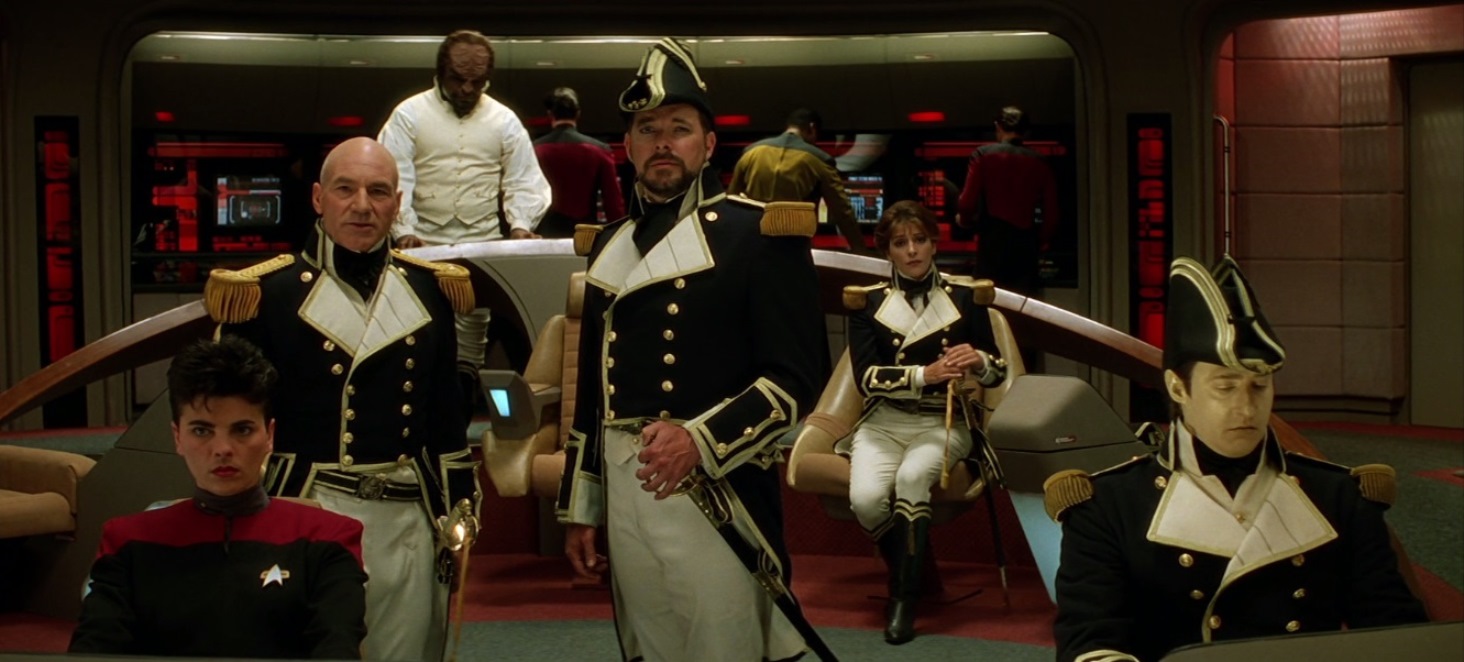
With Star Trek: Generations, which was released six months after the airing of Star Trek: The Next Generation‘s final episode, the series blossomed out into its own big screen incarnation. However, Star Trek: Generations is a decidedly mixed affair. It feels like a routine episode of the tv series that has accidentally attained a multi-million dollar budget. Certainly, the planetary destruction sequences and the show-stopping crashlanding of The Enterprise are awesome. There is one fabulous shot that pans down a starship’s exterior to a breach in the hull to show tiny figures standing inside, utterly dwarfed by the scale of the ship.
On the other hand, the rest of the film seems caught back down in the limited budgetary horizons of a TV episode. Case in point being the climactic shootout, which seems only like one of the series’ cut-price desert locations with a bridge plonked in its midst. Star Trek: Generations even seems to have been photographed for the small screen – look at the way Brent Spiner’s makeup job shows its cracks under the widescreen camera’s unflattering eye.
Star Trek: Generations also shares many of the failings of the Classic Star Trek films with a story that characteristically reaches for grandiose concepts – godlike alien beings and vessels, return from the dead – but falls woefully short of any satisfying treatment of them. For such a grandly scaled concept as The Nexus – a virtual dreamworld that contains the fulfillment of one’s greatest desire – the film needs a titanic struggle to match it. There should have been a monumental choice between the fulfillment of what Captain Kirk most dearly wanted in his life and the necessity to abandon that to save the rest of the universe. Only this isn’t the case – Kirk sees through the illusion and dismisses it with an astonishingly casual shrug of the shoulders.
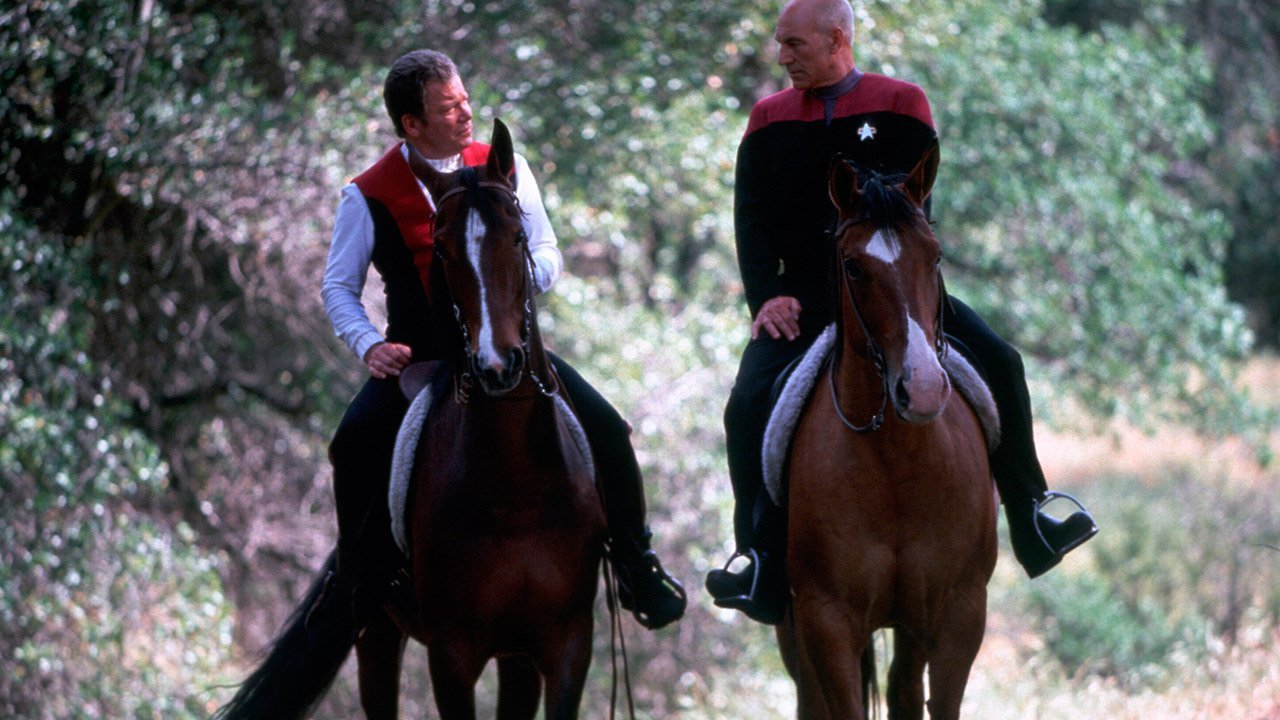
The series’ regular characters seem unsure of themselves. It is a virtual sleepwalk through for some of the characters like Worf, Beverly and Geordi who hardly even appear. One of the problems of having an ensemble cast that was well developed throughout the course of the series is that in moving to feature-film format and in effect limited to producing only one film (the equivalent of one-and-a-half tv episodes) every two years, the characters get minimal screen time and take much longer to develop whereas the series could easily devote a whole weekly story to each character.
In the most radical piece of development, Data gets his emotion chip – which one was under the impression had been irreparably damaged at the end of the episode Descent, Part II (1993) – working and the opportunity to experience the human emotions he always wanted to throughout the series. Brent Spiner is a superb mimic – he was the one genuine find among the cast of unknowns that Star Trek: The Next Generation brought to the screen – and certainly makes the comic most of Data’s emotional scenes here. However, one is unsure how the apparent permanence of the chip is going to impact on future story development. One has the suspicion that it may humanise the character too much as ironically Data’s appeal on the small screen was his very lack of humanity, his oddball curiosity and blank-eyed innocent view of the world.
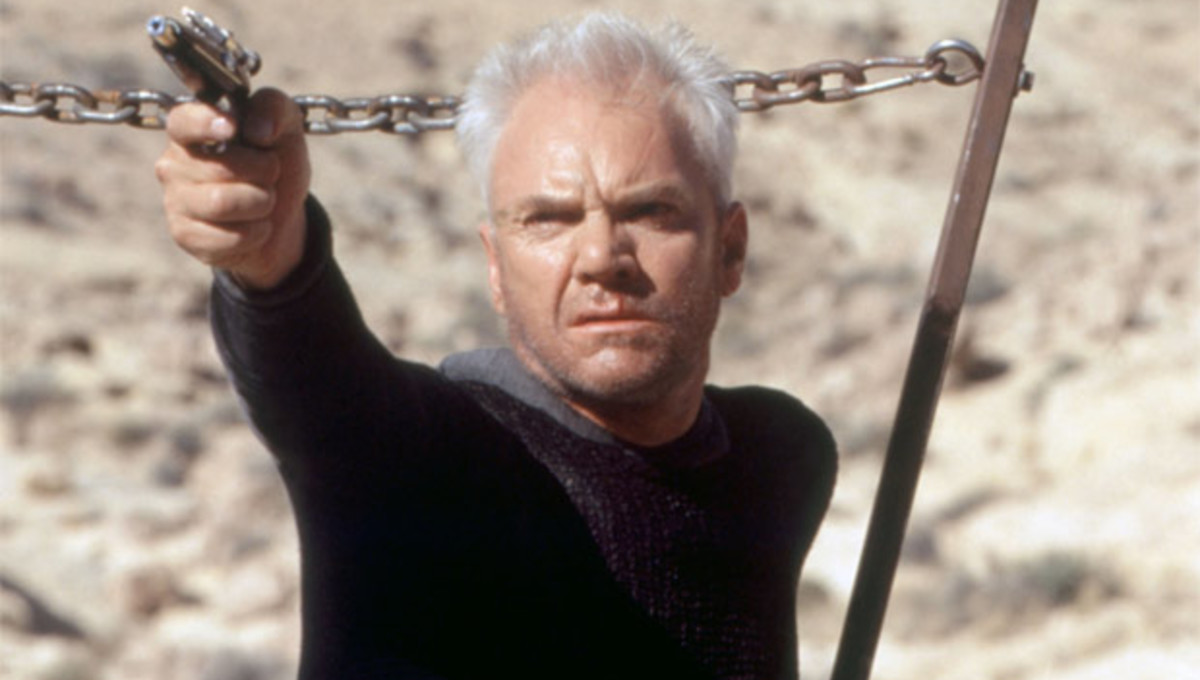
The one person who makes the best of things is that renowned limelight grabber William Shatner. Star Trek: Generations‘s big drawcard was the little kept secret of William Shatner’s guest appearance and Captain Kirk’s death. William Shatner rises to the occasion, mugging and smirking his way through a grand old airing of the Captain Kirk role, in fact out-acting all others in the show, including the much more subdued Patrick Stewart. It was a good career move for Shatner killing his bread-and-butter role off, especially considering how the public has started to turn off him with the publication of various of the original casts’ autobiographies – even Shatner’s own – which portrayed him in a decidedly unappealing light. Malcolm McDowell also lets all his patent stops loose in a grand scenery-chewing performance that vies with William Shatner’s for screen size.
The film was placed into the hands of David Carson, a British born director who had been working in series television both in the UK and USA since the early 1980s. He had directed various episodes of Star Trek: The Next Generation and Star Trek: Deep Space Nine (1993-9), including the two-hour pilot for the latter. Carson has only ventured onto cinema screens a handful of other times. His other notable genre works are the tv mini-series The 10th Kingdom (2000) set in a world where the classic fairytales are real and the tv mini-series remake of Stephen King’s Carrie (2002).
The subsequent Star Trek: The Next Generation films were Star Trek: First Contact (1996), Star Trek: Insurrection (1998) and Star Trek: Nemesis (2002). The Classic Star Trek films are: Star Trek – The Motion Picture (1979), Star Trek II: The Wrath of Khan (1982), Star Trek III: The Search for Spock (1984), The Voyage Home: Star Trek IV (1986), Star Trek V: The Final Frontier (1989) and Star Trek VI: The Undiscovered Country (1991). Star Trek (2009), Star Trek: Into Darkness (2013) and Star Trek: Beyond (2016) were reboots of the classic series, which recast the classic roles with new faces. The original Star Trek tv series are:- Star Trek (1966-9) and the animated Star Trek (1973-5). Star Trek was revived in four new series in the 1980s and 2000s – Star Trek: The Next Generation (1987-94), Star Trek: Deep Space Nine (1993-9), Star Trek: Voyager (1995-2001) and Enterprise (2001-5). The third generation revival tv series are Star Trek: Discovery (2017-24), Star Trek: Picard (2020-23), the animated Star Trek: Lower Decks (2020- ), Star Trek: Prodigy (2021- ) and Star Trek: Strange New Worlds (2022- ). Star Trek: Section 31 (2025) was a film spinoff from the revival series.
(Nominee for Best Special Effects at this site’s Best of 1994 Awards).
Trailer here