

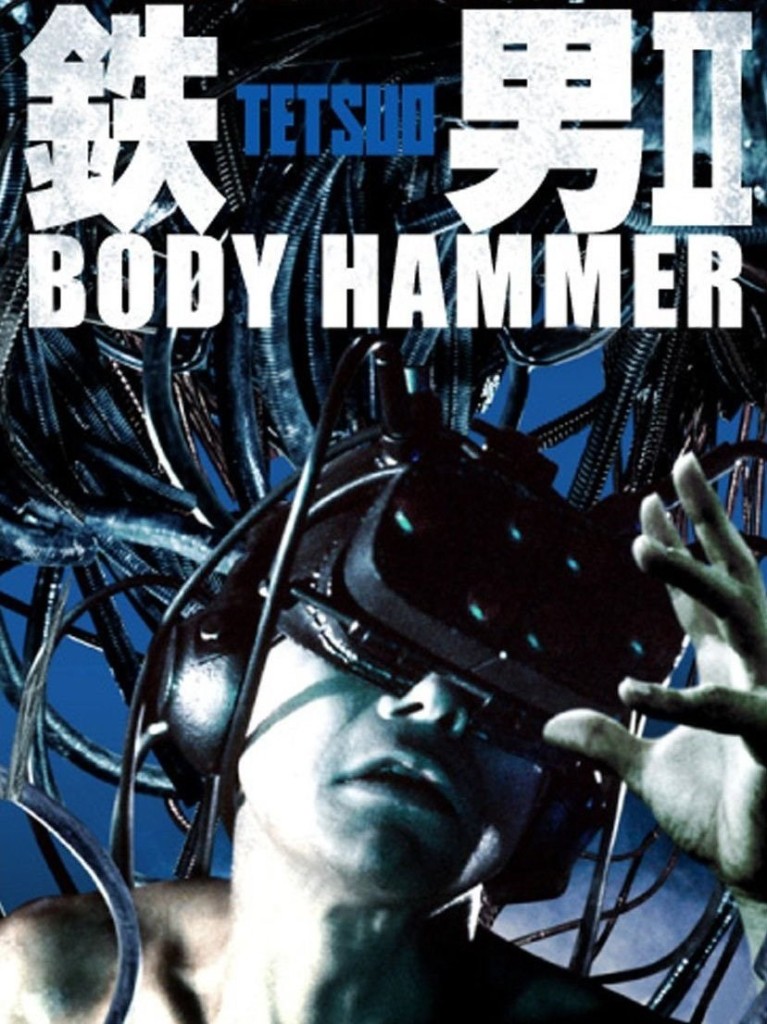
Crew
Director/Screenplay/Art Direction – Shinya Tsukamoto, Producers – Fumio Kurokawa & Fuminori Shishido, Photography – Shinya Tsukamoto, Fumikazu Oda & Katsunori Yokoyama, Music – Chu Ishikawa. Production Company – Kaiju Theatre,
Cast
Tomoroh Taguchi (Tomoo Taniguchi), Nobu Kanaoka (Kana Taniguchi), Shinya Tsukamoto (Yatsu), Keinosuke Tomioka (Minori Taniguchi), Sujin Kim (Tomoo’s father), Toreamon Utazawa (Mad Scientist)
Plot
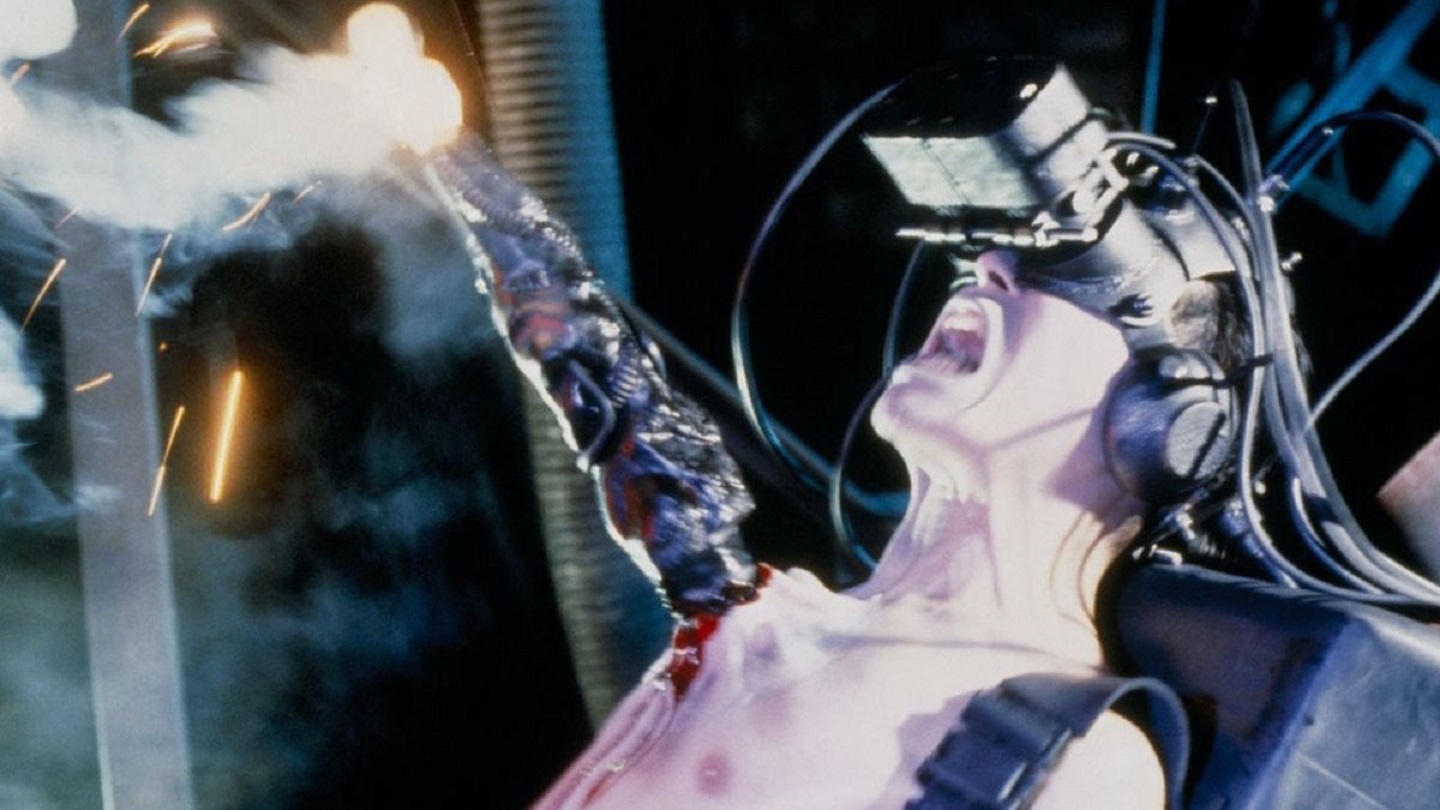
Tomoo Taniguchi bumps into some skinheads while walking through a mall with his family. Afterwards, the skinheads follow Tomoo and snatch his son. They take Tomoo to a scientist who places him in a tank and manipulates images in his mind, causing his body parts to mutate into metal and his arm to transform into a gun. The lead skinhead discovers a similar ability to transform his arm into a gun and infects the other skinheads with the ability. A battle of wills then ensues between Tomoo and the skinheads.
Shinya Tsukamoto’s Tetsuo – The Iron Man (1989) was a genuine piece of guerrilla filmmaking, plotless yet jam-packed with a mind-bogglingly crazed string of imagery about man fusing into machine. This sequel-remake comes from the same director, but despite a larger budget and colour, is an incredibly tame disappointment.
Missing from Tetsuo II: Body Hammer is all the outlaw wildness of the first film. The sequel lacks anything that compares to the intensity of the images in the first film like that of the hero’s penis turning into a high-speed drill bit capable of boring through coffee tables or the hero being buggared by a female punk with a three-foot long pipe for a phallus.
Even the imagery in this film seems second-hand – the hand and body gun imagery plays like outtakes from David Cronenberg’s Videodrome (1983) and the climax with the hero and lead punk transforming into giant junk piles with heaps of angle iron coming out of their faces, before absorbing the villain into the mass and riding off into the streets as a giant junkpile, would be effective were it not merely a reprise of the first film’s climax.
In Shinya Tsukamoto’s case, the old adage about directors who made a name through B-budget wildness selling out their beginnings and their voice being swallowed by commercialism could be said to be true – except for the fact that the budget this sequel has is only about that of the average B-movie. One can see what Shinya Tsukamoto was trying to achieve. He has attempted to give the first film a deeper thematic definition, even create a nominal science-fictional explanation for the transformations, but in doing so has sacrificed all that made the first film effective.
Where the first Tetsuo was a psychotic Cyberpunk Eraserhead (1977), Tetsuo II plays more like a Cyberpunk version of The Incredible Hulk. The problem though is that Shinya Tsukamoto is not a scriptwriter. The first film made no narrative sense whatsoever and was carried solely by the wildness of its imagery. In trading that for explanation, Shinya Tsukamoto merely makes a film that is dramatically murky while sacrificing all that made the first film effective. Here Tsukamoto’s explanations are murky at best and not helped by a style intercut with random cuts.
Shinya Tsukamoto made a further entry in the series with Tetsuo: The Bullet Man (2009). Tsukamoto’s films other films include:- Hiruko the Goblin (1990); the boxing and body piercing film Tokyo Fist (1995); Bullet Ballet (1998), a film that played the image of a people fusing with guns out on a psychological level; the twin drama Gemini (1999); the erotic film A Snake of June (2002); Haze (2005) about a man trapped in an allegorical maze; Nightmare Detective (2006) and Nightmare Detective 2 (2008) about a man who can enter into dreams; and Kotoko (2011) about a woman suffering hallucinations.
Trailer here