
Crew
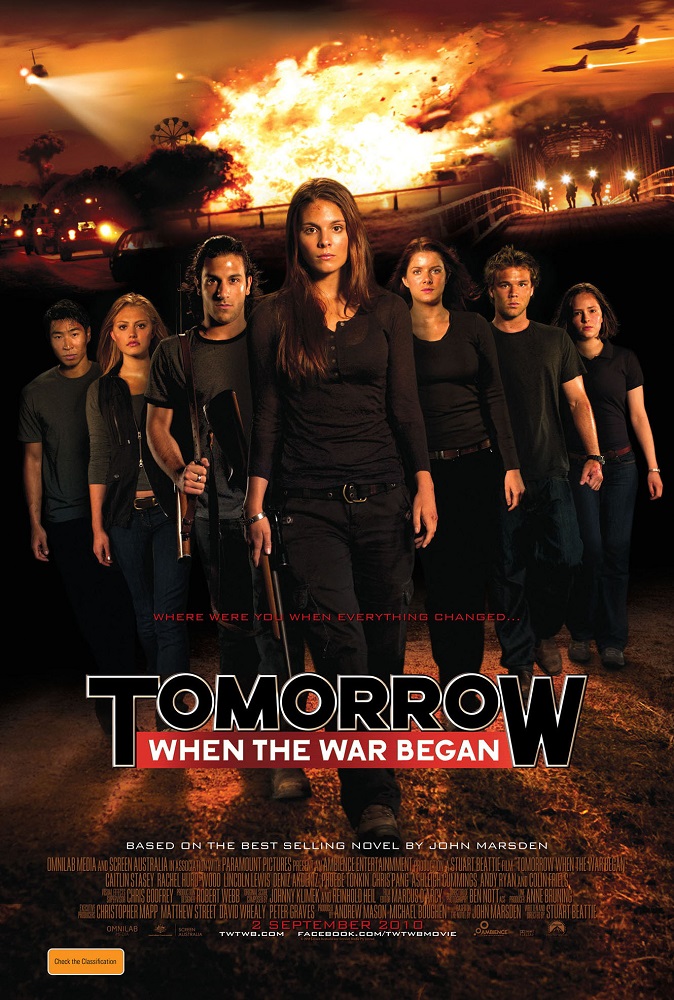
Director/Screenplay – Stuart Beattie, Based on the Novel by John Marsden, Producers – Michael Boughen & Andrew Mason, Photography – Ben Nott, Music – Reinhold Heil & Johnny Klimek, Visual Effects Supervisor – Chris Godfrey, Visual Effects – Fuel VFX (Supervisor – Dave Morley), Iloura (Supervisor – Sigi Eimutis), The Lab Sydney (Supervisor – Tony Cole), Miniature Supervisor – Tom Davies, Special Effects Supervisor – Dan Oliver, Production Design – Robert Webb. Production Company – Ambience Entertainment/Omnilabmedia/Screen Australia
Cast
Caitlin Stasey (Ellie Linton), Rachel Hurd-Wood (Corrie Mackenzie), Deniz Akdeniz (Homer Yannos), Chris Pang (Lee Takkam), Lincoln Lewis (Kevin Holmes), Phoebe Tonkin (Fiona Maxwell), Ashleigh Cummings (Robyn Mathers), Andy Ryan (Chris Lang), Colin Friels (Dr Clement)
Plot
In the small sleepy backwoods Australian farm town of Wirrawee, eighteen year-old Ellie Linton and her best friend Corrie Mackenzie decide on impulse to go on a camping trip. They gather a group of friends and head into the bush near the remote region known as Hell. As they go to sleep that night, they see squadrons of planes flying overhead but think nothing of it. After the weekend, they return and are shocked to find the power and phone off in their homes and their families missing. They discover that while they were away, Australia has been invaded by a foreign nation and all the Wirrawee locals rounded up and made prisoner in the showgrounds. Ellie is forced to kill some of the soldiers in order to get away. They arm themselves and realise that their only recourse is to head back to Hell and prepare the best means to strike back against the invaders.
Stop me if you have heard this one before – foreign country invades large sovereign nation and takes over; teenagers manage to evade the general round-up and retreat to the backwoods where they begin a successful guerrilla insurgency against the invaders. It is the essential plot of Red Dawn (1984), one of the more laughable 1980s action films that today only seems an hysterically paranoid crosscut of conservative America’s fears of the USSR. (Red Dawn had been earmarked for a remake with the long-delayed Red Dawn (2012) around the same time that Tomorrow When the War Began came out).
The premise of Red Dawn was borrowed by Australian writer John Marsden who wrote Tomorrow When the War Began (1993), which became a huge international young adult’s bestseller. Marsden has written six follow-up books – The Dead of the Night (1994), The Third Day, The Frost/A Killing Frost (1995), Darkness, Be My Friend (1996), Burning for Revenge (1997), The Night is for Hunting (1998) and The Other Side of Dawn (1999), as well as a further three book series that follow the central character of Ellie Linton after the war.
Tomorrow When the War Began was the directorial debut of Stuart Beattie, an Australian who gained a high-profile as an international screenwriter with credits such as Pirates of the Caribbean: The Curse of the Black Pearl (2003), Collateral (2004), Derailed (2005), 30 Days of Night (2007) and G.I. Joe: The Rise of the Cobra (2009), before returning home for Baz Luhrman’s Australia (2008). Tomorrow When the War Began has clearly been intended as a film franchise with the film being afforded a major budget and all the other books in the series having been optioned and at least two planned sequels announced.
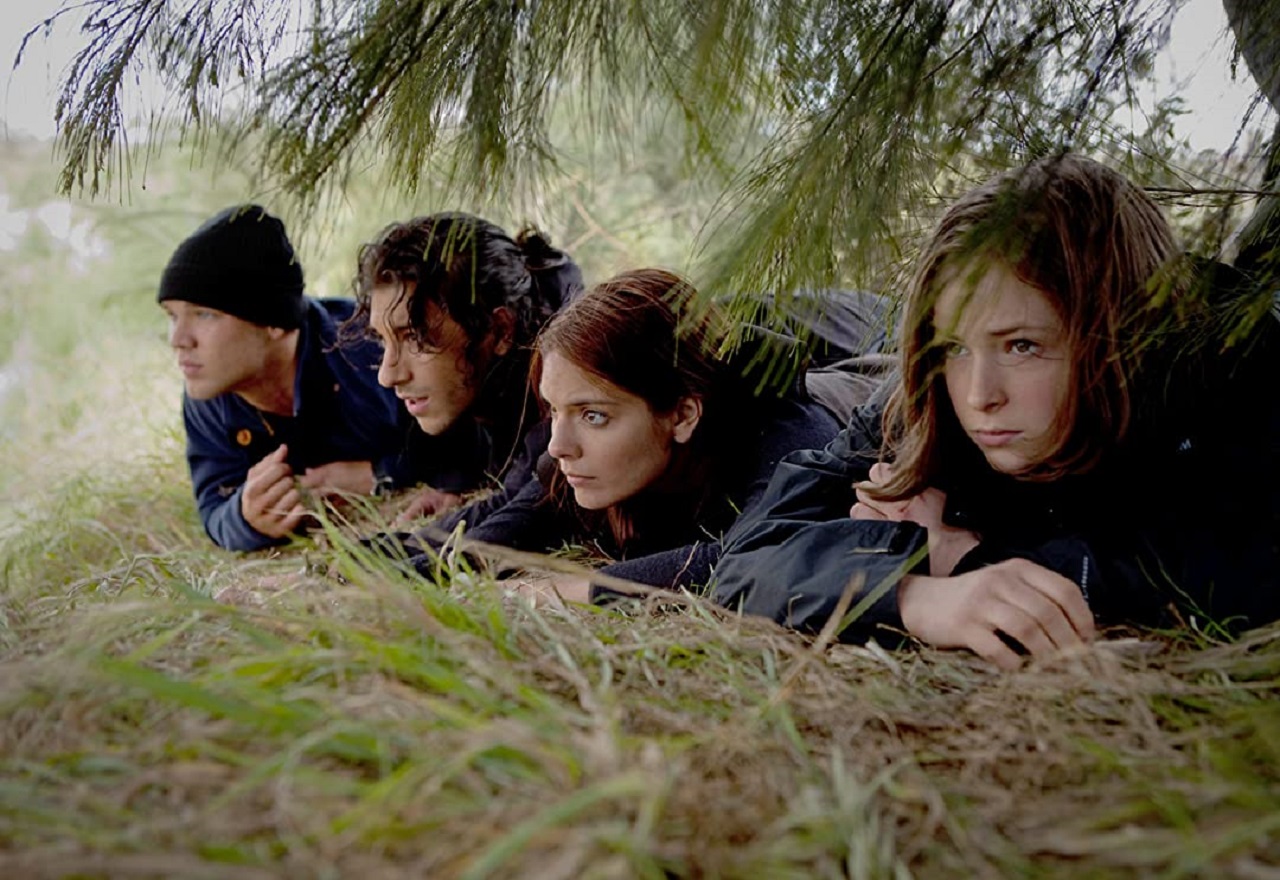
In many regards, Stuart Beattie and associates have pulled out all stop with Tomorrow When the War Began. It is a ravishingly photographed film – Ben Nott has gone for all the maximum wide-impact shots showing off the Australian scenery in a clear pitch to sell the film to the international market. Less so is the story as Tomorrow When the War Began settles in. We see the crosscut of standard characters being set up – the rebel, the naive innocent, the fashionista who has the clear character arc of receiving a wake-up call about reality. About the only difference from standard here is that the girls lead the group as opposed to the guys. The idea of an invasion of Australia with its largely unoccupied landmass is one that exists in the realms of far-fetched improbability but the film kind of accepts this – the invaders have all been cast as non-specified Asian in origin and the language they speak a polyglot of words from different world languages.
Stuart Beattie is a better action director than John Milius and rather than Red Dawn‘s macho posturing, the characters here are far more engagingly likeable. Unlike Red Dawn and its fears of Communism, Tomorrow When the War Began comes with a lack of any political subtext. At most, Stuart Beattie cuts away in the midst of the action to a painted mural of English soldiers meeting Aborigines, as though to leave us to draw parallels with this invasion by another superior force. There is an obliquely implied critique of Australia’s harsh immigration policies under Prime Minister John Howard at one point with a line of dialogue: “Australia must be made to share its resources with its neighbours.”
Like Red Dawn, Tomorrow When the War Began is a rite of passage and a Coming of Age film. The invasion in both serves as a harsh and abrupt cancellation of the idyll of childhood and the thrusting of the characters into the deep end of adulthood where they are forced to survive in brutal terms. As Caitlin Stasey says in voiceover at one point: “We were so innocent back then. I feel like we were innocent right until yesterday. We didn’t believe in Santa Claus or anything like that. No, we believed in other fantasies. We believed we were safe. I guess that was the biggest fantasy of them all, right?”
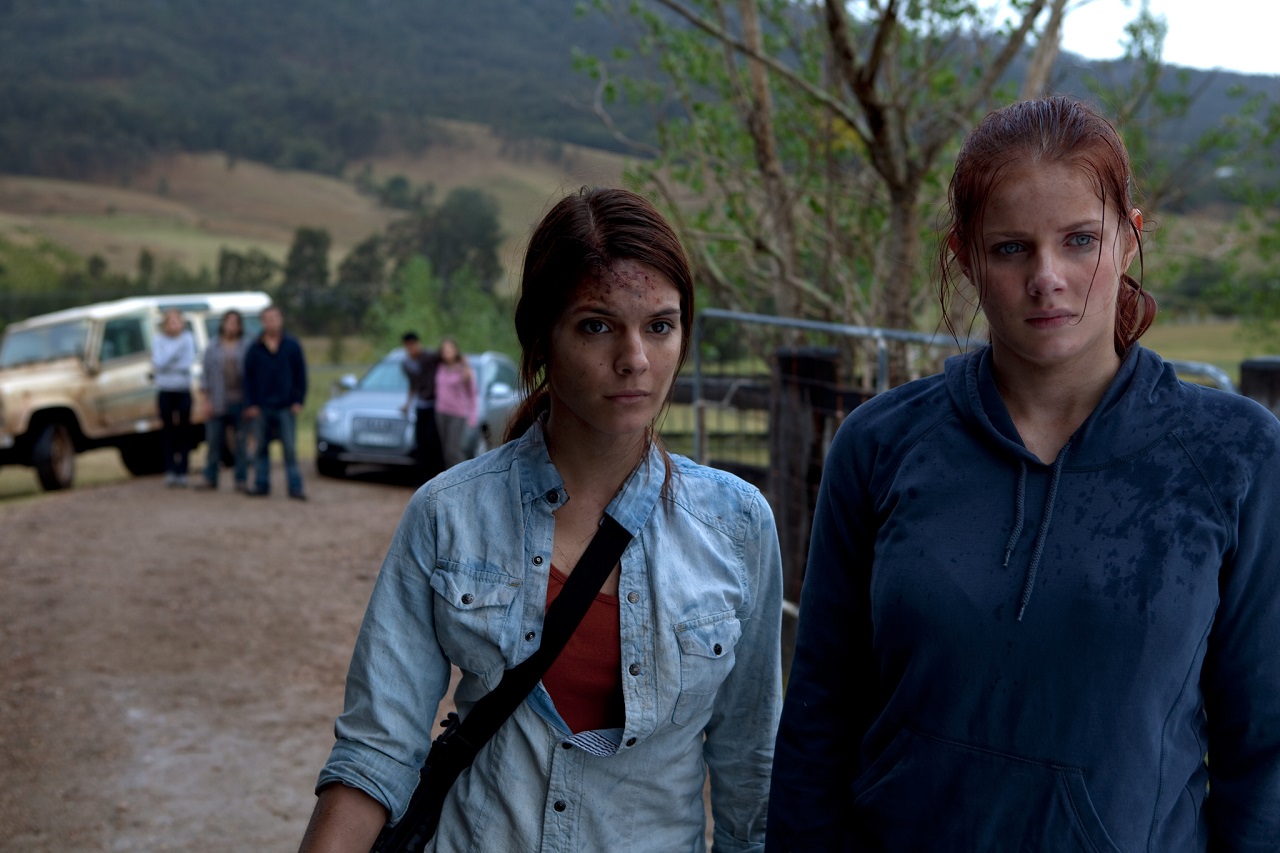
At contrast to John Milius’s gung ho militarism and veritable NRA recruiting commercial, Tomorrow When the War Began has a character who is a Christian and a pacifist (Ashleigh Cummings) who refuses to murder anyone, although eventually reaches a point where she has no choice but to pick up a gun. There are some interesting philosophical debates about the decision to fight, as Caitlin Stasey asks at one point: “It came down to that I valued my life over theirs … How many people is it okay to kill to keep me alive? What point do we lose our souls if we haven’t already?”
Tomorrow When the War Began is well polished and produced. Its’ minus point is that it is eventually only a pretty account of teenagers in a war. It feels more like Dawson’s Creek (1998-2003) Goes to War than a story that conveys the harsh brutalities of war. For all the film’s big budget polish, Stuart Beattie’s action and war scenes are surprisingly tame – a couple of scenes where the teens are ducking fire and a big money scene where they use a petrol tanker to blow up a bridge. You reach the end of the film feeling that there should have been something more epical than that.
The ending also reaches an inconclusive point where everything is set up for a cliffhanger that will lead on to the sequel. This is an ambitious gamble (one suspects that this is a premise that would have worked better as a single film than a series). This holds a disappointment in that the film seems to build towards something big but this has been held off until next time and the story we are left with comes without a dramatically satisfying climax.
Stuart Beattie next made the ridiculous I Frankenstein (2014). He has also promised to make two further sequels to Tomorrow When the War Began, although these have yet to emerge.
The first book adapted here was later filmed as a six-episode tv mini-series Tomorrow When the War Began (2016).
(Nominee for Best Cinematography at this site’s Best of 2010 Awards).