
Crew
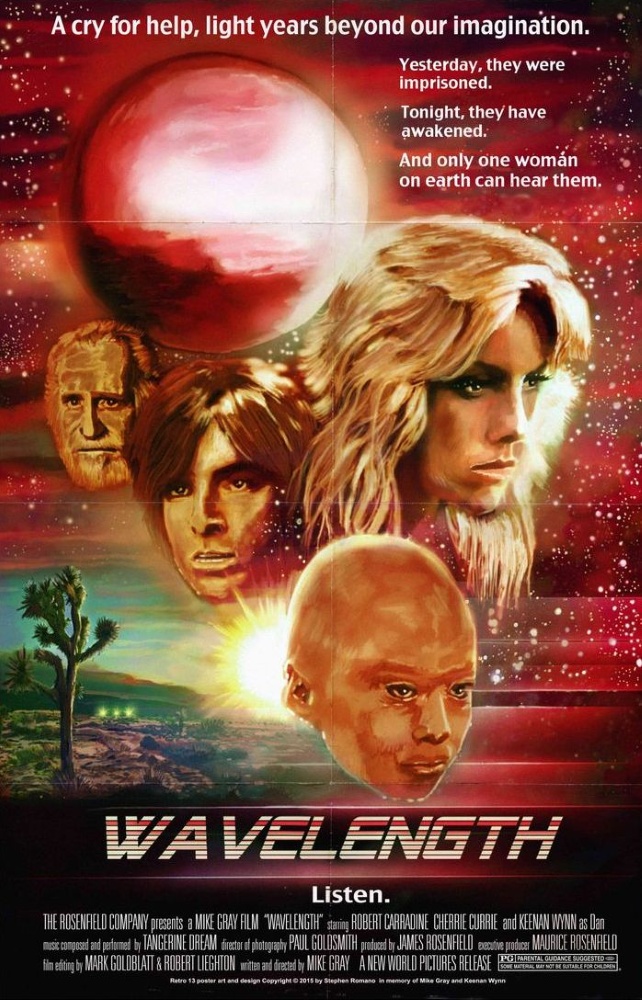
Director/Screenplay – Mike Gray, Producer – James Rosenfield, Photography – Paul Goldsmith, Music – Tangerine Dream, Optical Effects – Cinema Research Corporation (Supervisor – Joseph Wallikas), Special Effects – Mike Menzel, Art Direction – Linda Pearl. Production Company – The Rosenfield Co.
Cast
Robert Carradine (Bobby Sinclair), Cherie Currie (Iris Longacre), Keenan Wynn (Dan), James Hess (Colonel James MacGruder), Cal Bowman (General Milton Ward), Eric Morris (Dr Vernon Cottrell), Dov Young (Gamma), Joshua Oreck (Beta), Christian Morris (Delta)
Plot
Artist Iris Longacre becomes lovers with down-on-his-luck singer/songwriter Bobby Sinclair after they meet in a bar. From his apartment in the Hollywood Hills, she begins to hear strange noises in her head. She traces these to an apparently abandoned military installation and realises that they are the empathic cries of four child-like aliens being held there by the military and about to be dissected. She and Bobby come up with a plan to break into the base, rescue the aliens and return them to a meeting with their mothership in the Mojave Desert.
Wavelength is a modest little alien contact film. It was an independently made production, directed by Mike Gray who was previously a documentary short filmmaker and had written the screenplay for The China Syndrome (1979).
When it came out, Wavelength was seen as being made in imitation of the dual successes of Steven Spielberg’s Close Encounters of the Third Kind (1977) and E.T. – The Extra-Terrestrial (1982). However, producer James Rosenfield informs me that Mike Gray actually wrote the screenplay before Close Encounters and that the film went into production prior to E.T. but was not released until afterwards due to the lengthy difficulty of the effects sequences.
While most Spielberg imitators drowned in mawkish sentimentality, Wavelength does the basic story modestly and thoughtfully. The introduction of the aliens via empathic contact is intriguingly built up. The standard elements of government cover-up paranoia come filled with neat little asides – requests for lip identification prints, government officials complaining about how they never get their briefcases back after official searches and, in one memorable sequence, a pull back from a scene with Robert Carradine improvising an escape to show that everything is being calmly observed by guards on a video monitor.
Despite promising build up, the film heads in predictable directions. The climax takes place in the Mojave Desert, which is strikingly photographed with the sheer immenseness of the desert dwarfing humans and aliens alike. There are some very good effects work involved in the appearance of the mothership as a giant mirrored sphere.
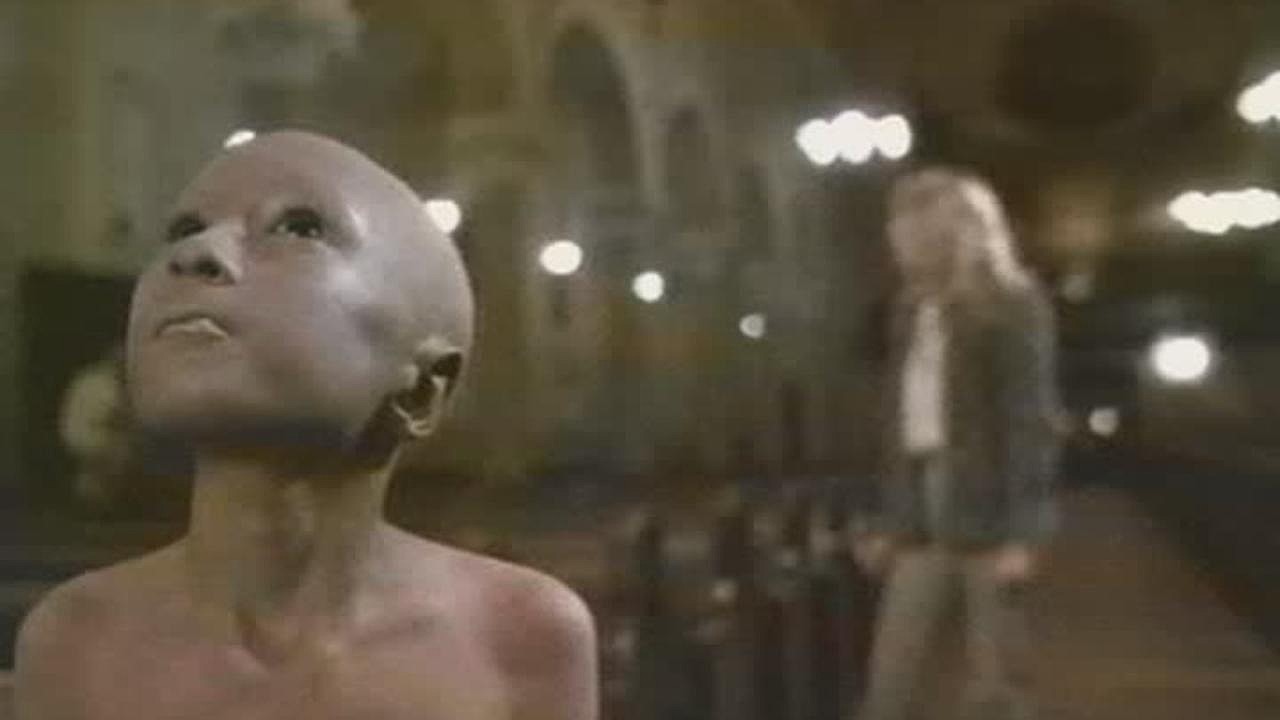
Yet for all its relative effectiveness, Wavelength disappoints somewhat – it is geared up but seems ultimately ever so afraid of taking the material in directions that have not been mapped out before. Lead actress Cherie Currie suffers from a bad case of camera shyness. The aliens also fail to look like anything other than depilated children.