

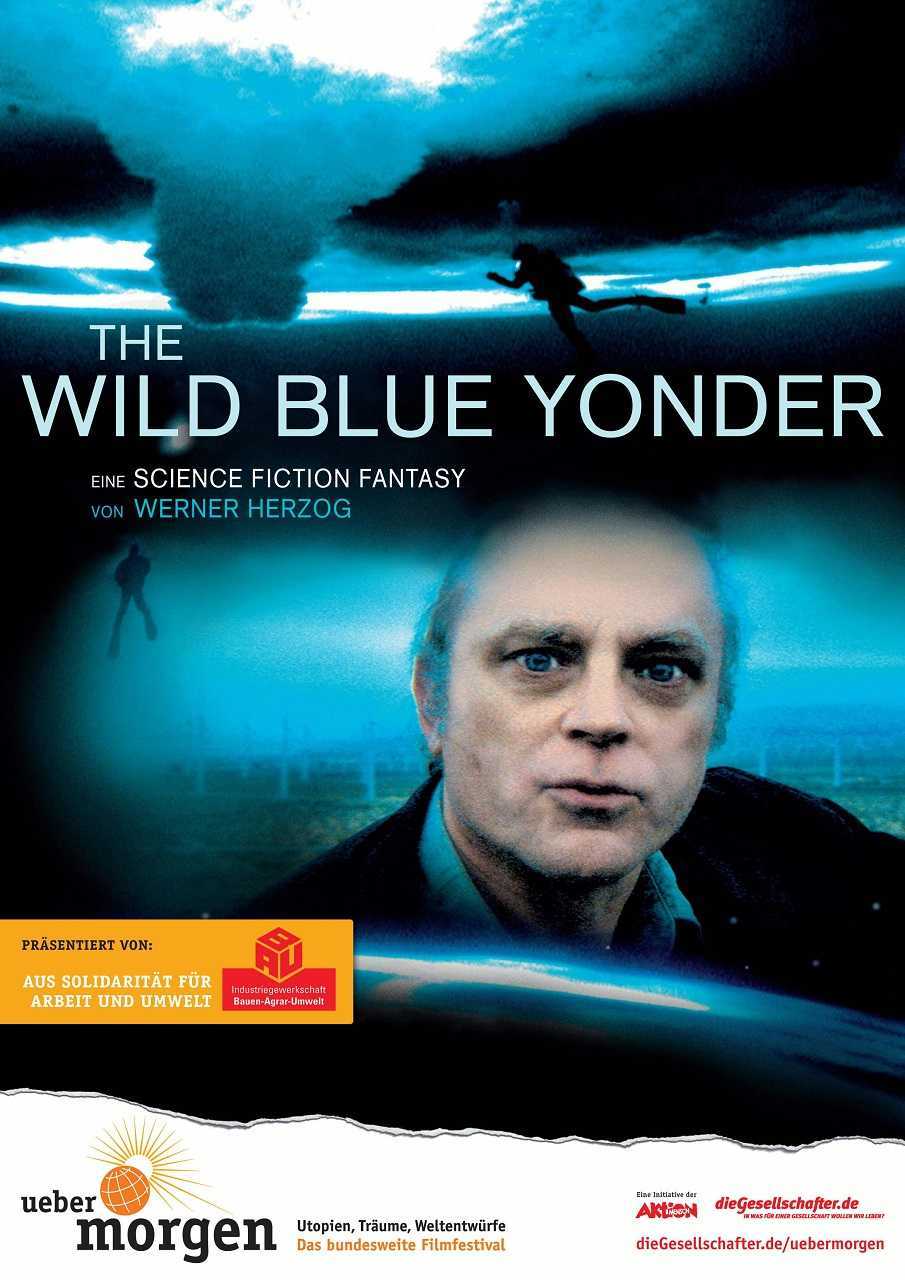
Germany/UK/France. 2005.
Crew
Director/Screenplay – Werner Herzog, Producers – Andre Singer, Photography – Henry Kaiser, Tanja Koop & Klaus Scheurich, Music – Ernst Reijseger. Production Company – Werner Herzog Filmproduktion/West Park Pictures/Tetra Media/France 2.
Cast
Brad Dourif (The Alien). The Astronauts:– Dr Ellen Baker, Francis Chang-Diaz, Shannon Lucid, Michael McCulley, Captain Donald Williams. The Mathematicians:– Roger Diehl, Martin Lo, Ted Sweetser.)
Plot
An alien from the Andromeda galaxy tells about how his people came to colonise Earth. However, the mission was a disaster, with their attempt to build a capital city on Earth ending up a dismal failure. Meanwhile, Earth scientists reopen the Roswell saucer but inadvertently unleash bacteria from Andromeda. It is decided to send a space mission to find a habitable alternative to Earth. This is in danger of failing because of the infinitesimal slowness of traditional space travel. A system of interplanetary highway network that allows the astronauts to travel to Andromeda at super-light speeds is then discovered. There the astronauts explore the aliens’ abandoned home planet.
The German-born Werner Herzog gained fame beginning in the 1970s with films like The Enigma of Kaspar Hauser (1974), Aguirre, The Wrath of God (1977), Fitzcarraldo (1982) and Where the Green Ants Dream (1984). These frequently concern themselves with individuals who have extraordinary visions or else with the clash of cultures and different ways of thinking. Herzog himself has a reputation as a filmmaker willing to go to extremes, including twice having moved an entire film crew into the Amazonian rainforest to film. Herzog is best known within the genre for his remake of Nosferatu the Vampyre (1979). Herzog has also had a great interest in documentary and in more recent years his output has tended to move away from drama and into this area with works like Echoes from a Somber Empire (1990), Bells from the Deep (1993), Gesualdo: Death for Five Voices (1995), Little Dieter Needs to Fly (1997), Wings of Hope (2000), The White Diamond (2004), Grizzly Man (2005), Encounters at the End of the World (2007), Cave of Forgotten Dreams (2010), Into the Abyss (2011), Queen of the Desert (2015), Into the Inferno (2016), Lo and Behold, Reveries of the Connected World (2016), Meeting Gorbachev (2018) and occasional dramas with Invincible (2001), Rescue Dawn (2006), The Bad Lieutenant – Port of Call: New Orleans (2009), My Son, My Son, What Have Ye Done (2009) and Salt and Fire (2016).
Two of Werner Herzog’s most interesting documentaries – if one can ever find them – are Fata Morgana (1971) and Lessons of Darkness (1992). Fata Morgana is a mesmerising piece that consists solely of the scenery as seen from a vehicle moving through the North African desert; Lessons in Darkness is similarly shot in the burning Kuwaiti oil fields in the aftermath of the first Gulf War. In both films, Herzog’s take on what we are seeing is not as a documentary but through a science-fictional frame – that the journey through the Sahara desert in Fata Morgana is a view of human civilisation by aliens; while in the latter, the narration compares the vision of the burning Gulf oilfields to an apocalypse. It is this fascinating use of science-fiction more as metaphor for the real world rather than as a speculative literature of ideas that similarly underlies The Wild Blue Yonder.
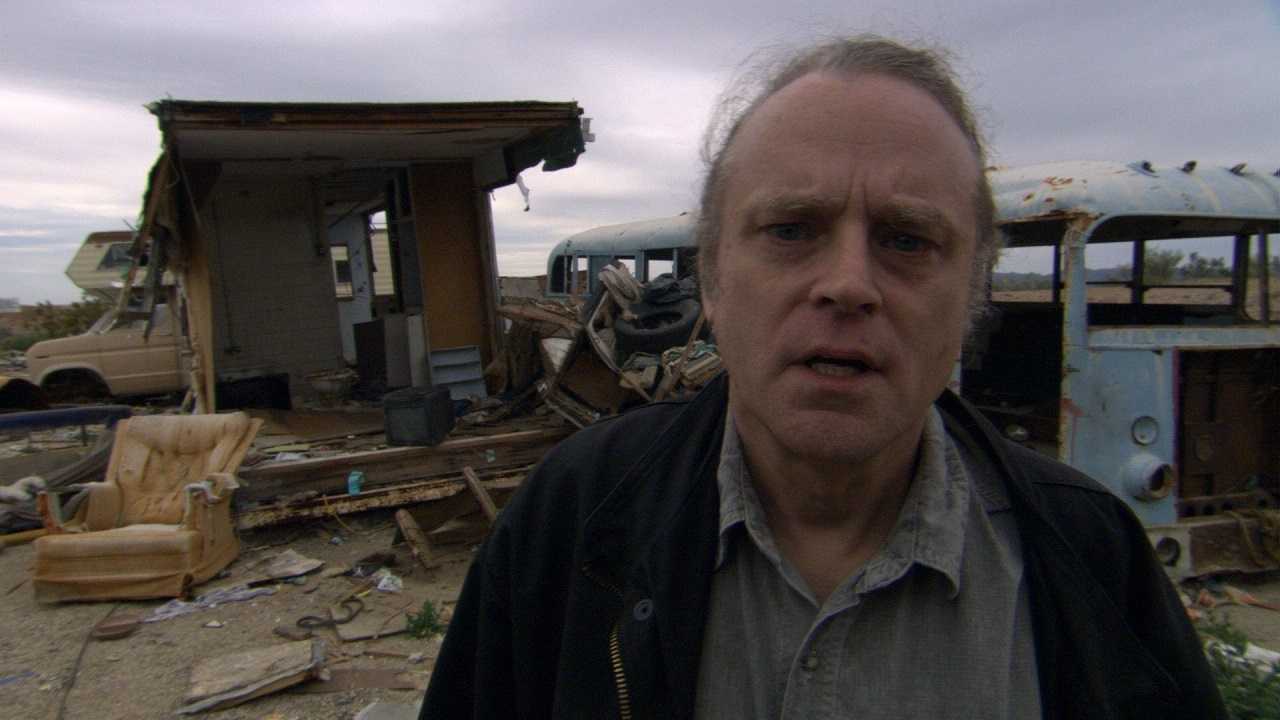
Sitting down to watch The Wild Blue Yonder makes for a considerable scratch of the head. The film is a joke being played on us by Herzog (albeit a rather eccentric one) where he tries to convince us that mundane footage is a science-fiction story. (Herzog after all appeared as an actor in the amusing mockumentary Incident at Loch Ness (2004), where he happily joined in a joke that willingly pulled the wool over our eyes in regard to being a ‘serious’ documentary). At the start of the film, we have scenes from old films of an early plane flying, a man throwing himself in front of a truck and various scenes at a NASA facility, which the narrating Brad Dourif tries in perfect straight-face to convince us are respectively scenes of the alien ship landing, a suicidal alien and NASA trying to contain a bio-outbreak from the Roswell Crash.
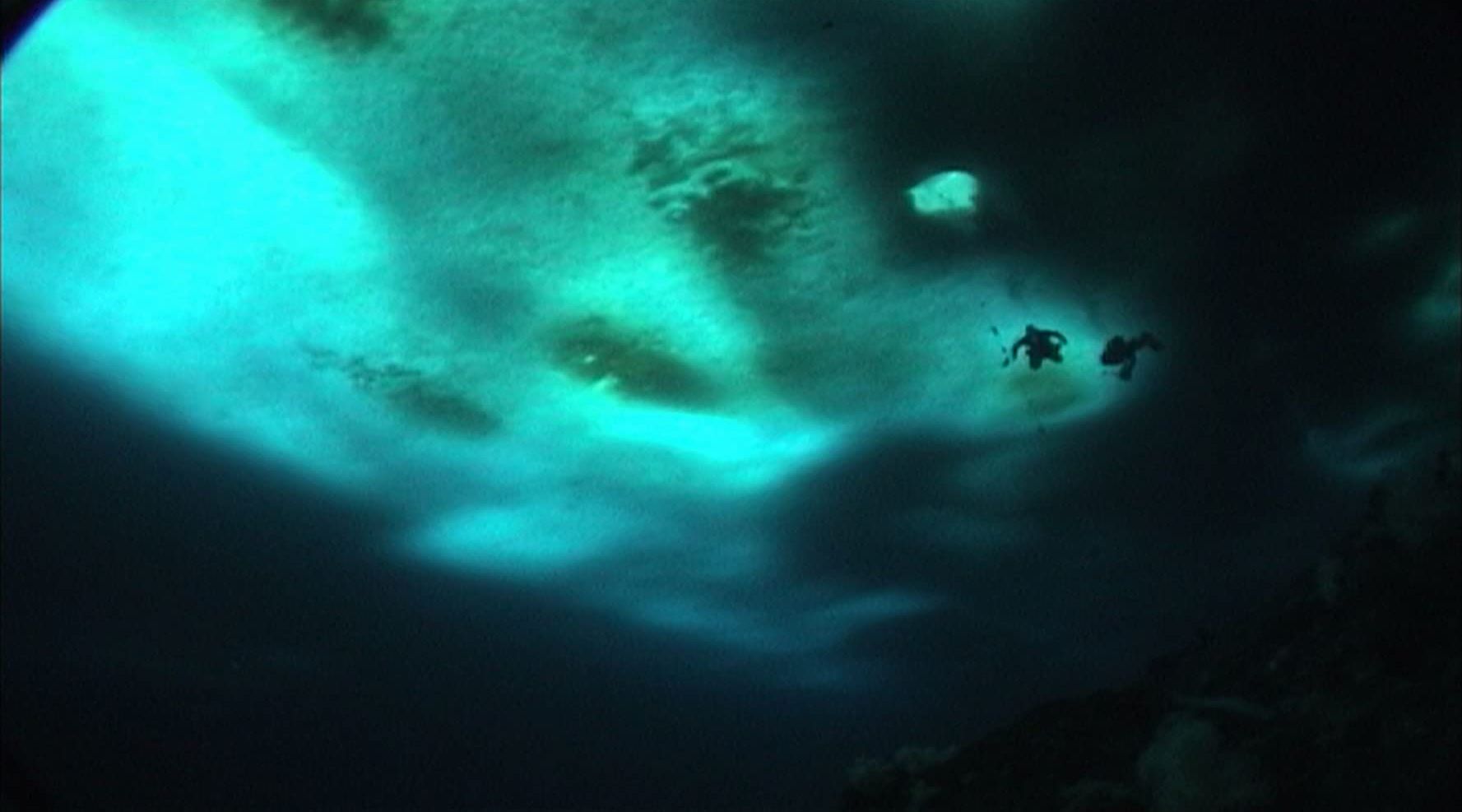
The majority of The Wild Blue Yonder is set around two different sets of footage – onboard video taken by the astronauts aboard the STS-43 mission aboard the space shuttle Atlantis in 1991; and film taken by musician Henry Kaiser from beneath the icecap while Kaiser was on an arts scholarship to the Antarctic in 2001. In both cases, Werner Herzog sets out to convince us that these pieces of film are very different things – that the shuttle astronauts are on a deep space mission to find a new habitat for humankind and that the sub-Antarctic footage is film of the Andromedan homeworld.
In many ways, it feels as though Herzog started out making a documentary about spaceflight and got sick of it halfway through and decided to take the piss out his material. In some respects, The Wild Blue Yonder is akin to something like Dead Men Don’t Wear Plaid (1982) – a film made around clips from 1940s detective thrillers – or perhaps even more so what Roger Corman did with the Russian Storm Planet (1962) in recutting it as Voyage to the Prehistoric Planet (1965) and Voyage to the Planet of Prehistoric Women (1968) where he reworked the scenes into a story that had entirely different meaning to what was originally intended.
The Wild Blue Yonder is at its most eccentric when we get Brad Dourif, one of cinema’s prime whackos, trying to convince us that he is an alien from Andromeda. Dourif’s deadpan narration verges on the hysterical at times. Although he does have one excellent scene where he demonstrates the mind-boggling distance involved in interstellar travel by comparing the fastest moving human-powered object to the whole of human history, before pulling back to tell us that that would only get the spacecraft 15% of the way to the nearest star.
This joke becomes particularly bizarre when it comes to the interviews with the various scientists. Here Herzog deliberately leaves in scenes that other documentarians would cut out – like those of the mathematicians making mistakes during their drawing a diagram of planetary orbits and particularly the shots of Martin Lo dozing. The end result is to make the scientists look nerdy – indeed, the watching audience who were unable to follow the science ended up laughing. Herzog also frequently puts the interview material to purposes that the various interviewees most likely never intended. Martin Lo’s idea about the Interplanetary Transport Network, of using the natural velocity of the gravitational funnels created by the orbit of planetary bodies, is a fascinating one, although one suspects in a cursory reading of Lo’s theories that almost certainly these do not hold any concepts of Faster Than Light travel, which is what Herzog immediately turns the idea around to mean.
Similarly, Herzog interviews the STS-43 shuttle crew some fifteen years after the mission and immediately uses the contrast of age differences to suggest that the astronauts aged 820 years during their return journey. When one astronaut starts enthusing about the possibility of orbital colonies, Herzog jumps from him mentioning malls in space to the dreary mall in the middle of a nowhere town that Brad Dourif told us was the alien’s capital city on Earth. One cannot help but feel that Herzog is being derogatory to his interviewees – of undercutting their material or adding cuts that seem designed to make them into figures of laughter.
The minus side also is that, while Herzog gives it a story of sorts, The Wild Blue Yonder is never a particularly dramatic film – the space shuttle footage goes on too long past the point that it was interesting (or the gag that Herzog lays over the top has finished), while the scenes of the divers returning to the surface, which we are told is the astronauts travelling through a time tunnel back to Earth, is also long and repetitious – just how many more shots is it possible to see of divers heading up into the light? That said, by the point of the journey under the Antarctic icecap, which is filmed with an extraordinary beauty, you are quite prepared to give Herzog the suspension of disbelief to accept that the marine life swimming towards the camera is an alien greeting party and that the cathedral-like splendour of the light under the ice is an alien world.
Trailer here